


#Short Answer
Explores the future of generative ai, including emerging trends, practical impacts, risks, and important signals to watch.
#Infobox
#Overview
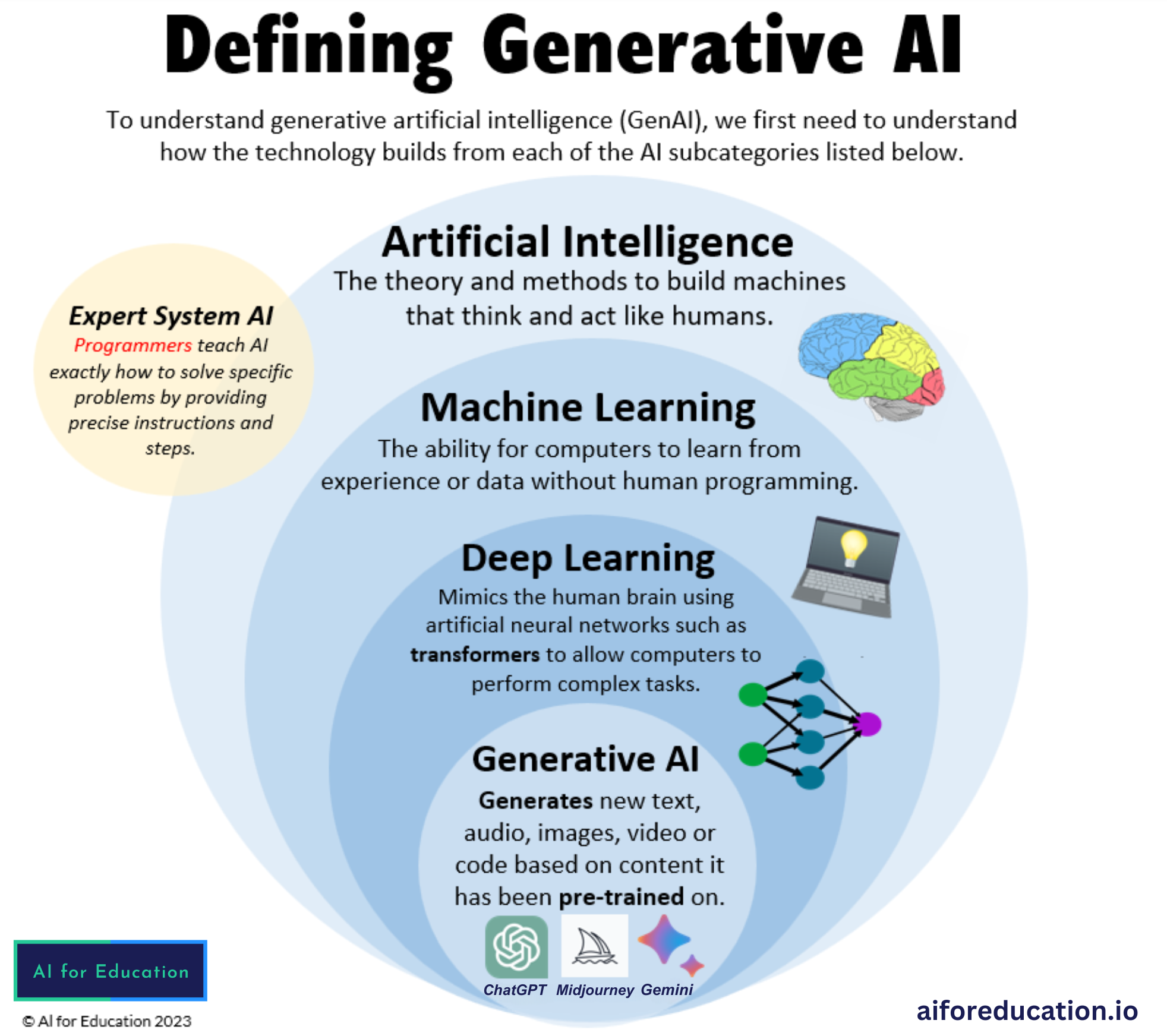
Generative AI represents a paradigm shift in artificial intelligence, enabling machines to produce human-like content autonomously. Unlike traditional AI systems designed for classification or prediction, generative models learn the underlying distribution of data and generate new instances that resemble the training set. This capability has unlocked unprecedented possibilities across industries, from automating repetitive tasks to fostering entirely new forms of creativity. The technology underpinning generative AI has evolved rapidly, driven by advances in computational power, neural network architectures, and large-scale datasets. Today, generative AI systems can generate coherent text, realistic images, synthetic voices, and even functional code, often indistinguishable from human-created content. However, their proliferation has also raised concerns about misuse, including deepfake creation, plagiarism, and the erosion of trust in digital media. Despite these challenges, generative AI is poised to redefine workflows, accelerate innovation, and democratize access to creative tools. Businesses leverage it for personalized marketing, while researchers use it to simulate complex systems in fields like climate science and drug development. As the technology matures, its integration into daily life—through virtual assistants, AI-generated art, and automated content creation—will likely become ubiquitous.
#History / Background
#Early Foundations (Pre-2010s)
The conceptual roots of generative AI trace back to the 1950s and 1960s with early experiments in neural networks and probabilistic models. However, practical applications were limited by computational constraints and the lack of large datasets. Key milestones during this period included:
- 1957: The Perceptron, an early neural network model, laid the groundwork for machine learning.
- 1986: The introduction of backpropagation enabled neural networks to learn from data more effectively.
- 1990s: Hidden Markov Models (HMMs) and Gaussian Mixture Models (GMMs) were used for sequence generation, particularly in speech synthesis.
#The Rise of Generative Models (2010s)
The 2010s witnessed a surge in generative AI research, fueled by breakthroughs in deep learning and the availability of massive datasets. Critical developments included:
- 2014: Generative Adversarial Networks (GANs), introduced by Ian Goodfellow, revolutionized image generation by pitting two neural networks against each other—one generating content and the other evaluating it.
- 2016: Variational Autoencoders (VAEs) provided a probabilistic approach to generating new data points by learning latent representations.
- 2017: The Transformer architecture, introduced in the paper "Attention Is All You Need", became the backbone of modern generative models, enabling efficient processing of sequential data like text.
#The Breakthrough Era (2020–Present)
The past few years have seen generative AI transition from research labs to mainstream applications, driven by:
- 2020: OpenAI’s GPT-3 demonstrated the potential of large language models (LLMs) by generating human-like text across diverse domains.
- 2021: DALL·E and CLIP showcased the ability of AI to generate and understand images from textual descriptions.
- 2022: Stable Diffusion and MidJourney made high-quality image generation accessible to the public, sparking widespread adoption and creative experimentation.
- 2023: The release of GPT-4 and models like PaLM 2 and Llama 2 pushed the boundaries of reasoning, multimodal capabilities, and scalability. Today, generative AI is a multi-billion-dollar industry, with applications spanning entertainment, healthcare, finance, and education. Governments and organizations are increasingly investing in ethical frameworks and regulations to address its societal impact.
#How It Works
Generative AI systems operate by learning patterns from large datasets and using those patterns to produce new, original content. The underlying mechanisms vary depending on the type of model, but most rely on deep learning techniques. Below are the primary approaches:
#
- Generative Adversarial Networks (GANs) GANs consist of two neural networks:
- Generator: Creates new data instances (e.g., images, text).
- Discriminator: Evaluates the generated data, distinguishing it from real data. The two networks are trained simultaneously in a competitive process, where the generator aims to fool the discriminator, and the discriminator improves its ability to detect fakes. This adversarial training leads to increasingly realistic outputs. Applications: Image synthesis (e.g., faces, landscapes), super-resolution, and data augmentation.
#
- Variational Autoencoders (VAEs) VAEs are probabilistic models that learn a compressed representation (latent space) of the input data. They consist of:
- Encoder: Maps input data to a latent space.
- Decoder: Reconstructs data from the latent space. By sampling from the latent space, VAEs can generate new, similar data points. Applications: Anomaly detection, drug discovery, and generating diverse outputs from limited data.
#
- Transformer-Based Models Transformers, introduced in 2017, have become the dominant architecture for generative AI, particularly in natural language processing (NLP). Key components include:
- Self-Attention Mechanism: Allows the model to weigh the importance of different parts of the input data.
- Large-Scale Pretraining: Models like GPT-3 and BERT are pretrained on vast text corpora to learn language patterns.
- Fine-Tuning: The pretrained model is adapted for specific tasks (e.g., translation, summarization). Applications: Text generation, chatbots, code synthesis, and multimodal tasks (e.g., image captioning).
#
- Diffusion Models Diffusion models generate data by gradually adding noise to a sample and then learning to reverse the process. They consist of two phases:
- Forward Diffusion: Noise is incrementally added to the data.
- Reverse Diffusion: A neural network learns to denoise the data, reconstructing the original sample. Applications: High-fidelity image generation (e.g., Stable Diffusion), audio synthesis, and molecular design.
#
- Autoregressive Models These models generate content sequentially, predicting the next token (e.g., word, pixel) based on previous outputs. Examples include:
- GPT (Generative Pre-trained Transformer): Uses autoregressive decoding to generate text.
- PixelCNN: Generates images pixel by pixel. Applications: Text generation, music composition, and time-series forecasting.
#Important Facts
- Scalability: Generative AI models require massive computational resources. Training a model like GPT-3 costs millions of dollars in cloud computing.
- Data Dependency: The quality and diversity of training data directly impact the model’s performance. Biases in datasets can lead to biased outputs.
- Multimodality: Modern generative AI can handle multiple types of data (e.g., text-to-image, text-to-speech), enabling cross-modal applications.
- Ethical Concerns: Generative AI raises issues such as deepfake misuse, copyright infringement, and the spread of misinformation.
- Regulation: Governments are exploring frameworks to govern generative AI, including the EU’s AI Act and the U.S. Executive Order on AI.
- Energy Consumption: Training large models has a significant carbon footprint, prompting research into more efficient architectures.
- Open vs. Closed Models: Open-source models (e.g., Stable Diffusion, Llama 2) promote accessibility, while proprietary models (e.g., GPT-4) offer higher performance but limited transparency.
#Timeline
- Foundational ideas
Core concepts and early methods shape The Future of Generative AI.
- Practical use
Tools, examples, and real-world deployments make the topic easier to evaluate.
- Responsible implementation
Current work focuses on reliability, governance, performance, and measurable impact.
#Related Terms
#FAQ
What does The Future of Generative AI cover?
Explores the future of generative ai, including emerging trends, practical impacts, risks, and important signals to watch.
Why is The Future of Generative AI important?
It helps readers understand key concepts, compare practical use cases, and evaluate how Generative AI decisions affect outcomes, risks, and implementation choices.
What should readers verify before applying this topic?
Readers should compare benefits, limitations, data requirements, and related themes such as Future, Generative, AI before using the ideas in real projects.
#References
- The Future of Generative AI terminology and background research
- The Future of Generative AI use cases, implementation examples, and limitations
- Generative AI best practices, standards, and risk guidance
- Future case studies, benchmarks, and current industry analysis


.png)
Comments
No comments yet. Start the discussion with a useful note.