

#Short Answer
Explores the future of machine learning, including emerging trends, practical impacts, risks, and important signals to watch.
#Infobox
#History / Background
Early Foundations (1950s–1980s) The concept of machine learning emerged from early AI research, with key milestones:
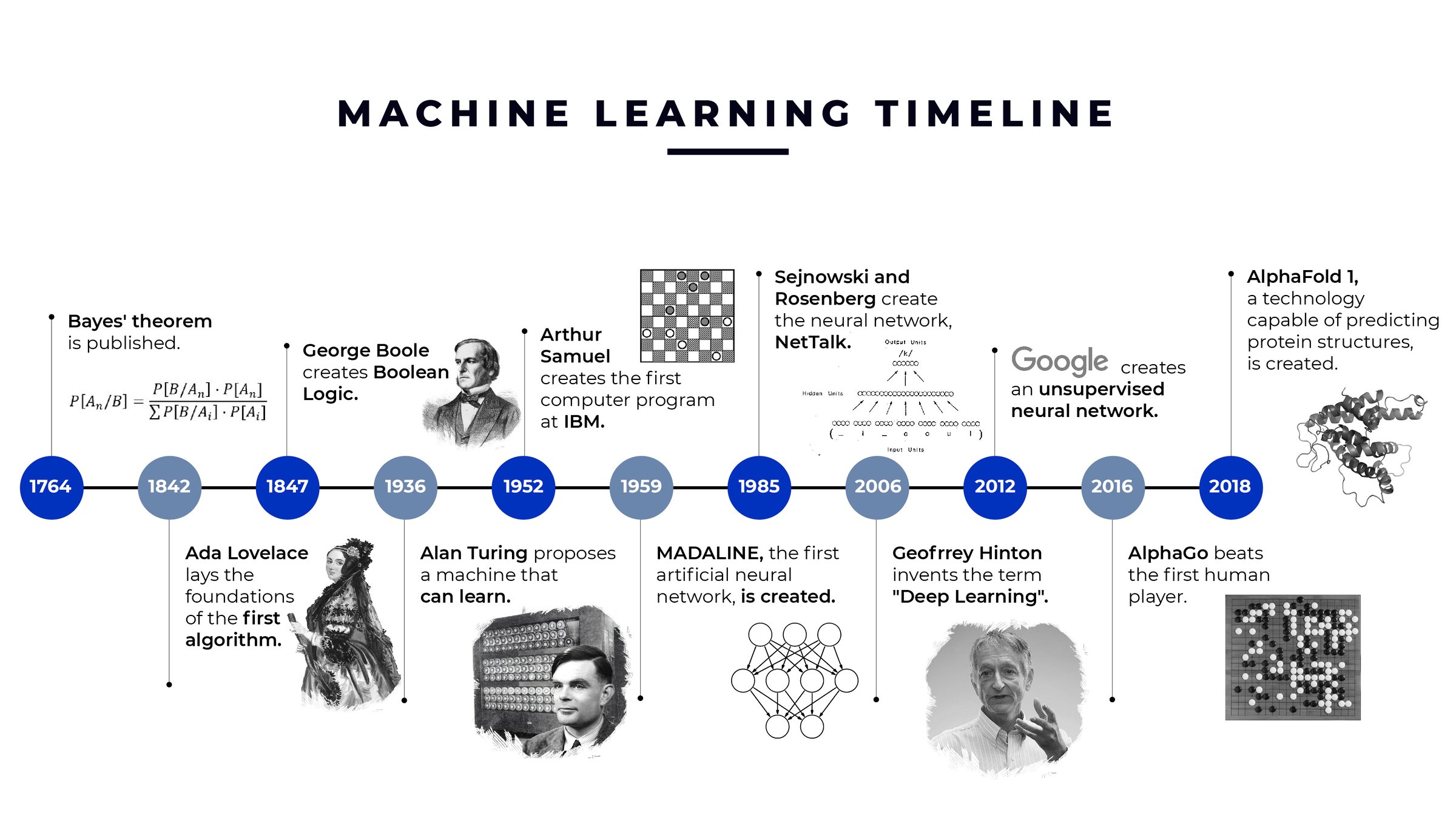
- 1950: Alan Turing’s "Computing Machinery and Intelligence" proposed the Turing Test, laying the groundwork for AI evaluation.
- 1952: Arthur Samuel developed the first self-learning program for checkers, coining the term "machine learning."
- 1956: The Dartmouth Conference marked the birth of AI as a formal discipline.
- 1960s–1970s: Early ML models, such as perceptrons (Frank Rosenblatt) and decision trees, were introduced, though limited by computational constraints.
The Rise of Statistical Learning (1980s–2000s)
- 1980s: The backpropagation algorithm (Rumelhart, Hinton) enabled neural networks to train effectively, reviving interest in deep learning.
- 1997: IBM’s Deep Blue defeated chess champion Garry Kasparov, showcasing AI’s potential in strategic decision-making.
- 2006: Geoffrey Hinton’s work on deep belief networks reignited interest in neural networks, leading to the deep learning revolution.
The Deep Learning Era (2010s–Present)
- 2012: AlexNet, a deep convolutional neural network (CNN), won the ImageNet competition, demonstrating the power of GPUs in training large models.
- 2016: Google’s AlphaGo defeated a world champion Go player, highlighting ML’s ability to master complex, unstructured games.
- 2020s: The advent of transformer models (e.g., BERT, GPT-3) revolutionized natural language processing (NLP), enabling machines to understand and generate human-like text.
#How It Works
Core Principles ML systems operate by:
- Data Collection: Gathering large datasets (structured or unstructured) relevant to the task.
- Feature Engineering: Selecting and transforming input variables to improve model performance.
- Model Selection: Choosing an algorithm (e.g., linear regression, random forests, neural networks) based on the problem type (classification, regression, clustering).
- Training: Feeding data into the model to adjust its parameters (e.g., weights in a neural network) via optimization techniques like gradient descent.
- Evaluation: Assessing performance using metrics (e.g., accuracy, precision, recall) and validating on unseen data.
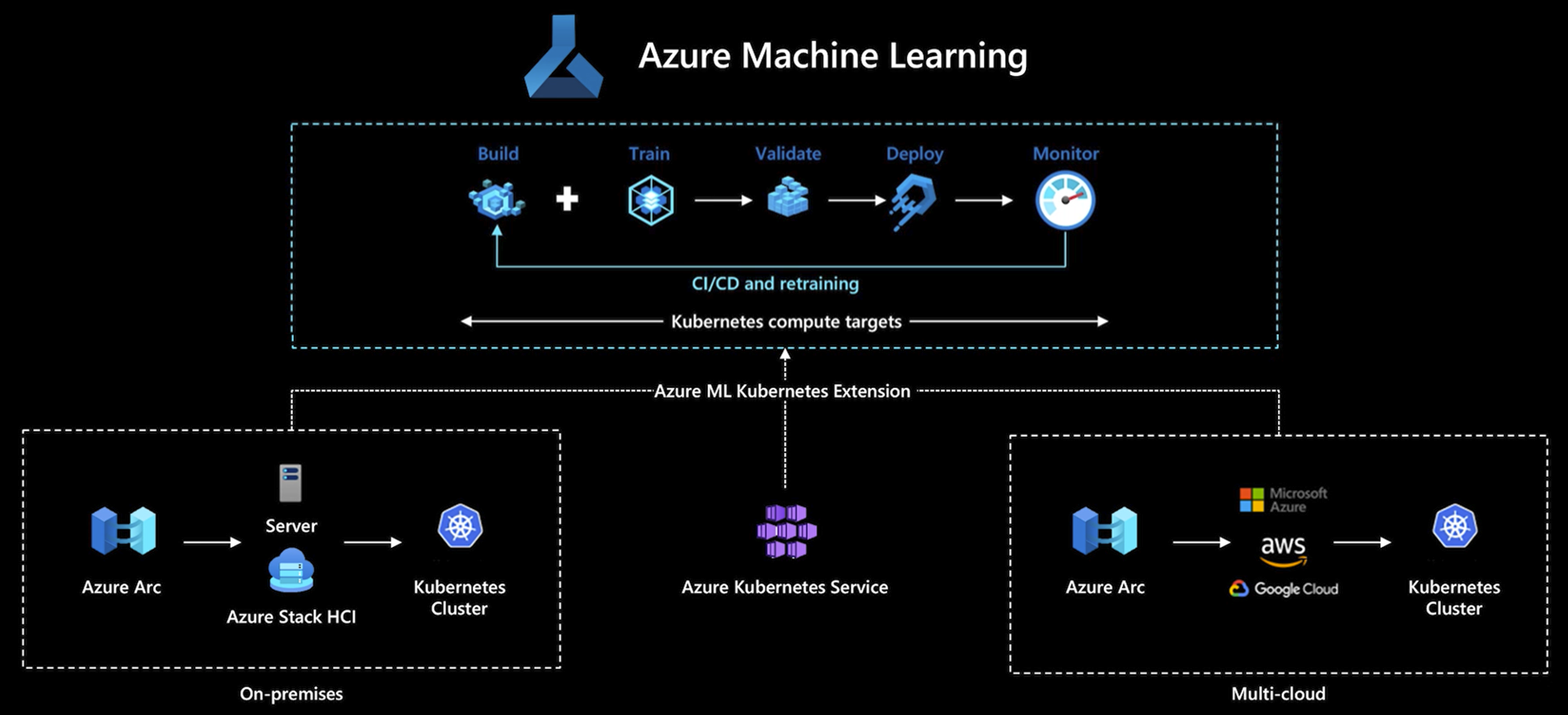
- Deployment: Integrating the trained model into real-world applications (e.g., recommendation systems, autonomous vehicles).
Key Techniques
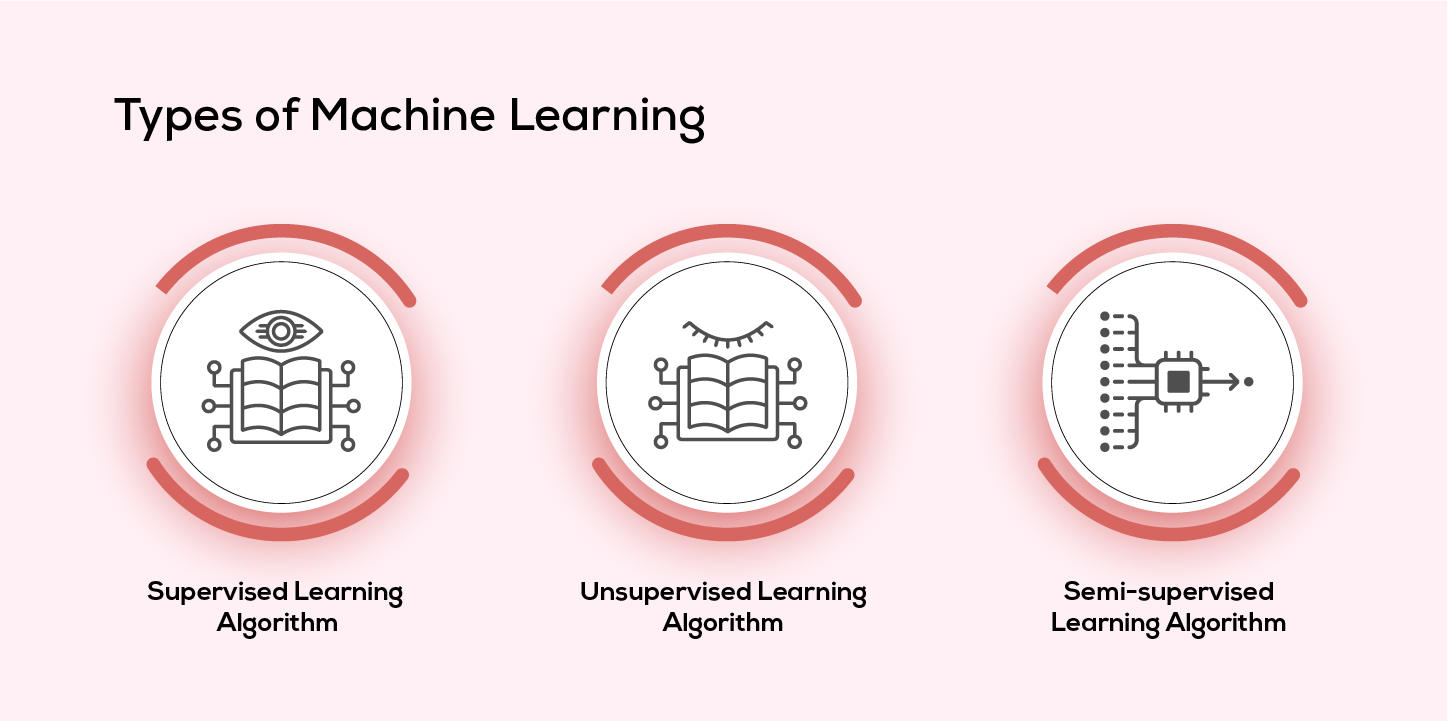
- Supervised Learning: Models learn from labeled data (e.g., spam detection, image classification).
- Unsupervised Learning: Identifies patterns in unlabeled data (e.g., customer segmentation, anomaly detection).
- Reinforcement Learning (RL): Agents learn by interacting with an environment to maximize rewards (e.g., robotics, game-playing AI).
- Deep Learning: Uses multi-layered neural networks to model complex patterns (e.g., computer vision, speech recognition).
Emerging Paradigms
- Federated Learning: Trains models across decentralized devices without sharing raw data, enhancing privacy.
- Transfer Learning: Leverages pre-trained models (e.g., BERT, ResNet) to adapt to new tasks with minimal data.
- Neuro-Symbolic AI: Combines neural networks with symbolic reasoning for explainable and logical decision-making.
#Important Facts
- Exponential Growth in Data: By 2025, the global datasphere is projected to reach 175 zettabytes, fueling ML advancements.
- Energy Consumption: Training large ML models (e.g., GPT-3) can consume as much energy as several hundred cars emit in their lifetime.
- Bias in Algorithms: Studies show that facial recognition systems have higher error rates for women and people of color, highlighting the need for fairness.
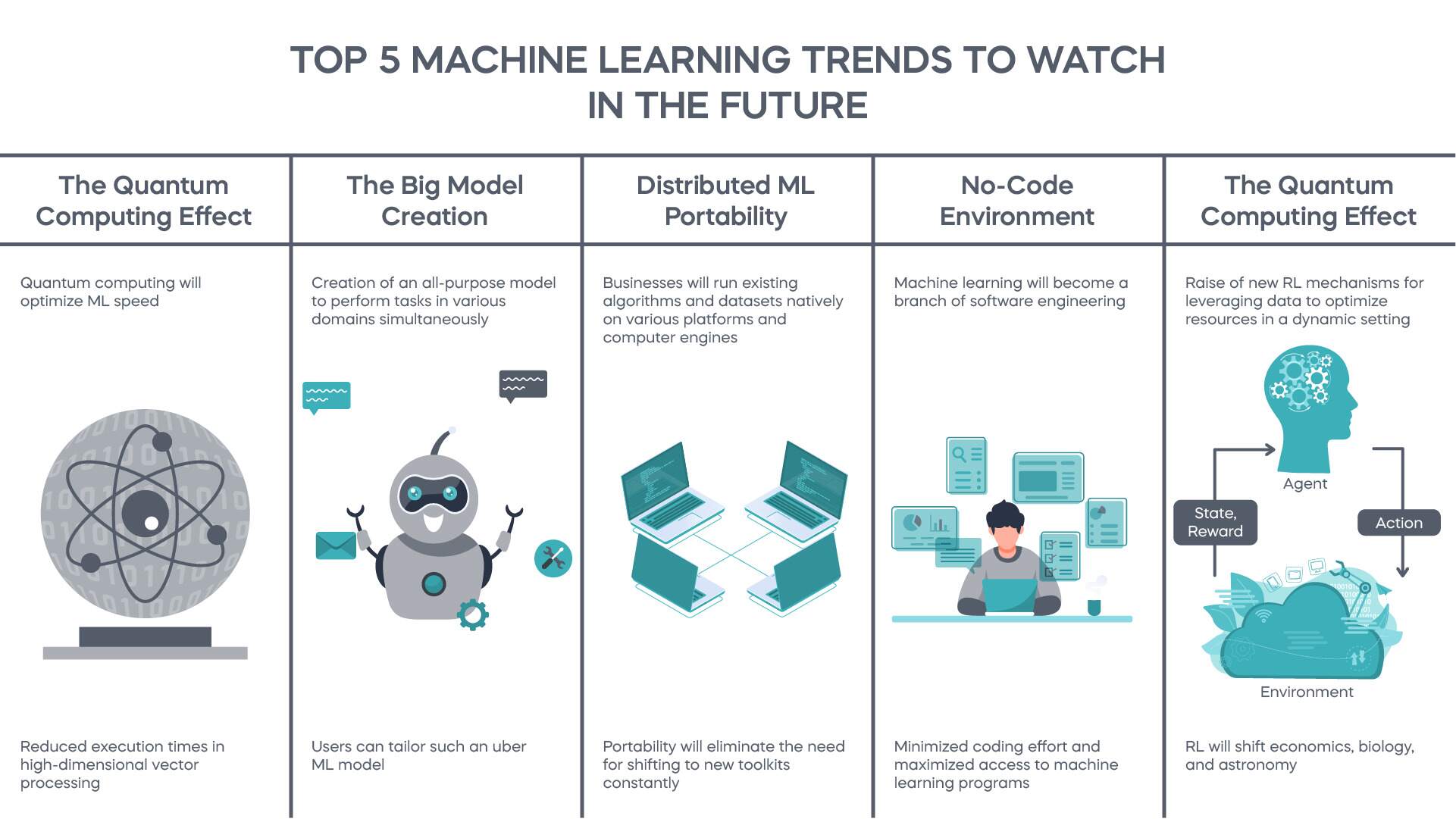
- Quantum ML: Quantum computing could accelerate ML tasks, such as optimization and drug discovery, by leveraging quantum parallelism.
- Regulatory Impact: The EU AI Act (2024) classifies high-risk AI systems, including some ML models, requiring strict compliance.
- Autonomous Systems: Self-driving cars (e.g., Tesla, Waymo) rely on ML for perception, decision-making, and control.
- Generative AI: Models like DALL·E 3 and MidJourney can create realistic images, audio, and text from prompts, raising concerns about misinformation.
#Timeline
- Foundational ideas
Core concepts and early methods shape The Future of Machine Learning.
- Practical use
Tools, examples, and real-world deployments make the topic easier to evaluate.
- Responsible implementation
Current work focuses on reliability, governance, performance, and measurable impact.
#Related Terms
#FAQ
What does The Future of Machine Learning cover?
Explores the future of machine learning, including emerging trends, practical impacts, risks, and important signals to watch.
Why is The Future of Machine Learning important?
It helps readers understand key concepts, compare practical use cases, and evaluate how Machine Learning decisions affect outcomes, risks, and implementation choices.
What should readers verify before applying this topic?
Readers should compare benefits, limitations, data requirements, and related themes such as Future, Machine, Learning before using the ideas in real projects.
#References
- The Future of Machine Learning terminology and background research
- The Future of Machine Learning use cases, implementation examples, and limitations
- Machine Learning best practices, standards, and risk guidance
- Future case studies, benchmarks, and current industry analysis

Comments
No comments yet. Start the discussion with a useful note.