

#Short Answer
Covers machine learning: everything you need to know, including core concepts, practical examples, benefits, limitations, and risks in Machine Learning.
#Infobox
#Overview
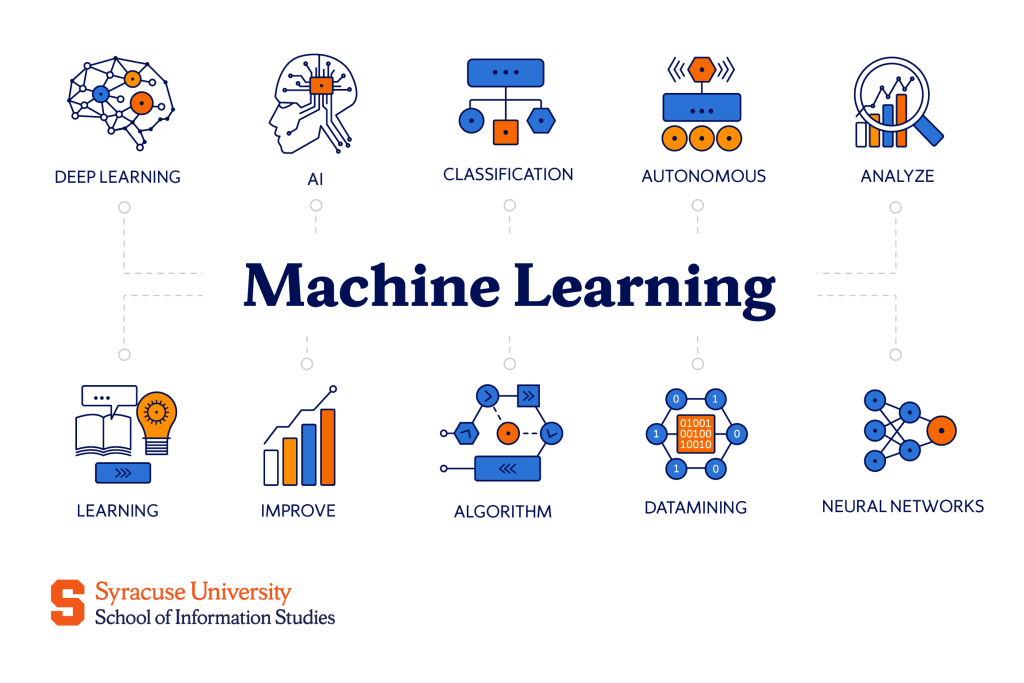
Machine learning is a subset of artificial intelligence that focuses on building systems capable of learning from data, identifying patterns, and making decisions with minimal human intervention. Unlike traditional programming, where rules are explicitly defined, ML models improve their accuracy as they are exposed to more data. This adaptability makes ML a powerful tool for solving complex problems across industries such as healthcare, finance, and technology. The core idea behind ML is to enable computers to generalize from examples rather than relying solely on predefined instructions. This is achieved through algorithms that iteratively refine their performance based on feedback from data. The field has evolved significantly since its inception, driven by advancements in computational power, the availability of large datasets, and breakthroughs in algorithmic design.
#History / Background
#Early Foundations The concept of machine learning traces back to the mid-20th century, with early work in cybernetics and neural networks. In 1950, Alan Turing proposed the "Turing Test," which laid the groundwork for evaluating machine intelligence. However, the term "machine learning" was first coined by Arthur Samuel in 1959, who developed a program that learned to play checkers and improve its performance over time.
#The Rise of Neural Networks The 1980s saw a resurgence of interest in neural networks, inspired by the work of David Rumelhart and Geoffrey Hinton. The backpropagation algorithm, introduced in 1986, enabled neural networks to learn from errors and adjust their weights accordingly. This period also marked the development of expert systems, which used rule-based logic to mimic human decision-making.
#The Modern Era The 21st century brought about a revolution in machine learning, fueled by the availability of big data and advancements in computing hardware. Key milestones include:
- 2006: Geoffrey Hinton's work on deep belief networks reignited interest in deep learning.
- 2012: AlexNet, a deep convolutional neural network, achieved breakthrough performance in image recognition, winning the ImageNet competition.
- 2016: AlphaGo, developed by DeepMind, defeated a world champion Go player, demonstrating the power of reinforcement learning. Today, machine learning is a cornerstone of AI, with applications ranging from autonomous vehicles to personalized recommendations on streaming platforms.
#How It Works
#Core Principles Machine learning operates on the principle of learning from data. The process typically involves the following steps:
- Data Collection: Gathering relevant datasets that represent the problem domain.
- Data Preprocessing: Cleaning, normalizing, and transforming data to make it suitable for training.
- Model Selection: Choosing an appropriate algorithm based on the problem type (e.g., classification, regression, clustering).
- Training: Feeding the data into the model to learn patterns and relationships.
- Evaluation: Assessing the model's performance using metrics such as accuracy, precision, and recall.
- Deployment: Implementing the model in real-world applications to make predictions or decisions.
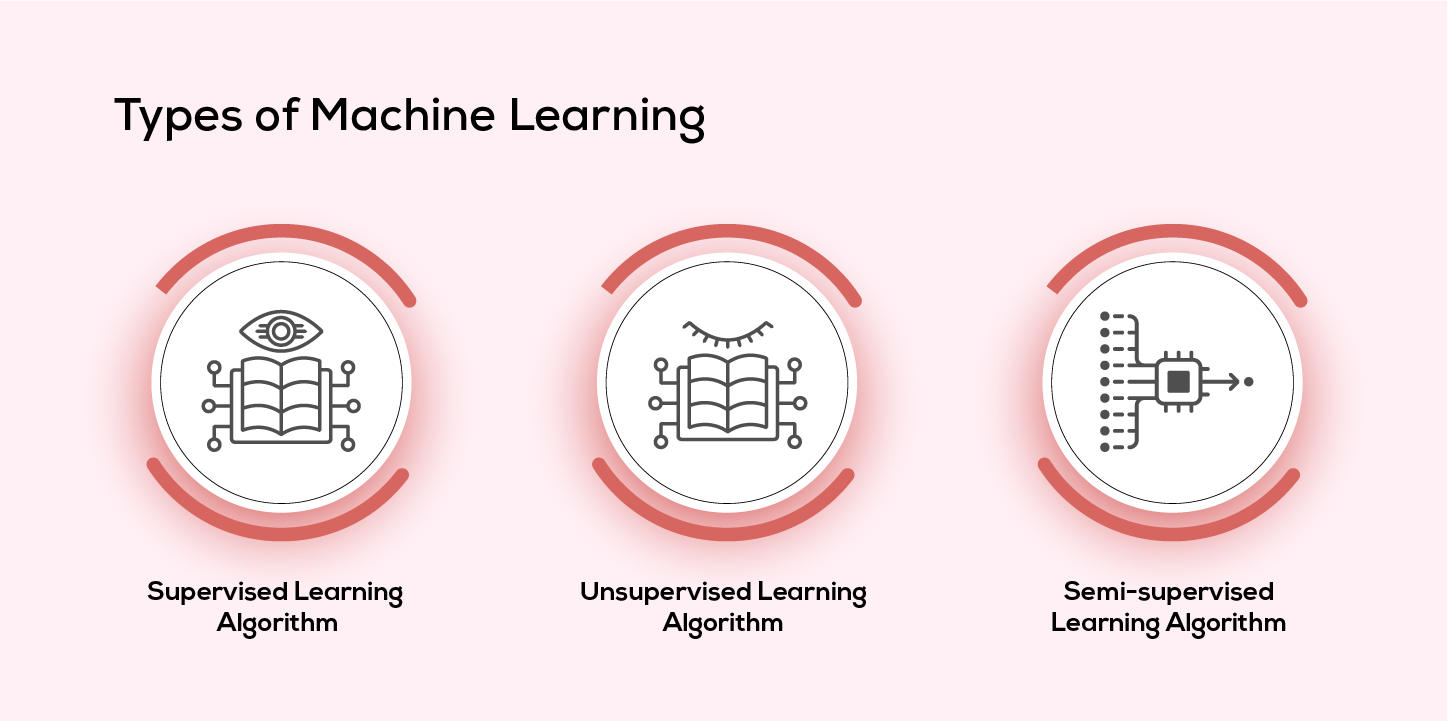
#Types of Machine Learning Machine learning can be broadly categorized into three main types:
1. Supervised Learning In supervised learning, the model is trained on labeled data, where the input-output pairs are known. The goal is to learn a mapping from inputs to outputs. Common tasks include:
- Classification: Predicting discrete labels (e.g., spam detection, image classification).
- Regression: Predicting continuous values (e.g., stock price forecasting, temperature prediction). Popular algorithms include linear regression, logistic regression, decision trees, and support vector machines (SVM).
2. Unsupervised Learning Unsupervised learning involves training models on unlabeled data, where the algorithm identifies patterns or structures within the data. Key techniques include:
- Clustering: Grouping similar data points (e.g., customer segmentation, image segmentation).
- Dimensionality Reduction: Reducing the number of features while preserving important information (e.g., principal component analysis, t-SNE). Algorithms such as k-means clustering, hierarchical clustering, and autoencoders are commonly used.
3. Reinforcement Learning Reinforcement learning (RL) is inspired by behavioral psychology, where an agent learns to make decisions by interacting with an environment. The agent receives rewards or penalties based on its actions and aims to maximize cumulative rewards. Applications include:
- Robotics: Teaching robots to perform tasks like walking or grasping objects.
- Game AI: Developing AI that can play complex games like chess or video games.
- Autonomous Systems: Training self-driving cars to navigate roads safely. Key algorithms include Q-learning, deep Q-networks (DQN), and policy gradient methods.
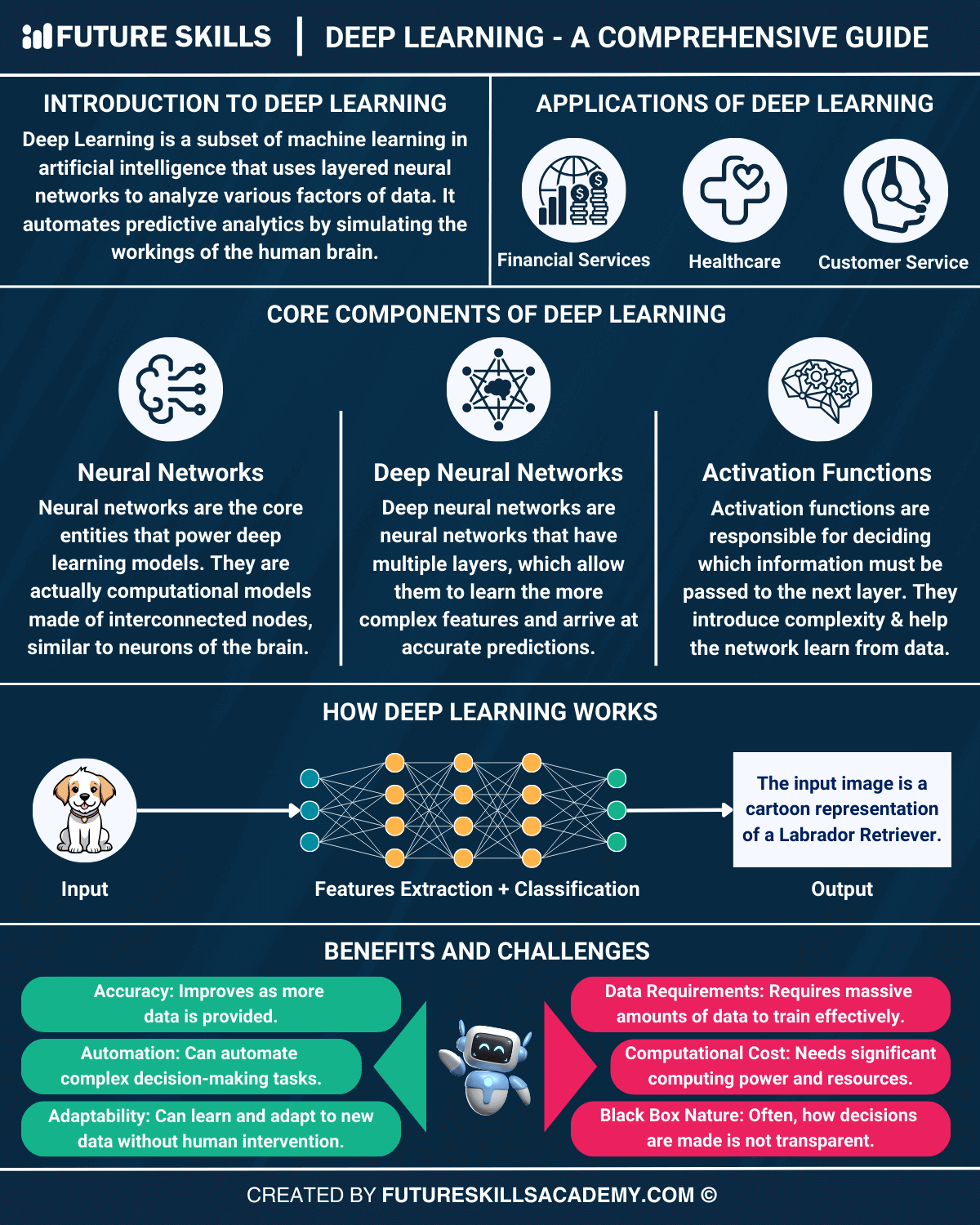
#Deep Learning Deep learning is a specialized subset of machine learning that uses artificial neural networks with multiple layers (hence "deep"). These networks, known as deep neural networks (DNNs), are capable of learning hierarchical representations of data. Convolutional neural networks (CNNs) excel in image and video processing, while recurrent neural networks (RNNs) and transformers are widely used for sequential data such as text and speech.
#Important Facts
- Data Dependency: The performance of ML models heavily depends on the quality and quantity of data. Poor data can lead to biased or inaccurate models.
- Computational Requirements: Training complex models, especially deep learning models, requires significant computational resources, often necessitating GPUs or TPUs.
- Overfitting: A model that performs well on training data but poorly on unseen data is said to be overfitting. Techniques like regularization, dropout, and cross-validation help mitigate this issue.
- Bias and Fairness: ML models can inadvertently perpetuate biases present in the training data, leading to unfair or discriminatory outcomes. Addressing bias is a critical challenge in ethical AI.
- Explainability: Many ML models, particularly deep learning models, are often referred to as "black boxes" because their decision-making processes are not easily interpretable. Explainable AI (XAI) aims to address this issue.
- Transfer Learning: This technique involves using a pre-trained model on a new but related task, significantly reducing the amount of data and computational resources required.
#Timeline
- Foundational ideas
Core concepts and early methods shape Machine Learning: Everything You Need to Know.
- Practical use
Tools, examples, and real-world deployments make the topic easier to evaluate.
- Responsible implementation
Current work focuses on reliability, governance, performance, and measurable impact.
#Related Terms
#FAQ
What does Machine Learning: Everything You Need to Know cover?
Covers machine learning: everything you need to know, including core concepts, practical examples, benefits, limitations, and risks in Machine Learning.
Why is Machine Learning: Everything You Need to Know important?
It helps readers understand key concepts, compare practical use cases, and evaluate how Machine Learning decisions affect outcomes, risks, and implementation choices.
What should readers verify before applying this topic?
Readers should compare benefits, limitations, data requirements, and related themes such as Machine, Learning, AI before using the ideas in real projects.
#References
- Machine Learning: Everything You Need to Know terminology and background research
- Machine Learning: Everything You Need to Know use cases, implementation examples, and limitations
- Machine Learning best practices, standards, and risk guidance
- Machine case studies, benchmarks, and current industry analysis


Comments
No comments yet. Start the discussion with a useful note.