


#Short Answer
Introduces AI in transportation for new readers, covering essential concepts, common examples, practical uses, and next steps for learning.
#Infobox
Artificial Intelligence (AI) in transportation enhances efficiency, safety, and sustainability through automation, predictive analytics, and real-time decision-making.
Artificial Intelligence in Transportation Field Transportation Key Applications Autonomous vehicles, traffic management, predictive maintenance, route optimization Major Technologies Machine learning, computer vision, reinforcement learning, IoT, big data analytics Benefits Reduced congestion, lower emissions, improved safety, cost efficiency Challenges Data privacy, ethical concerns, high implementation costs, regulatory hurdles Notable Organizations Waymo, Tesla, Uber, Siemens Mobility, IBM
#Overview
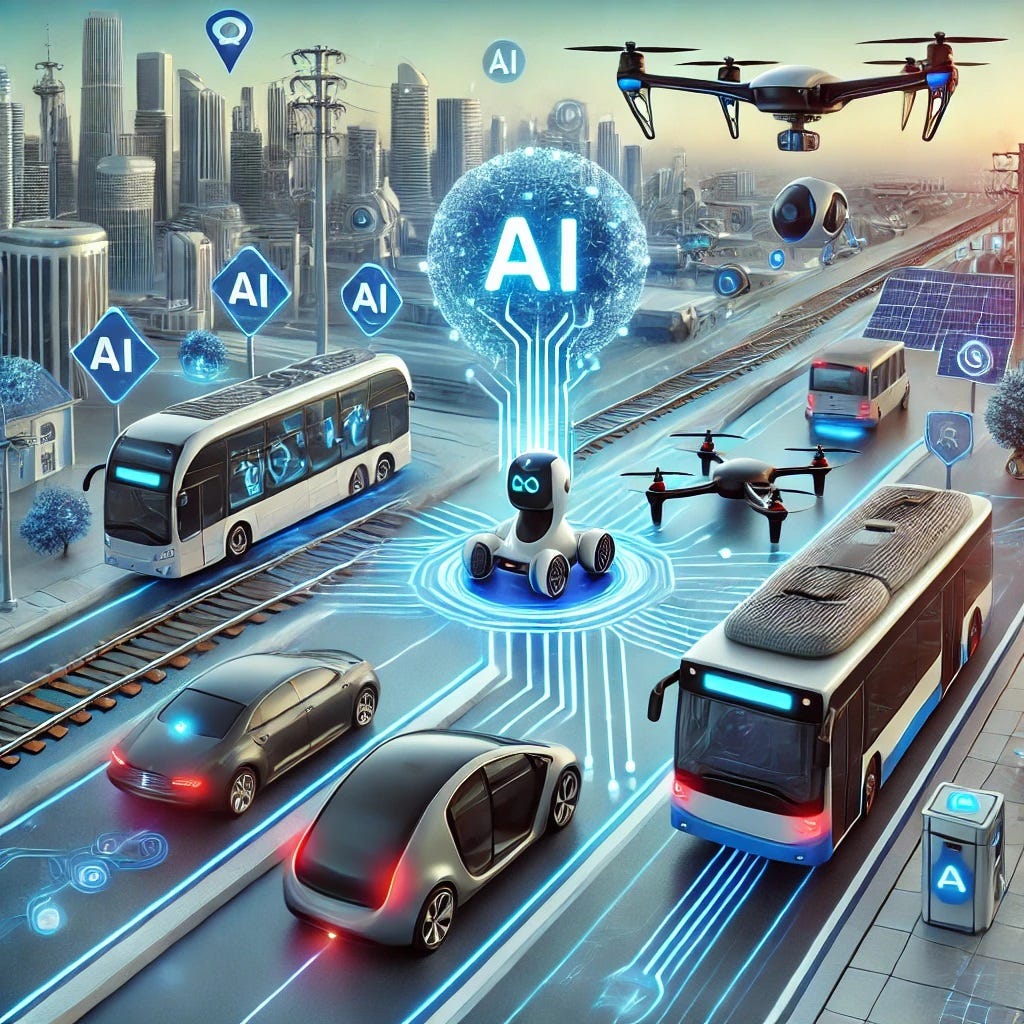
Artificial Intelligence (AI) in transportation refers to the application of machine learning, deep learning, and other AI technologies to improve the efficiency, safety, and sustainability of transportation systems. AI systems analyze vast amounts of data from sensors, cameras, and other sources to make real-time decisions, optimize routes, and predict maintenance needs. This integration spans various modes of transport, including road, rail, air, and maritime, transforming traditional systems into intelligent, adaptive networks.
The adoption of AI in transportation is driven by the need to address growing challenges such as urban congestion, environmental concerns, and the demand for seamless mobility. By leveraging AI, transportation authorities and private companies can enhance operational efficiency, reduce accidents, and lower carbon footprints. The technology also enables the development of autonomous vehicles, which promise to revolutionize personal and commercial transport by eliminating human error and improving accessibility.
#History / Background
The concept of AI in transportation dates back to the mid-20th century, with early research focused on automation and control systems. In the 1950s and 1960s, engineers began exploring the potential of computers to manage traffic signals and optimize road networks. The first significant milestone came in 1958 with the development of the General Problem Solver by Herbert Simon and Allen Newell, which laid the groundwork for AI-driven decision-making.
During the 1980s and 1990s, advancements in machine learning and neural networks accelerated the integration of AI into transportation. Projects like the Autonomous Land Vehicle (ALV) in the U.S. and Japan’s Personal Vehicle System demonstrated the feasibility of self-driving cars. The late 1990s saw the introduction of adaptive cruise control and lane-keeping assist systems, marking the beginning of AI-powered driver-assistance technologies.
The 21st century has witnessed exponential growth in AI applications for transportation. The launch of Tesla’s Autopilot in 2014 and Waymo’s public autonomous taxi service in 2020 highlighted the commercial viability of AI-driven mobility. Governments worldwide have also invested in smart city initiatives, integrating AI with IoT devices to create intelligent transportation systems (ITS). Today, AI is a cornerstone of modern transportation infrastructure, with ongoing research focused on fully autonomous vehicles and hyperloop systems.
#How It Works
#Data Collection and Processing
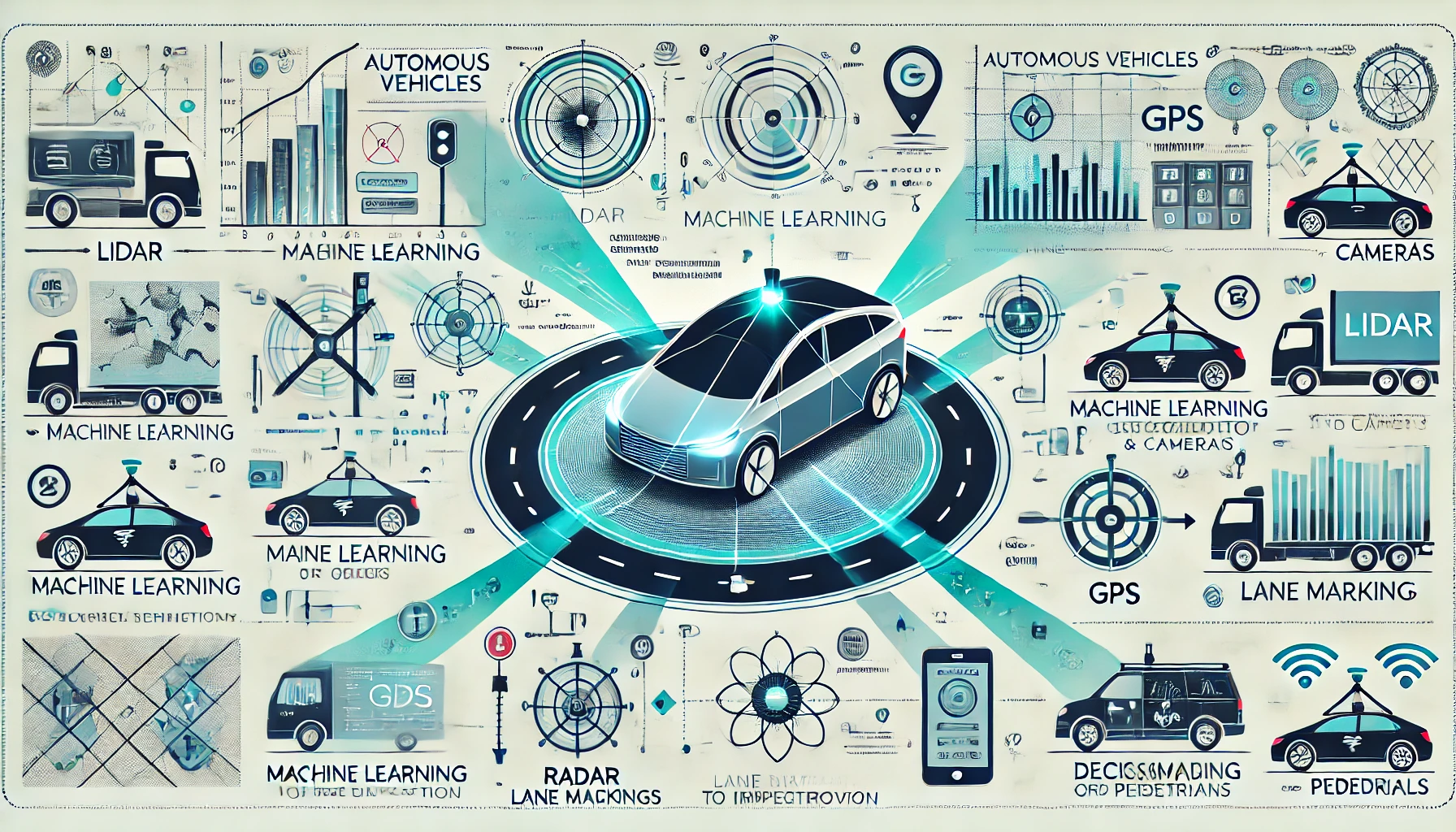
AI in transportation relies on vast datasets collected from multiple sources, including GPS devices, traffic cameras, vehicle sensors, and weather stations. These datasets are processed using advanced algorithms to extract meaningful insights. For example, computer vision systems analyze camera feeds to detect pedestrians, traffic signs, and obstacles, while LiDAR sensors generate 3D maps of the environment for autonomous vehicles.
Big data analytics platforms aggregate and clean this data, removing noise and inconsistencies to ensure accuracy. Machine learning models, particularly deep learning neural networks, are then trained on historical and real-time data to recognize patterns, predict outcomes, and make decisions. Reinforcement learning, a subset of AI, enables systems to learn from interactions with their environment, improving performance over time through trial and error.
#Key AI Technologies in Transportation
- Computer Vision: Used in autonomous vehicles to interpret visual data from cameras, enabling object detection, lane recognition, and traffic sign identification.
- Natural Language Processing (NLP): Facilitates human-machine interaction, such as voice-activated navigation systems and chatbots for customer service in public transport.
- Predictive Analytics: Analyzes historical data to forecast traffic patterns, demand for public transport, and potential equipment failures in vehicles and infrastructure.
- Reinforcement Learning: Powers decision-making in dynamic environments, such as optimizing traffic light timings or adjusting autonomous vehicle routes in real time.
- IoT Integration: Connects vehicles, road infrastructure, and traffic management systems to create a cohesive, data-driven network.
#Applications
- Autonomous Vehicles: AI enables self-driving cars, trucks, and drones to navigate roads, avoid obstacles, and adhere to traffic rules without human intervention.
- Traffic Management: AI systems optimize traffic flow by adjusting signal timings, rerouting vehicles, and predicting congestion hotspots.
- Predictive Maintenance: Machine learning models analyze sensor data from vehicles and infrastructure to predict failures before they occur, reducing downtime and repair costs.
- Route Optimization: AI algorithms calculate the most efficient routes for delivery trucks, public transport, and ride-sharing services, minimizing fuel consumption and travel time.
- Smart Public Transport: AI enhances the efficiency of buses, trains, and subways by predicting passenger demand, optimizing schedules, and improving accessibility for people with disabilities.
#Important Facts
- AI can reduce traffic congestion by up to 30% through optimized signal timings and dynamic routing.
- The global AI in transportation market is projected to reach $10.3 billion by 2027, growing at a CAGR of 17.8%.
- Autonomous vehicles powered by AI could prevent 94% of traffic accidents caused by human error.
- AI-driven predictive maintenance can reduce vehicle downtime by up to 40% and cut maintenance costs by 25%.
- The first fully autonomous taxi service, Waymo One, was launched in Phoenix, Arizona, in 2020.
- AI-powered drones are being tested for last-mile delivery, with companies like Amazon and UPS exploring their potential.
- In 2021, the European Union introduced regulations requiring AI systems in vehicles to undergo rigorous safety assessments.
#Timeline
Year Milestone 1958 Development of the General Problem Solver, a foundational AI system for decision-making. 1980s Introduction of adaptive cruise control and early autonomous vehicle prototypes. 1995 DARPA’s Autonomous Land Vehicle (ALV) project demonstrates long-distance navigation. 2004 DARPA Grand Challenge sparks innovation in autonomous vehicle technology. 2014 Tesla releases Autopilot, a semi-autonomous driving system. 2016 Uber launches its first autonomous vehicle testing program in Pittsburgh. 2018 Waymo begins testing fully autonomous vehicles without safety drivers in Arizona. 2020 Waymo One, the first commercial autonomous taxi service, launches in Phoenix. 2022 European Union enacts AI Act, setting regulatory frameworks for AI in transportation. 2023 China approves the first fully autonomous robotaxis for public use in Beijing.
#Related Terms
#FAQ
What does Beginner Guide To AI In Transportation cover?
Introduces AI in transportation for new readers, covering essential concepts, common examples, practical uses, and next steps for learning.
Why is Beginner Guide To AI In Transportation important?
It helps readers understand key concepts, compare practical use cases, and evaluate how Technology decisions affect outcomes, risks, and implementation choices.
What should readers verify before applying this topic?
Readers should compare the benefits, limitations, data requirements, and related themes such as Beginner Friendly, Transportation, Autonomous Systems before using the ideas in real projects.
#References
- Beginner Guide To AI In Transportation terminology and background research
- Beginner Guide To AI In Transportation use cases, implementation examples, and limitations
- Technology best practices, standards, and risk guidance
- Beginner Friendly case studies, benchmarks, and current industry analysis

Comments
No comments yet. Start the discussion with a useful note.