

#Short Answer
Explores how artificial intelligence shapes music and composing with machines, covering practical use cases, benefits, limitations, and risks.
#Infobox
Exploration of artificial intelligence's role in music composition, production, and innovation.
Artificial Intelligence in Music Field Music Related fields Music technology, Artificial intelligence, Computer science, Music theory Notable pioneers David Cope, François Pachet, Pierre Boulez, Iannis Xenakis Key developments AI-assisted composition, generative music, neural networks, machine learning Major applications Music generation, audio mastering, virtual instruments, creative tools
#Overview
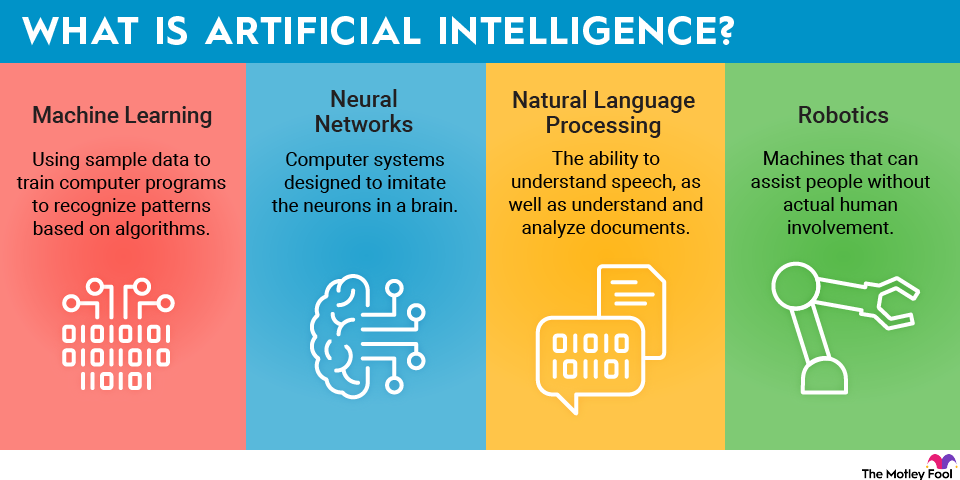
Artificial intelligence (AI) in music refers to the use of computational systems to assist, enhance, or autonomously create musical compositions, performances, and productions. AI technologies, including machine learning, deep learning, and neural networks, analyze vast datasets of musical patterns, styles, and structures to generate original works, emulate human creativity, or optimize production workflows. These systems range from simple algorithmic tools to advanced generative models capable of producing symphonies, pop melodies, or experimental soundscapes indistinguishable from human-made music in some cases.
The integration of AI into music spans multiple domains, including composition, performance, mixing, mastering, and even audience engagement. Tools powered by AI can suggest chord progressions, generate basslines, or create entire tracks based on user input, while also enabling real-time improvisation during live performances. The rise of AI in music has sparked debates about creativity, authorship, and the future role of human musicians, as well as opportunities for collaboration between artists and intelligent systems.
#History / Background
#Early Developments
The concept of using machines to generate music dates back to the early 20th century, with early experiments in algorithmic composition. In the 1950s and 1960s, composers such as Iannis Xenakis and Pierre Boulez explored mathematical models and stochastic processes to create music. Xenakis, for instance, used computers to generate compositions based on probability distributions, laying the groundwork for data-driven music creation.
In 1957, Lejaren Hiller and Leonard Isaacson developed Illiac Suite, the first computer-generated musical composition, using the ILLIAC I computer at the University of Illinois. This string quartet marked a milestone in the intersection of computing and music, demonstrating that machines could produce aesthetically coherent works.
#AI Era and Generative Music
The advent of AI in the late 20th and early 21st centuries revolutionized music composition by introducing systems capable of learning from data. In the 1980s and 1990s, researchers like David Cope developed programs such as EMI (Experiments in Musical Intelligence), which analyzed the styles of classical composers and generated new pieces in their idiom. Cope's work highlighted the potential for AI to emulate human creativity and even challenge notions of originality.
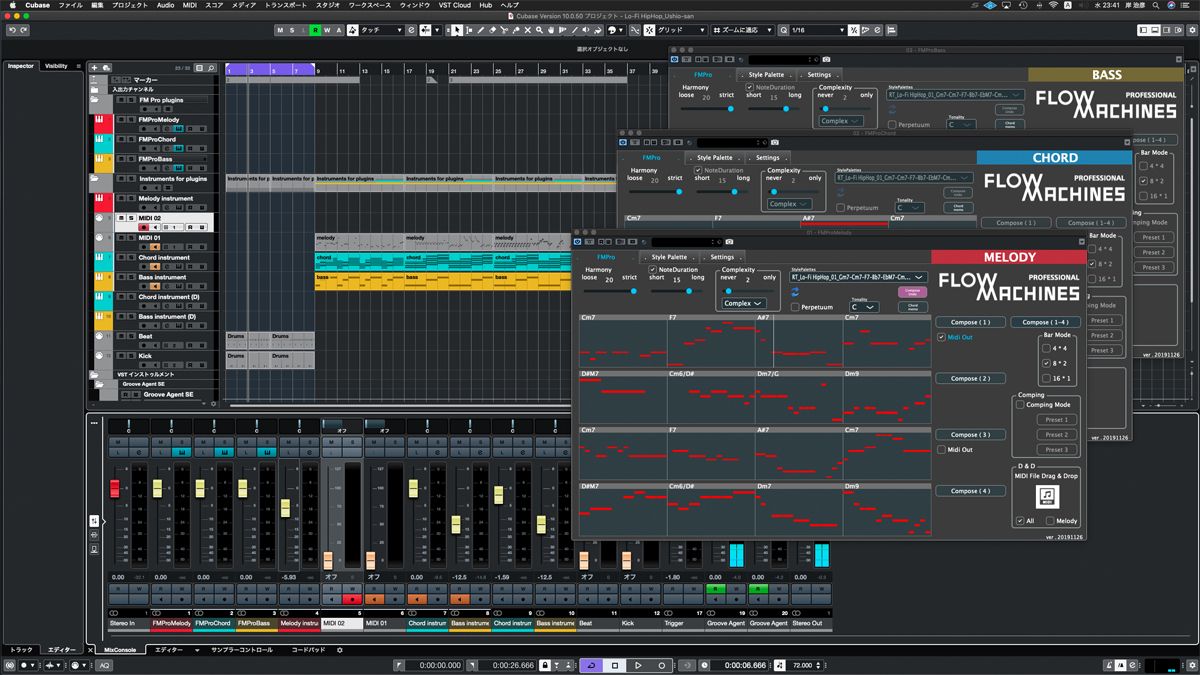
The 2010s saw a surge in AI-driven music tools, fueled by advances in deep learning and neural networks. Projects like Google Magenta, launched in 2016, used TensorFlow to explore how machines could learn music and assist artists. Similarly, Sony's Flow Machines project, which debuted in 2016, employed AI to generate original compositions in various styles, including pop, jazz, and classical. These systems relied on large datasets of existing music to identify patterns and generate new material.
#How It Works
#Machine Learning and Neural Networks
Most AI music systems operate using machine learning models trained on extensive musical datasets. These models learn to recognize patterns in melody, harmony, rhythm, and timbre by analyzing thousands of songs. Common architectures include:
- Recurrent Neural Networks (RNNs): Particularly Long Short-Term Memory (LSTM) networks, which are adept at processing sequential data like musical notes. RNNs can generate coherent melodies by predicting the next note based on previous ones.
- Generative Adversarial Networks (GANs): Consist of two neural networks—a generator that creates music and a discriminator that evaluates its authenticity. GANs refine the output through iterative competition, producing high-quality results.
- Transformer Models: Inspired by natural language processing, models like Music Transformer use attention mechanisms to capture long-range dependencies in music, enabling the generation of complex structures.
- Variational Autoencoders (VAEs): These models compress musical data into a latent space, allowing for the interpolation between styles and the generation of novel compositions.
#AI-Assisted Composition Tools
AI tools in music composition often function as collaborative partners, offering suggestions, completing phrases, or generating entire sections based on user input. Examples include:
- Chord Progressions: AI can suggest chord sequences that fit a given key or mood, helping songwriters overcome creative blocks.
- Melody Generation: Systems like AIVA (Artificial Intelligence Virtual Artist) create original melodies in specified genres, from classical to electronic.
- Lyric Writing: AI models trained on poetry and song lyrics can generate verse or suggest rhymes, aiding lyricists.
- Arrangement and Orchestration: AI can suggest instrumentations or arrangements for a given melody, optimizing for timbre and texture.
#Real-Time Generation and Interactive Music
Some AI systems enable real-time music generation, responding to live input from musicians or audience interaction. For instance, AI can improvise alongside a human performer, adapting to their playing style or emotional cues. Projects like Jukedeck (acquired by TikTok) and Amper Music allowed users to generate royalty-free music by selecting parameters like genre, mood, and tempo. These tools democratized music creation, making it accessible to non-musicians.
#Important Facts
- First AI-Generated Hit: In 2018, an AI-composed song titled "Daddy's Car" was released by Sony's Flow Machines, blending styles reminiscent of The Beatles. It became one of the first AI-generated tracks to gain commercial traction.
- AI in the Music Industry: By 2023, over 30% of music producers reported using AI tools in their workflow, according to industry surveys.
- Copyright Challenges: AI-generated music raises legal questions about ownership and copyright. In 2023, the U.S. Copyright Office ruled that AI-generated works without human authorship cannot be copyrighted.
- Human-AI Collaboration: Many artists, including Holly Herndon and Taryn Southern, have used AI to augment their creative process, blending human emotion with machine precision.
- Ethical Concerns: Critics argue that AI music could devalue human creativity or lead to mass-produced, formulaic tracks. Others see it as a tool for democratizing music creation.
#Timeline
Year Event 1957 Illiac Suite, the first computer-generated musical composition, is created by Lejaren Hiller and Leonard Isaacson. 1980s David Cope develops EMI (Experiments in Musical Intelligence), pioneering AI-assisted composition. 1997 The first AI-composed opera, Stria by David Cope, premieres. 2012 Google's DeepMind begins exploring AI for music generation, later leading to Magenta. 2016 Sony's Flow Machines and Google Magenta launch, introducing advanced generative music tools. 2018 "Daddy's Car," an AI-composed song by Flow Machines, is released. 2020 OpenAI releases MuseNet, a deep neural network capable of generating music across multiple genres and styles. 2022 Boomy, an AI music generator, allows users to create and monetize original tracks in minutes. 2023 The U.S. Copyright Office rules that AI-generated works without human authorship cannot be copyrighted.
#Related Terms
#FAQ
What does AI And Music: Composing With Machines cover?
Explores how artificial intelligence shapes music and composing with machines, covering practical use cases, benefits, limitations, and risks.
Why is AI And Music: Composing With Machines important?
It helps readers understand key concepts, compare practical use cases, and evaluate how Creative AI decisions affect outcomes, risks, and implementation choices.
What should readers verify before applying this topic?
Readers should compare the benefits, limitations, data requirements, and related themes such as Music, Composing, Machine before using the ideas in real projects.
#References
- AI And Music: Composing With Machines terminology and background research
- AI And Music: Composing With Machines use cases, implementation examples, and limitations
- Creative AI best practices, standards, and risk guidance
- Music case studies, benchmarks, and current industry analysis


Comments
No comments yet. Start the discussion with a useful note.