

#Short Answer
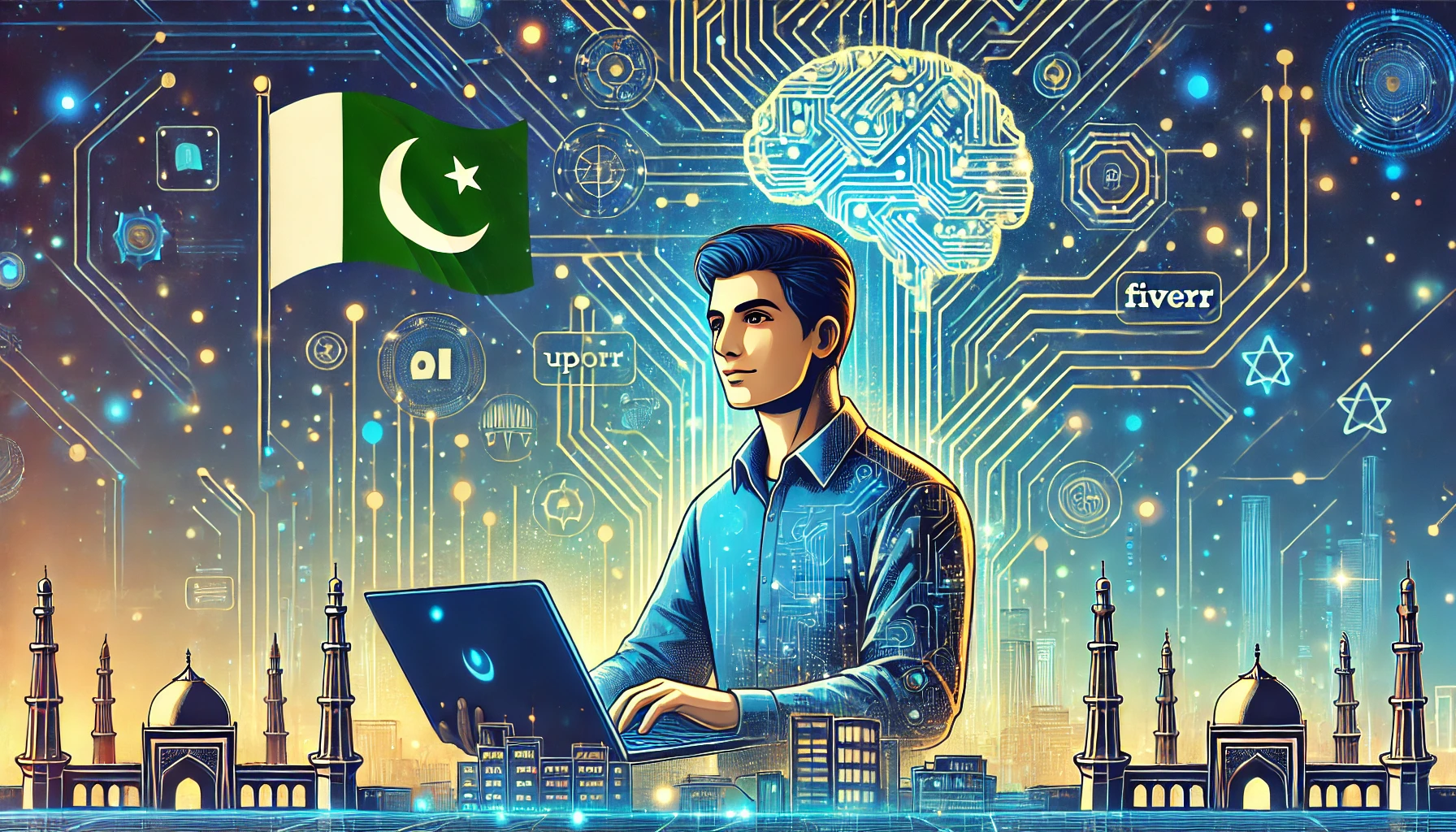
AI freelancing in Pakistan involves leveraging artificial intelligence tools and platforms to offer specialized services such as content generation, data analysis, and automation solutions. Freelancers can capitalize on the growing demand for AI-driven services by acquiring relevant skills, building a portfolio, and marketing their expertise on global freelance platforms.
#Infobox
#Overview
AI freelancing refers to the practice of offering artificial intelligence-related services on a freelance basis. In Pakistan, this emerging field has gained significant traction due to the country's large pool of tech-savvy professionals, competitive labor costs, and increasing access to high-speed internet. Freelancers in this domain provide services such as AI model fine-tuning, natural language processing (NLP) solutions, image and video generation, and automation scripts for businesses worldwide.
The rise of AI tools like ChatGPT, DALL·E, and Stable Diffusion has democratized access to advanced AI capabilities, enabling freelancers without formal computer science degrees to enter the market. Many Pakistani freelancers specialize in prompt engineering, AI content creation, and custom AI application development, catering to clients in the United States, Europe, and the Middle East.
#History / Background
#Early Development
The concept of AI freelancing emerged alongside the broader growth of the global freelance economy in the early 2010s. Initially, freelancers focused on basic web development and graphic design. However, as AI technologies matured, opportunities expanded to include AI-driven services. The launch of platforms like Upwork and Fiverr in the mid-2010s provided a structured marketplace for freelancers to offer AI-related services.
#Rise of AI Tools
The breakthrough of deep learning models such as OpenAI's GPT series (2018–2023) and image generation models like DALL·E (2021) revolutionized the freelance landscape. These tools allowed freelancers to generate high-quality content, design assets, and automate repetitive tasks with minimal coding knowledge. In Pakistan, the adoption of these tools accelerated during the COVID-19 pandemic, as remote work became the norm.
#Government and Institutional Support
Recognizing the potential of AI freelancing, the Pakistani government and private organizations launched initiatives to upskill the workforce. Programs such as the National Incubation Center and Ignite National Technology Fund provided training in AI, machine learning, and digital marketing. Additionally, universities began offering specialized courses in AI and data science, further fueling the talent pipeline.
#How It Works
#Skill Acquisition
Freelancers typically start by learning the fundamentals of AI tools and platforms. Key areas include:
- Prompt Engineering: Crafting effective prompts to generate desired outputs from AI models like ChatGPT or Midjourney.
- AI Content Creation: Using tools such as Jasper or Copy.ai to produce blog posts, social media content, and marketing copy.
- Image and Video Generation: Leveraging DALL·E, Stable Diffusion, or Runway ML to create visual content for clients.
- Automation Scripts: Writing Python scripts to automate workflows using libraries like Selenium or BeautifulSoup.
- AI Model Training: Fine-tuning pre-trained models for specific tasks using frameworks like TensorFlow or PyTorch.
#Platform Selection
Freelancers choose platforms based on their target audience and service offerings:
- Upwork: Ideal for long-term contracts and high-paying clients, particularly in the US and Europe.
- Fiverr: Suitable for gig-based services, such as AI-generated logos or social media posts.
- Freelancer.com: Competitive bidding environment with a wide range of projects.
- Toptal: Exclusive network for top-tier freelancers, often requiring rigorous screening.
#Client Acquisition and Project Execution
Freelancers attract clients by showcasing their expertise through portfolios, case studies, and testimonials. They use platforms like LinkedIn, Twitter, and personal websites to build their brand. Once a project is secured, freelancers follow a structured process:
- Requirements Gathering: Understanding the client's goals and expectations.
- Tool Selection: Choosing the appropriate AI tools or frameworks for the task.
- Execution: Developing the solution, whether it's generating content, designing assets, or automating processes.
- Delivery and Feedback: Submitting the final product and incorporating client feedback.
#Important Facts
- Market Size: The global AI freelance market is projected to exceed $15 billion by 2025, with Pakistan contributing significantly due to its skilled workforce.
- Income Potential: Top AI freelancers in Pakistan earn between $3,000 and $10,000 per month, depending on their niche and client base.
- Demand Drivers: The increasing adoption of AI in industries such as marketing, healthcare, and e-commerce is driving demand for freelance AI services.
- Challenges: Freelancers face competition from global markets, payment delays, and the need for continuous upskilling to stay relevant.
- Taxation: Freelancers in Pakistan must register with the Federal Board of Revenue (FBR) and comply with tax regulations for income earned from international clients.
- Tools and Resources: Free and paid resources such as Coursera, Udemy, and YouTube tutorials help freelancers learn AI tools quickly.
#Timeline
- Launch of Upwork and
Launch of Upwork and Fiverr, laying the foundation for global freelance marketplaces.
- Introduction of deep learning
Introduction of deep learning models like Google's WaveNet, increasing interest in AI services.
- OpenAI releases GPT-2, enablin
OpenAI releases GPT-2, enabling more advanced text generation capabilities for freelancers.
- COVID-19 pandemic accelerates
COVID-19 pandemic accelerates remote work and AI tool adoption among freelancers in Pakistan.
- DALL·E and Stable Diffusion
DALL·E and Stable Diffusion launch, revolutionizing image and art generation services.
- Pakistan's government launches
Pakistan's government launches digital upskilling programs to train freelancers in AI and tech.
- ChatGPT reaches 100 million
ChatGPT reaches 100 million users, further popularizing AI freelancing services globally.
- AI freelancing becomes a
AI freelancing becomes a mainstream career option in Pakistan, with dedicated communities and mentorship programs.
#Related Terms
#FAQ
What does AI Freelancing: Getting Started cover?
AI freelancing: getting started covers practical examples, benefits, limitations, and important considerations for readers.
Why is AI Freelancing: Getting Started important?
It helps readers understand key concepts, compare practical use cases, and evaluate how Creative AI decisions affect outcomes, risks, and implementation choices.
What should readers verify before applying this topic?
Readers should compare the benefits, limitations, data requirements, and related themes such as Freelancing, Getting, Started before using the ideas in real projects.
#References
- AI Freelancing: Getting Started terminology and background research
- AI Freelancing: Getting Started use cases, implementation examples, and limitations
- Creative AI best practices, standards, and risk guidance
- Freelancing case studies, benchmarks, and current industry analysis



Comments
No comments yet. Start the discussion with a useful note.