

#Short Answer
Explores how artificial intelligence shapes home and smart living, covering practical use cases, benefits, limitations, and risks.
#Infobox
Artificial Intelligence in Smart Homes Field Artificial intelligence Focus Home automation, energy efficiency, security, convenience Key Technologies Machine learning, natural language processing, IoT, computer vision Major Applications Smart thermostats, voice assistants, AI-powered security systems, automated lighting Industry Impact Consumer electronics, real estate, energy management, healthcare Notable Developers Amazon, Google, Apple, Samsung, Nest, Ecobee
Artificial Intelligence in Smart Homes (also referred to as AI-driven home automation or smart living technology) is the integration of artificial intelligence (AI) systems into residential environments to enhance comfort, security, energy efficiency, and overall quality of life. These systems leverage advanced algorithms, machine learning, and real-time data processing to automate household tasks, optimize resource consumption, and provide personalized experiences for residents.
#Overview
Smart home technology powered by AI represents a convergence of the Internet of Things (IoT), cloud computing, and advanced analytics. Unlike traditional home automation, which relies on pre-programmed rules, AI-enabled systems adapt to user behavior, environmental conditions, and external data sources (e.g., weather forecasts, energy prices) to make intelligent decisions.
These systems typically consist of:
- Smart Devices: Connected appliances and sensors (e.g., smart thermostats, doorbells, lights).
- AI Platforms: Cloud-based or edge computing systems that process data and execute commands.
- User Interfaces: Voice assistants (e.g., Alexa, Google Assistant), mobile apps, or touchscreens.
- Network Infrastructure: Wi-Fi, Zigbee, Z-Wave, or Thread protocols for device communication.
#Key Features
- Adaptive Learning: Systems like smart thermostats (e.g., Nest Learning Thermostat) analyze daily routines to adjust temperatures automatically.
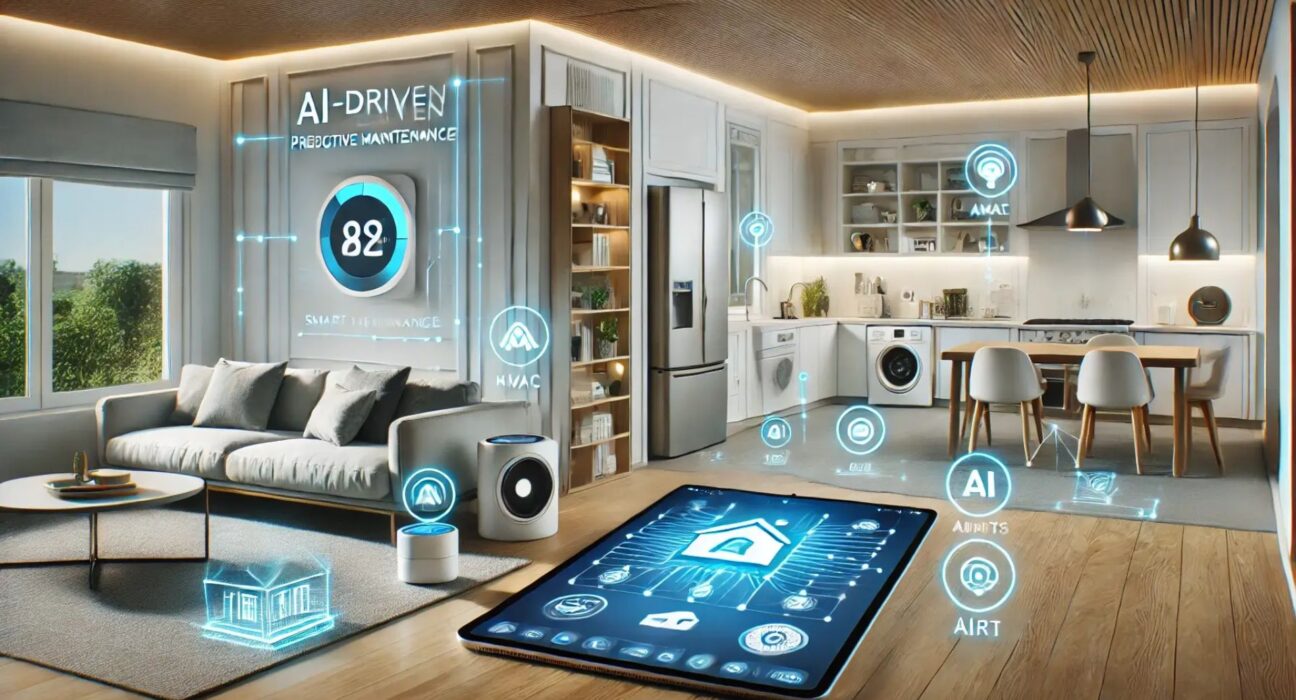
- Predictive Maintenance: AI detects anomalies in appliances (e.g., refrigerators, HVAC systems) before failures occur.
- Energy Optimization: AI algorithms reduce electricity and water usage by optimizing device operation schedules.
- Enhanced Security: Facial recognition, motion detection, and anomaly alerts in smart cameras and door locks.
- Voice and Gesture Control: Natural language processing enables hands-free operation of devices.
#History / Background
#Early Developments
The concept of home automation dates back to the 1970s with the introduction of X10, a communication protocol for remote control of home devices. However, AI integration began in earnest in the 2010s with the rise of IoT and cloud computing.
Key milestones include:
- 2011: Introduction of Nest Learning Thermostat, the first widely adopted AI-powered smart thermostat.
- 2014: Amazon launches Echo with Alexa, popularizing voice-controlled smart homes.
- 2016: Google acquires Nest Labs, accelerating AI-driven home automation.
- 2018: Apple releases HomeKit, integrating AI with its ecosystem of devices.
- 2020s: Growth of edge AI (on-device processing) and 5G connectivity enhances real-time responsiveness.
#Market Growth
The global smart home market was valued at approximately $84.5 billion in 2022 and is projected to reach $222.9 billion by 2027, growing at a CAGR of 21.1%. Factors driving adoption include:
- Increasing smartphone penetration.
- Rising demand for energy-efficient solutions.
- Growing awareness of home security threats.
- Advancements in AI and IoT technologies.
#How It Works
#Core Technologies
- Sensors and IoT Devices: Collect data on temperature, humidity, motion, and usage patterns.
- Edge and Cloud Computing: Process data locally (edge) or remotely (cloud) to reduce latency and improve privacy.
- Machine Learning Algorithms: Analyze historical and real-time data to predict user behavior and optimize settings.
- Natural Language Processing (NLP): Enables voice assistants to understand and respond to spoken commands.
- Computer Vision: Powers facial recognition in security cameras and gesture-based controls.
#Example Workflows
Morning Routine Automation:
- The smart home system detects the user waking up via motion sensors.
- AI adjusts the thermostat to a comfortable temperature.
- Smart lights gradually brighten to simulate sunrise.
- The coffee maker starts brewing, and the news briefing plays on the smart speaker.
Energy Savings Mode:
- AI analyzes weather forecasts and energy prices.
- The system pre-cools the home during off-peak hours.
- Smart plugs turn off non-essential devices during peak demand.
- Solar panels store excess energy for later use.
#Important Facts
- Privacy Concerns: AI-powered smart homes collect vast amounts of personal data, raising concerns about surveillance and data breaches.
- Interoperability Issues: Many smart devices use proprietary protocols, limiting compatibility across brands.
- Energy Savings Potential: AI-driven thermostats can reduce heating and cooling costs by up to 30%.
- Accessibility Benefits: Voice-controlled systems assist elderly and disabled individuals in managing their homes.
- Cybersecurity Risks: Unsecured IoT devices are vulnerable to hacking, potentially compromising home networks.
#Timeline
Year Event 1975 X10 protocol introduced for remote home device control. 2007 First generation of smart thermostats (e.g., Ecobee) launched. 2011 Nest Learning Thermostat debuts, incorporating AI for adaptive learning. 2014 Amazon Echo with Alexa revolutionizes voice-controlled smart homes. 2016 Google acquires Nest Labs, expanding AI-driven home automation. 2018 Apple releases HomeKit, integrating AI with its ecosystem. 2020 Rise of edge AI and 5G connectivity for faster, more responsive systems. 2023 AI-powered predictive maintenance becomes mainstream in smart appliances. 2025 Fully autonomous smart homes with self-learning AI systems emerge.
#Related Terms
#FAQ
What does AI And Home: Smart Living cover?
Explores how artificial intelligence shapes home and smart living, covering practical use cases, benefits, limitations, and risks.
Why is AI And Home: Smart Living important?
It helps readers understand key concepts, compare practical use cases, and evaluate how Creative AI decisions affect outcomes, risks, and implementation choices.
What should readers verify before applying this topic?
Readers should compare the benefits, limitations, data requirements, and related themes such as Home, Smart, Living before using the ideas in real projects.
#References
- AI And Home: Smart Living terminology and background research
- AI And Home: Smart Living use cases, implementation examples, and limitations
- Creative AI best practices, standards, and risk guidance
- Home case studies, benchmarks, and current industry analysis


Comments
No comments yet. Start the discussion with a useful note.