

#Short Answer
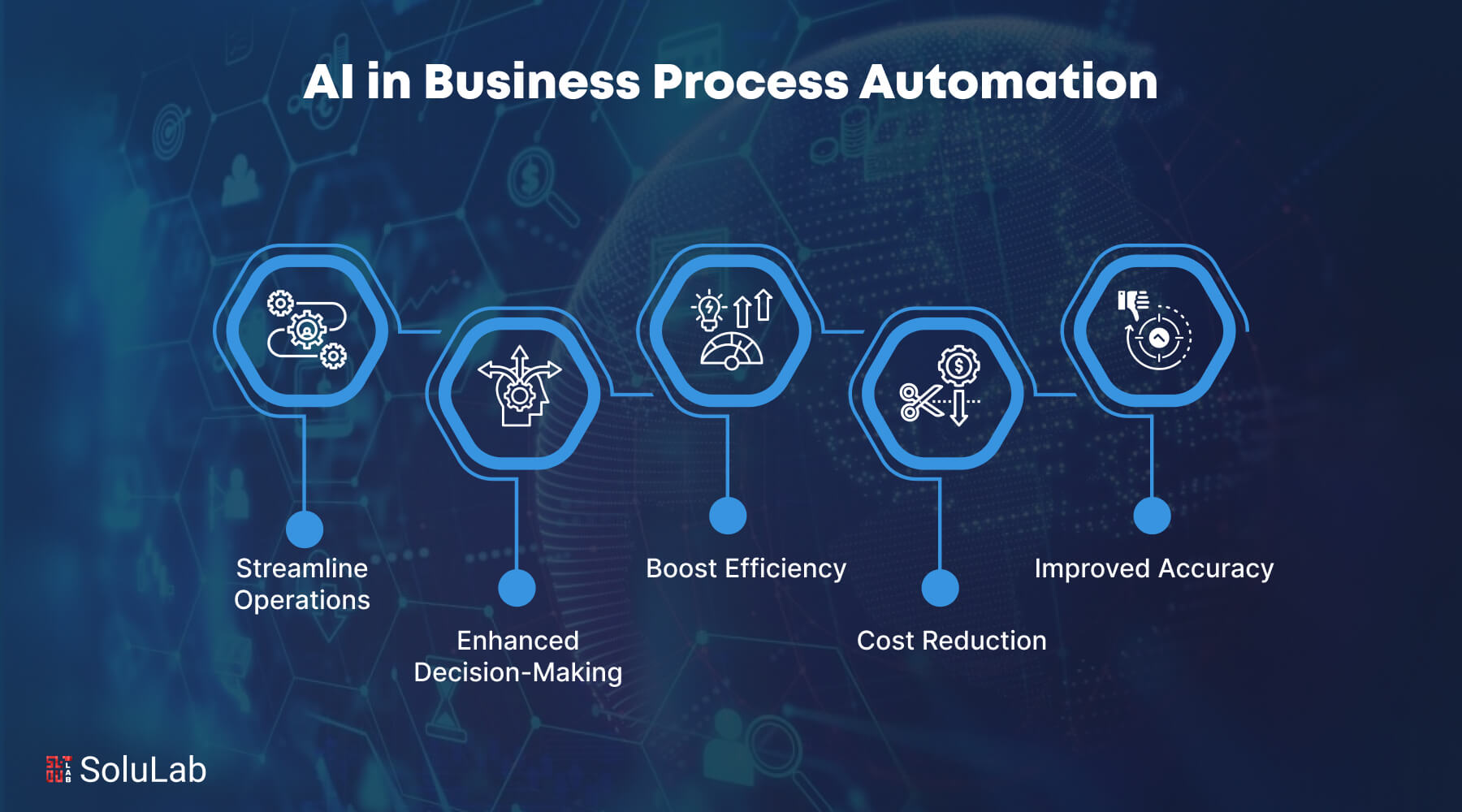
Artificial intelligence (AI) and automation technologies are transforming industries by optimizing workflows, reducing human error, and enhancing productivity.
#Infobox
#Overview
Artificial intelligence (AI) and automation refer to the use of technology to perform tasks with minimal human intervention. AI enables machines to mimic cognitive functions such as learning, reasoning, and problem-solving, while automation focuses on executing repetitive tasks efficiently. Together, these technologies streamline processes, enhance decision-making, and drive innovation across industries.
AI-driven automation leverages algorithms, data analytics, and robotic systems to optimize workflows. It spans various domains, including robotic process automation (RPA), machine learning (ML), and natural language processing (NLP). Businesses adopt these solutions to improve operational efficiency, reduce costs, and enhance customer experiences.
#History / Background
#Early Developments
The concept of automation dates back to ancient civilizations, where mechanical devices like the Antikythera mechanism (circa 100 BCE) were used to perform calculations. The Industrial Revolution (18th–19th centuries) introduced mechanized production, laying the foundation for modern automation.
In the mid-20th century, the advent of computers and AI pioneers like Alan Turing and John McCarthy advanced the field. Turing’s 1950 paper, Computing Machinery and Intelligence, proposed the Turing test as a measure of machine intelligence, while McCarthy coined the term "artificial intelligence" in 1956.
#Modern Evolution
The 1980s and 1990s saw the rise of expert systems and neural networks, enabling machines to perform complex tasks. The 21st century brought breakthroughs in deep learning, fueled by big data and computational power. Companies like Google, IBM, and Tesla integrated AI into automation, revolutionizing industries such as healthcare, finance, and transportation.
#How It Works
#Core Technologies
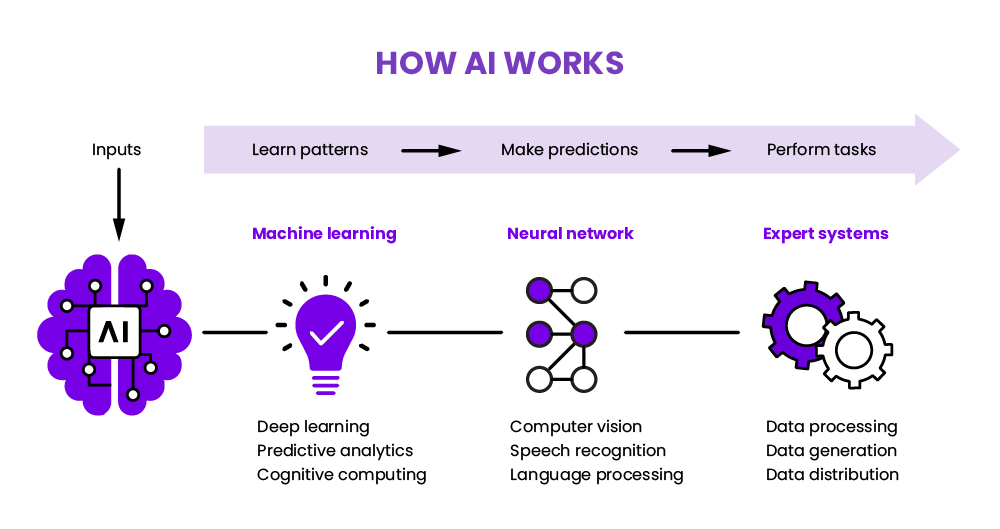
- Machine Learning (ML): Algorithms analyze data to identify patterns and make predictions without explicit programming.
- Robotic Process Automation (RPA): Software robots mimic human actions to automate repetitive tasks like data entry and invoice processing.
- Natural Language Processing (NLP): Enables machines to understand and generate human language, powering chatbots and virtual assistants.
- Computer Vision: AI systems interpret visual data, used in facial recognition, quality control, and autonomous vehicles.
#Implementation Process
- Assessment: Identify repetitive or error-prone tasks suitable for automation.
- Tool Selection: Choose AI or automation tools (e.g., RPA software, ML frameworks).
- Integration: Connect systems to data sources and existing workflows.
- Testing: Validate performance and accuracy before full deployment.
- Monitoring: Continuously track efficiency and adjust algorithms as needed.
#Important Facts
- AI automation can reduce operational costs by up to 30% in some industries.
- The global AI market is projected to reach $1.8 trillion by 2030.
- RPA can process transactions 10x faster than humans with near-zero errors.
- By 2025, 50% of enterprises will use AI-driven automation for customer service.
- Ethical concerns include job displacement, bias in algorithms, and data privacy risks.
#Timeline
- Alan Turing proposes the
Alan Turing proposes the Turing test for machine intelligence.
- John McCarthy coins the
John McCarthy coins the term 'artificial intelligence.'
- ELIZA, an early NLP
ELIZA, an early NLP program, is developed at MIT.
- IBM’s Deep Blue defeats
IBM’s Deep Blue defeats world chess champion Garry Kasparov.
- IBM Watson wins *Jeopardy!*
IBM Watson wins *Jeopardy!*, showcasing AI’s language capabilities.
- AlphaGo defeats a top
AlphaGo defeats a top Go player, demonstrating advanced ML.
- AI-driven automation adoption
AI-driven automation adoption surges during the COVID-19 pandemic.
- Generative AI tools like
Generative AI tools like DALL·E and ChatGPT gain widespread use.
#Related Terms
#FAQ
What does AI And Automation: Streamlining Processes cover?
Explores how artificial intelligence shapes automation and streamlining processes, covering practical use cases, benefits, limitations, and risks.
Why is AI And Automation: Streamlining Processes important?
It helps readers understand key concepts, compare practical use cases, and evaluate how Artificial Intelligence decisions affect outcomes, risks, and implementation choices.
What should readers verify before applying this topic?
Readers should compare the benefits, limitations, data requirements, and related themes such as Automation, Streamlining, Processe before using the ideas in real projects.
#References
- AI And Automation: Streamlining Processes terminology and background research
- AI And Automation: Streamlining Processes use cases, implementation examples, and limitations
- Artificial Intelligence best practices, standards, and risk guidance
- Automation case studies, benchmarks, and current industry analysis



Comments
No comments yet. Start the discussion with a useful note.