


#Short Answer
Explains What Is an AI Startup, including the core definition, how it works, practical examples, and limitations.
#Infobox
#Overview
An AI startup is a specialized enterprise that integrates artificial intelligence into its core operations to create disruptive technologies or optimize existing systems. Unlike traditional startups, AI-driven ventures rely heavily on data science, algorithmic development, and computational power to deliver intelligent solutions. These startups often emerge from research labs, universities, or corporate spin-offs, where cutting-edge AI research is translated into market-ready products. AI startups span a wide range of applications, including:
- Autonomous Systems: Self-driving cars, drones, and robotic process automation (RPA).
- Predictive Analytics: Forecasting market trends, customer behavior, or equipment failures.
- Natural Language Processing (NLP): Chatbots, virtual assistants, and sentiment analysis tools.
- Computer Vision: Facial recognition, medical imaging, and quality control in manufacturing.
- Healthcare AI: Drug discovery, personalized medicine, and diagnostic tools.
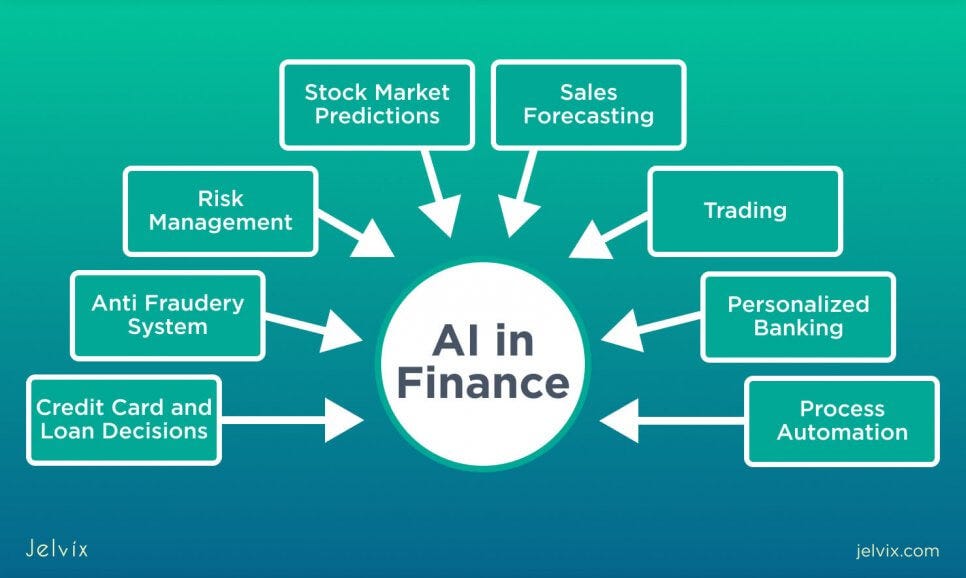
- FinTech: Fraud detection, algorithmic trading, and credit scoring. The rapid advancement of AI technologies, coupled with increasing computational power and data availability, has made it easier for entrepreneurs to launch AI startups. However, challenges such as high development costs, ethical concerns, and regulatory hurdles often accompany these ventures.
#History / Background
#Early Foundations (1950s–1980s)
The concept of AI startups traces back to the early days of artificial intelligence research. In the 1950s and 1960s, pioneers like Alan Turing, John McCarthy, and Marvin Minsky laid the theoretical groundwork for AI. However, due to limited computational resources and skepticism from the broader scientific community, commercial AI applications remained scarce. The first wave of AI startups emerged in the 1980s with the advent of expert systems—rule-based AI programs designed to mimic human decision-making. Companies like Symbolics and Lisp Machines Inc. developed AI hardware and software, catering to niche markets such as defense and finance. Despite initial enthusiasm, the AI Winter of the late 1980s and early 1990s—marked by funding cuts and unmet expectations—halted progress.
#Revival and Growth (1990s–2010s)
The resurgence of AI in the late 1990s and early 2000s was fueled by breakthroughs in machine learning, particularly neural networks and support vector machines. The internet boom also provided vast datasets, enabling AI models to improve. Startups like Google (founded in 1998) and Facebook (founded in 2004) began integrating AI into their platforms, though they were not exclusively AI-focused. The 2010s marked a turning point with the rise of deep learning, driven by advances in GPU computing and big data. Key milestones included:
- 2011: IBM’s Watson won Jeopardy!, demonstrating AI’s potential in natural language understanding.
- 2012: Google’s AlexNet won the ImageNet competition, showcasing the power of deep neural networks in computer vision.
- 2014: DeepMind (later acquired by Google) developed an AI that mastered Atari games and later defeated a world champion in Go. During this period, AI startups proliferated, particularly in Silicon Valley, China, and Israel, where venture capital and government support were abundant.
#Modern Era
(2020s–Present)
The 2020s have seen AI startups evolve into unicorn and decacorn status, with valuations exceeding $1 billion. The COVID-19 pandemic accelerated AI adoption across industries, from telemedicine to remote work tools. Key trends include:
- Generative AI: Startups like OpenAI (ChatGPT), MidJourney, and Stable Diffusion have revolutionized content creation.
- AI in Healthcare: Companies like Tempus and PathAI use AI for personalized treatment and diagnostics.
- Ethical AI: Growing emphasis on responsible AI, bias mitigation, and regulatory compliance (e.g., EU AI Act).
- AI Infrastructure: Startups providing AI-as-a-Service (AIaaS), such as Hugging Face and Scale AI, democratize access to AI tools. Today, AI startups are at the forefront of technological innovation, attracting billions in investments and shaping industries worldwide.
#How It Works
#Core Components of an AI Startup An AI startup typically consists of the following key components:
- Data Collection & Curation - AI models require high-quality, labeled datasets for training. Startups may gather data from: - Public datasets (e.g., Kaggle, UCI Machine Learning Repository). - Web scraping (with legal compliance). - Partnerships with enterprises (e.g., healthcare records, financial transactions). - Synthetic data generation (e.g., using GANs—Generative Adversarial Networks).
- Model Development
- Machine Learning (ML): Algorithms like linear regression, decision trees, and random forests for structured data.
- Deep Learning: Neural networks (e.g., CNNs for images, RNNs/LSTMs for text) for unstructured data.
- Reinforcement Learning: Used in robotics, gaming, and autonomous systems.
- Transfer Learning: Leveraging pre-trained models (e.g., BERT for NLP) to reduce training time.
- Infrastructure & Compute
- Cloud Computing: Platforms like AWS, Google Cloud, and Azure provide scalable AI infrastructure.
- Edge AI: Deploying models on local devices (e.g., smartphones, IoT sensors) for low-latency applications.
- GPU/TPU Acceleration: NVIDIA’s CUDA and Google’s TPUs speed up training and inference.
- Deployment & Integration
- APIs & Microservices: AI startups often offer APIs (e.g., OpenAI’s API, Google Vision API) for seamless integration.
- Embedded AI: Integrating AI into existing software (e.g., Salesforce Einstein, HubSpot’s AI tools).
- On-Premise Solutions: For industries with strict data privacy requirements (e.g., healthcare, defense).
- Monitoring & Optimization
- Model Drift Detection: Ensuring AI performance remains accurate over time.
- Bias Audits: Identifying and mitigating biases in datasets and algorithms.
- Continuous Learning: Updating models with new data (e.g., online learning).
#Business Models AI startups monetize their technologies through various models:
- Subscription (SaaS): Recurring revenue (e.g., DataRobot, Sisense).
- Pay-per-Use: Charging based on API calls or compute hours (e.g., AWS SageMaker).
- Licensing: Selling proprietary AI models or tools (e.g., NVIDIA’s AI Enterprise).
- Freemium: Offering basic features for free with premium upgrades (e.g., Grammarly).
- AI-as-a-Service (AIaaS): Providing end-to-end AI solutions (e.g., Scale AI for data labeling).
- Data Monetization: Selling anonymized datasets or insights (e.g., Palantir).
#Important Facts
- Market Growth - The global AI market is projected to reach $1.8 trillion by 2030 (PwC). - AI startups raised $93.5 billion in venture capital in 2021 (PitchBook).
- Job Creation - AI-related roles are among the fastest-growing jobs, with a 74% increase in demand from 2016 to 2022 (LinkedIn).
- Ethical Concerns
- Bias in AI: Algorithms trained on biased data can perpetuate discrimination (e.g., facial recognition inaccuracies for darker-skinned individuals).
- Privacy Issues: AI systems often require vast amounts of personal data, raising concerns about surveillance and misuse.
- Job Displacement: Automation may eliminate 85 million jobs by 2025 (World Economic Forum), though it also creates new roles.
- Regulatory Landscape - The EU AI Act (2024) classifies AI systems into risk categories, imposing strict rules on high-risk applications. - The U.S. AI Bill of Rights (2022) outlines principles for ethical AI development.
- Notable Failures & Successes
- Failure: Zume Pizza (2018) attempted to automate pizza delivery with robots but pivoted due to high costs.
- Success: UiPath (RPA startup) went public in 2021 with a $35 billion valuation.
- AI Talent Shortage - There is a global shortage of 300,000 AI professionals (Tencent Research Institute).
#Timeline
- Foundational ideas
Core concepts and early methods shape What Is an AI Startup?.
- Practical use
Tools, examples, and real-world deployments make the topic easier to evaluate.
- Responsible implementation
Current work focuses on reliability, governance, performance, and measurable impact.
#Related Terms
#FAQ
What does What Is an AI Startup? cover?
Explains What Is an AI Startup, including the core definition, how it works, practical examples, and limitations.
Why is What Is an AI Startup? important?
It helps readers understand key concepts, compare practical use cases, and evaluate how Business & Marketing decisions affect outcomes, risks, and implementation choices.
What should readers verify before applying this topic?
Readers should compare benefits, limitations, data requirements, and related themes such as AI, Startup, Machine Learning before using the ideas in real projects.
#References
- What Is an AI Startup? terminology and background research
- What Is an AI Startup? use cases, implementation examples, and limitations
- Business & Marketing best practices, standards, and risk guidance
- AI case studies, benchmarks, and current industry analysis



Comments
No comments yet. Start the discussion with a useful note.