

#Short Answer
Explains What Is AI in Business, including the core definition, how it works, practical examples, and limitations.
#Infobox
#Overview
Artificial Intelligence (AI) has emerged as a transformative force in modern business, reshaping how organizations operate, compete, and innovate. By integrating AI-driven tools and algorithms, businesses can automate repetitive tasks, extract actionable insights from vast datasets, and deliver hyper-personalized experiences to customers. The adoption of AI in business spans industries, from automating customer service with chatbots to optimizing supply chains with predictive analytics. AI in business is not limited to large corporations; small and medium-sized enterprises (SMEs) also benefit from AI-powered solutions that enhance efficiency and reduce operational costs. The technology enables businesses to make data-driven decisions, identify market trends, and respond to customer needs in real time. As AI continues to evolve, its role in business is expected to expand, driving further automation, innovation, and competitive differentiation.
#History / Background
#Early Foundations (1950s–1980s)
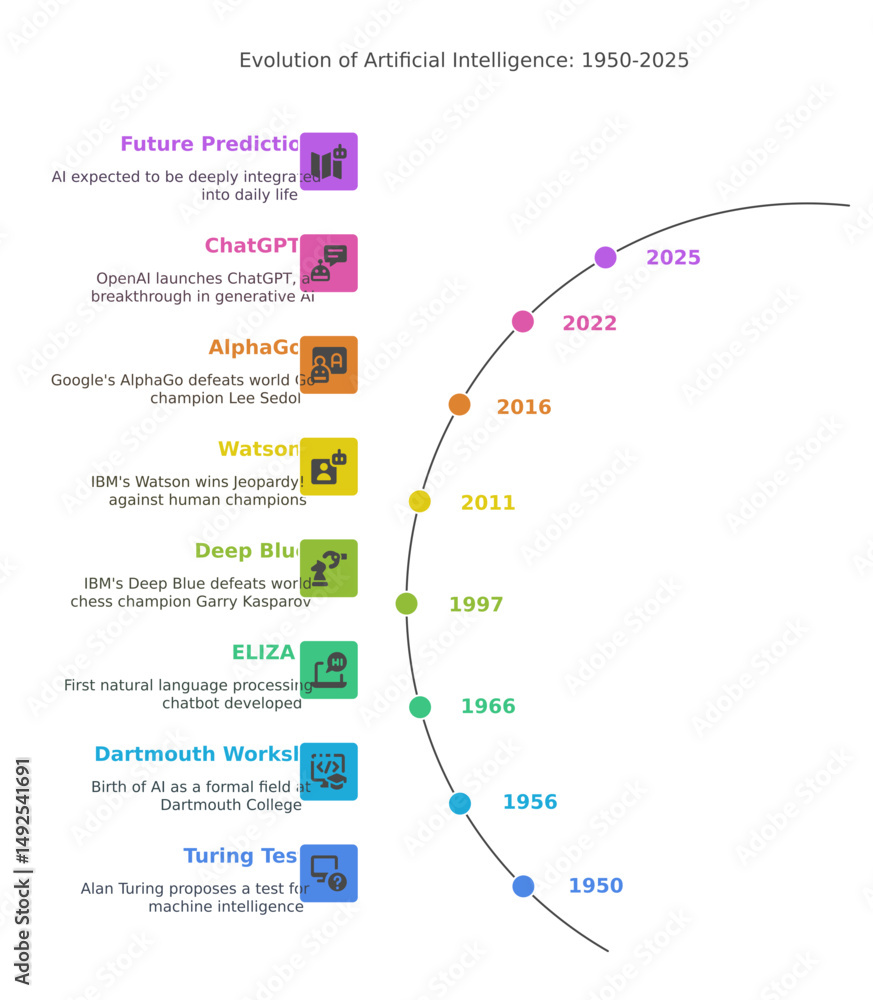
The concept of AI dates back to the mid-20th century, with early research focused on symbolic reasoning and problem-solving. In 1956, the term "artificial intelligence" was coined at the Dartmouth Conference, marking the beginning of AI as a formal field of study. Early AI systems, such as ELIZA (1966), demonstrated the potential of natural language processing, while expert systems like MYCIN (1970s) showcased AI's ability to mimic human decision-making in specialized domains.
#The AI Winter and Revival (1980s–2000s)
The 1980s saw a decline in AI research due to overhyped expectations and limited computational power, leading to the "AI winter." However, advancements in machine learning, particularly neural networks, reignited interest in the 1990s and 2000s. The introduction of support vector machines (SVMs) and the rise of big data provided the foundation for modern AI applications.
#The AI Boom (2010s–Present)
The 2010s marked a turning point for AI in business, driven by breakthroughs in deep learning, cloud computing, and the availability of large datasets. Companies like Google, Amazon, and IBM began integrating AI into their products and services, while startups emerged with AI-driven solutions for industries such as healthcare, finance, and retail. The proliferation of AI-powered tools, such as chatbots, recommendation systems, and fraud detection algorithms, has become ubiquitous in business operations.
#How It Works
#Core AI Technologies in Business
- Machine Learning (ML)
- Definition: A subset of AI that enables systems to learn from data without explicit programming.
- Applications: Predictive analytics, customer segmentation, demand forecasting.
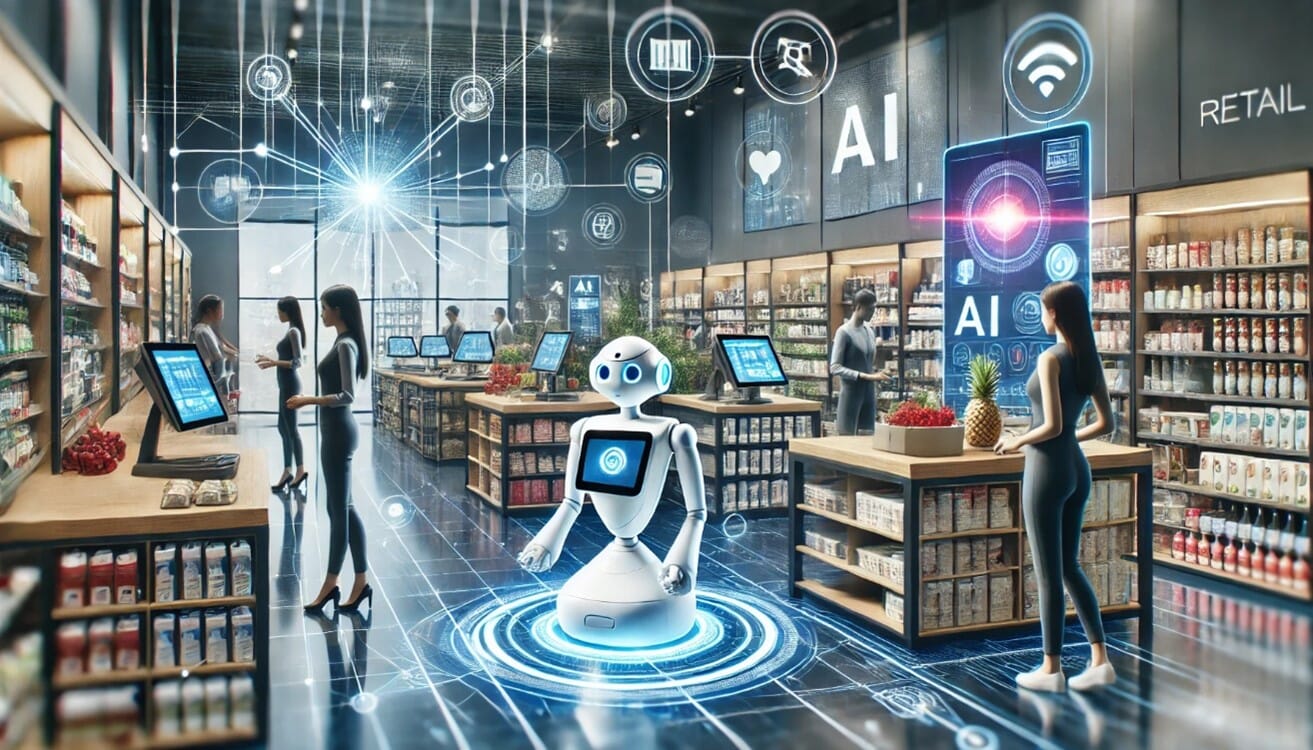
- Example: Retailers use ML to analyze purchase history and recommend products to customers.
- Natural Language Processing (NLP)
- Definition: AI that processes and understands human language, enabling interaction with machines.
- Applications: Chatbots, sentiment analysis, voice assistants.
- Example: Customer service chatbots use NLP to resolve queries in real time.
- Computer Vision
- Definition: AI that interprets and analyzes visual data from images or videos.
- Applications: Quality control in manufacturing, facial recognition for security, autonomous vehicles.
- Example: Manufacturing plants use computer vision to detect defects in products.
- Robotic Process Automation (RPA)
- Definition: AI-driven automation of repetitive, rule-based tasks.
- Applications: Data entry, invoice processing, inventory management.
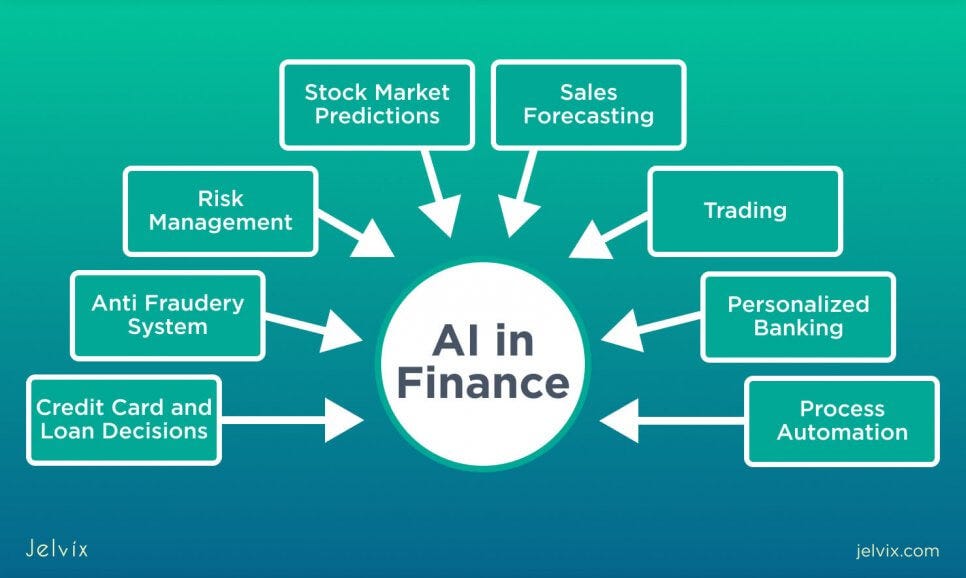
- Example: Banks use RPA to automate loan processing and fraud detection.
- Predictive Analytics
- Definition: AI that forecasts future trends based on historical data.
- Applications: Sales forecasting, risk assessment, supply chain optimization.
- Example: Airlines use predictive analytics to optimize fuel consumption and reduce costs.
#Integration into Business Processes AI systems are integrated into business workflows through:
- APIs and Cloud Services: Businesses leverage cloud-based AI platforms (e.g., AWS AI, Google Cloud AI) to deploy AI solutions without extensive infrastructure.
- Custom AI Models: Companies develop proprietary AI models tailored to their specific needs, such as fraud detection in financial services.
- Hybrid AI Systems: Combining rule-based systems with AI to enhance decision-making in complex environments.
#Important Facts
- Market Growth: The global AI in business market is projected to reach $300 billion by 2026, growing at a CAGR of 36.6% from 2021 to 2026.
- Productivity Gains: Businesses using AI report up to 40% improvements in productivity due to automation and data-driven insights.
- Customer Experience: 80% of consumers are more likely to engage with businesses that offer personalized experiences powered by AI.
- Cost Savings: AI-driven automation can reduce operational costs by up to 30% in industries like manufacturing and logistics.
- Job Transformation: While AI automates routine tasks, it also creates new roles, such as AI trainers, data scientists, and ethicists.
- Ethical Concerns: 68% of businesses cite data privacy and ethical considerations as major challenges in AI adoption.
- Adoption Rates: As of 2023, 35% of companies have integrated AI into their operations, with adoption rates higher in tech and finance sectors.
#Timeline
- Foundational ideas
Core concepts and early methods shape What Is AI in Business?.
- Practical use
Tools, examples, and real-world deployments make the topic easier to evaluate.
- Responsible implementation
Current work focuses on reliability, governance, performance, and measurable impact.
#Related Terms
#FAQ
What does What Is AI in Business? cover?
Explains What Is AI in Business, including the core definition, how it works, practical examples, and limitations.
Why is What Is AI in Business? important?
It helps readers understand key concepts, compare practical use cases, and evaluate how Business & Marketing decisions affect outcomes, risks, and implementation choices.
What should readers verify before applying this topic?
Readers should compare benefits, limitations, data requirements, and related themes such as AI, Business, Machine Learning before using the ideas in real projects.
#References
- What Is AI in Business? terminology and background research
- What Is AI in Business? use cases, implementation examples, and limitations
- Business & Marketing best practices, standards, and risk guidance
- AI case studies, benchmarks, and current industry analysis

Comments
No comments yet. Start the discussion with a useful note.