


#Short Answer
Explains What Is AI Research, including the core definition, how it works, practical examples, and limitations.
#Infobox
#Overview
Artificial intelligence research represents a multidisciplinary effort to develop systems capable of performing cognitive functions traditionally associated with human intelligence. Unlike conventional software, which follows predefined instructions, AI systems are designed to learn from data, recognize patterns, and make decisions with varying degrees of autonomy. The field has evolved from theoretical explorations in the mid-20th century to a transformative force in modern technology, influencing industries, economies, and daily life. At its core, AI research seeks to replicate or augment human cognitive abilities through computational models. This includes tasks such as image and speech recognition, natural language understanding, strategic planning, and adaptive behavior. The scope of AI research extends beyond narrow applications to broader goals like artificial general intelligence (AGI), where machines could perform any intellectual task a human can do. However, current AI systems—often categorized as narrow AI—are specialized in specific domains, such as playing chess, diagnosing diseases, or generating human-like text. The rapid advancement of AI has been fueled by breakthroughs in machine learning, particularly deep learning, which leverages neural networks with multiple layers to process vast amounts of data. These models have achieved superhuman performance in tasks like image classification, language translation, and game-playing, demonstrating the potential of AI to surpass human capabilities in certain areas. Yet, challenges remain, including interpretability, scalability, and ethical implications, which continue to shape the direction of AI research.
#History / Background
#Early Foundations (Pre-1950s)
The conceptual roots of AI trace back to ancient mythology and philosophy, where stories of artificial beings with human-like intelligence appeared in works like the Iliad and Frankenstein. However, the formal study of AI began in the mid-20th century, driven by advancements in mathematics, logic, and computing. In 1936, Alan Turing introduced the concept of a universal machine capable of performing any computation, laying the groundwork for programmable computers. His 1950 paper "Computing Machinery and Intelligence" posed the question, "Can machines think?" and proposed the Turing Test as a criterion for machine intelligence. Around the same time, Warren McCulloch and Walter Pitts developed the first mathematical model of a neural network, inspired by the human brain.
#The Birth of AI (1950s–1970s)
The term "artificial intelligence" was coined in 1956 at the Dartmouth Conference, organized by John McCarthy, Marvin Minsky, Nathaniel Rochester, and Claude Shannon. This event is widely regarded as the birth of AI as a formal discipline. Early AI research focused on symbolic AI, which used logic-based systems to solve problems. Programs like the Logic Theorist (1956) and the General Problem Solver (1957) demonstrated that machines could perform tasks requiring human-like reasoning. However, symbolic AI faced limitations in handling real-world complexity. The 1960s saw the development of expert systems, such as DENDRAL (1965) for chemical analysis and MYCIN (1970s) for medical diagnosis, which mimicked human expertise in specific domains. Despite these successes, AI research encountered skepticism due to the "AI winter" of the 1970s, a period marked by reduced funding and unmet expectations.
#The Rise of Machine Learning (1980s–1990s)
The 1980s witnessed a resurgence in AI with the advent of machine learning, particularly through the work of Geoffrey Hinton, Yann LeCun, and others on neural networks. The backpropagation algorithm, rediscovered in the 1980s, enabled neural networks to learn from data by adjusting weights based on errors. However, computational limitations and the lack of large datasets constrained progress. The 1990s saw AI applications in practical domains, such as speech recognition (e.g., IBM’s ViaVoice) and machine translation (e.g., statistical machine translation systems). The defeat of world chess champion Garry Kasparov by IBM’s Deep Blue in 1997 marked a symbolic milestone, demonstrating AI’s potential in complex strategic games.
#The Deep Learning Revolution (2000s–Present)
The 2000s brought about a paradigm shift with the rise of deep learning, driven by advances in computing power (e.g., GPUs), big data, and algorithmic improvements. Convolutional neural networks (CNNs) revolutionized computer vision, while recurrent neural networks (RNNs) and transformers advanced natural language processing. Key milestones include:
- 2012: AlexNet, a deep CNN, won the ImageNet competition, significantly outperforming traditional methods.
- 2016: AlphaGo defeated Lee Sedol, a top Go player, using deep reinforcement learning.
- 2018: The introduction of transformer models (e.g., BERT, GPT) transformed NLP, enabling highly accurate language understanding and generation.
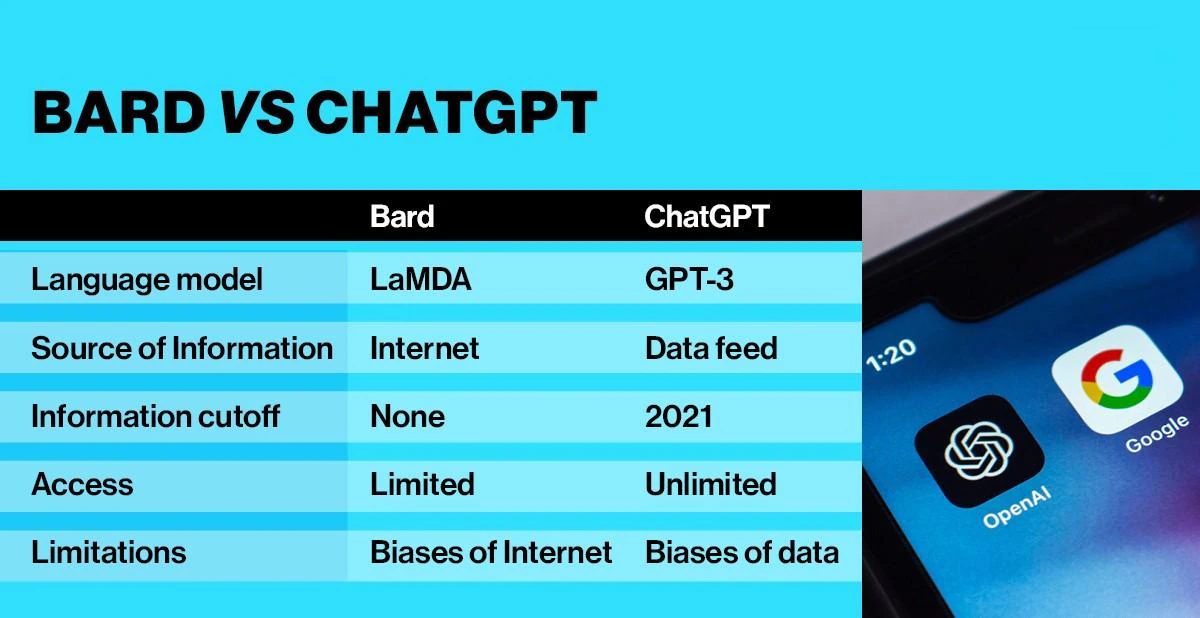
- 2020s: The development of large language models (LLMs) like ChatGPT and DALL·E demonstrated AI’s ability to generate human-like text and images, sparking both excitement and concerns about misuse. Today, AI research is characterized by its interdisciplinary nature, integrating insights from neuroscience, cognitive science, and data science. The field continues to expand into areas like robotics, autonomous systems, and human-AI collaboration.
#How It Works
#Core Concepts and Techniques AI research encompasses a diverse set of techniques, broadly categorized into symbolic AI, machine learning, and hybrid approaches. The choice of method depends on the problem domain, data availability, and desired outcomes.
- Symbolic AI
Symbolic AI, also known as classical or rule-based AI, relies on explicit, human-readable rules to represent knowledge and perform reasoning. Systems in this category use logical expressions, ontologies, and inference engines to solve problems. For example:
- Expert Systems: Programs like MYCIN use a knowledge base of rules (e.g., "IF symptom X THEN disease Y") to diagnose medical conditions.
- Search Algorithms: Techniques like A* and minimax are used in game-playing AI (e.g., chess engines) to explore possible moves and outcomes. Strengths: - Interpretable and explainable decisions. - Effective for well-defined, rule-based problems. Limitations: - Struggles with ambiguity, noise, or unstructured data. - Requires manual rule engineering, which is time-consuming.
- Machine Learning (ML)
Machine learning enables systems to learn patterns from data without explicit programming. It is divided into three main paradigms:
A. Supervised Learning The model is trained on labeled data, where input-output pairs are provided. The goal is to learn a mapping from inputs to outputs.
- Examples: Image classification (e.g., identifying cats vs. dogs), spam detection.
- Algorithms: Linear regression, decision trees, support vector machines (SVMs), neural networks.
- Evaluation Metrics: Accuracy, precision, recall, F1-score, mean squared error.
B. Unsupervised Learning The model identifies patterns in unlabeled data, often used for clustering or dimensionality reduction.
- Examples: Customer segmentation, anomaly detection.
- Algorithms: K-means clustering, principal component analysis (PCA), autoencoders.
- Evaluation Metrics: Silhouette score, Davies-Bouldin index.
C. Reinforcement Learning (RL) The model learns by interacting with an environment, receiving rewards or penalties for actions. It aims to maximize cumulative reward.
- Examples: Game-playing AI (e.g., AlphaGo), robotics, autonomous driving.
- Algorithms: Q-learning, deep Q-networks (DQN), proximal policy optimization (PPO).
- Challenges: Exploration vs. exploitation trade-off, sparse rewards.
- Deep Learning
A subset of machine learning, deep learning uses neural networks with multiple layers (hence "deep") to model complex patterns. Key architectures include:
- Convolutional Neural Networks (CNNs): Optimized for grid-like data (e.g., images), using convolutional layers to detect features.
- Recurrent Neural Networks (RNNs): Designed for sequential data (e.g., time series, text), with memory cells to retain information.
- Transformers: Introduced in the 2017 paper "Attention Is All You Need", transformers use self-attention mechanisms to process sequences in parallel, enabling breakthroughs in NLP (e.g., BERT, GPT).
- Generative Models: Includes variational autoencoders (VAEs) and generative adversarial networks (GANs), which generate new data (e.g., images, text) similar to training data. Strengths: - Handles large, complex datasets. - Automatically extracts features, reducing the need for manual engineering. - Achieves state-of-the-art performance in tasks like image recognition and language modeling. Limitations: - Requires massive computational resources and data. - "Black-box" nature makes interpretability difficult. - Prone to overfitting and adversarial attacks.
- Hybrid and Emerging Approaches
Modern AI research often combines multiple techniques to overcome limitations:
- Neuro-Symbolic AI: Integrates neural networks with symbolic reasoning to combine the strengths of both paradigms (e.g., for explainable AI).
- Few-Shot Learning: Enables models to learn from a small number of examples, mimicking human-like adaptability.
- Federated Learning: Trains models across decentralized devices (e.g., smartphones) without sharing raw data, addressing privacy concerns.
- Causal AI: Focuses on understanding cause-and-effect relationships, moving beyond correlation-based predictions.
#Important Facts
- Data Dependency: AI systems rely heavily on high-quality, diverse datasets. Poor or biased data can lead to flawed or discriminatory outcomes (e.g., facial recognition systems with higher error rates for darker-skinned individuals).
- Computational Power: Training large AI models (e.g., LLMs) requires significant computational resources. For example, training GPT-3 reportedly cost millions of dollars in cloud computing.
- Ethical Concerns: AI raises ethical dilemmas, including job displacement, privacy violations (e.g., surveillance), and the potential for autonomous weapons. The EU’s AI Act (2024) is one of the first comprehensive regulatory frameworks for AI.
- Explainability: Many AI models, especially deep learning, are "black boxes," making it difficult to understand their decision-making processes. Techniques like LIME (Local Interpretable Model-agnostic Explanations) and SHAP (SHapley Additive exPlanations) aim to address this.
- Bias and Fairness: AI systems can perpetuate or amplify biases present in training data. For instance, facial recognition systems have been shown to perform poorly on certain demographic groups.
- Energy Consumption: Training large AI models has a significant environmental impact. Some estimates suggest that training a single AI model can emit as much carbon as five cars in their lifetimes.
- Regulation and Governance: Governments worldwide are grappling with how to regulate AI. The U.S. has issued an Executive Order on AI (2023), while the UK hosted the first global AI Safety Summit in 2023.
- AGI vs. Narrow AI: Current AI systems are narrow, excelling in specific tasks. The pursuit of artificial general intelligence (AGI)—machines with human-like cognitive abilities—remains a long-term goal with ongoing debate about feasibility and risks.
#Timeline
- Foundational ideas
Core concepts and early methods shape What Is AI Research?.
- Practical use
Tools, examples, and real-world deployments make the topic easier to evaluate.
- Responsible implementation
Current work focuses on reliability, governance, performance, and measurable impact.
#Related Terms
#FAQ
What does What Is AI Research? cover?
Explains What Is AI Research, including the core definition, how it works, practical examples, and limitations.
Why is What Is AI Research? important?
It helps readers understand key concepts, compare practical use cases, and evaluate how Artificial Intelligence decisions affect outcomes, risks, and implementation choices.
What should readers verify before applying this topic?
Readers should compare benefits, limitations, data requirements, and related themes such as AI, Research, Machine Learning before using the ideas in real projects.
#References
- What Is AI Research? terminology and background research
- What Is AI Research? use cases, implementation examples, and limitations
- Artificial Intelligence best practices, standards, and risk guidance
- AI case studies, benchmarks, and current industry analysis

Comments
No comments yet. Start the discussion with a useful note.