

#Short Answer
Explains What Is AI in Transportation, including the core definition, how it works, practical examples, and limitations.
#Infobox
#Overview
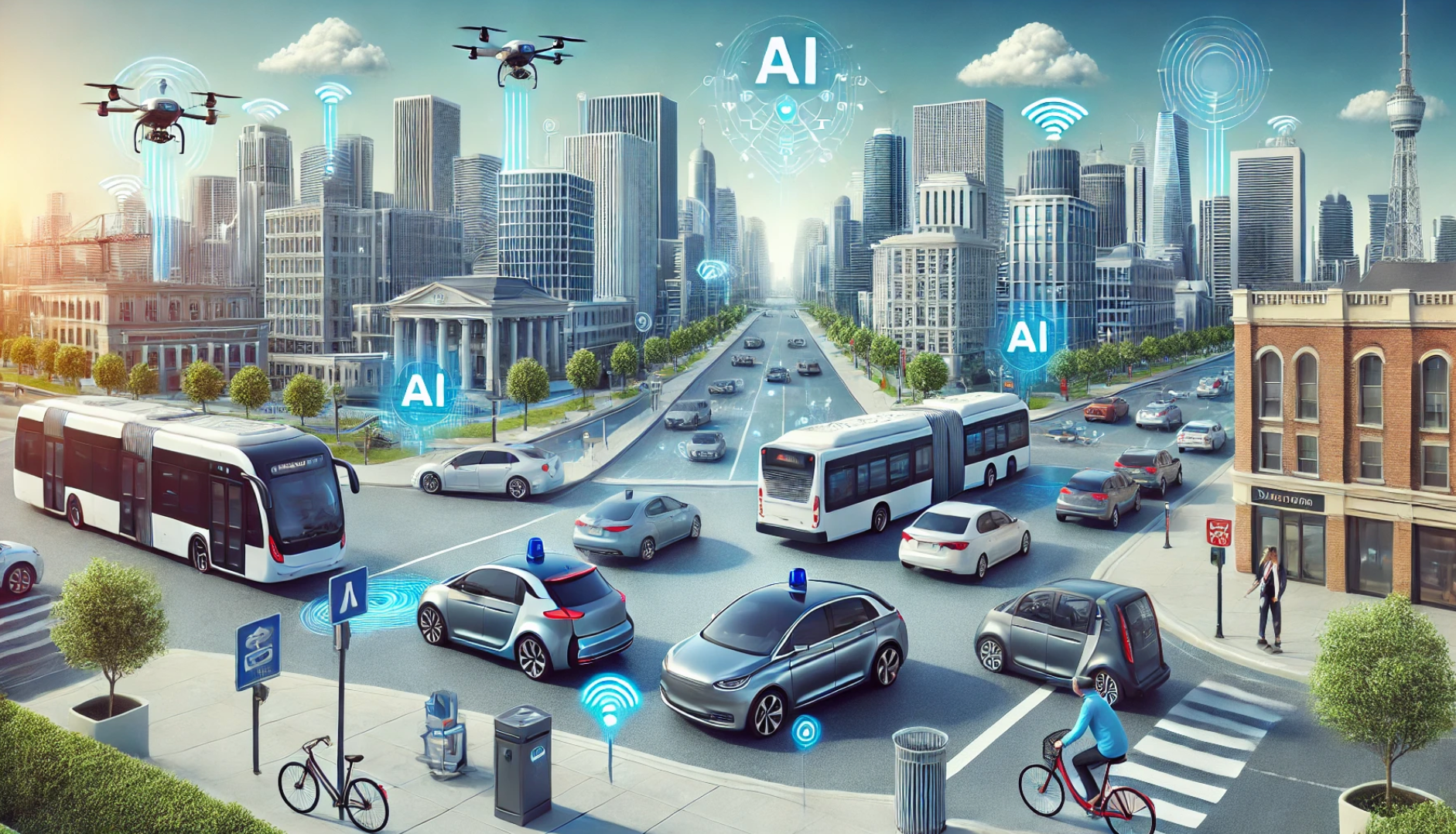
Artificial Intelligence (AI) in transportation represents a paradigm shift in how vehicles, infrastructure, and logistics networks operate. By leveraging advanced algorithms, real-time data processing, and connectivity, AI enables systems to make autonomous decisions, predict disruptions, and optimize resource allocation. This integration spans multiple domains, including road, rail, air, and maritime transport, fostering smarter, safer, and more sustainable mobility solutions. The adoption of AI in transportation is driven by the need to address growing urbanization, climate change, and inefficiencies in traditional systems. From self-driving cars to AI-powered traffic lights, these technologies aim to reduce human error, minimize environmental impact, and enhance the overall user experience. As AI continues to evolve, its role in transportation is expected to expand, paving the way for fully autonomous ecosystems and hyper-efficient logistics networks.
#History / Background
The concept of AI in transportation traces back to the mid-20th century, with early experiments in automation and robotics. One of the first notable milestones was the development of autonomous vehicle prototypes in the 1980s, such as Carnegie Mellon University’s Navlab project, which demonstrated the feasibility of computer-controlled driving. However, progress was limited by computational constraints and the lack of robust sensor technology. The 2000s marked a turning point with advancements in machine learning and computer vision, enabling more sophisticated AI applications. The DARPA Grand Challenge (2004–2007) played a pivotal role by incentivizing researchers to develop self-driving cars capable of navigating complex environments. Companies like Google (Waymo) and Tesla later commercialized these innovations, introducing AI-driven features such as lane-keeping assist and adaptive cruise control. In parallel, AI began transforming traffic management systems. Cities like Singapore and Los Angeles deployed AI-powered adaptive traffic signals to reduce congestion, while logistics companies adopted predictive analytics to streamline supply chains. The rise of Internet of Things (IoT) devices further accelerated this trend, enabling real-time data collection from vehicles, roads, and infrastructure. By the 2020s, AI in transportation had become a cornerstone of smart city initiatives, with governments and corporations investing heavily in autonomous public transit, drone deliveries, and AI-driven freight optimization. The COVID-19 pandemic further highlighted the importance of AI in maintaining resilient supply chains and contactless mobility solutions.
#How It Works
AI in transportation operates through a combination of data collection, processing, and decision-making, facilitated by advanced technologies:
#1. Data Collection AI systems rely on sensors, cameras, LiDAR (Light Detection and Ranging), GPS, and IoT devices to gather real-time data. For example:
- Autonomous vehicles use radar, ultrasonic sensors, and cameras to detect obstacles, pedestrians, and road conditions.
- Traffic management systems collect data from loop detectors, drones, and connected vehicles to monitor congestion and accidents.
- Logistics platforms track shipments via RFID tags, GPS, and telematics to optimize routes and delivery schedules.
#2. Data Processing & AI Models Collected data is processed using:
- Machine Learning (ML): Algorithms such as neural networks, reinforcement learning, and deep learning analyze patterns to make predictions (e.g., traffic flow forecasting, demand prediction).
- Computer Vision: AI models process visual data from cameras to identify objects, recognize traffic signs, and detect anomalies (e.g., potholes, unauthorized lane changes).
- Predictive Analytics: Historical and real-time data are used to forecast disruptions, such as weather-related delays, vehicle breakdowns, or demand surges.
#3. Decision-Making & Automation AI systems make real-time decisions to:
- Autonomous Navigation: Self-driving cars use path planning algorithms to navigate roads, obey traffic rules, and avoid collisions.
- Traffic Optimization: AI adjusts traffic light timings dynamically based on live traffic data to reduce congestion.
- Fleet Management: AI optimizes delivery routes, fuel consumption, and maintenance schedules for logistics fleets.
- Predictive Maintenance: AI detects vehicle wear and tear by analyzing sensor data, preventing breakdowns before they occur.
#4. Human-AI Interaction While AI handles most operations autonomously, human oversight remains crucial in:
- Supervisory Control: Remote operators monitor autonomous systems for safety and intervene when necessary.
- User Interfaces: AI-powered dashboards provide drivers, fleet managers, and city planners with actionable insights.
#Important Facts
- Autonomous Vehicles: Waymo’s self-driving cars have logged millions of autonomous miles, demonstrating a 90% reduction in accident rates compared to human drivers.
- Traffic Reduction: AI-powered traffic signals in Los Angeles reduced congestion by 12%, saving $1.2 billion annually in fuel and time costs.
- Emissions Impact: AI-optimized truck platooning (where vehicles drive closely together to reduce air resistance) can cut fuel consumption by 10–15%.
- Cost Savings: Predictive maintenance in rail transport can reduce breakdowns by 30–50%, saving the industry billions annually.
- Urban Mobility: AI-driven ride-sharing algorithms (e.g., Uber, Lyft) have decreased empty vehicle miles by 15–20%.
- Regulatory Challenges: Over 30 U.S. states have enacted laws regulating autonomous vehicles, highlighting the need for standardized AI governance.
- Cybersecurity Risks: A 2021 report found that 62% of transportation companies experienced cyberattacks, underscoring vulnerabilities in AI-dependent systems.
#Timeline
- Foundational ideas
Core concepts and early methods shape What Is AI in Transportation?.
- Practical use
Tools, examples, and real-world deployments make the topic easier to evaluate.
- Responsible implementation
Current work focuses on reliability, governance, performance, and measurable impact.
#Related Terms
#FAQ
What does What Is AI in Transportation? cover?
Explains What Is AI in Transportation, including the core definition, how it works, practical examples, and limitations.
Why is What Is AI in Transportation? important?
It helps readers understand key concepts, compare practical use cases, and evaluate how Artificial Intelligence decisions affect outcomes, risks, and implementation choices.
What should readers verify before applying this topic?
Readers should compare benefits, limitations, data requirements, and related themes such as AI, Transportation, Machine Learning before using the ideas in real projects.
#References
- What Is AI in Transportation? terminology and background research
- What Is AI in Transportation? use cases, implementation examples, and limitations
- Artificial Intelligence best practices, standards, and risk guidance
- AI case studies, benchmarks, and current industry analysis

Comments
No comments yet. Start the discussion with a useful note.