

#Short Answer
Explains What Is AI, including the core definition, how it works, practical examples, and limitations.
#Infobox
#Overview
Artificial Intelligence (AI) is a branch of computer science focused on creating systems capable of performing tasks that typically require human intelligence. These tasks include visual perception, speech recognition, decision-making, and language translation. AI systems leverage algorithms, data, and computational power to mimic cognitive functions such as learning and problem-solving. The field of AI is broadly divided into two categories:
- Narrow AI (Weak AI): Designed to perform a narrow task (e.g., facial recognition, voice assistants like Siri or Alexa).
- General AI (Strong AI): Hypothetical systems with the ability to understand, learn, and apply knowledge across diverse domains, similar to human cognition. AI technologies are integrated into various industries, including healthcare (diagnostic tools), finance (fraud detection), automotive (self-driving cars), and entertainment (recommendation algorithms). The rapid advancements in AI, particularly in machine learning and deep learning, have led to significant breakthroughs in automation, data analysis, and predictive modeling.
#History / Background
#Early Foundations (Pre-1950s)
The concept of artificial intelligence dates back to ancient myths and stories of artificial beings endowed with intelligence or consciousness. Philosophers like René Descartes and Gottfried Wilhelm Leibniz explored the idea of mechanical reasoning. In the 19th century, mathematician George Boole developed Boolean algebra, laying the groundwork for digital circuit design and logical reasoning.
#The Birth of AI (1950s–1970s)
The formal birth of AI as a discipline is often traced to the Dartmouth Conference in 1956, where the term "artificial intelligence" was coined by John McCarthy. Key milestones during this period include:
- 1950: Alan Turing’s Computing Machinery and Intelligence introduced the Turing Test, a criterion for determining a machine’s ability to exhibit intelligent behavior.
- 1956: The Logic Theorist, developed by Allen Newell and Herbert Simon, became the first AI program capable of proving mathematical theorems.
- 1958: John McCarthy created the LISP programming language, which became fundamental for AI research.
- 1966: ELIZA, an early natural language processing program, simulated conversation by using pattern matching and substitution methodology.
#The AI Winter (1970s–1980s)
Despite early optimism, AI research faced significant challenges due to limited computational power and unrealistic expectations. The AI Winter refers to periods of reduced funding and interest in AI research, particularly from the late 1970s to the mid-1980s. Key factors included:
- Limited computational resources: Early computers were too slow for complex AI tasks.
- Overpromising and underdelivering: Many projects failed to meet expectations, leading to skepticism.
- Lack of data: AI systems required vast datasets, which were not readily available at the time.
#Revival and Modern AI (1990s–Present)
The resurgence of AI in the 1990s was driven by advancements in computational power, the availability of large datasets, and breakthroughs in algorithms. Key developments include:
- 1997: IBM’s Deep Blue defeated world chess champion Garry Kasparov, marking a milestone in AI’s ability to perform complex strategic tasks.
- 2011: IBM Watson won Jeopardy!, demonstrating AI’s capability in natural language understanding and information retrieval.
- 2012: The rise of deep learning, powered by neural networks, revolutionized AI applications in image and speech recognition.
- 2016: Google DeepMind’s AlphaGo defeated a world champion Go player, showcasing AI’s ability to master complex games with vast decision spaces. Today, AI is a rapidly evolving field with applications in nearly every sector, driven by innovations in machine learning, reinforcement learning, and generative AI.
#How It Works
#Core Concepts and Techniques
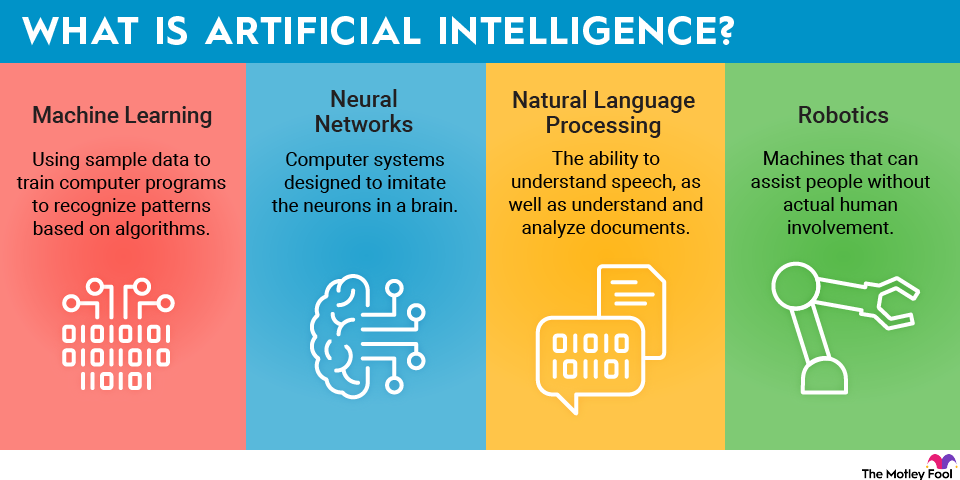
- Machine Learning (ML)
Machine learning is a subset of AI that enables systems to learn from data without explicit programming. It relies on algorithms that improve their performance as they are exposed to more data. Key types of machine learning include:
- Supervised Learning: The model is trained on labeled data (input-output pairs). Examples include classification (e.g., spam detection) and regression (e.g., predicting house prices).
- Unsupervised Learning: The model identifies patterns in unlabeled data. Examples include clustering (e.g., customer segmentation) and dimensionality reduction (e.g., principal component analysis).
- Reinforcement Learning: The model learns by interacting with an environment and receiving rewards or penalties. Used in robotics, gaming, and autonomous systems.
- Deep Learning
A specialized form of machine learning that uses neural networks with multiple layers (hence "deep") to model complex patterns in data. Key architectures include:
- Convolutional Neural Networks (CNNs): Used for image and video recognition.
- Recurrent Neural Networks (RNNs): Suitable for sequential data like time series or natural language.
- Transformers: Introduced in 2017, these models (e.g., BERT, GPT) excel in natural language processing tasks by capturing contextual relationships in text.
- Natural Language Processing (NLP)
NLP enables machines to understand, interpret, and generate human language. Techniques include:
- Tokenization: Breaking text into words or phrases.
- Sentiment Analysis: Determining the emotional tone of a text.
- Machine Translation: Automatically translating text between languages (e.g., Google Translate).
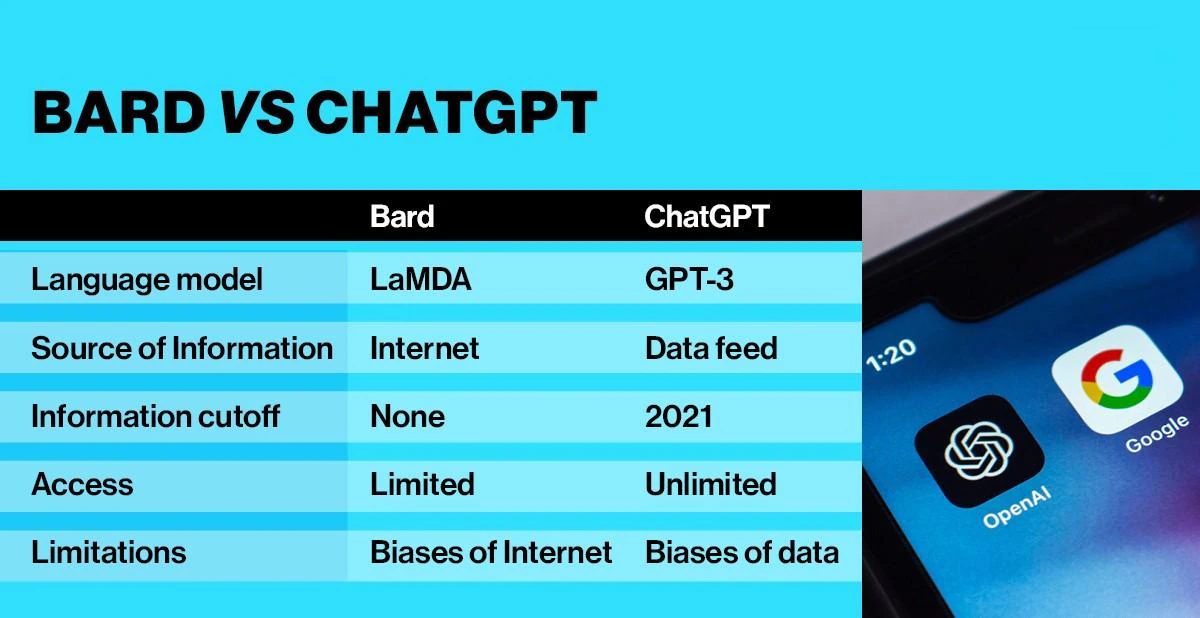
- Chatbots and Virtual Assistants: Systems like Siri or Alexa use NLP to process user queries and provide responses.
- Computer Vision
Computer vision focuses on enabling machines to interpret and make decisions based on visual input. Applications include:
- Object Detection: Identifying and locating objects in images (e.g., facial recognition).
- Image Segmentation: Partitioning an image into meaningful regions.
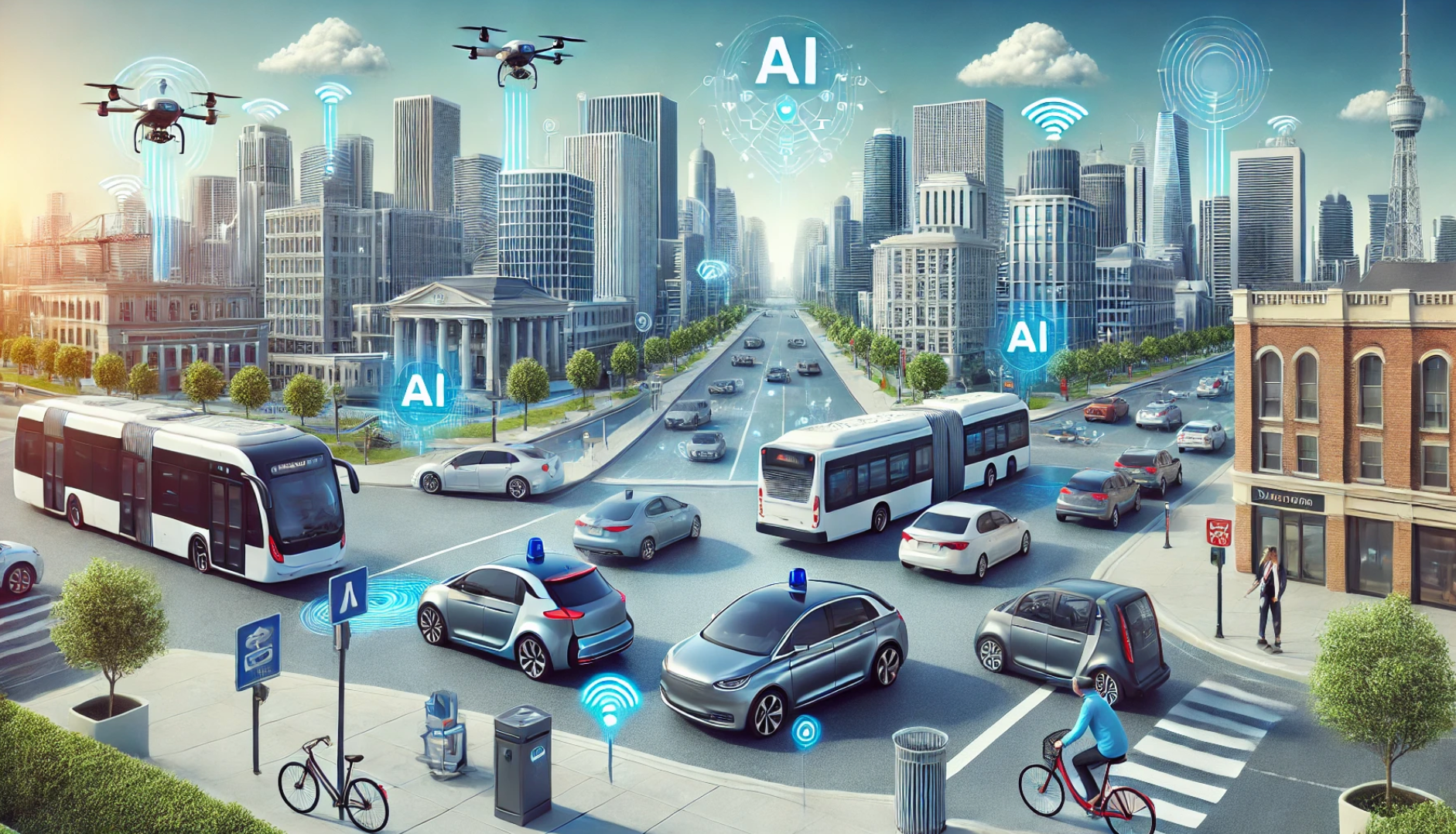
- Autonomous Vehicles: Using cameras and sensors to navigate and avoid obstacles.
- Robotics
AI-powered robotics combines physical machines with intelligent algorithms to perform tasks autonomously or semi-autonomously. Examples include:
- Industrial Robots: Used in manufacturing for assembly and quality control.
- Service Robots: Assist in healthcare, hospitality, and household tasks.
- Autonomous Drones: Used for surveillance, delivery, and exploration.
#Data and Computational Power AI systems rely on big data and high-performance computing to train models effectively. Key considerations include:
- Data Quality: Clean, labeled, and representative datasets are essential for training accurate models.
- Computational Resources: Training deep learning models requires significant processing power, often provided by GPUs (Graphics Processing Units) or TPUs (Tensor Processing Units).
- Cloud Computing: Platforms like AWS, Google Cloud, and Azure provide scalable infrastructure for AI development and deployment.
#Ethical and Societal Implications The deployment of AI raises important ethical questions, including:
- Bias and Fairness: AI systems can perpetuate or amplify biases present in training data.
- Privacy: The use of personal data in AI applications raises concerns about surveillance and data security.
- Job Displacement: Automation may lead to job losses in certain sectors, necessitating reskilling and policy interventions.
- Autonomy and Control: The development of autonomous weapons and decision-making systems requires careful regulation.
#Important Facts
- AI vs. Human Intelligence: - AI excels at specific tasks (e.g., playing chess, recognizing faces) but lacks general intelligence and consciousness. - Humans possess emotional intelligence, creativity, and common sense, which are challenging to replicate in machines.
- AI in Everyday Life:
- Recommendation Systems: Platforms like Netflix and Amazon use AI to suggest content or products based on user behavior.
- Voice Assistants: Siri, Alexa, and Google Assistant use NLP and speech recognition to interact with users.
- Autonomous Vehicles: Companies like Tesla and Waymo are developing self-driving cars that use AI for navigation and decision-making.
- AI and Creativity: - Generative AI models like DALL-E and MidJourney can create art, music, and text based on user prompts. - AI tools are used in content creation, design, and even scientific research (e.g., drug discovery).
- AI in Healthcare:
- Diagnostic Tools: AI models analyze medical images (e.g., X-rays, MRIs) to detect diseases like cancer.
- Personalized Medicine: AI tailors treatment plans based on a patient’s genetic and medical history.
- Drug Discovery: Machine learning accelerates the identification of potential drug candidates.
- AI and Cybersecurity: - AI detects and responds to cyber threats in real-time by analyzing patterns in network traffic. - Fraud detection systems in banking use AI to identify suspicious transactions.
- Limitations of AI:
- Hallucinations: AI models can generate plausible but incorrect or nonsensical outputs (e.g., chatbots providing false information).
- Explainability: Many AI models, especially deep learning systems, operate as "black boxes," making it difficult to understand their decision-making processes.
- Energy Consumption: Training large AI models requires significant energy, raising concerns about environmental impact.
#Timeline
- Foundational ideas
Core concepts and early methods shape What Is AI?.
- Practical use
Tools, examples, and real-world deployments make the topic easier to evaluate.
- Responsible implementation
Current work focuses on reliability, governance, performance, and measurable impact.
#Related Terms
#FAQ
What does What Is AI? cover?
Explains What Is AI, including the core definition, how it works, practical examples, and limitations.
Why is What Is AI? important?
It helps readers understand key concepts, compare practical use cases, and evaluate how Artificial Intelligence decisions affect outcomes, risks, and implementation choices.
What should readers verify before applying this topic?
Readers should compare benefits, limitations, data requirements, and related themes such as AI, Machine Learning, Implementation before using the ideas in real projects.
#References
- What Is AI? terminology and background research
- What Is AI? use cases, implementation examples, and limitations
- Artificial Intelligence best practices, standards, and risk guidance
- AI case studies, benchmarks, and current industry analysis
Comments
No comments yet. Start the discussion with a useful note.