


#Short Answer
Reviews top 10 ai tools in 2026, covering notable options, strengths, limitations, and practical selection factors.
#Infobox
#Overview
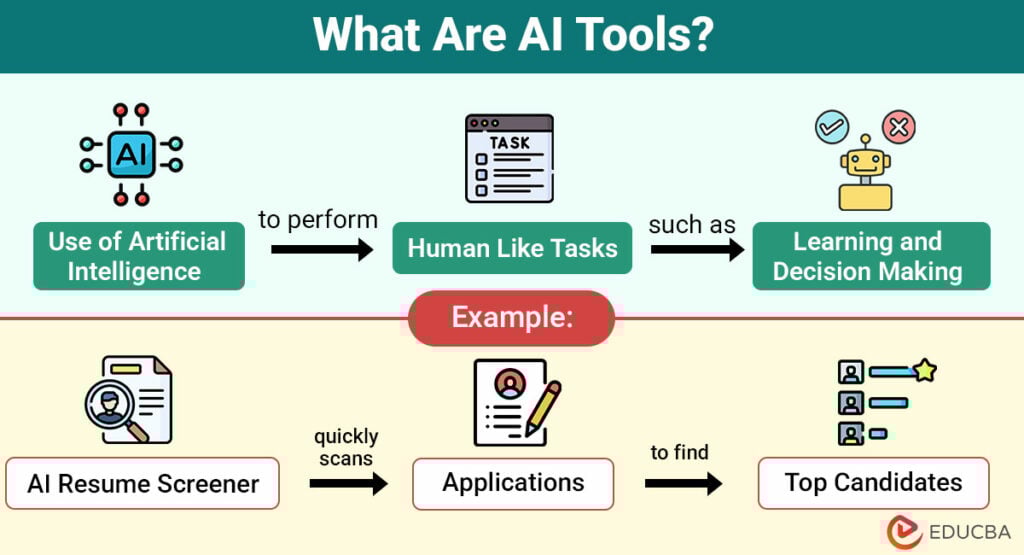
The year 2026 marks a pivotal moment in the integration of artificial intelligence (AI) into business operations, driven by advancements in computational power, algorithmic efficiency, and data accessibility. The Top 10 AI Tools for Business in 2026 are not merely incremental upgrades but revolutionary solutions that redefine how organizations operate. These tools are categorized based on their core functionalities, including autonomous decision-making, hyper-personalization, predictive maintenance, and ethical AI governance. Businesses across sectors are increasingly adopting AI to streamline workflows, reduce costs, and unlock new revenue streams. For instance, AI-powered customer relationship management (CRM) systems now leverage real-time sentiment analysis to tailor interactions, while supply chain optimization tools use predictive analytics to mitigate disruptions. The convergence of AI with other emerging technologies, such as quantum computing and blockchain, further amplifies its potential, enabling secure, decentralized, and ultra-fast processing. Moreover, the democratization of AI—facilitated by no-code/low-code platforms—has empowered non-technical users to deploy AI solutions without extensive programming knowledge. This shift has accelerated innovation, allowing small and medium-sized enterprises (SMEs) to compete with larger corporations on a level playing field.
#History / Background
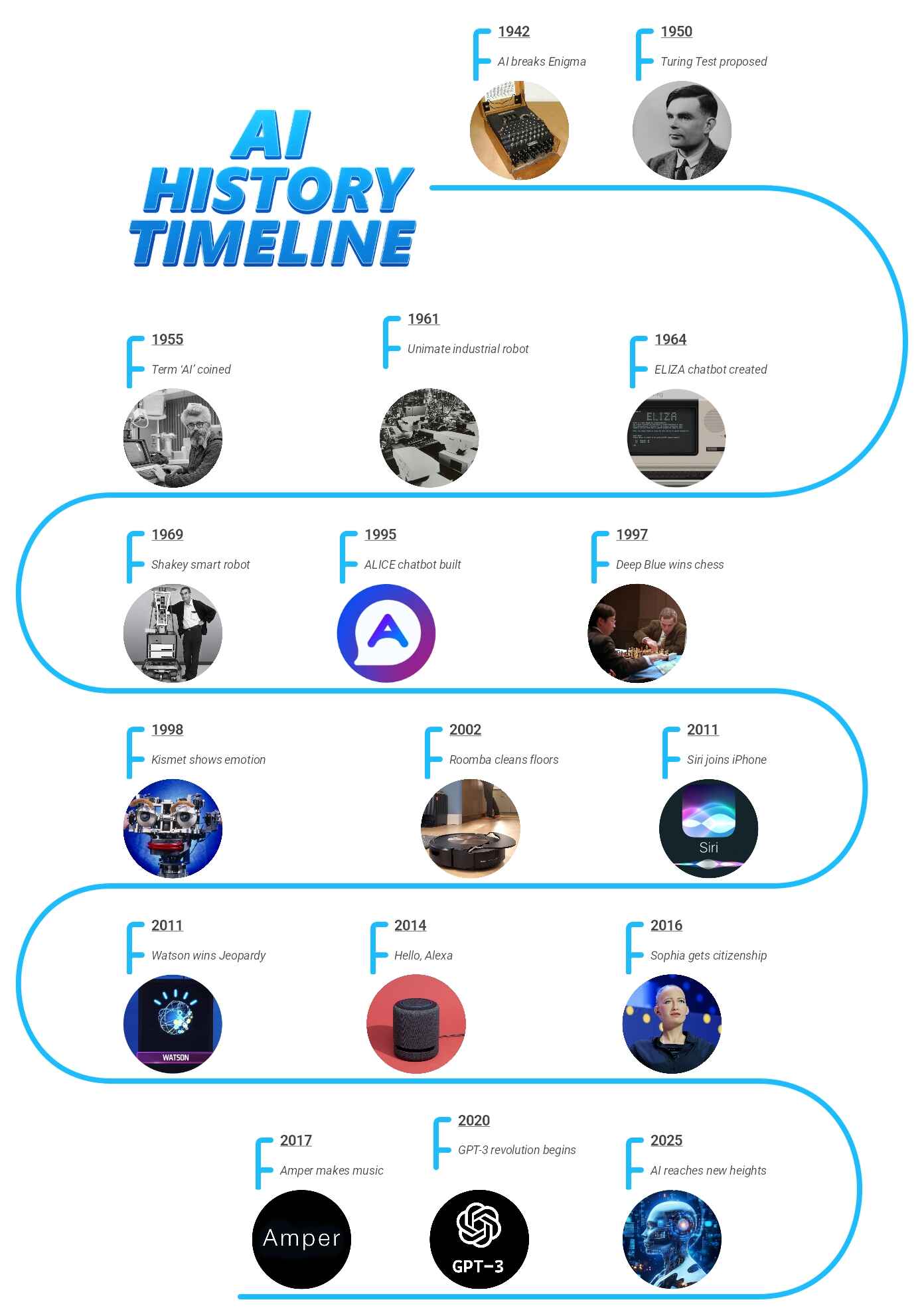
The evolution of AI tools for business can be traced back to the early 2010s, with the advent of machine learning (ML) and deep learning techniques. However, the real breakthrough came with the introduction of generative AI models, such as transformers (e.g., BERT, GPT), which enabled machines to understand and generate human-like text, images, and code. By 2020, AI adoption in enterprises surged, driven by the need for remote work solutions during the COVID-19 pandemic. Companies like Microsoft, Google, and IBM began integrating AI into their cloud platforms, offering AI-as-a-Service (AIaaS) models. The launch of ChatGPT in 2022 marked a turning point, demonstrating the potential of large language models (LLMs) in business applications, from content creation to customer service automation. The period between 2023–2025 saw rapid advancements in multimodal AI, where systems could process and generate text, images, audio, and video simultaneously. This enabled tools like AI-powered design platforms and real-time translation services to become mainstream. Additionally, regulatory frameworks such as the EU AI Act (2024) and U.S. AI Executive Order (2023) began shaping the ethical deployment of AI, emphasizing transparency, accountability, and bias mitigation. By 2026, AI tools have evolved into self-optimizing systems that continuously learn from their environments, reducing the need for manual intervention. The integration of edge AI—where processing occurs on local devices rather than in the cloud—has also reduced latency, making AI more responsive in critical applications like autonomous vehicles and industrial robotics.
#Top 10 AI Tools for Business in 2026
#
- Autonomous Data Analyst (ADA) Category: Predictive Analytics & Business Intelligence Key Features:
- Self-service analytics with natural language querying (e.g., "Show me Q3 sales trends in Europe").
- Automated insight generation using generative AI to highlight anomalies, opportunities, and risks.
- Real-time dashboard updates with predictive forecasting (e.g., demand, churn, fraud).
- Integration with ERP/CRM systems for seamless data flow. Use Cases: - Financial forecasting for investment firms. - Supply chain risk assessment for manufacturers. - Customer behavior analysis for e-commerce platforms. Notable Providers: Tableau (Salesforce), Microsoft Power BI, Sisense, ThoughtSpot.
#
- Hyper-Personalization Engine (HPE) Category: Marketing & Customer Experience Key Features:
- Dynamic content generation tailored to individual user preferences in real time.
- Emotion-aware AI that adjusts messaging based on sentiment analysis (e.g., social media, chatbots).
- Cross-channel consistency (email, social media, website, mobile apps).
- A/B testing automation with AI-driven optimization. Use Cases: - Personalized email campaigns for SaaS companies. - Adaptive pricing models for airlines and hotels. - Customized product recommendations in retail. Notable Providers: Adobe Experience Cloud, Salesforce Einstein, Dynamic Yield (McDonald’s), Segment.
#
- AI-Powered Cybersecurity Shield (APCS) Category: Cybersecurity & Threat Detection Key Features:
- Zero-trust architecture with continuous authentication.
- Predictive threat intelligence using ML to identify emerging attack vectors.
- Automated incident response (e.g., isolating compromised systems, patching vulnerabilities).
- Dark web monitoring for leaked credentials or sensitive data. Use Cases: - Protection for financial institutions against fraud. - Securing IoT networks in smart cities. - Compliance with NIST, ISO 27001, and GDPR. Notable Providers: Darktrace, CrowdStrike, Palo Alto Networks, IBM Security.
#
- Autonomous Procurement Assistant (APA) Category: Supply Chain & Logistics Key Features:
- AI-driven supplier selection based on cost, quality, and sustainability metrics.
- Automated contract negotiation using NLP to draft and review agreements.
- Predictive inventory management to prevent stockouts or overstocking.
- Carbon footprint tracking for sustainable sourcing. Use Cases: - Manufacturing companies optimizing raw material procurement. - Healthcare providers managing medical supply chains. - Retailers adapting to seasonal demand fluctuations. Notable Providers: Coupa, Jaggaer, Ivalua, SAP Ariba.
#
- Generative AI Content Creator (GACC) Category: Content Creation & Marketing Key Features:
- Multimodal content generation (text, images, videos, audio).
- Brand voice consistency with customizable AI models.
- SEO-optimized content generated in bulk for blogs, social media, and ads.
- Copyright-compliant training data to avoid legal risks. Use Cases: - Automated blog writing for news outlets. - AI-generated product descriptions for e-commerce. - Personalized video ads for digital marketing. Notable Providers: Jasper, Copy.ai, Midjourney, Runway ML.
#
- AI-Driven Customer Support Bot (AICSB) Category: Customer Service & Support Key Features:
- Context-aware chatbots that handle complex queries without human intervention.
- Emotion detection to escalate frustrated customers to human agents.
- Multilingual support with real-time translation.
- Integration with CRM systems for seamless handoffs. Use Cases: - 24/7 technical support for SaaS companies. - Virtual concierge services for hospitality. - Automated refund processing for e-commerce. Notable Providers: Zendesk Answer Bot, Intercom Fin, Ada, Tidio.
#
- Predictive Maintenance Optimizer (PMO) Category: Industrial IoT & Manufacturing Key Features:
- Sensor data analysis to predict equipment failures before they occur.
- Automated work order generation for maintenance teams.
- Energy efficiency optimization by reducing downtime.
- Digital twin integration for virtual simulations. Use Cases: - Predictive maintenance for wind turbines in energy sectors. - Fleet management for logistics companies. - Quality control in semiconductor manufacturing. Notable Providers: Siemens MindSphere, GE Digital, PTC ThingWorx, Uptake.
#
- AI-Powered Financial Advisor (APFA) Category: Finance & Investment Key Features:
- Robo-advisory services with hyper-personalized investment strategies.
- Fraud detection in real-time transactions.
- Algorithmic trading with adaptive risk management.
- Tax optimization using predictive modeling. Use Cases: - Wealth management for high-net-worth individuals. - Credit scoring for fintech lenders. - Cryptocurrency portfolio management. Notable Providers: Betterment, Wealthfront, Numerai, Upstart.
#
- Ethical AI Governance Platform (EAGP) Category: Compliance & Risk Management Key Features:
- Bias detection and mitigation in AI models.
- Explainable AI (XAI) for regulatory compliance (e.g., EU AI Act).
- Automated audit trails for AI decision-making processes.
- Ethical AI certification for businesses. Use Cases: - Healthcare providers ensuring HIPAA-compliant AI diagnostics. - Government agencies deploying AI for public services. - HR departments using AI in recruitment without discrimination. Notable Providers: IBM AI Fairness 360, FICO AI, H2O.ai, Dataiku.
#
- Edge AI Processing Unit (EAPU) Category: Edge Computing & IoT Key Features:
- Low-latency processing for real-time applications (e.g., autonomous drones, AR/VR).
- Energy-efficient AI for battery-powered devices.
- Offline functionality for remote or disconnected environments.
- Privacy-preserving AI (e.g., federated learning). Use Cases: - Smart agriculture with drone-based crop monitoring. - Autonomous delivery robots in urban logistics. - Wearable health monitors for remote patient care. Notable Providers: NVIDIA Jetson, Intel OpenVINO, Qualcomm AI Engine, Google Coral.
#How It Works
The Top 10 AI Tools for Business in 2026 operate on a combination of advanced algorithms, vast datasets, and scalable infrastructure. Below is a breakdown of their core mechanisms:
#1. Machine Learning & Deep Learning
- Supervised Learning: Models are trained on labeled datasets to make predictions (e.g., fraud detection, demand forecasting).
- Unsupervised Learning: Identifies patterns in unlabeled data (e.g., customer segmentation, anomaly detection).
- Reinforcement Learning: Optimizes decisions through trial-and-error (e.g., autonomous procurement, dynamic pricing).
#2. Natural Language Processing (NLP)
- Transformers (e.g., BERT, GPT): Enable machines to understand and generate human language for chatbots, content creation, and sentiment analysis.
- Speech Recognition: Converts spoken language into text for voice assistants and transcription services.
#3. Computer Vision
- Object Detection: Identifies and classifies visual data (e.g., quality control in manufacturing, autonomous vehicles).
- Image Generation: Creates realistic images from text prompts (e.g., marketing visuals, virtual try-ons).
#4. Predictive Analytics
- Time-Series Forecasting: Uses historical data to predict future trends (e.g., sales, stock prices, equipment failures).
- Monte Carlo Simulations: Models uncertainty in decision-making (e.g., financial risk assessment).
#5. Edge AI & Federated Learning
- Edge Computing: Processes data locally on devices (e.g., smartphones, IoT sensors) to reduce latency and bandwidth usage.
- Federated Learning: Trains AI models across decentralized devices without sharing raw data (e.g., healthcare diagnostics).
#6. Generative AI
- Diffusion Models: Generate high-quality images, audio, and video (e.g., deepfake detection, synthetic media).
- Large Language Models (LLMs): Power conversational AI, code generation, and document summarization.
#Important Facts
- Adoption Rate: By 2026, 75% of enterprises will use AI in at least one business function (Gartner, 2024).
- Cost Savings: AI-driven automation is projected to reduce operational costs by 30% in industries like manufacturing and logistics.
- Job Market Impact: While AI displaces routine tasks, it also creates new roles in AI ethics, prompt engineering, and data curation.
- Ethical Concerns: Bias in AI models remains a critical challenge, with 68% of organizations reporting incidents of algorithmic discrimination (Deloitte, 2025).
- Energy Consumption: Training large AI models consumes significant energy, with some models requiring as much power as a small town (MIT Technology Review, 2023).
- Regulatory Landscape: The EU AI Act (2024) classifies AI systems into four risk categories, with strict penalties for non-compliance.
- Future Trends: Quantum AI (combining quantum computing with AI) is expected to revolutionize optimization problems in 2027–2030.
#Timeline
- Foundational ideas
Core concepts and early methods shape Top 10 AI Tools in 2026.
- Practical use
Tools, examples, and real-world deployments make the topic easier to evaluate.
- Responsible implementation
Current work focuses on reliability, governance, performance, and measurable impact.
#Related Terms
#FAQ
What does Top 10 AI Tools in 2026 cover?
Reviews top 10 ai tools in 2026, covering notable options, strengths, limitations, and practical selection factors.
Why is Top 10 AI Tools in 2026 important?
It helps readers understand key concepts, compare practical use cases, and evaluate how AI Tools decisions affect outcomes, risks, and implementation choices.
What should readers verify before applying this topic?
Readers should compare benefits, limitations, data requirements, and related themes such as Top, 10, AI before using the ideas in real projects.
#References
- Top 10 AI Tools in 2026 terminology and background research
- Top 10 AI Tools in 2026 use cases, implementation examples, and limitations
- AI Tools best practices, standards, and risk guidance
- Top case studies, benchmarks, and current industry analysis
Comments
No comments yet. Start the discussion with a useful note.