

#Short Answer
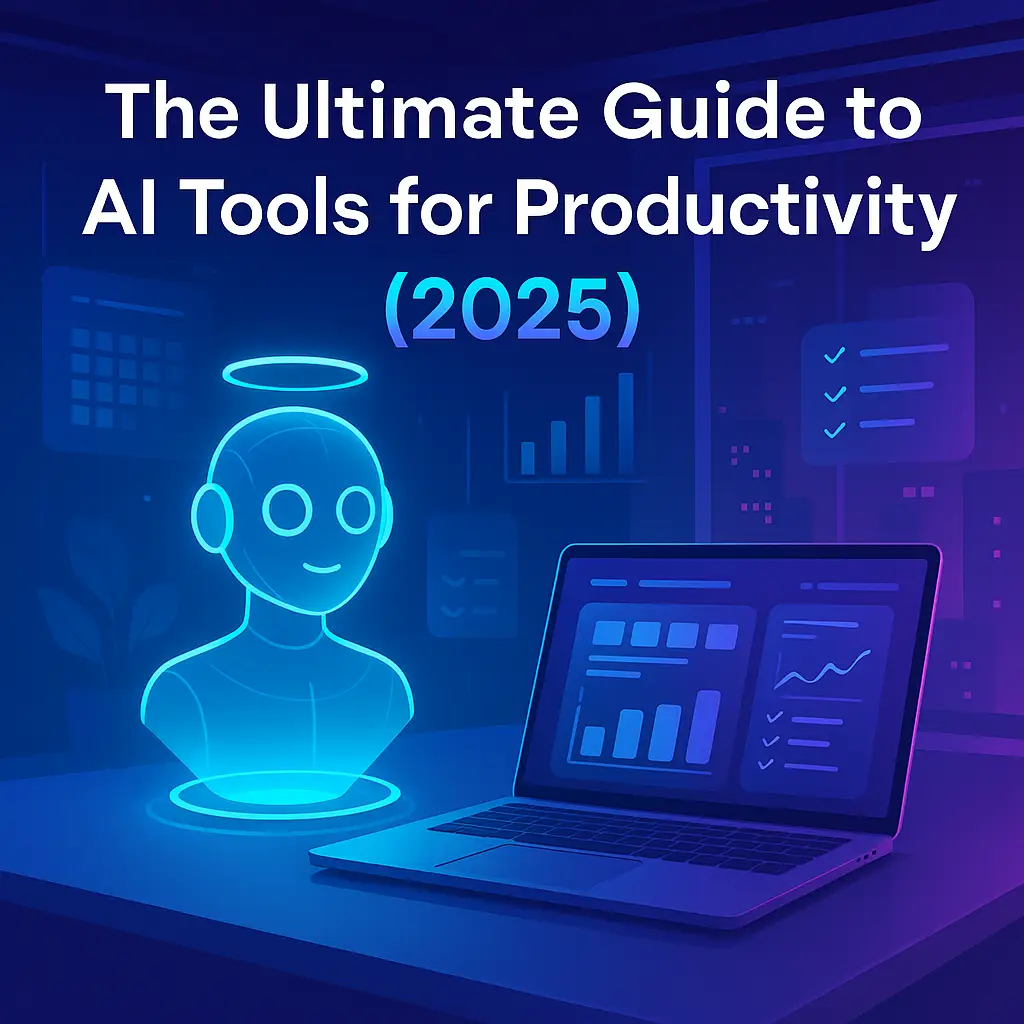
Covers the ultimate guide to ai platforms, including core concepts, practical examples, benefits, limitations, and risks in AI Tools.
#Infobox
#Overview
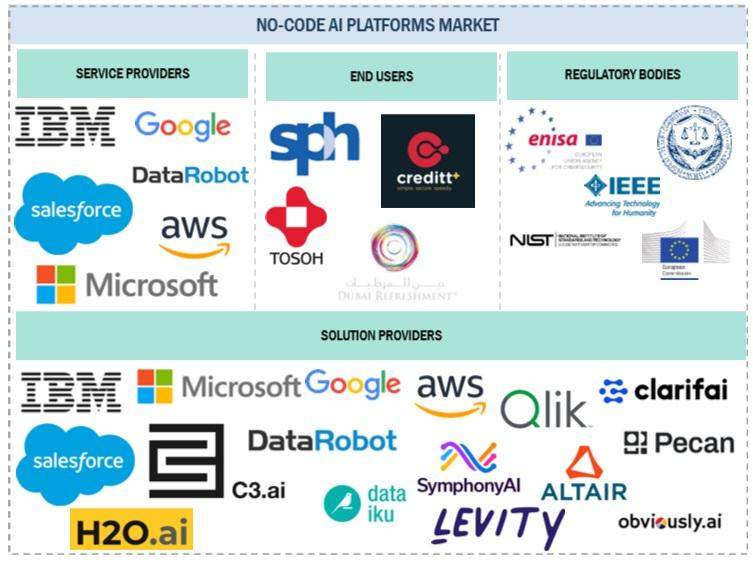
Artificial Intelligence (AI) platforms represent a cornerstone of modern technological innovation, enabling organizations to harness the power of machine learning (ML), deep learning, and other AI subfields. These platforms serve as end-to-end solutions, providing the necessary infrastructure, tools, and services to develop, train, deploy, and monitor AI models. By abstracting complex technical processes, AI platforms democratize access to AI capabilities, allowing businesses of all sizes to integrate intelligent automation, predictive analytics, and decision-making systems into their operations. The evolution of AI platforms has been driven by advancements in cloud computing, big data analytics, and open-source frameworks like TensorFlow and PyTorch. Today, these platforms are indispensable in sectors such as healthcare (for diagnostics and drug discovery), finance (for fraud detection and algorithmic trading), retail (for personalized recommendations), and manufacturing (for predictive maintenance). The global AI platform market is projected to reach over $100 billion by 2030, reflecting its critical role in digital transformation strategies.
#History / Background
The concept of AI platforms emerged alongside the development of AI itself, evolving through distinct phases:
#Early Foundations (1950s–1980s)
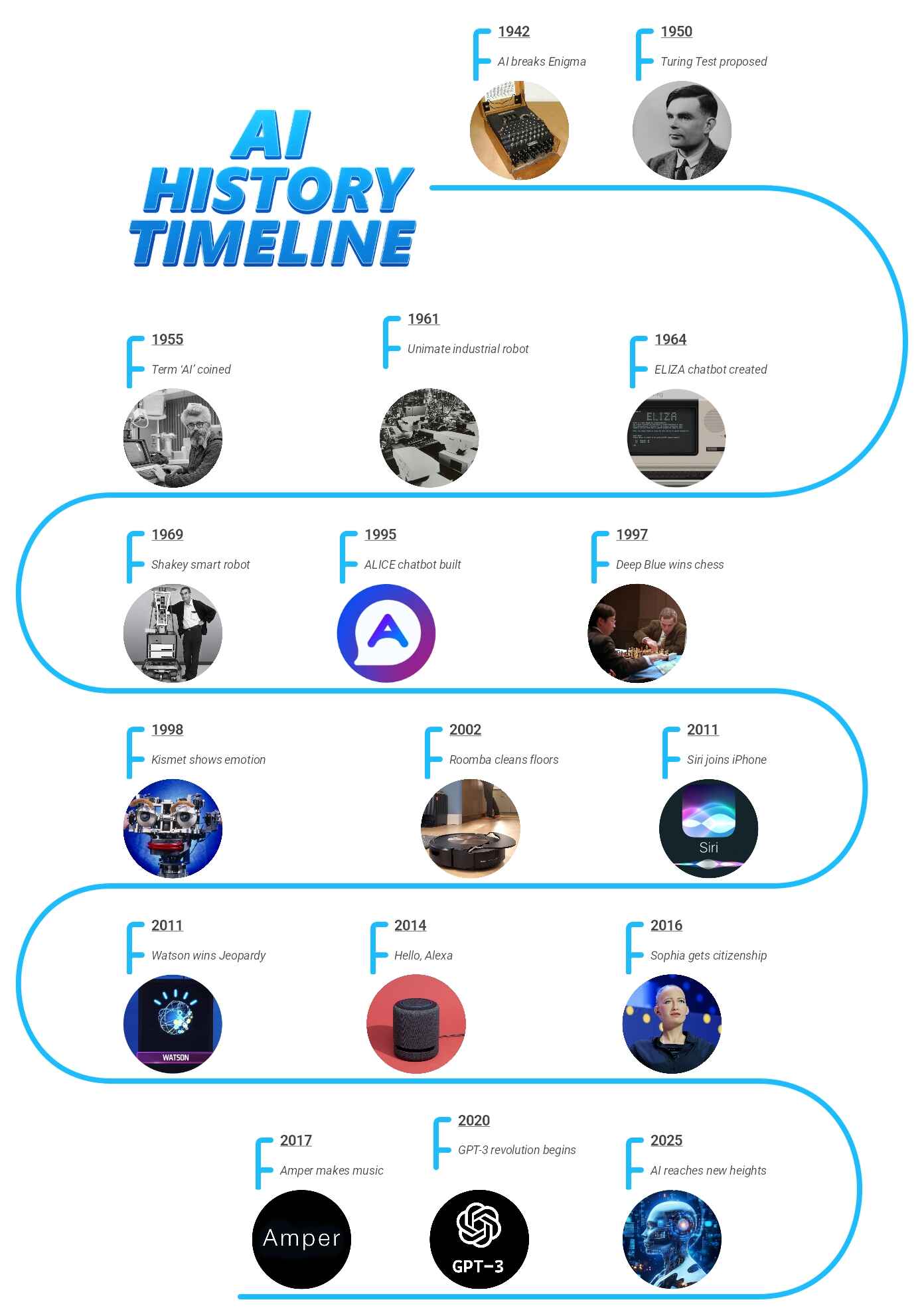
- 1956: The Dartmouth Conference coined the term "artificial intelligence," laying the groundwork for AI research.
- 1960s–1970s: Early AI systems relied on rule-based expert systems (e.g., MYCIN for medical diagnostics), which were limited by computational constraints.
- 1980s: The rise of symbolic AI and the introduction of Lisp and Prolog programming languages enabled more structured AI applications.
#Machine Learning Revolution (1990s–2010)
- 1997: IBM’s Deep Blue defeated world chess champion Garry Kasparov, showcasing the potential of AI in complex decision-making.
- 2006: Geoffrey Hinton’s work on deep learning reignited interest in neural networks, leading to breakthroughs in image and speech recognition.
- 2011: IBM Watson’s victory on Jeopardy! demonstrated the power of natural language processing (NLP) and unstructured data analysis.
#Cloud and AI Platforms (2010s–Present)
- 2012: The launch of Amazon Web Services (AWS) and Google Cloud introduced scalable AI services, enabling developers to build and deploy models without on-premise infrastructure.
- 2015: Google open-sourced TensorFlow, accelerating AI research and adoption.
- 2018: Microsoft Azure AI and IBM Watson expanded enterprise-grade AI capabilities, integrating AutoML, computer vision, and NLP tools.
- 2020s: The rise of AutoML (automated machine learning) and low-code/no-code AI platforms further lowered barriers to entry, allowing non-experts to deploy AI models.
#How It Works
AI platforms operate through a modular architecture, typically comprising the following components:
#1. Data Ingestion & Preprocessing
- Data Collection: Aggregates structured (databases, spreadsheets) and unstructured (text, images, audio) data from various sources (APIs, IoT devices, web scraping).
- Data Cleaning: Handles missing values, outliers, and inconsistencies using techniques like imputation and normalization.
- Feature Engineering: Transforms raw data into meaningful inputs for AI models (e.g., text tokenization, image resizing).
#2. Model Development
- Algorithm Selection: Offers pre-built models (e.g., ResNet for image classification, BERT for NLP) or customizable frameworks (TensorFlow, PyTorch).
- Training: Uses labeled datasets to train models via supervised, unsupervised, or reinforcement learning.
- Hyperparameter Tuning: Optimizes model performance using techniques like grid search or Bayesian optimization.
#3. Deployment & Scalability
- Model Serving: Deploys trained models as APIs (REST/gRPC) or edge devices (e.g., mobile, IoT).
- Scalability: Leverages cloud infrastructure (AWS SageMaker, Google Vertex AI) to handle high-volume inference requests.
- A/B Testing: Compares model versions to ensure accuracy and performance in production.
#4. Monitoring & Maintenance
- Performance Tracking: Monitors metrics like latency, accuracy, and bias using tools like TensorBoard or MLflow.
- Retraining: Updates models with new data to adapt to changing environments (e.g., concept drift in financial fraud detection).
- Explainability: Provides interpretability tools (SHAP, LIME) to understand model decisions, critical for regulatory compliance (e.g., GDPR, HIPAA).
#Important Facts
- Market Leaders: Google AI Platform, Microsoft Azure AI, Amazon SageMaker, IBM Watson, and DataRobot dominate the enterprise AI platform space.
- Open-Source vs. Proprietary: Platforms like Hugging Face (open-source) and Dataiku (proprietary) cater to different user needs.
- Cost Factors: Pricing models vary—pay-per-use (cloud-based), subscription (SaaS), or one-time licenses (on-premise).
- Ethical Considerations: AI platforms must address bias, privacy (e.g., GDPR compliance), and transparency to avoid reputational risks.
- Industry-Specific Solutions: Healthcare platforms (e.g., NVIDIA Clara) focus on medical imaging, while finance platforms (e.g., Ayasdi) specialize in risk modeling.
#Timeline
- Foundational ideas
Core concepts and early methods shape The Ultimate Guide to AI Platforms.
- Practical use
Tools, examples, and real-world deployments make the topic easier to evaluate.
- Responsible implementation
Current work focuses on reliability, governance, performance, and measurable impact.
#Related Terms
#FAQ
What does The Ultimate Guide to AI Platforms cover?
Covers the ultimate guide to ai platforms, including core concepts, practical examples, benefits, limitations, and risks in AI Tools.
Why is The Ultimate Guide to AI Platforms important?
It helps readers understand key concepts, compare practical use cases, and evaluate how AI Tools decisions affect outcomes, risks, and implementation choices.
What should readers verify before applying this topic?
Readers should compare benefits, limitations, data requirements, and related themes such as Ultimate, AI, Platforms before using the ideas in real projects.
#References
- The Ultimate Guide to AI Platforms terminology and background research
- The Ultimate Guide to AI Platforms use cases, implementation examples, and limitations
- AI Tools best practices, standards, and risk guidance
- Ultimate case studies, benchmarks, and current industry analysis

Comments
No comments yet. Start the discussion with a useful note.