


#Short Answer
Covers the ultimate guide to ai frameworks, including core concepts, practical examples, benefits, limitations, and risks in AI Tools.
#Infobox
#Overview
AI Prompt Frameworks represent a systematic approach to interacting with artificial intelligence systems, particularly large language models (LLMs). These frameworks are designed to address the inherent variability and unpredictability of AI responses by providing structured methodologies for crafting prompts. The primary goal is to enhance the precision, relevance, and utility of AI-generated outputs, making them more reliable for applications in research, business, education, and creative domains. The concept of prompt frameworks gained prominence with the rise of generative AI models, such as those developed by OpenAI, Google, and Anthropic. These models, while powerful, often produce inconsistent or off-topic responses when given poorly structured prompts. AI Prompt Frameworks mitigate this issue by introducing standardized techniques that guide the AI toward desired outcomes. Common frameworks include Chain-of-Thought (CoT) Prompting, which encourages the AI to break down complex problems into sequential steps, and Role-Based Prompting, which assigns a specific persona or role to the AI to tailor its responses accordingly. The adoption of these frameworks has become essential in fields where accuracy and context are critical, such as legal document analysis, medical diagnostics, and financial forecasting. By leveraging structured prompting techniques, users can significantly reduce the need for iterative refinement of inputs, thereby saving time and computational resources.
#History / Background
The evolution of AI Prompt Frameworks is closely tied to the development of natural language processing (NLP) and generative AI. Early NLP systems relied on rule-based approaches, which were limited in their ability to handle complex or ambiguous queries. The introduction of transformer-based models, such as the Generative Pre-trained Transformer (GPT) series by OpenAI, marked a turning point. These models demonstrated an unprecedented ability to generate coherent and contextually relevant text but also highlighted the need for structured input methodologies. The concept of prompt engineering emerged as a discipline within AI research, focusing on optimizing the way humans interact with these models. Early work in this area was largely ad-hoc, with practitioners developing custom techniques based on trial and error. However, as the capabilities of LLMs expanded, so did the need for systematic frameworks. Researchers began formalizing these techniques, leading to the development of widely recognized frameworks such as:
- Chain-of-Thought (CoT) Prompting (2022): Introduced by Wei et al., this framework demonstrated that encouraging models to articulate their reasoning process before providing a final answer significantly improves performance on complex tasks.
- Few-Shot Prompting: A technique where the AI is provided with a small number of examples before being asked to generate a response, enabling it to infer patterns and context more effectively.
- Role-Based Prompting: Assigning a specific role or persona to the AI (e.g., "act as a legal expert") to guide the tone and depth of its responses. The rapid adoption of these frameworks was further accelerated by the release of user-friendly AI tools and platforms, such as LangChain and PromptLayer, which provided developers with libraries and interfaces to implement these techniques seamlessly. Today, AI Prompt Frameworks are considered a cornerstone of effective AI utilization, with ongoing research exploring their integration with other AI paradigms, such as reinforcement learning and multi-modal models.
#How It Works
AI Prompt Frameworks operate on the principle of structured input optimization, where the way a prompt is formulated directly influences the quality and relevance of the AI's output. The process typically involves several key steps:
#
- Role Assignment Assigning a specific role or persona to the AI helps contextualize its responses. For example, a prompt might begin with: > "Act as a senior software engineer reviewing a Python code snippet for potential bugs." This instruction primes the AI to adopt the perspective of a software engineer, ensuring that its feedback is technical, detailed, and relevant to the domain.
#
- Context Provision Providing sufficient background information reduces ambiguity and guides the AI toward the desired output. Context can include:
- Background information: "You are analyzing a dataset of customer reviews for a retail company."
- Constraints: "Limit your response to 200 words."
- Examples: Few-shot prompting, where the AI is given sample inputs and outputs to infer the expected format.
#
- Step-by-Step Reasoning Frameworks like Chain-of-Thought (CoT) encourage the AI to break down complex problems into intermediate steps. For instance: > "Explain the process of photosynthesis in three steps, then summarize the key points." This approach not only improves the accuracy of the response but also makes it easier for users to verify the AI's reasoning.
#
- Iterative Refinement Even with structured frameworks, initial prompts may require refinement. Techniques such as self-consistency checks (where the AI is asked to rephrase its response) or adversarial prompting (testing the AI with challenging or misleading inputs) help identify and correct weaknesses in the framework.
#
- Output Formatting Specifying the desired output format ensures consistency and usability. Common formats include:
- Bullet points for summaries.
- JSON or structured data for machine-readable outputs.
- Markdown tables for comparative analysis.
#Important Facts
- Performance Impact: Studies have shown that well-structured prompts can improve AI response accuracy by 30-50% compared to unstructured inputs.
- Energy Efficiency: Optimized prompts reduce the number of API calls or computational cycles needed, lowering costs and environmental impact.
- Bias Mitigation: Role-based and context-rich prompts help reduce biases by explicitly defining the AI's perspective.
- Cross-Domain Applicability: These frameworks are used in diverse fields, including healthcare (diagnostic support), law (contract analysis), and education (personalized tutoring).
- Limitations: Overly rigid frameworks may restrict creativity or lead to "overfitting" where the AI produces formulaic responses. Balancing structure with flexibility is key.
#Timeline
- Foundational ideas
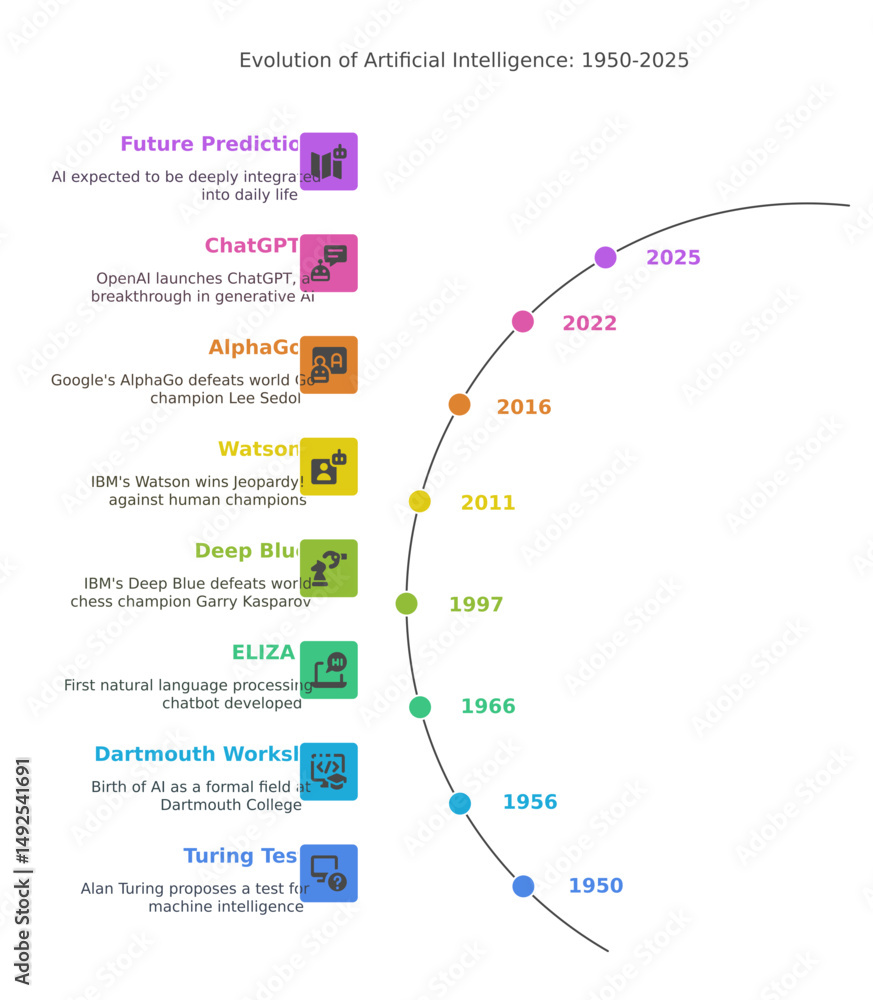
Core concepts and early methods shape The Ultimate Guide to AI Frameworks.
- Practical use
Tools, examples, and real-world deployments make the topic easier to evaluate.
- Responsible implementation
Current work focuses on reliability, governance, performance, and measurable impact.
#Related Terms
#FAQ
What does The Ultimate Guide to AI Frameworks cover?
Covers the ultimate guide to ai frameworks, including core concepts, practical examples, benefits, limitations, and risks in AI Tools.
Why is The Ultimate Guide to AI Frameworks important?
It helps readers understand key concepts, compare practical use cases, and evaluate how AI Tools decisions affect outcomes, risks, and implementation choices.
What should readers verify before applying this topic?
Readers should compare benefits, limitations, data requirements, and related themes such as Ultimate, AI, Frameworks before using the ideas in real projects.
#References
- The Ultimate Guide to AI Frameworks terminology and background research
- The Ultimate Guide to AI Frameworks use cases, implementation examples, and limitations
- AI Tools best practices, standards, and risk guidance
- Ultimate case studies, benchmarks, and current industry analysis

Comments
No comments yet. Start the discussion with a useful note.