

#Short Answer
Covers neural network myths debunked, including core concepts, practical examples, benefits, limitations, and risks in Machine Learning.
#Infobox
#History / Background
Early Foundations The concept of neural networks dates back to the 1940s, with the work of Warren McCulloch and Walter Pitts, who proposed a mathematical model of artificial neurons. Their 1943 paper, "A Logical Calculus of Ideas Immanent in Nervous Activity," laid the groundwork for computational neuroscience and artificial intelligence. The first practical implementation, the perceptron, was developed by Frank Rosenblatt in 1958. The perceptron, a single-layer neural network, could learn linear decision boundaries but was limited in its capabilities.
The AI Winter and Revival During the 1970s and 1980s, neural networks fell out of favor due to limited computational power and the perceived failure of perceptrons to solve complex problems. This period, known as the "AI winter," saw reduced funding and research interest. However, the 1986 publication of the backpropagation algorithm by David Rumelhart, Geoffrey Hinton, and Ronald Williams reignited interest by enabling multi-layer neural networks to learn from errors.
Deep Learning Era The 2010s marked a renaissance for neural networks, driven by advances in hardware (e.g., GPUs), big data, and algorithmic improvements. Key milestones include:
- 2012: AlexNet, a deep convolutional neural network (CNN), won the ImageNet competition, demonstrating the power of deep learning.
- 2016: AlphaGo defeated a world champion Go player, showcasing neural networks' ability to master complex, strategic games.
- 2020s: Transformers, introduced in the 2017 paper "Attention Is All You Need," revolutionized natural language processing (NLP) with models like BERT and GPT-3. Despite these advancements, myths about neural networks persist, often fueled by media portrayals and oversimplified explanations.
#How It Works
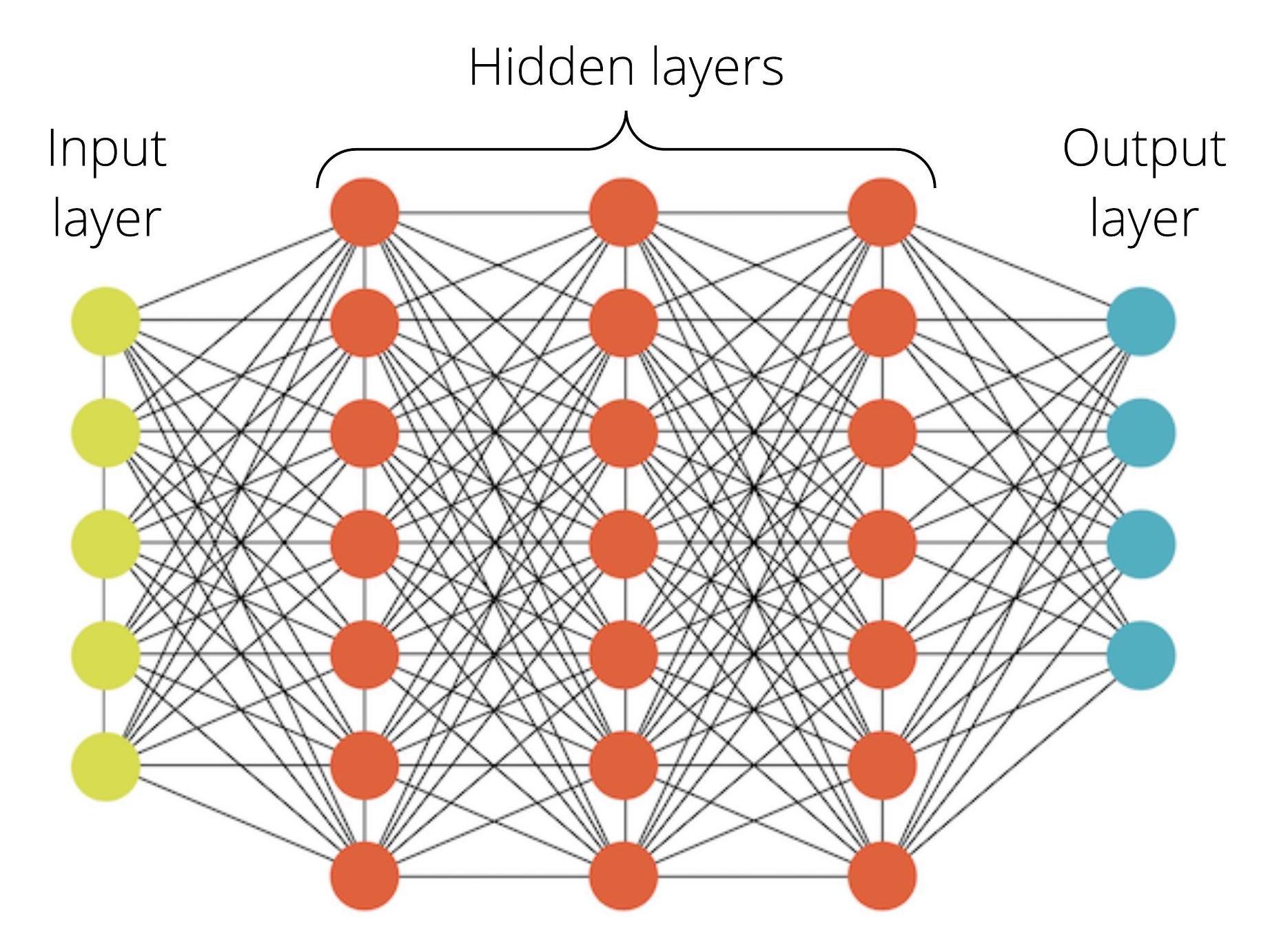
Biological vs. Artificial Neural Networks Biological neural networks consist of neurons connected by synapses, transmitting electrical and chemical signals. Artificial neural networks (ANNs) mimic this structure using:
- Neurons (Nodes): Basic units that process inputs and produce outputs.
- Weights: Parameters adjusted during training to optimize performance.
- Activation Functions: Non-linear functions (e.g., ReLU, sigmoid) that introduce complexity.
- Layers: Input, hidden, and output layers that transform data hierarchically.
Training Process Neural networks learn through supervised learning, where labeled data is used to adjust weights via optimization algorithms like gradient descent. The process involves:
- Forward Propagation: Input data passes through the network, generating predictions.
- Loss Calculation: A loss function (e.g., mean squared error, cross-entropy) measures the difference between predictions and actual labels.
- Backpropagation: Errors are propagated backward, and weights are updated using gradient descent to minimize loss.
- Iteration: The process repeats over multiple epochs until the model achieves satisfactory performance.
Key Architectures
- Feedforward Neural Networks (FNNs): Simplest form, with data flowing in one direction.
- Convolutional Neural Networks (CNNs): Specialized for grid-like data (e.g., images), using convolutional layers to detect features.
- Recurrent Neural Networks (RNNs): Designed for sequential data (e.g., time series), with loops to retain memory.
- Transformers: Use self-attention mechanisms to weigh the importance of different parts of the input, excelling in NLP tasks.
#Important Facts
Myth 1: "Neural Networks Think Like Human Brains" Reality: While neural networks are inspired by biological brains, they do not replicate human cognition. Biological neurons communicate via electrochemical signals, while artificial neurons use mathematical operations. Human brains are far more efficient, adaptable, and capable of abstract reasoning, whereas neural networks excel at pattern recognition within narrow domains.
Myth 2: "Neural Networks Require Little Data" Reality: Neural networks, especially deep learning models, typically require large datasets to generalize well. Small datasets lead to overfitting, where the model memorizes training data but fails on unseen examples. Techniques like data augmentation, transfer learning, and regularization (e.g., dropout) help mitigate this issue, but data scarcity remains a significant challenge.
Myth 3: "Neural Networks Are Infallible" Reality: Neural networks are prone to errors, biases, and vulnerabilities. Common issues include:
- Adversarial Attacks: Small perturbations to input data can fool models (e.g., misclassifying a panda as a gibbon).
- Bias: Training data may reflect societal biases, leading to discriminatory outcomes (e.g., facial recognition systems performing poorly on darker skin tones).
- Overfitting: Models may perform well on training data but poorly on real-world data.
- Black Box Nature: Complex models (e.g., deep neural networks) are often opaque, making it difficult to interpret their decisions.
Myth 4: "Neural Networks Understand Language" Reality: Neural networks, particularly large language models (LLMs), do not understand language in the human sense. They predict the next word in a sequence based on statistical patterns in training data. This can lead to hallucinations—generating plausible but incorrect or nonsensical outputs (e.g., confidently stating false historical facts).
Myth 5: "More Layers = Better Performance" Reality: While deeper networks can model complex patterns, they are not always superior. Vanishing gradients (where gradients become too small to update weights effectively) and computational costs limit the practical depth of networks. Techniques like skip connections (used in ResNet) and attention mechanisms (used in Transformers) address these issues.
#Timeline
- Foundational ideas
Core concepts and early methods shape Neural Network Myths Debunked.
- Practical use
Tools, examples, and real-world deployments make the topic easier to evaluate.
- Responsible implementation
Current work focuses on reliability, governance, performance, and measurable impact.
#Related Terms
#FAQ
What does Neural Network Myths Debunked cover?
Covers neural network myths debunked, including core concepts, practical examples, benefits, limitations, and risks in Machine Learning.
Why is Neural Network Myths Debunked important?
It helps readers understand key concepts, compare practical use cases, and evaluate how Machine Learning decisions affect outcomes, risks, and implementation choices.
What should readers verify before applying this topic?
Readers should compare benefits, limitations, data requirements, and related themes such as Neural, Network, Myths before using the ideas in real projects.
#References
- Neural Network Myths Debunked terminology and background research
- Neural Network Myths Debunked use cases, implementation examples, and limitations
- Machine Learning best practices, standards, and risk guidance
- Neural case studies, benchmarks, and current industry analysis

.png?1678746405)

Comments
No comments yet. Start the discussion with a useful note.