

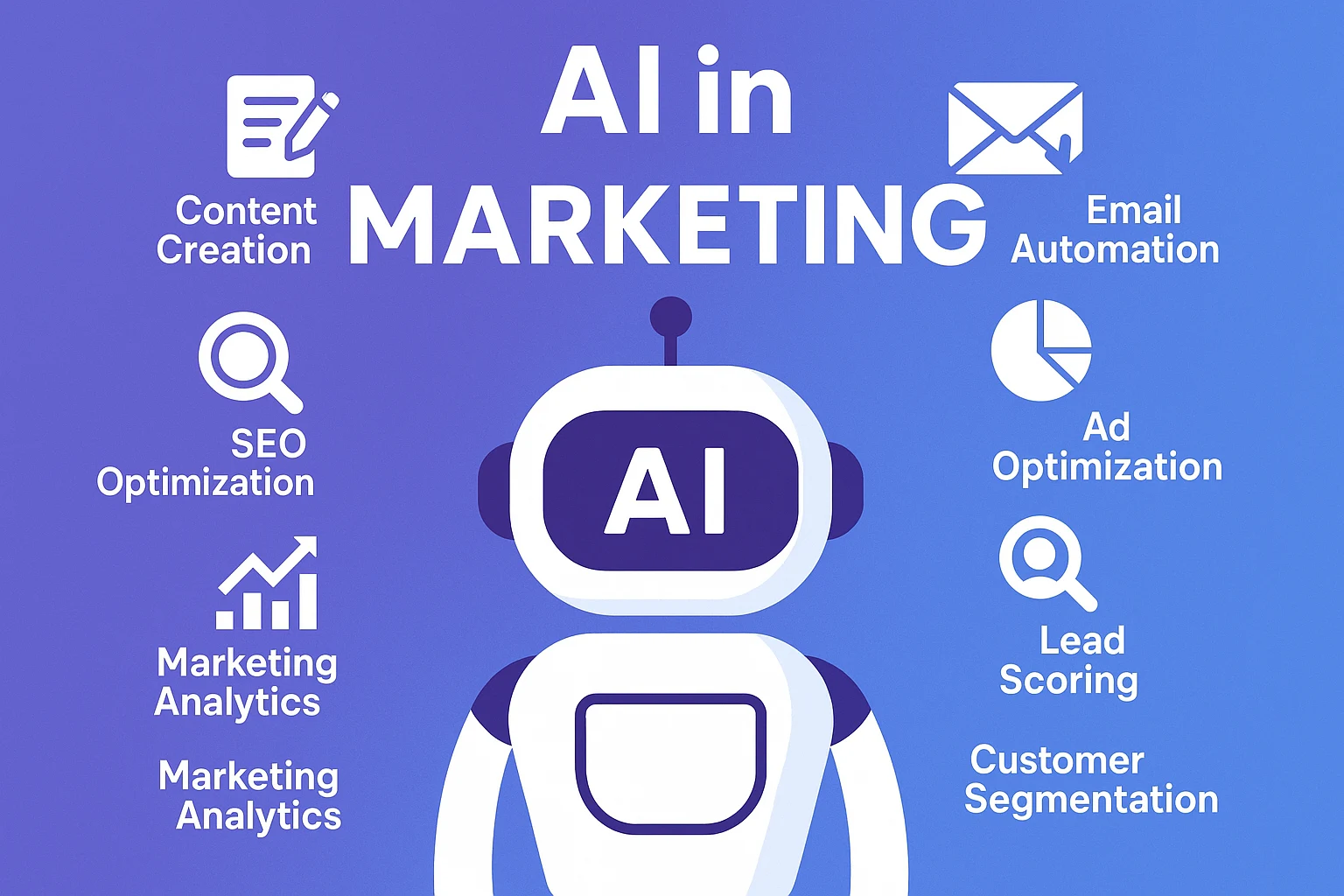
#Short Answer
Covers meaning of ai in marketing, including core concepts, practical examples, benefits, limitations, and risks in Business & Marketing.
#Infobox
#History / Background
Early Foundations (1950s–1990s) The concept of AI dates back to the 1950s, with early developments in machine learning and neural networks. However, its application in marketing remained limited due to technological constraints. The 1980s and 1990s saw the rise of database marketing, where businesses began leveraging customer data for targeted campaigns, laying the groundwork for AI-driven marketing.
The Digital Revolution (2000s–2010s) The proliferation of the internet and social media platforms in the 2000s provided marketers with unprecedented access to consumer data. This era witnessed the emergence of:
- Search Engine Optimization (SEO): AI algorithms, such as Google’s RankBrain, began influencing search rankings based on user intent.
- Programmatic Advertising: Real-time bidding (RTB) systems used AI to automate ad placements, improving efficiency.
- Recommendation Engines: Companies like Amazon and Netflix utilized AI to suggest products and content based on user behavior.
The AI Boom (2010s–Present) Advancements in deep learning, natural language processing (NLP), and cloud computing have accelerated AI adoption in marketing. Key milestones include:
- Chatbots and Virtual Assistants: AI-powered chatbots, such as those used by Sephora and H&M, provide 24/7 customer support.
- Predictive Analytics: Tools like Salesforce Einstein and HubSpot AI analyze historical data to forecast customer actions.
- Generative AI: Platforms like Jasper and Copy.ai generate human-like content, reducing the burden on human marketers.
- Voice Search Optimization: AI-driven voice assistants (e.g., Siri, Alexa) have reshaped SEO strategies to accommodate conversational queries.
#How It Works
Data Collection and Analysis AI in marketing relies on vast datasets, including:
- Customer Data: Purchase history, browsing behavior, demographic information.
- Social Media Data: Likes, shares, comments, and sentiment analysis.
- Website Analytics: Click-through rates (CTR), bounce rates, session duration.
- Third-Party Data: External sources like weather patterns or economic indicators. Machine learning algorithms process this data to identify patterns, segment audiences, and predict future trends.
Personalization and Segmentation AI enables hyper-personalization by:
- Dynamic Content Generation: Tools like Dynamic Yield (acquired by McDonald’s) tailor website content in real-time based on user preferences.
- Behavioral Targeting: AI analyzes past interactions to recommend products or services (e.g., Spotify’s Discover Weekly playlists).
- Predictive Lead Scoring: AI assigns scores to leads based on their likelihood to convert, prioritizing high-value prospects.
Automation and Optimization AI automates repetitive tasks and optimizes campaigns through:
- Chatbots: AI-driven chatbots handle customer inquiries, reducing response times and operational costs.
- Programmatic Advertising: AI algorithms bid on ad space in real-time, ensuring ads reach the right audience at the optimal time.
- A/B Testing: AI tools like Optimizely analyze variations of web pages or emails to determine the most effective version.
- Sentiment Analysis: NLP algorithms assess customer feedback (e.g., reviews, social media posts) to gauge brand perception.
Content Creation and Curation AI assists in content marketing by:
- Generative AI: Tools like Midjourney and DALL·E create visual content, while platforms like Jasper generate blog posts and social media captions.
- SEO Optimization: AI tools like SurferSEO analyze top-ranking pages to suggest keyword placements and content structure.
- Content Curation: AI curates relevant articles, videos, or posts for audiences (e.g., Flipboard’s AI-driven recommendations).
#Important Facts
- Market Growth: The global AI in marketing market is projected to reach $107.5 billion by 2028, growing at a CAGR of 29.7% (Grand View Research, 2023).
- Adoption Rates: 76% of marketers use AI in their strategies, with 51% leveraging it for personalization (Salesforce, 2023).
- ROI Impact: Companies using AI for marketing report a 40% increase in customer engagement and a 30% reduction in costs (McKinsey, 2022).
- Consumer Expectations: 63% of consumers expect personalized experiences from brands (Epsilon, 2023).
- Ethical Concerns: 62% of consumers are uncomfortable with AI tracking their behavior without consent (Pew Research, 2023).
- Voice Search: 50% of all searches are expected to be voice-based by 2025 (Comscore).
- Chatbot Efficiency: AI chatbots can resolve 80% of routine customer queries without human intervention (Gartner).
#Timeline
- Foundational ideas
Core concepts and early methods shape Meaning of AI in Marketing.
- Practical use
Tools, examples, and real-world deployments make the topic easier to evaluate.
- Responsible implementation
Current work focuses on reliability, governance, performance, and measurable impact.
#Related Terms
#FAQ
What does Meaning of AI in Marketing cover?
Covers meaning of ai in marketing, including core concepts, practical examples, benefits, limitations, and risks in Business & Marketing.
Why is Meaning of AI in Marketing important?
It helps readers understand key concepts, compare practical use cases, and evaluate how Business & Marketing decisions affect outcomes, risks, and implementation choices.
What should readers verify before applying this topic?
Readers should compare benefits, limitations, data requirements, and related themes such as Meaning, AI, Marketing before using the ideas in real projects.
#References
- Meaning of AI in Marketing terminology and background research
- Meaning of AI in Marketing use cases, implementation examples, and limitations
- Business & Marketing best practices, standards, and risk guidance
- Meaning case studies, benchmarks, and current industry analysis

Comments
No comments yet. Start the discussion with a useful note.