

#Short Answer
Covers meaning of ai in business, including core concepts, practical examples, benefits, limitations, and risks in Business & Marketing.
#Infobox
#History / Background
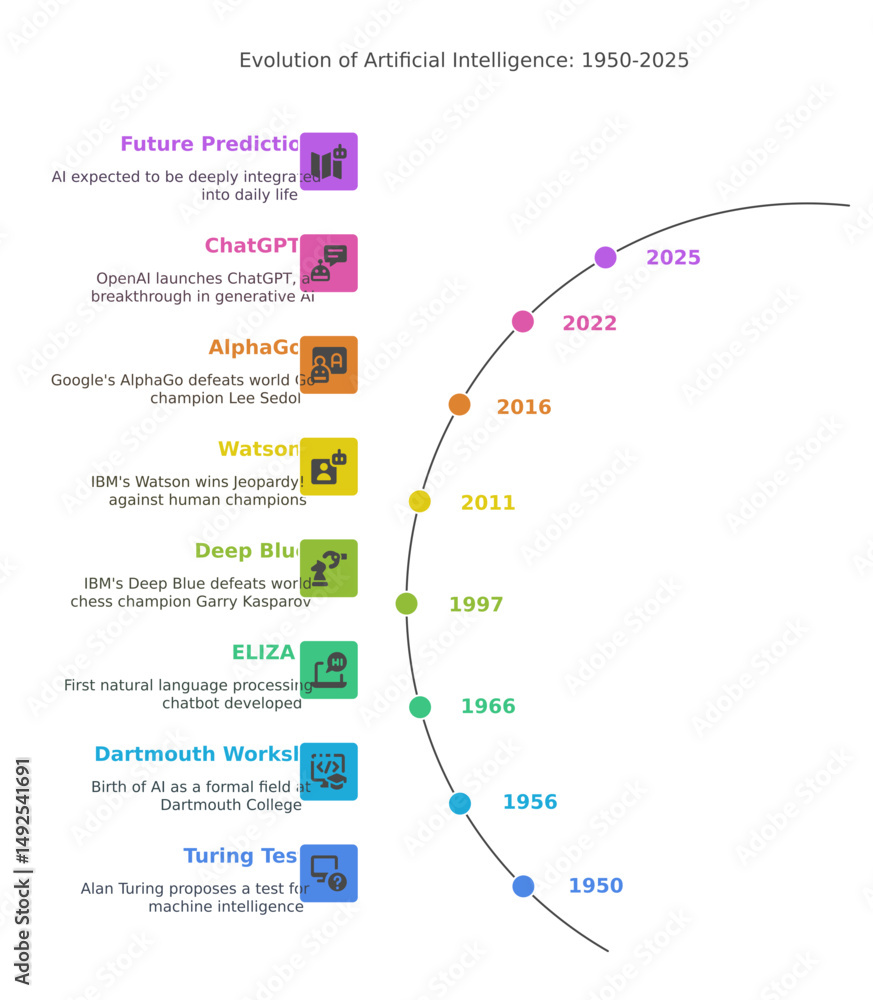
Early Foundations (1950s–1980s) The concept of AI dates back to the 1950s, with Alan Turing’s 1950 paper "Computing Machinery and Intelligence" posing the question, "Can machines think?" The term "Artificial Intelligence" was coined in 1956 at the Dartmouth Conference, marking the birth of AI as a formal field of study. Early AI systems were rule-based and limited in scope. In the 1980s, expert systems—AI programs that mimic human decision-making—gained traction in business, particularly in finance and healthcare. However, these systems required extensive manual programming and struggled with scalability.
The AI Winter and Revival (1990s–2010s) The late 20th century saw a decline in AI funding and interest, known as the "AI Winter," due to overpromised capabilities and technical limitations. However, advancements in computing power, data storage, and algorithms laid the groundwork for a resurgence. The 2010s witnessed a renaissance in AI, driven by:
- Big Data: The explosion of digital data provided the fuel for AI training.
- Machine Learning (ML): Algorithms like neural networks and deep learning enabled systems to learn from data without explicit programming.
- Cloud Computing: Scalable infrastructure made AI accessible to businesses of all sizes.
Modern Era (2020s–Present) Today, AI is ubiquitous in business, with applications spanning every sector. Key milestones include:
- 2011: IBM’s Watson defeated human champions in Jeopardy!, showcasing AI’s potential in natural language processing.
- 2016: Google’s AlphaGo defeated a world champion Go player, demonstrating AI’s ability to master complex games.
- 2020s: The rise of generative AI (e.g., large language models like me) has revolutionized content creation, customer service, and software development. The COVID-19 pandemic accelerated AI adoption, as businesses sought automation and remote solutions to maintain operations. By 2024, AI is a cornerstone of digital transformation, with companies investing billions in AI-driven innovation.
#How It Works
Core AI Technologies
- Machine Learning (ML)
- Definition: A subset of AI where systems learn from data without explicit programming.
- Types:
- Supervised Learning: Models trained on labeled data (e.g., spam detection).
- Unsupervised Learning: Models identify patterns in unlabeled data (e.g., customer segmentation).
- Reinforcement Learning: Systems learn by interacting with an environment (e.g., robotics, trading algorithms).
- Algorithms: Linear regression, decision trees, support vector machines, neural networks.
- Natural Language Processing (NLP) - Enables computers to understand, interpret, and generate human language.
- Applications: Chatbots, sentiment analysis, language translation, document summarization.
- Techniques: Tokenization, part-of-speech tagging, transformers (e.g., BERT, GPT).
- Computer Vision - Allows machines to interpret and analyze visual data.
- Applications: Image recognition, facial recognition, autonomous vehicles, quality control in manufacturing.
- Techniques: Convolutional Neural Networks (CNNs), object detection, optical character recognition (OCR).
- Predictive Analytics - Uses historical data to forecast future outcomes.
- Applications: Demand forecasting, risk assessment, customer churn prediction.
- Tools: Time-series analysis, regression models, ensemble methods.
- Robotics Process Automation (RPA) - Uses software robots to automate repetitive, rule-based tasks.
- Applications: Data entry, invoice processing, customer onboarding.
- Difference from AI: RPA follows pre-set rules, while AI adapts and learns.
AI Integration in Business Processes
- Customer Service
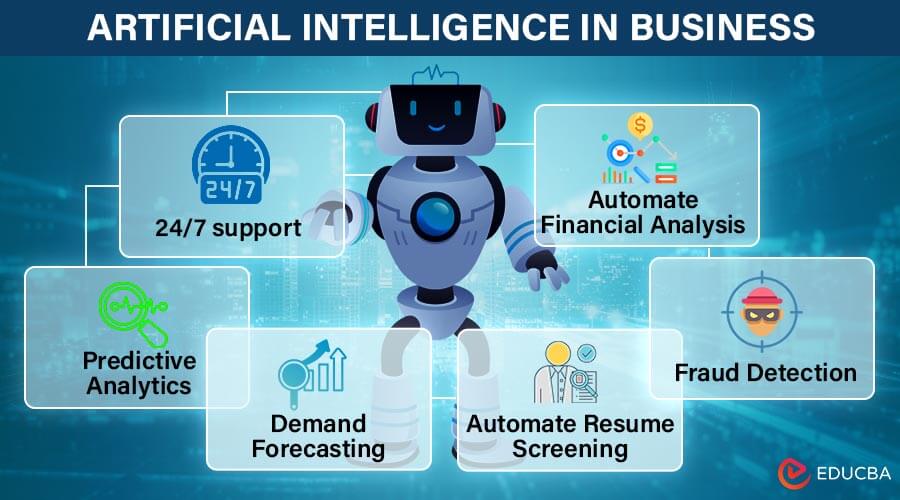
- Chatbots and Virtual Assistants: AI-powered tools like chatbots handle customer queries 24/7, reducing response times and operational costs.
- Sentiment Analysis: NLP analyzes customer feedback to gauge satisfaction and identify issues.
- Personalization: AI tailors recommendations based on user behavior (e.g., Netflix, Amazon).
- Supply Chain and Logistics
- Demand Forecasting: ML models predict product demand, optimizing inventory levels.
- Route Optimization: AI reduces delivery times and fuel costs by analyzing traffic patterns.
- Predictive Maintenance: Sensors and AI detect equipment failures before they occur, minimizing downtime.
- Marketing and Sales
- Customer Segmentation: AI clusters customers based on behavior, enabling targeted campaigns.
- Programmatic Advertising: AI automates ad buying and placement for maximum ROI.
- Dynamic Pricing: E-commerce platforms adjust prices in real-time based on demand and competition.
- Finance and Fraud Detection
- Credit Scoring: ML models assess creditworthiness more accurately than traditional methods.
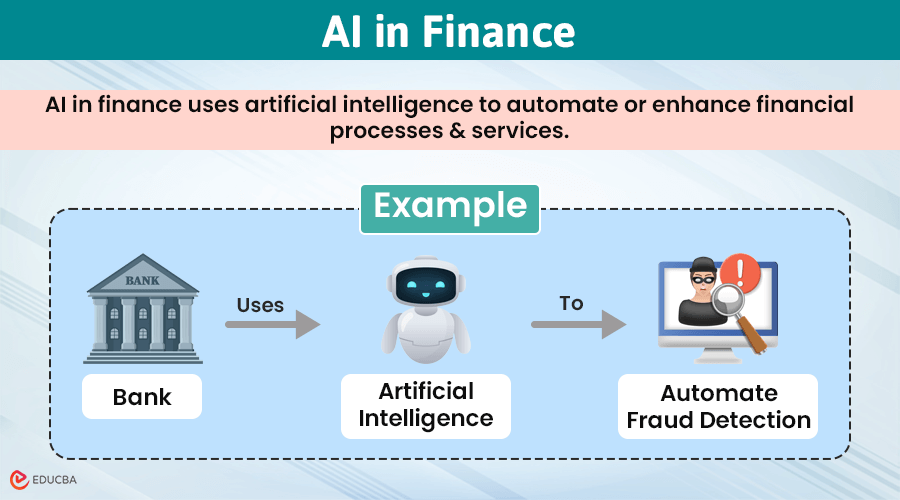
- Fraud Detection: AI identifies unusual transactions by analyzing patterns in real-time.
- Algorithmic Trading: AI-driven trading systems execute orders at optimal times.
- Human Resources
- Recruitment: AI screens resumes, conducts initial interviews via chatbots, and reduces bias in hiring.
- Employee Engagement: NLP analyzes employee feedback to improve workplace satisfaction.
- Training: AI-powered platforms personalize learning paths for employees.
- Manufacturing and Quality Control
- Computer Vision: Inspects products for defects with higher accuracy than human inspectors.
- Predictive Maintenance: Sensors and AI monitor machinery health to prevent breakdowns.
- Autonomous Robots: Robots perform tasks like assembly, packaging, and warehouse picking.
#Important Facts
- Economic Impact - AI is projected to contribute $15.7 trillion to the global economy by 2030 (PwC). - Businesses using AI report 20–30% cost savings in operational expenses.
- Adoption Trends
- 77% of businesses use AI in some form (Gartner, 2024).
- Top AI adopters: Technology (92%), financial services (83%), healthcare (77%).
- Small businesses: 31% have adopted AI, up from 13% in 2019.
- Productivity Gains - AI can increase productivity by 40% in knowledge-based industries (McKinsey).
- Automation potential: 30% of tasks in 60% of occupations could be automated (McKinsey).
- Ethical and Regulatory Concerns
- Bias in AI: Algorithms can perpetuate discrimination if trained on biased data (e.g., hiring tools favoring certain demographics).
- Data Privacy: Regulations like GDPR and CCPA impose strict guidelines on AI data usage.
- Job Displacement: Up to 375 million workers may need to switch occupational categories by 2030 (McKinsey).
- Technological Advancements
- Generative AI: Models like GPT-4 can create human-like text, images, and code.
- Edge AI: AI processing on local devices (e.g., smartphones) reduces latency and enhances privacy.
- Explainable AI (XAI): Techniques to make AI decisions transparent and interpretable.
- Industry-Specific Insights
- Healthcare: AI improves diagnostics (e.g., detecting tumors in X-rays) and drug discovery (e.g., AlphaFold for protein folding).
- Finance: AI detects fraud with 95% accuracy in some cases.
- Retail: AI-driven personalization can increase sales by 10–30% (McKinsey).
#Timeline
- Foundational ideas
Core concepts and early methods shape Meaning of AI in Business.
- Practical use
Tools, examples, and real-world deployments make the topic easier to evaluate.
- Responsible implementation
Current work focuses on reliability, governance, performance, and measurable impact.
#Related Terms
#FAQ
What does Meaning of AI in Business cover?
Covers meaning of ai in business, including core concepts, practical examples, benefits, limitations, and risks in Business & Marketing.
Why is Meaning of AI in Business important?
It helps readers understand key concepts, compare practical use cases, and evaluate how Business & Marketing decisions affect outcomes, risks, and implementation choices.
What should readers verify before applying this topic?
Readers should compare benefits, limitations, data requirements, and related themes such as Meaning, AI, Business before using the ideas in real projects.
#References
- Meaning of AI in Business terminology and background research
- Meaning of AI in Business use cases, implementation examples, and limitations
- Business & Marketing best practices, standards, and risk guidance
- Meaning case studies, benchmarks, and current industry analysis
Comments
No comments yet. Start the discussion with a useful note.