

#Short Answer
Explains how to create an ai-powered app, including the main process, tools, examples, risks, and practical implementation steps.
#Infobox
#Overview
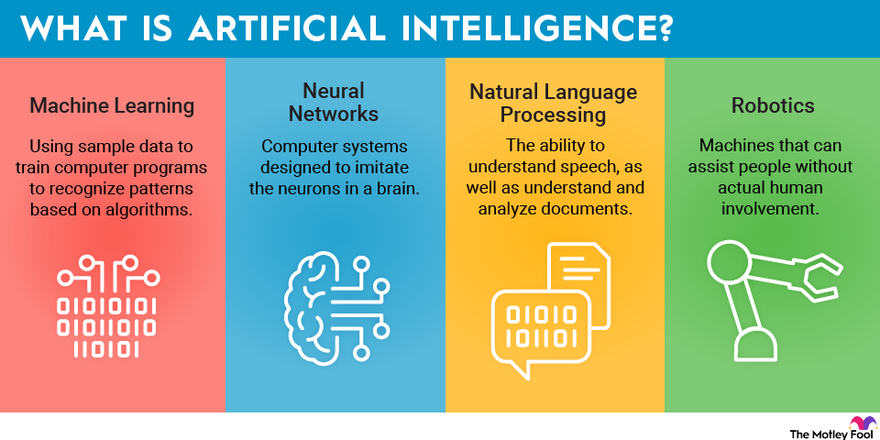
An AI-powered app is a software application that integrates artificial intelligence capabilities to enhance functionality, improve user experience, and automate complex tasks. Unlike traditional apps that rely on predefined logic, AI-powered apps can learn from data, adapt to user behavior, and make intelligent decisions in real time. These applications span various domains, including healthcare, finance, retail, education, and entertainment, offering personalized recommendations, predictive insights, and intelligent automation. The rise of AI-powered apps has been driven by advancements in computational power, the availability of large datasets, and the development of sophisticated machine learning algorithms. Today, AI is embedded in everyday applications such as virtual assistants (e.g., Siri, Alexa), recommendation systems (e.g., Netflix, Amazon), and fraud detection tools used by banks.
#History / Background
#Early Foundations (1950s–1990s)
The concept of artificial intelligence dates back to the mid-20th century, with early experiments in neural networks and symbolic AI. However, AI remained largely theoretical due to limited computational resources and data availability. During this period, AI research focused on rule-based systems and expert systems, which laid the groundwork for later developments.
#The AI Winter and Revival (1990s–2010s)
The 1990s and early 2000s saw a decline in AI interest, often referred to as the "AI winter," due to unmet expectations and funding challenges. However, breakthroughs in machine learning, particularly with the rise of deep learning in the 2010s, reignited interest. The availability of big data and improvements in GPU computing enabled the training of complex neural networks, leading to practical applications in image recognition, natural language processing, and recommendation systems.
#The AI App Revolution (2010s–Present)
The proliferation of smartphones and cloud computing in the 2010s accelerated the development of AI-powered apps. Companies like Google, Apple, and Amazon integrated AI into their platforms, enabling features such as voice recognition, real-time translation, and personalized content delivery. The launch of AI-as-a-Service platforms (e.g., Google Cloud AI, AWS SageMaker) democratized access to AI tools, allowing developers to build AI-powered apps without deep expertise in machine learning.
#How It Works
#Core Components of an AI-Powered App
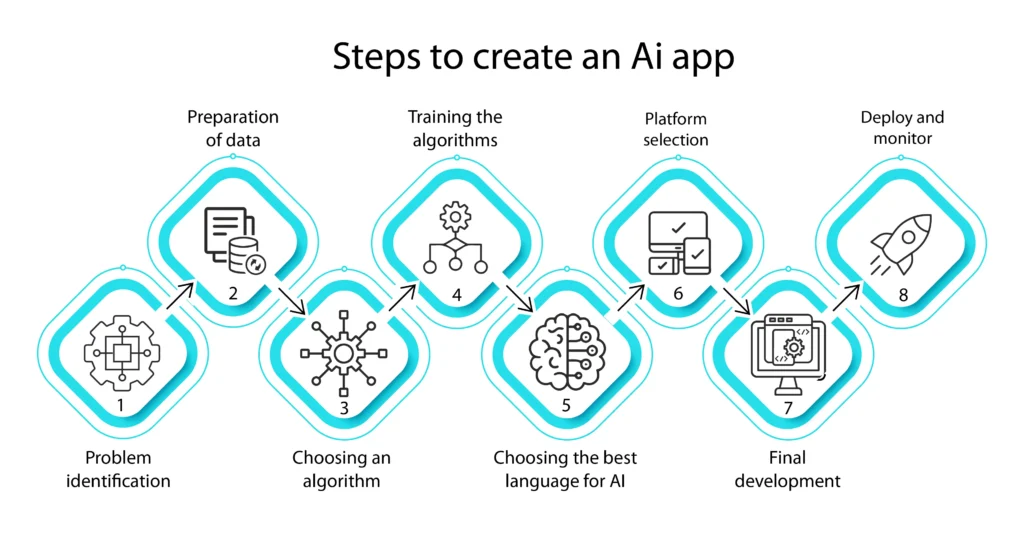
- Data Collection and Preprocessing AI apps rely on high-quality data to train models. This data may include user interactions, sensor inputs, text, images, or transaction records. Preprocessing involves cleaning, normalizing, and augmenting data to improve model performance.
- Model Selection and Training Developers choose an appropriate AI model based on the app’s use case. Common models include:
- Supervised Learning: For tasks like classification or regression (e.g., spam detection).
- Unsupervised Learning: For clustering or anomaly detection (e.g., customer segmentation).
- Reinforcement Learning: For decision-making in dynamic environments (e.g., game AI).
- Deep Learning: For complex tasks like image recognition or natural language understanding (e.g., convolutional neural networks for images, transformers for text).
- Integration with AI Frameworks or APIs Instead of building models from scratch, developers often use pre-trained models or APIs provided by platforms like:
- TensorFlow or PyTorch for custom model development.
- Google Vision AI for image analysis.
- Dialogflow for chatbots.
- Hugging Face Transformers for NLP tasks.
- Deployment and Inference The trained model is deployed on a server, cloud platform, or edge device (e.g., mobile phones). The app sends input data to the model, which processes it and returns predictions or actions. For real-time applications, low-latency inference is critical.
- Continuous Learning and Optimization AI apps often incorporate feedback loops to improve over time. Techniques like online learning or A/B testing help refine models based on user interactions.
#Important Facts
- AI apps require large datasets for training, but smaller datasets can be used with techniques like transfer learning.
- Ethical considerations such as bias in training data, privacy concerns, and transparency are critical in AI app development.
- Edge AI enables AI processing on local devices (e.g., smartphones), reducing latency and dependency on cloud services.
- Explainable AI (XAI) is increasingly important to ensure users understand how AI-driven decisions are made.
- AI model drift occurs when a model’s performance degrades over time due to changing data patterns, necessitating regular updates.
#Timeline
- Foundational ideas
Core concepts and early methods shape How to Create an AI-powered App.
- Practical use
Tools, examples, and real-world deployments make the topic easier to evaluate.
- Responsible implementation
Current work focuses on reliability, governance, performance, and measurable impact.
#Related Terms
#FAQ
What does How to Create an AI-powered App cover?
Explains how to create an ai-powered app, including the main process, tools, examples, risks, and practical implementation steps.
Why is How to Create an AI-powered App important?
It helps readers understand key concepts, compare practical use cases, and evaluate how Artificial Intelligence decisions affect outcomes, risks, and implementation choices.
What should readers verify before applying this topic?
Readers should compare benefits, limitations, data requirements, and related themes such as Create, AI, Powered before using the ideas in real projects.
#References
- How to Create an AI-powered App terminology and background research
- How to Create an AI-powered App use cases, implementation examples, and limitations
- Artificial Intelligence best practices, standards, and risk guidance
- Create case studies, benchmarks, and current industry analysis


Comments
No comments yet. Start the discussion with a useful note.