

#Short Answer
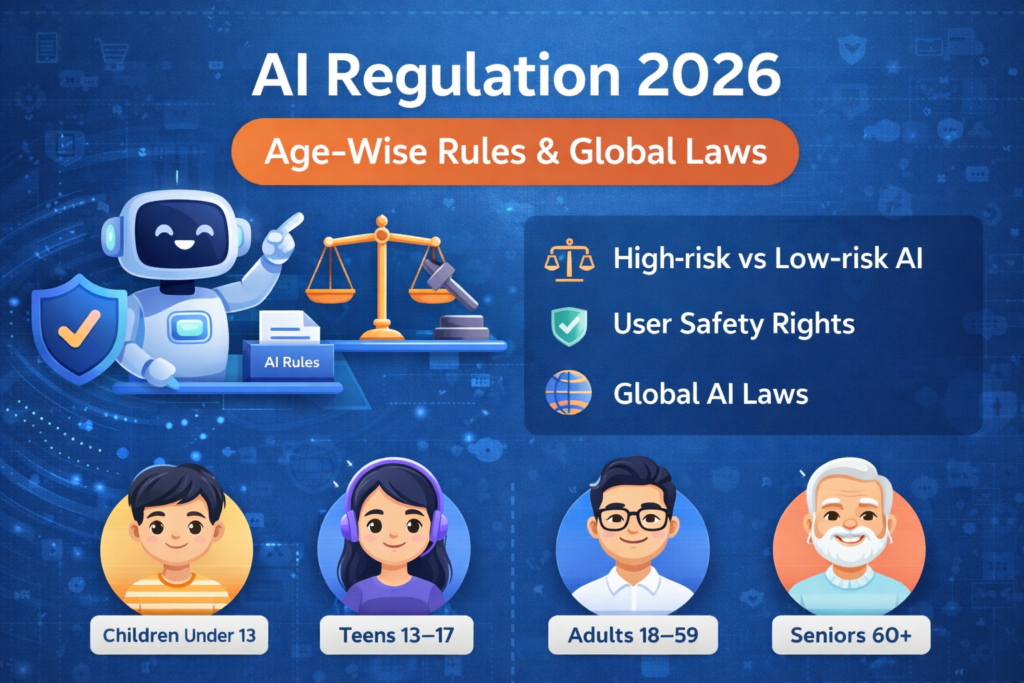
The AI Regulation 2026 Framework represents a landmark initiative in global AI governance, designed to address the rapid proliferation of artificial intelligence technologies while safeguarding societal values. Unlike previous regulatory attempts, this framework adopts a demographic-centric approach, categorizing AI applications based on the age of end-users to mitigate risks such as misinformation, bias, and privacy violations.
#Infobox
#Overview
The AI Regulation 2026 Framework represents a landmark initiative in global AI governance, designed to address the rapid proliferation of artificial intelligence technologies while safeguarding societal values. Unlike previous regulatory attempts, this framework adopts a demographic-centric approach, categorizing AI applications based on the age of end-users to mitigate risks such as misinformation, bias, and privacy violations.
Key objectives include:
- Establishing age-appropriate AI usage guidelines.
- Mandating transparency in AI decision-making processes.
- Enforcing strict data protection measures for minors.
- Promoting international cooperation to harmonize AI regulations.
The framework is expected to influence legislation in over 50 countries, with pilot programs already underway in the European Union and North America.
#Scope and Applicability
The regulation applies to all AI systems deployed in public and private sectors, including:
- Social media algorithms
- Autonomous vehicles
- Healthcare diagnostics
- Educational AI tools
- Financial credit scoring systems
Exemptions are granted for low-risk applications, such as basic chatbots and recommendation engines, provided they adhere to ethical guidelines.
#History / Background
#Early Initiatives
The foundation for AI regulation was laid in the early 2020s, with the European Union’s AI Act (2021) serving as a precursor. This legislation introduced risk-based classifications for AI systems but lacked age-specific provisions. Meanwhile, the United States adopted a sectoral approach, focusing on data privacy laws like the Children’s Online Privacy Protection Act (COPPA).
#Evolution of Age-Specific Regulations
By 2024, growing concerns over AI-driven mental health risks among teenagers and the exploitation of vulnerable populations led to calls for more granular regulations. The AI Regulation 2026 Framework emerged from collaborative efforts between policymakers, technologists, and child welfare advocates. Its development was accelerated by high-profile incidents, such as:
- The 2023 TikTok algorithm controversy, which exposed minors to harmful content.
- Biases in facial recognition systems disproportionately affecting older adults.
- Deepfake technologies used to manipulate public opinion during elections.
#Key Milestones
#How It Works
#Risk Categorization
The framework classifies AI systems into four risk tiers based on age demographics and potential harm:
#Compliance Mechanisms
To enforce the framework, the following measures are implemented:
-
Mandatory Certification: AI developers must obtain certification for high-risk systems before deployment.
-
Real-Time Monitoring: Regulatory bodies use AI-driven tools to detect violations, such as unauthorized data collection.
-
Penalties:
-
Fines up to 4% of global revenue for non-compliance.
-
Temporary bans on AI systems deemed harmful.
-
Criminal liability for executives in cases of gross negligence.
-
Public Reporting: Companies must publish annual transparency reports detailing AI usage, data sources, and bias mitigation strategies.
#Important Facts
- The framework is the first to explicitly address AI’s impact on different age groups, with dedicated provisions for children under 13.
- Over 30 countries have already integrated aspects of the framework into national laws, including Japan, Canada, and Australia.
- AI systems used in healthcare for pediatric diagnostics must undergo clinical trials similar to pharmaceutical drugs.
- The regulation introduces the concept of explainable AI (XAI), requiring developers to provide clear, understandable explanations for AI decisions.
- Social media platforms must implement age gates to restrict access to high-risk AI features for minors.
#Timeline
- EU AI Act proposed
EU AI Act proposed, introducing risk-based classifications.
- UN adopts resolution on
UN adopts resolution on AI ethics, emphasizing child protection.
- First draft of the
First draft of the AI Regulation 2026 Framework released for public consultation.
- Pilot programs launched in
Pilot programs launched in select countries; final framework published.
#Related Terms
#FAQ
What does AI Regulations: Latest Updates cover?
AI regulations: latest updates covers practical examples, benefits, limitations, and important considerations for readers.
Why is AI Regulations: Latest Updates important?
It helps readers understand key concepts, compare practical use cases, and evaluate how AI Ethics decisions affect outcomes, risks, and implementation choices.
What should readers verify before applying this topic?
Readers should compare the benefits, limitations, data requirements, and related themes such as Regulation, Update, Responsible AI before using the ideas in real projects.
#References
- AI Regulations: Latest Updates terminology and background research
- AI Regulations: Latest Updates use cases, implementation examples, and limitations
- AI Ethics best practices, standards, and risk guidance
- Regulation case studies, benchmarks, and current industry analysis

Comments
No comments yet. Start the discussion with a useful note.