


#Short Answer
Explains how AI works in real estate, covering data, models, workflows, practical examples, and adoption challenges.
#Infobox
Artificial Intelligence in Real Estate Field Artificial intelligence Subfield Real estate Key People Real estate professionals, AI developers, data scientists Notable Applications Property valuation, market analysis, virtual tours, chatbots Emergence Early 2010s Impact Increased efficiency, reduced costs, improved customer experience
#Overview
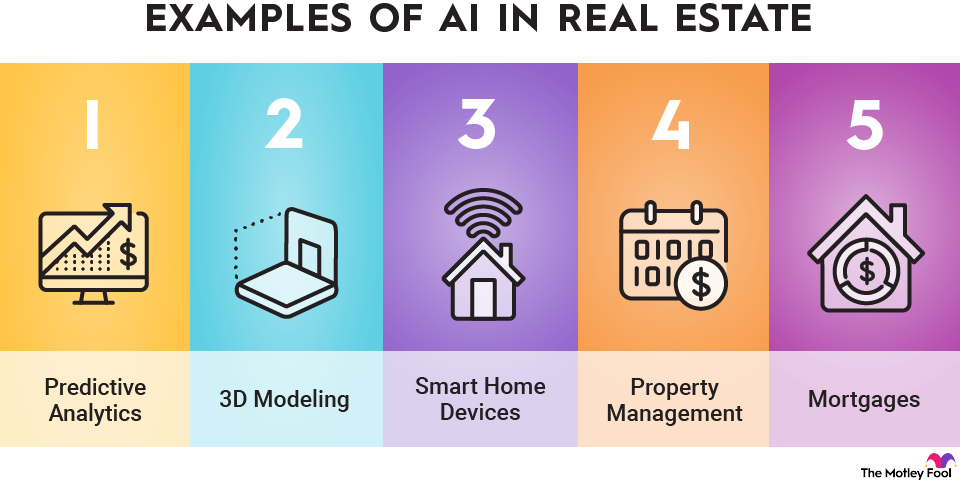
Artificial intelligence has transformed the real estate sector by automating repetitive tasks, providing data-driven insights, and improving decision-making processes. AI-powered tools analyze vast datasets to predict property values, identify market trends, and optimize investment strategies. These technologies also enhance customer interactions through virtual assistants and personalized recommendations, making real estate transactions faster, more accurate, and more accessible.
#History / Background
The integration of AI into real estate began in the early 2010s, driven by advancements in big data, cloud computing, and machine learning. Early applications focused on automating property searches and basic valuation models. By the mid-2010s, companies like Zillow and Redfin introduced AI-driven pricing algorithms, while startups developed chatbots for customer inquiries. The proliferation of IoT devices and smart home technologies further expanded AI's role in real estate, enabling predictive maintenance and energy optimization.
#Key developments
- 2012: Zillow launches its "Zestimate" algorithm for automated home valuation.
- 2015: IBM Watson begins assisting in commercial real estate analysis.
- 2017: Startups like Opendoor use AI to streamline property purchases and sales.
- 2019: AI-powered virtual tours become mainstream with platforms like Matterport.
- 2021: Proptech companies integrate AI with blockchain for secure, transparent transactions.
#How It Works
AI in real estate operates through several core technologies:
#Machine Learning and Data Analytics
AI systems analyze historical sales data, neighborhood demographics, economic indicators, and property features to generate accurate valuations. Algorithms like random forest and neural networks identify patterns that human analysts might overlook, improving prediction accuracy over time.
#Natural Language Processing
NLP enables AI to interpret and respond to human language, powering chatbots and virtual assistants that handle customer queries, schedule viewings, and provide market insights. These systems use sentiment analysis to gauge buyer preferences and tailor recommendations accordingly.
#Computer Vision
AI-driven computer vision processes images and videos of properties to assess conditions, estimate renovation costs, and generate 3D virtual tours. Tools like Matterport create immersive digital twins of properties, allowing remote inspections and reducing the need for physical visits.
#Predictive Modeling
Predictive models forecast market trends, rental yields, and property appreciation by analyzing macroeconomic factors, local development plans, and consumer behavior. These models help investors and developers make informed decisions about acquisitions and divestitures.
#Automation and Robotics
Robotic process automation (RPA) handles administrative tasks such as document processing, contract reviews, and compliance checks. In commercial real estate, robotics assist in property management, maintenance scheduling, and security monitoring.
#Important Facts
- AI can reduce property valuation errors by up to 30% compared to traditional methods.
- The global AI in real estate market is projected to reach $13.8 billion by 2027, growing at a CAGR of 10.7%.
- 72% of real estate professionals use AI tools for lead generation and customer engagement.
- AI-powered chatbots can handle 80% of routine customer inquiries, reducing response times by 90%.
- Commercial real estate firms using AI for portfolio management report a 20% improvement in ROI.
#Timeline
Year Event 2010 First AI-driven property valuation models emerge. 2012 Zillow launches Zestimate, a proprietary AI valuation tool. 2015 IBM Watson enters commercial real estate analytics. 2017 Opendoor and other iBuyers use AI for instant property offers. 2019 AI virtual tours become widely adopted in residential sales. 2020 COVID-19 accelerates adoption of AI for remote property transactions. 2022 AI integrates with blockchain for smart contracts in real estate. 2023 Generative AI tools create hyper-realistic property descriptions and floor plans.
#Related Terms
#FAQ
What does AI In Real Estate: How It Works cover?
Explains how AI works in real estate, covering data, models, workflows, practical examples, and adoption challenges.
Why is AI In Real Estate: How It Works important?
It helps readers understand key concepts, compare practical use cases, and evaluate how Business & Finance decisions affect outcomes, risks, and implementation choices.
What should readers verify before applying this topic?
Readers should compare the benefits, limitations, data requirements, and related themes such as Real, Estate, Work before using the ideas in real projects.
#References
- AI In Real Estate: How It Works terminology and background research
- AI In Real Estate: How It Works use cases, implementation examples, and limitations
- Business & Finance best practices, standards, and risk guidance
- Real case studies, benchmarks, and current industry analysis


Comments
No comments yet. Start the discussion with a useful note.