


#Short Answer
Explores how artificial intelligence shapes real estate and property analysis, covering practical use cases, benefits, limitations, and risks.
#Infobox
Artificial intelligence (AI) is transforming the real estate industry by enhancing property analysis, market predictions, and transaction efficiency through advanced algorithms and data-driven insights.
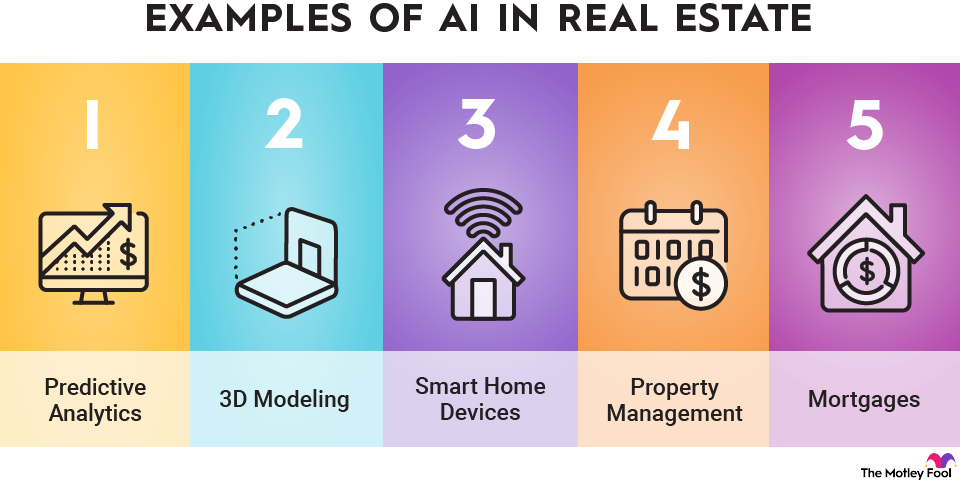
Artificial Intelligence in Real Estate Field Real estate Focus Property analysis, valuation, market trends, and transaction optimization Key Technologies Machine learning, natural language processing, computer vision, predictive analytics Major Applications Automated valuation models (AVMs), virtual property tours, fraud detection, demand forecasting Industry Impact Increased efficiency, reduced costs, improved accuracy in pricing and risk assessment Notable Developments AI-powered CRM systems, blockchain integration, smart contract automation
#Overview
Artificial intelligence (AI) in real estate refers to the application of machine learning, predictive analytics, and automation technologies to streamline property-related processes. These tools analyze vast datasets—including market trends, property characteristics, and economic indicators—to provide accurate valuations, identify investment opportunities, and optimize transactions. AI enhances decision-making for buyers, sellers, investors, and agents by reducing human bias and improving data interpretation.
The integration of AI has led to the development of automated valuation models (AVMs), which estimate property values using algorithms trained on historical sales data and comparable market metrics. Additionally, AI-driven platforms facilitate virtual property tours, chatbots for customer inquiries, and fraud detection systems that flag suspicious transactions. As the real estate sector becomes increasingly data-centric, AI serves as a critical tool for enhancing transparency, efficiency, and profitability.
#History / Background
The concept of using technology to analyze real estate dates back to the 1970s with the introduction of early computer-based property valuation models. However, the modern era of AI in real estate began in the late 20th century with the advent of machine learning and big data analytics. In the 1990s, companies like Zillow pioneered online property valuation tools, laying the groundwork for AI-driven solutions.
The 2010s marked a significant shift with the rise of big data and cloud computing, enabling real-time analysis of market trends. The proliferation of IoT devices further expanded AI applications, allowing for smart home integration and real-time property monitoring. Today, AI is embedded in nearly every facet of real estate, from CRM systems to blockchain-based transaction platforms.
#How It Works
#Data Collection and Processing
AI in real estate relies on diverse data sources, including public records, MLS (Multiple Listing Service) databases, satellite imagery, and user-generated content. Machine learning models process this data to identify patterns, such as price fluctuations, neighborhood desirability, and seasonal demand trends. Natural language processing (NLP) extracts insights from unstructured data like property descriptions, reviews, and social media mentions.
#Predictive Modeling
Predictive analytics uses historical data to forecast future market conditions. For example, AI models can predict property appreciation rates, rental yields, or the likelihood of a sale based on economic indicators. These models are trained on datasets spanning decades, allowing them to account for variables like interest rates, employment trends, and infrastructure developments.
#Automation and Optimization
AI automates repetitive tasks such as lead qualification, document processing, and customer support. Chatbots and virtual assistants handle inquiries 24/7, while robotic process automation (RPA) streamlines back-office operations like contract generation and compliance checks. In property management, AI-powered systems optimize maintenance schedules, energy consumption, and tenant screening.
#Important Facts
- Accuracy: AI-driven AVMs can achieve valuation accuracy within 5–10% of professional appraisals, though they are less reliable in volatile markets.
- Speed: Property searches that once took weeks can now be completed in minutes using AI-powered search engines that filter listings based on user preferences.
- Cost Reduction: AI reduces operational costs by up to 30% in some real estate firms by automating routine tasks and minimizing human error.
- Fraud Prevention: Machine learning detects anomalies in transaction patterns, flagging potential fraud in mortgage applications or title transfers.
- Global Adoption: Countries like the U.S., U.K., and China lead in AI real estate adoption, with emerging markets in Southeast Asia and Africa rapidly catching up.
#Timeline
Year Event 1970s Early computer-based property valuation models emerge. 1995 Zillow launches one of the first online property valuation tools. 2006 Redfin introduces AI-driven property search and recommendation systems. 2012 IBM Watson begins analyzing real estate data for investment insights. 2016 AI-powered virtual property tours gain popularity with the rise of VR/AR technologies. 2019 Blockchain and AI integration enables smart contracts for real estate transactions. 2022 AI-driven demand forecasting tools become standard in commercial real estate. 2024 Generative AI models assist in creating hyper-personalized property listings and marketing content.
#Related Terms
#FAQ
What does AI And Real Estate: Property Analysis cover?
Explores how artificial intelligence shapes real estate and property analysis, covering practical use cases, benefits, limitations, and risks.
Why is AI And Real Estate: Property Analysis important?
It helps readers understand key concepts, compare practical use cases, and evaluate how Business & Finance decisions affect outcomes, risks, and implementation choices.
What should readers verify before applying this topic?
Readers should compare the benefits, limitations, data requirements, and related themes such as Real, Estate, Property before using the ideas in real projects.
#References
- AI And Real Estate: Property Analysis terminology and background research
- AI And Real Estate: Property Analysis use cases, implementation examples, and limitations
- Business & Finance best practices, standards, and risk guidance
- Real case studies, benchmarks, and current industry analysis



Comments
No comments yet. Start the discussion with a useful note.