

#Short Answer
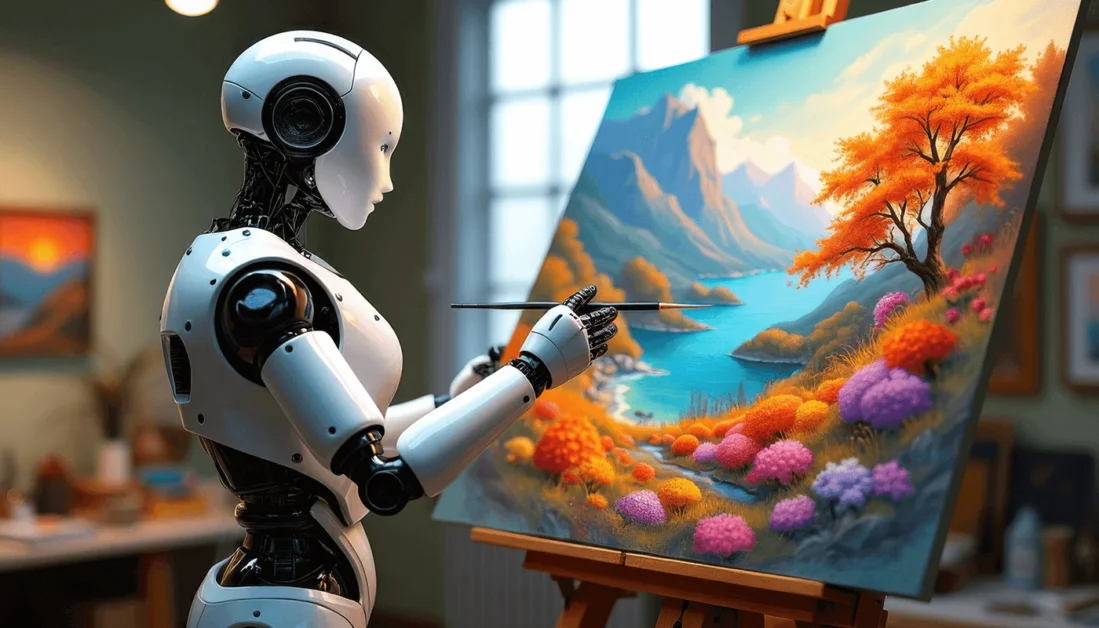
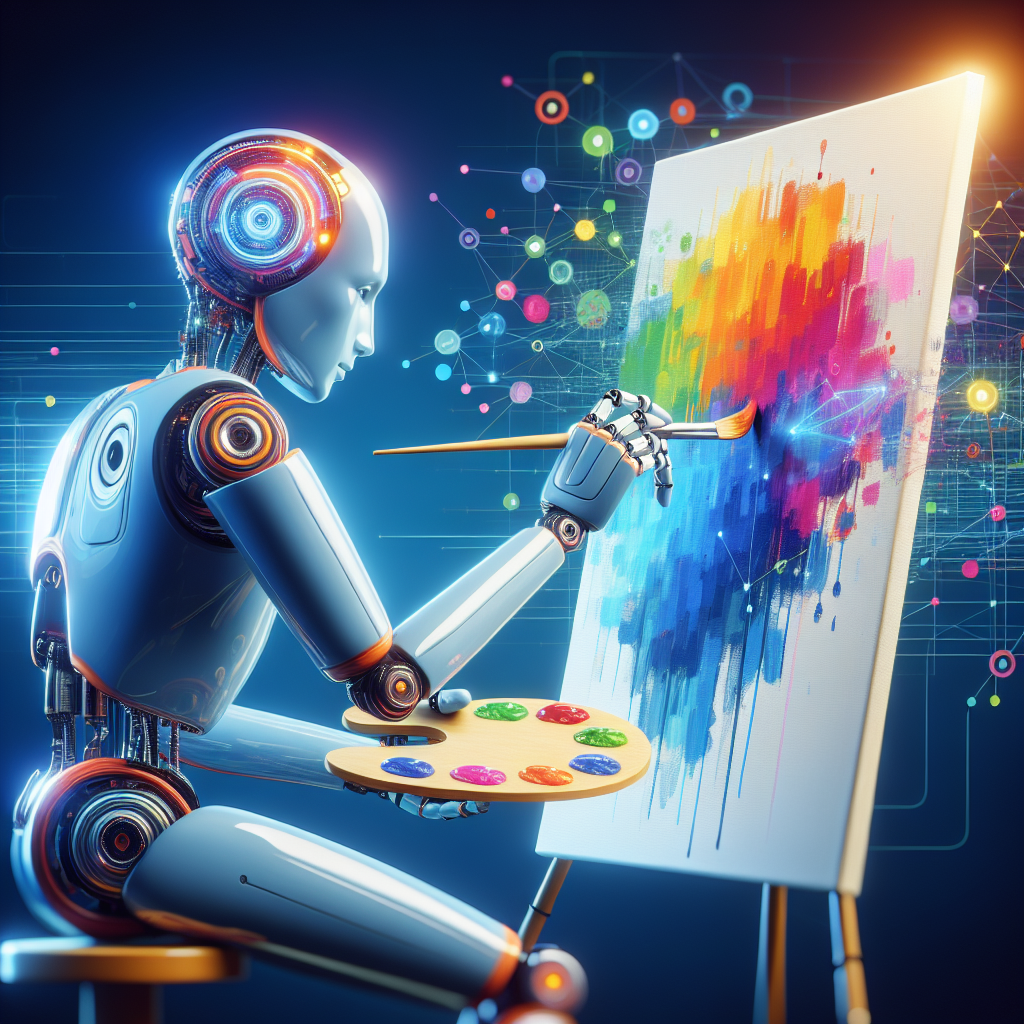
Explains how AI is applied in art to support creativity or gimmick, with examples, workflows, benefits, and adoption challenges.
#Infobox
AI in Art: Creativity or Gimmick? Field Art, Artificial intelligence Key Figures Mario Klingemann, Refik Anadol, Sougwen Chung Notable Works Portrait of Edmond de Belamy, The Next Rembrandt, Obvious (collective) Debates Authorship, originality, ethical concerns, human-AI collaboration First AI Artwork AARON (1973, Harold Cohen) Major Milestones 2018: Portrait of Edmond de Belamy sold at Christie's for $432,500; 2022: AI-generated art wins Colorado State Fair competition
AI in Art: Creativity or Gimmick? is a multidisciplinary debate examining the role of artificial intelligence in artistic creation. The discussion centers on whether AI-generated art represents a new frontier of human-machine collaboration or merely a technological novelty lacking substantive creative value. Proponents argue that AI expands artistic possibilities, while critics contend that it undermines traditional notions of authorship and originality.
#Overview
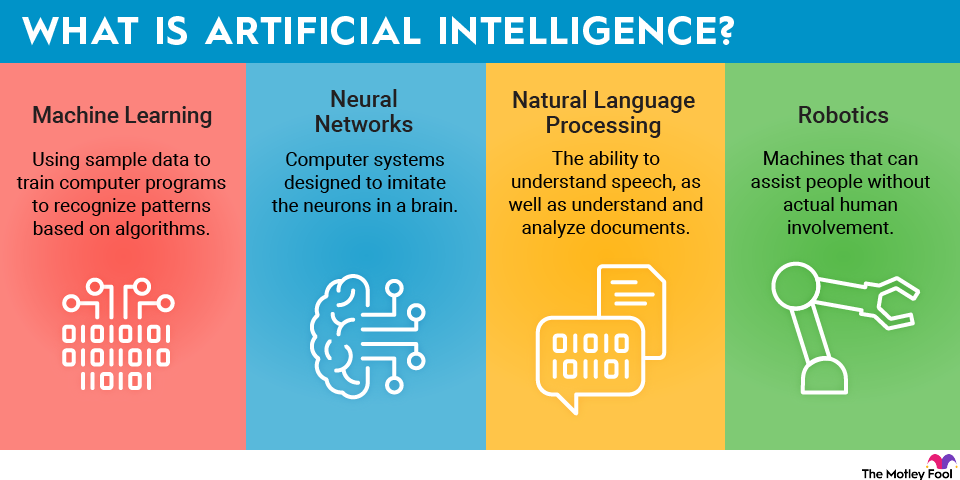
Artificial intelligence has increasingly intersected with the art world, enabling the generation of visual art, music, literature, and even performance pieces through machine learning algorithms. AI art systems, such as generative adversarial networks (GANs) and diffusion models, analyze vast datasets of existing artworks to produce novel compositions. These systems can mimic styles, emulate techniques, and even combine multiple artistic traditions in ways previously unimaginable.
The debate surrounding AI in art is multifaceted, encompassing questions of authorship, intellectual property, and the nature of creativity. While some view AI as a tool that augments human creativity, others argue that it challenges the very definition of art by removing the human hand from the creative process. The commercialization of AI-generated art, including its sale at major auction houses, has further intensified discussions about its legitimacy and value.
#History / Background
The integration of AI into art traces back to the 1960s and 1970s, with early experiments in computer-generated art. Harold Cohen developed AARON, one of the first AI programs capable of creating original drawings, in 1973. Cohen's work laid the foundation for rule-based AI systems that could autonomously produce visual art.
The 2010s marked a turning point with the advent of deep learning and neural networks. The introduction of GANs in 2014 by Ian Goodfellow and colleagues revolutionized AI art by enabling systems to generate highly realistic images through adversarial training. This technology paved the way for projects like Portrait of Edmond de Belamy, created by the Paris-based collective Obvious and sold at Christie's auction house in 2018 for $432,500—a landmark event that brought AI art into the mainstream consciousness.
In 2022, the Colorado State Fair's art competition sparked controversy when an AI-generated piece, Théâtre D'opéra Spatial by Jason M. Allen, won first place in the digital art category. The victory reignited debates about the ethical implications of AI in art competitions and the criteria for judging creativity in machine-generated works.
#How It Works
AI art systems typically rely on machine learning models trained on large datasets of existing artworks. The most common approaches include:
Generative adversarial networks (GANs) Consist of two neural networks—the generator and the discriminator—that compete against each other. The generator creates images, while the discriminator evaluates their authenticity. Through iterative training, the generator improves its ability to produce convincing artworks. Diffusion models Work by progressively adding noise to an image and then reversing the process to generate new images. Models like DALL-E and Stable Diffusion use text prompts to guide the image generation process, allowing users to specify artistic styles or themes. Neural style transfer Involves applying the visual style of one image (e.g., a painting by Van Gogh) to another image (e.g., a photograph). This technique enables artists to blend different artistic influences seamlessly. Transformer-based models Originally developed for natural language processing, transformers have been adapted for image generation tasks. Models like Midjourney and DALL-E 3 use transformer architectures to interpret text prompts and generate detailed, contextually relevant images. These systems often require significant computational resources and large datasets, which raises concerns about energy consumption and the environmental impact of training AI models. Additionally, the datasets used to train these models may inadvertently include copyrighted or culturally sensitive material, leading to ethical and legal debates.
#Important Facts
- First AI Art Auction: In 2018, Christie's sold Portrait of Edmond de Belamy for $432,500, marking the first major auction of an AI-generated artwork.
- AI Wins Art Competition: In 2022, Jason M. Allen's AI-generated piece Théâtre D'opéra Spatial won first place at the Colorado State Fair, sparking widespread controversy.
- Ethical Concerns: AI art raises questions about the ownership of generated works, the potential for plagiarism, and the exploitation of artists' styles without consent.
- Commercialization: AI art tools like Midjourney, DALL-E, and Stable Diffusion have democratized art creation but also flooded the market with derivative works.
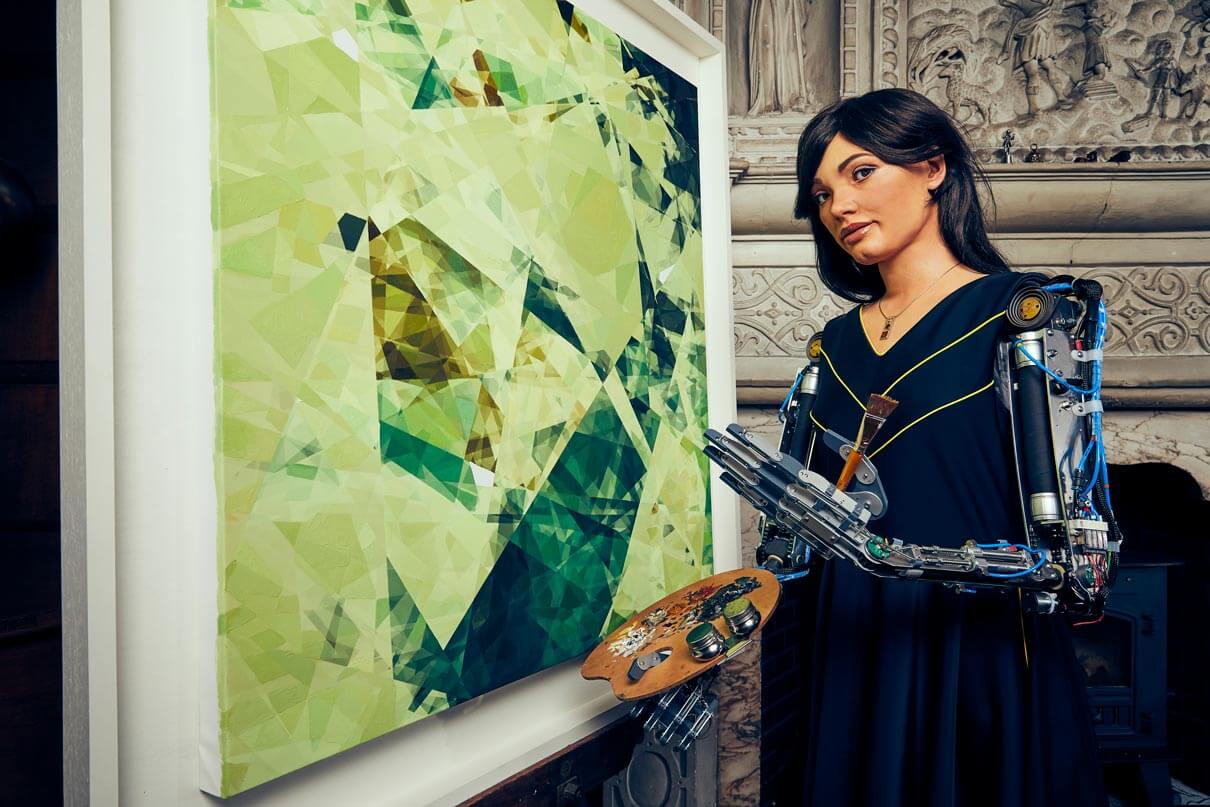
- Human-AI Collaboration: Many artists now use AI as a collaborative tool, integrating machine-generated elements into their work to explore new creative possibilities.
- Legal Challenges: Courts are grappling with cases involving AI-generated art, such as the dispute over whether AI art can be copyrighted or if the training data used violates existing copyright laws.
#Timeline
Year Event 1973 Harold Cohen develops AARON, one of the first AI programs to create original drawings. 2014 Ian Goodfellow and colleagues introduce Generative Adversarial Networks (GANs), revolutionizing AI art. 2016 Google DeepDream popularizes AI-generated imagery by creating surreal, psychedelic images from photographs. 2018 Portrait of Edmond de Belamy, created by the collective Obvious, is sold at Christie's for $432,500. 2021 DALL-E is released by OpenAI, enabling text-to-image generation with unprecedented detail and creativity. 2022 Jason M. Allen's AI-generated piece Théâtre D'opéra Spatial wins first place at the Colorado State Fair, sparking global debate. 2023 Adobe integrates Adobe Firefly into its Creative Cloud suite, offering AI-powered tools for artists. 2024 Major art institutions, including the Metropolitan Museum of Art, begin hosting exhibitions dedicated to AI-generated art.
#Related Terms
#FAQ
What does AI In Art: Creativity Or Gimmick? cover?
Explains how AI is applied in art to support creativity or gimmick, with examples, workflows, benefits, and adoption challenges.
Why is AI In Art: Creativity Or Gimmick? important?
It helps readers understand key concepts, compare practical use cases, and evaluate how Creative AI decisions affect outcomes, risks, and implementation choices.
What should readers verify before applying this topic?
Readers should compare the benefits, limitations, data requirements, and related themes such as Art, Creativity, Gimmick before using the ideas in real projects.
#References
- AI In Art: Creativity Or Gimmick? terminology and background research
- AI In Art: Creativity Or Gimmick? use cases, implementation examples, and limitations
- Creative AI best practices, standards, and risk guidance
- Art case studies, benchmarks, and current industry analysis
Comments
No comments yet. Start the discussion with a useful note.