

#Short Answer
Explores how artificial intelligence shapes poetry and writing verses, covering practical use cases, benefits, limitations, and risks.
#Infobox
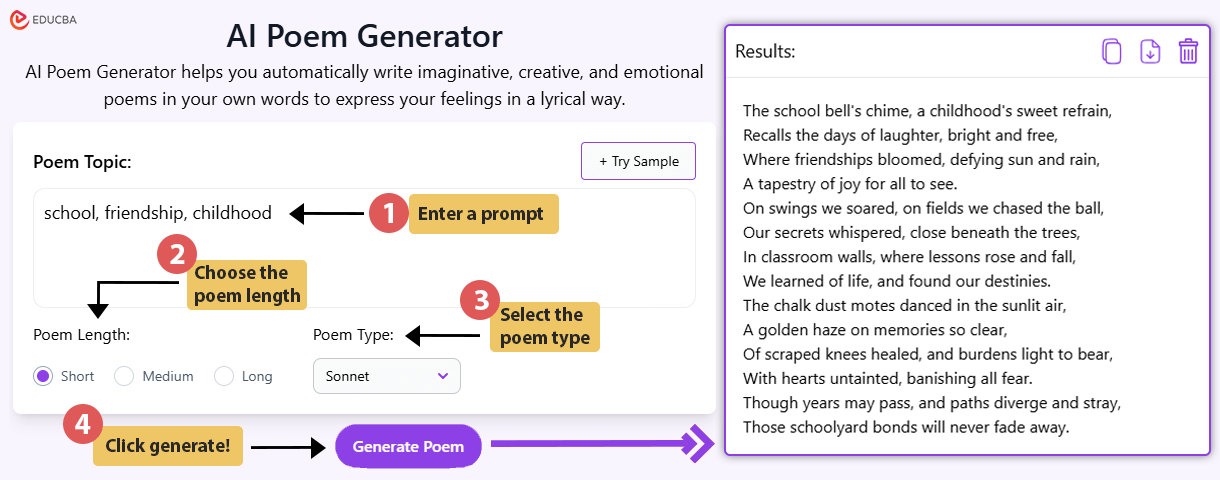
AI poem generators use natural language processing (NLP) and machine learning to analyze patterns in poetry and generate original verses based on user input, themes, or prompts. These tools assist writers, educators, and creatives in overcoming writer’s block, exploring new styles, or producing content efficiently.
AI and Poetry Key Information Field Computational Creativity, Natural Language Processing First Development 1950s–1960s (early experiments) Major Tools AI Poem Generator, ChatGPT, Google Bard, DeepAI Applications Creative writing, education, therapy, marketing Notable Figures Ray Kurzweil, Margaret Boden, Simon Colton Ethical Concerns Plagiarism, originality, emotional authenticity
#Overview
AI and poetry intersect at the frontier of computational creativity, where artificial intelligence systems are designed to generate, analyze, or assist in the creation of poetic works. These systems leverage advanced algorithms—particularly natural language processing (NLP) and deep learning—to interpret linguistic structures, emulate stylistic patterns, and produce original verses that mimic human creativity. While AI cannot replicate the full spectrum of human emotion or lived experience, it serves as a powerful tool for augmenting the creative process, offering new perspectives, and democratizing access to poetic expression.
AI poem generators have gained popularity in recent years, enabling users to input prompts, themes, or keywords to receive algorithmically composed poems. These tools are used across diverse domains, including education, where they help students learn poetic forms, and in marketing, where they generate catchy slogans or brand verses. Despite their utility, AI-generated poetry raises important questions about authorship, authenticity, and the evolving role of technology in the arts.
#History and Background
#Early Experiments (1950s–1980s)
The concept of using machines to generate poetry dates back to the mid-20th century. One of the earliest examples is Stochastic Poems, created by theologian and poet Raymond Queneau and mathematician François Le Lionnais in 1961. This work used combinatorial methods to generate random poetic structures, laying the groundwork for algorithmic creativity.
In 1959, British computer scientist Christopher Strachey developed a program called Love Letters that generated romantic prose using random word selection and grammatical rules. Though not strictly poetry, it demonstrated the potential for machines to manipulate language in creative ways. By the 1970s and 1980s, researchers like James Meehan began developing story and poetry generators using rule-based systems, such as TALE-SPIN, which created simple narrative poems based on character motivations and plot structures.
#Rise of Machine Learning (1990s–2010s)
The advent of machine learning and statistical NLP in the 1990s enabled more sophisticated approaches to poetic generation. Systems began to analyze large corpora of poetry to learn stylistic patterns, rhyme schemes, and thematic structures. Notable projects included Racter, an AI program that generated surreal and often nonsensical poetry, and Verse by Verse by the Electronic Poetry Center at SUNY Buffalo.
During this period, researchers also explored the use of neural networks for language generation. Early recurrent neural networks (RNNs) showed promise in capturing sequential dependencies in text, though their outputs were often grammatically inconsistent or semantically incoherent. Despite these limitations, the foundation was laid for modern AI poetry systems.
#Modern Era (2010s–Present)
The 2010s marked a turning point with the rise of deep learning and transformer-based models like GPT (Generative Pre-trained Transformer) series. Models such as GPT-2 and GPT-3 demonstrated an unprecedented ability to generate coherent, stylistically varied, and contextually relevant poetry. Platforms like AI Poem Generator, DeepAI, and Jasper emerged, offering user-friendly interfaces for generating poems on demand.
Today, AI poetry is not limited to generation—it also includes analysis, translation, and even performance. Projects like DeepDream and AI Dungeon have expanded the creative possibilities, integrating visual and interactive elements. Additionally, AI is being used to analyze historical poetry, identify stylistic influences, and even compose in the voices of famous poets.
#How AI Poem Generators Work
#Core Technologies
AI poem generators rely on several key technologies:
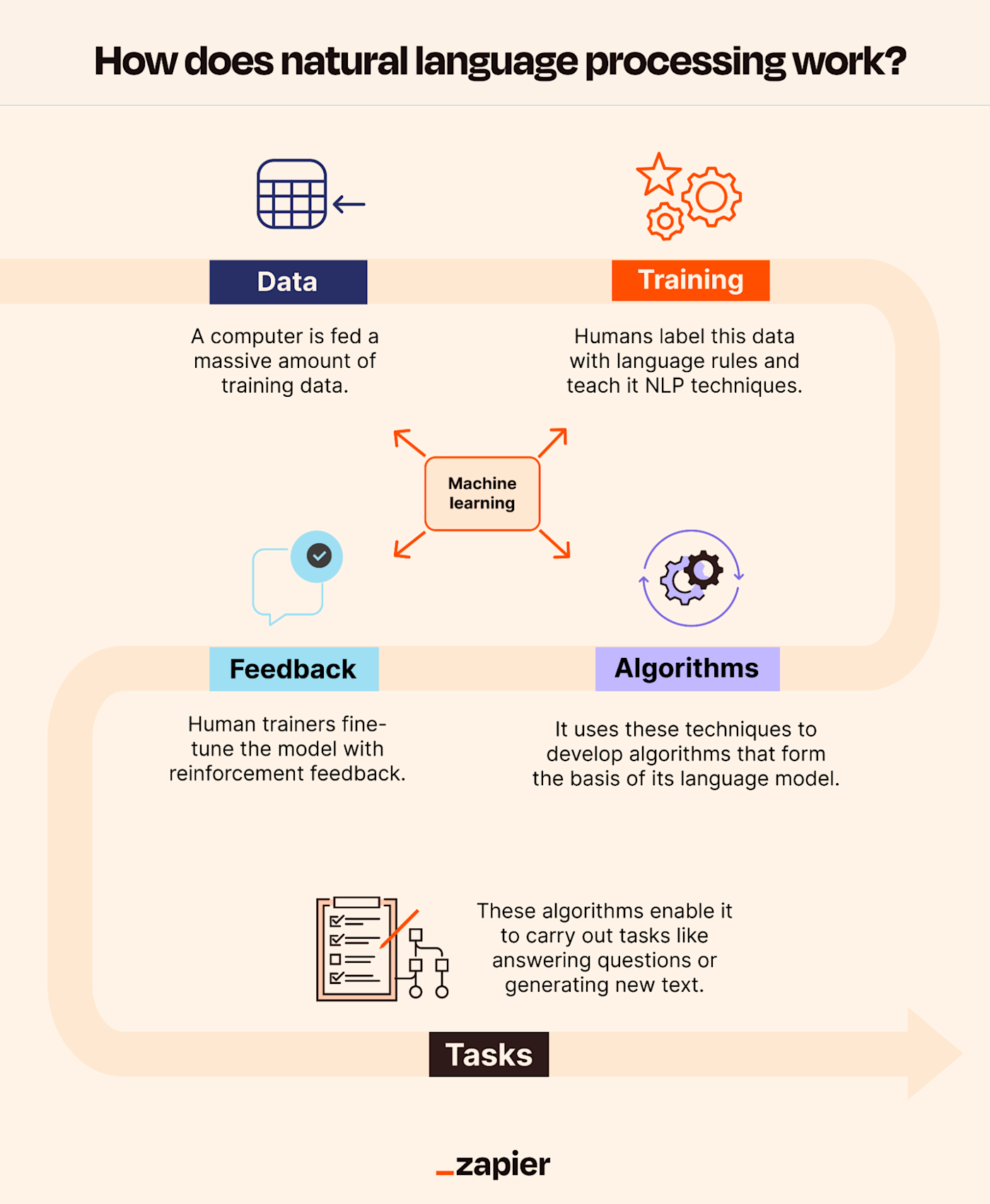
- Natural Language Processing (NLP): Enables the system to understand and manipulate human language, including syntax, semantics, and pragmatics.
- Machine Learning (ML): Trains models on large datasets of poetry to learn patterns, styles, and structures.
- Deep Learning: Uses neural networks—particularly transformers—to model complex linguistic relationships and generate text with high coherence.
- Reinforcement Learning: In some systems, feedback from users or evaluators is used to refine and improve output quality over time.
#Data Collection and Training
AI poetry models are typically trained on vast datasets of poems, which may include works from public domain poets, contemporary writers, or curated collections. These datasets are preprocessed to remove noise, standardize formatting, and ensure linguistic consistency. The training process involves:
- Tokenization: Breaking text into smaller units (tokens) such as words or subwords.
- Embedding: Converting tokens into numerical vectors that capture semantic meaning.
- Model Training: Using transformer architectures (e.g., BERT, GPT) to predict the next word or line in a sequence based on context.
- Fine-Tuning: Adapting the model to specific poetic forms (e.g., haiku, sonnet) or styles (e.g., Romantic, modernist).
#Generation Process
When a user inputs a prompt—such as a theme, emotion, or starting line—the AI poem generator follows these steps:
- Prompt Interpretation: The system analyzes the input to determine intent, tone, and desired structure.
- Context Modeling: The transformer model uses attention mechanisms to weigh the relevance of each word in the prompt and surrounding context.
- Text Generation: The model predicts the most likely continuation of the text, balancing creativity with coherence. Techniques like beam search or top-k sampling are used to avoid repetitive or nonsensical outputs.
- Post-Processing: The generated poem may be refined for rhyme, meter, or thematic consistency. Some systems apply rule-based corrections to enforce poetic conventions.
- Output Delivery: The final poem is presented to the user, often with options to regenerate, edit, or share.
#Limitations
Despite advancements, AI-generated poetry has several limitations:
- Lack of True Understanding: AI does not possess consciousness or emotional experience, so its "understanding" of poetry is statistical rather than experiential.
- Repetition and Cliché: Models may default to overused phrases or predictable structures, especially when trained on limited datasets.
- Contextual Missteps: AI can generate text that is grammatically correct but semantically irrelevant or nonsensical in context.
- Ethical Concerns: Issues of plagiarism, misattribution, and the devaluation of human creativity remain contentious.
#Important Facts
- First AI-Generated Poem: In 1966, Joseph Weizenbaum’s ELIZA program generated simple conversational poetry, though it was more interactive than autonomous.
- Longest AI Poem: In 2021, an AI system generated a 10,000-line epic poem titled The Day a Computer Wrote a Poem, blending surrealism with narrative structure.
- AI in Education: Tools like AI Poem Generator are used in classrooms to teach poetic devices, rhyme schemes, and creative writing techniques.
- Emotional Resonance: Studies suggest that AI-generated poetry can evoke emotional responses in readers, though often less intensely than human-written works.
- Copyright Issues: The legal status of AI-generated poetry remains unclear, particularly regarding ownership and plagiarism when trained on copyrighted works.
- Collaborative Creativity: Some poets use AI as a co-writer, blending human intuition with machine-generated suggestions to enhance the creative process.
- Multilingual Poetry: Advanced models like Google’s PaLM can generate poetry in multiple languages, including rare or endangered ones.
#Timeline of AI and Poetry
Year Event 1959 Christopher Strachey’s Love Letters program generates romantic prose, marking early AI language creativity. 1961 Raymond Queneau and François Le Lionnais publish Stochastic Poems, using combinatorial methods to generate poetry. 1970s James Meehan develops TALE-SPIN, a story and poetry generator based on rule-based systems. 1984 Racter, an AI program, generates surreal and often unintelligible poetry, gaining cult status. 2001 Electronic Poetry Center at SUNY Buffalo launches Verse by Verse, an online poetry generator. 2016 Google’s DeepDream generates psychedelic visual poetry by applying neural networks to images. 2019 OpenAI releases GPT-2, capable of generating coherent and stylistically varied poetry. 2020 AI Dungeon introduces interactive storytelling with poetic elements. 2021 A 10,000-line AI-generated epic poem, The Day a Computer Wrote a Poem, is published. 2023 AI poem generators like AI Poem Generator and Jasper become widely accessible, integrating with creative and educational platforms.
#Related Terms
#FAQ
What does AI And Poetry: Writing Verses cover?
Explores how artificial intelligence shapes poetry and writing verses, covering practical use cases, benefits, limitations, and risks.
Why is AI And Poetry: Writing Verses important?
It helps readers understand key concepts, compare practical use cases, and evaluate how Language AI decisions affect outcomes, risks, and implementation choices.
What should readers verify before applying this topic?
Readers should compare the benefits, limitations, data requirements, and related themes such as Poetry, Writing, Verse before using the ideas in real projects.
#References
- AI And Poetry: Writing Verses terminology and background research
- AI And Poetry: Writing Verses use cases, implementation examples, and limitations
- Language AI best practices, standards, and risk guidance
- Poetry case studies, benchmarks, and current industry analysis

Comments
No comments yet. Start the discussion with a useful note.