

#Short Answer
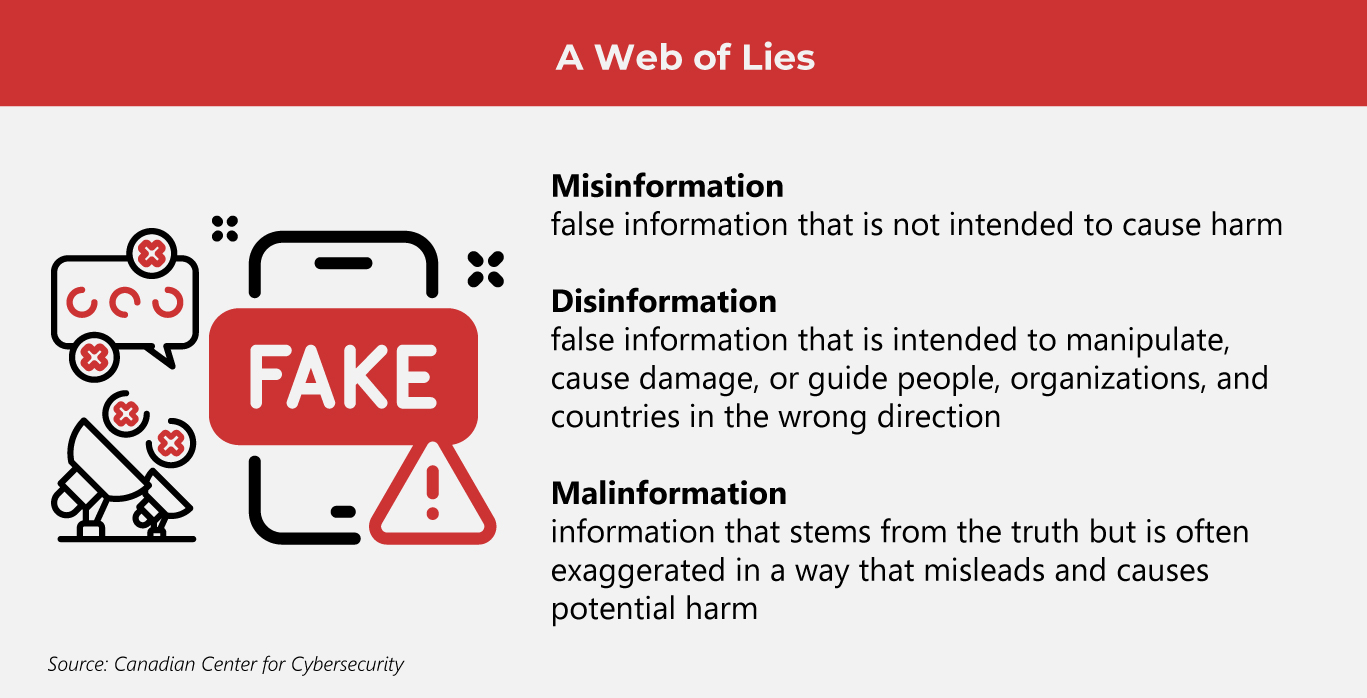
Explores how artificial intelligence shapes misinformation and fighting fake news, covering practical use cases, benefits, limitations, and risks.
#Infobox
#Overview
Artificial intelligence (AI) plays a pivotal role in addressing the global challenge of misinformation, which includes fake news, disinformation, and misleading content spread through digital platforms. AI systems leverage advanced algorithms to analyze vast amounts of data, identify patterns indicative of false information, and assist in real-time content moderation. These technologies are increasingly integrated into social media platforms, news organizations, and fact-checking initiatives to curb the proliferation of deceptive narratives.
The rise of AI in this domain reflects a broader shift toward technological solutions in combating information disorders. While traditional fact-checking relies on human expertise, AI augments these efforts by automating repetitive tasks, detecting subtle linguistic cues, and scaling responses to the sheer volume of online content. However, the effectiveness of AI is contingent on robust data quality, algorithmic transparency, and continuous refinement to address emerging manipulation techniques.
#History / Background
The intersection of AI and misinformation emerged prominently in the early 2010s, coinciding with the rapid growth of social media and the democratization of content creation. Early AI applications focused on keyword-based filtering and basic sentiment analysis, but advancements in natural language processing (NLP) and machine learning expanded capabilities significantly.
Key milestones include the launch of Google’s Fact Check tools in 2016, which enabled publishers to tag disputed claims, and Facebook’s introduction of AI-driven content moderation systems in 2017. The proliferation of deepfake technology in the late 2010s further accelerated the need for AI-powered detection tools, such as those developed by DeepMind and Microsoft.
Governments and international organizations also recognized the potential of AI in combating misinformation. The European Union’s Code of Practice on Disinformation (2018) and initiatives like the Global Disinformation Index underscored the importance of AI in policy frameworks.
#How it works
#Natural language processing (NLP)
NLP enables AI systems to analyze text for linguistic inconsistencies, sentiment shifts, and stylistic anomalies that may indicate misinformation. Techniques such as named-entity recognition (NER) help identify entities (e.g., people, organizations) and their relationships, while part-of-speech tagging detects grammatical irregularities. Pre-trained language models like BERT and RoBERTa are fine-tuned to classify claims as true, false, or misleading based on contextual cues.
#Machine learning and deep learning
Supervised learning models are trained on labeled datasets containing verified true and false claims, enabling them to generalize patterns across new content. Convolutional neural networks (CNNs) and recurrent neural networks (RNNs) process sequential data, such as news articles or social media posts, to detect temporal inconsistencies or repetitive phrasing. Generative adversarial networks (GANs) are also explored for generating counter-misinformation content.
#Computer vision
For visual misinformation, such as manipulated images or deepfakes, computer vision techniques analyze pixel-level anomalies, facial inconsistencies, and metadata inconsistencies. Tools like Microsoft Video Authenticator detect subtle artifacts in deepfake videos, while InVID verifies the provenance of images by cross-referencing them with databases like Google Reverse Image Search.
#Real-time monitoring and crowdsourcing
AI systems integrate with APIs from social media platforms to monitor content in real time. Platforms like Twitter (now X) and Facebook use AI to prioritize flagged content for human review or automated removal. Crowdsourcing initiatives, such as Wikipedia's WikiProject Fact and Reference Check, complement AI by leveraging community expertise to verify claims.
#Important facts
- Accuracy rates: AI fact-checking tools achieve accuracy rates between 70% and 90% in controlled environments, though performance varies based on language, context, and data quality.
- Bias in training data: AI models trained on biased datasets may replicate or amplify existing prejudices, leading to false positives or negatives in misinformation detection.
- Scalability: AI can process millions of posts per second, making it indispensable for platforms like Facebook and Twitter, which handle billions of daily interactions.
- Adversarial attacks: Misinformation creators use techniques like adversarial examples to evade AI detection, necessitating adversarial training and robust model updates.
- Multimodal detection: Modern AI systems analyze text, images, audio, and video simultaneously to detect coordinated disinformation campaigns across platforms.
- Ethical concerns: The use of AI in misinformation detection raises privacy issues, as it often involves monitoring user-generated content without explicit consent.
- Global disparities: AI tools are more effective in languages with abundant training data (e.g., English, Mandarin) and struggle with low-resource languages like Swahili or Quechua.
#Timeline
YearEvent2012Google launches its first fact-checking tool, enabling publishers to tag disputed claims.2016Facebook introduces AI-driven content moderation systems to flag harmful content.2017DeepMind develops AI tools to detect deepfake videos by analyzing facial inconsistencies.2018The European Union adopts the Code of Practice on Disinformation, encouraging AI adoption in policy.2019Twitter launches Birdwatch (later rebranded as Community Notes), a crowdsourced fact-checking feature.2020Microsoft releases Video Authenticator, a tool to detect deepfake videos in real time.2021ClaimBuster, an AI-powered fact-checking tool, gains prominence during the COVID-19 pandemic.2022Meta (formerly Facebook) deploys AI to label AI-generated content on its platforms.2023OpenAI releases tools to detect AI-generated text, addressing concerns about synthetic misinformation.
#Related Terms
#FAQ
What does AI And Misinformation: Fighting Fake News cover?
Explores how artificial intelligence shapes misinformation and fighting fake news, covering practical use cases, benefits, limitations, and risks.
Why is AI And Misinformation: Fighting Fake News important?
It helps readers understand key concepts, compare practical use cases, and evaluate how Artificial Intelligence decisions affect outcomes, risks, and implementation choices.
What should readers verify before applying this topic?
Readers should compare the benefits, limitations, data requirements, and related themes such as Misinformation, Fighting, Fake before using the ideas in real projects.
#References
- AI And Misinformation: Fighting Fake News terminology and background research
- AI And Misinformation: Fighting Fake News use cases, implementation examples, and limitations
- Artificial Intelligence best practices, standards, and risk guidance
- Misinformation case studies, benchmarks, and current industry analysis



Comments
No comments yet. Start the discussion with a useful note.