

#Short Answer
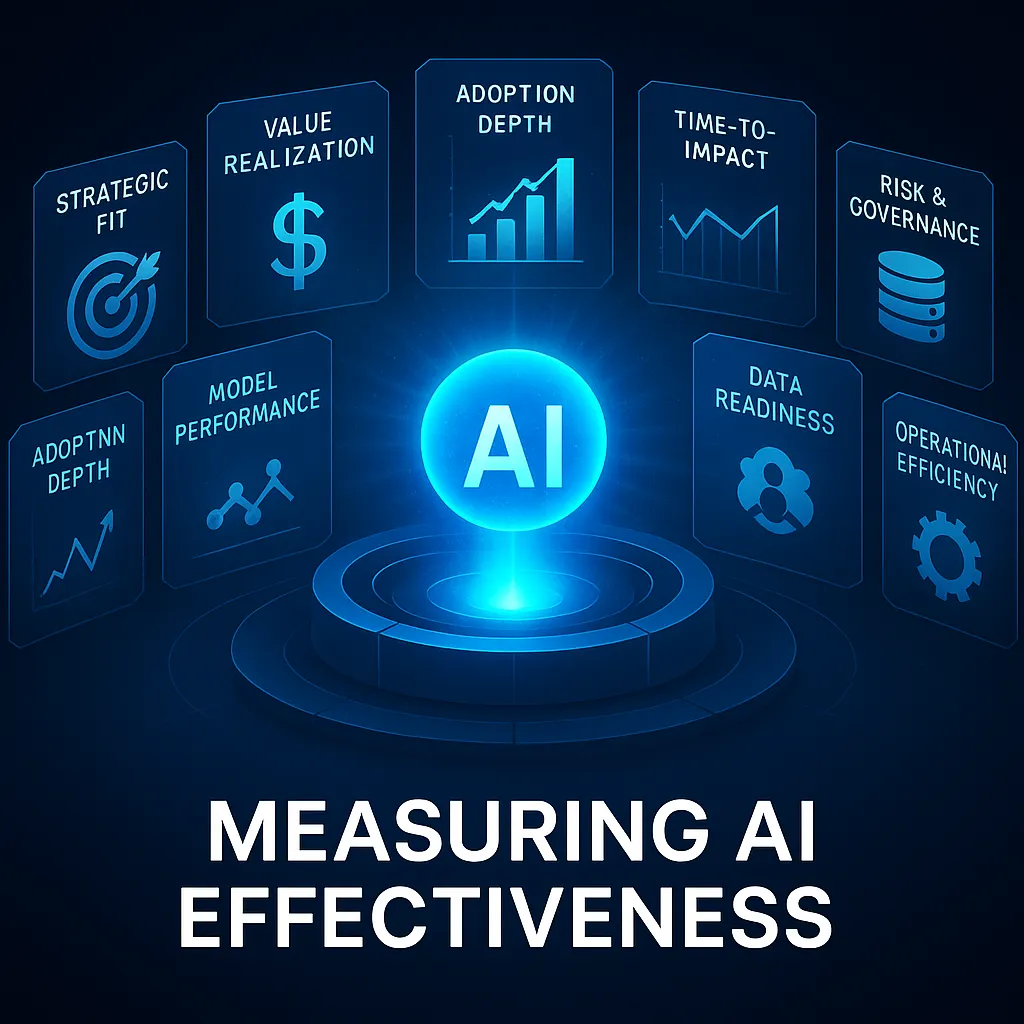
Explores how artificial intelligence shapes results and measuring impact, covering practical use cases, benefits, limitations, and risks.
#Infobox
Artificial intelligence (AI) in data remediation automates error correction, enhances data quality, and accelerates decision-making across industries.
Artificial Intelligence in Data Remediation Field Artificial intelligence Subfield Data remediation Key Technologies Machine learning, natural language processing, computer vision Applications Data cleansing, anomaly detection, predictive maintenance Impact Metrics Accuracy, processing speed, cost reduction Developers Research institutions, tech companies, data-driven enterprises
#Overview
Artificial intelligence (AI) has revolutionized data remediation by automating the identification and correction of errors in datasets. Traditional data remediation relies heavily on manual processes, which are time-consuming and prone to human error. AI-driven systems leverage machine learning (ML), natural language processing (NLP), and computer vision to detect inconsistencies, fill missing values, and standardize formats at scale. These advancements not only improve data accuracy but also significantly reduce the time and resources required for remediation.
The integration of AI in data remediation is particularly critical in industries such as healthcare, finance, and manufacturing, where high-quality data is essential for operational efficiency and regulatory compliance. For instance, in healthcare, AI-powered tools can correct patient records, ensuring accurate diagnoses and treatment plans. In finance, AI detects fraudulent transactions by identifying irregular patterns in real-time. By automating these processes, organizations can achieve higher data integrity, leading to better decision-making and strategic outcomes.
#History / Background
The concept of data remediation predates AI, with early methods involving manual data entry, spreadsheet-based corrections, and rule-based validation. However, the limitations of these approaches became evident as datasets grew in size and complexity. The advent of AI in the late 20th century introduced new possibilities for automating data quality improvements.
In the 1990s, rule-based systems were the primary tools for data remediation, relying on predefined algorithms to detect and correct errors. While effective for simple datasets, these systems struggled with scalability and adaptability. The 2000s saw the rise of machine learning, which enabled systems to learn from data patterns and improve over time. For example, support vector machines (SVMs) and decision trees were used to classify and correct erroneous entries.
The 2010s marked a turning point with the proliferation of deep learning and neural networks, which enhanced AI's ability to handle unstructured data, such as text and images. Technologies like convolutional neural networks (CNNs) and recurrent neural networks (RNNs) enabled AI systems to detect anomalies in complex datasets with greater precision. Today, AI-driven data remediation is a cornerstone of digital transformation, enabling organizations to harness the full potential of their data assets.
#How It Works
#Data Collection and Preprocessing
The first step in AI-driven data remediation is collecting and preprocessing raw data. This involves gathering data from various sources, such as databases, APIs, or IoT devices, and cleaning it to remove noise and inconsistencies. Preprocessing techniques include normalization, tokenization, and handling missing values. For example, in text data, NLP algorithms tokenize sentences into words or phrases, while in numerical data, missing values may be imputed using statistical methods or predictive models.
#Anomaly Detection
AI systems use anomaly detection algorithms to identify outliers or errors in datasets. These algorithms can be rule-based, statistical, or machine learning-based. For instance, Isolation Forest is a popular unsupervised learning technique that isolates anomalies by randomly partitioning data points. In contrast, supervised learning models, such as Random Forest classifiers, are trained on labeled datasets to distinguish between correct and erroneous entries. Deep learning models, like autoencoders, can also detect anomalies by learning the normal patterns in data and flagging deviations.
#Error Correction and Imputation
Once anomalies are detected, AI systems apply correction techniques to remediate errors. For missing data, imputation methods such as mean, median, or mode substitution are used, though advanced techniques like k-nearest neighbors (KNN) imputation or predictive modeling (e.g., using regression or neural networks) can provide more accurate results. For inconsistent data, AI systems may standardize formats, correct typos, or resolve conflicts using predefined rules or learned patterns. In some cases, AI can even reconstruct missing data by inferring relationships between variables.
#Validation and Feedback Loops
AI-driven data remediation is not a one-time process; it requires continuous validation and refinement. Feedback loops allow the system to learn from corrections made by users or domain experts, improving its accuracy over time. For example, if an AI system incorrectly flags a valid data point as an error, a user can provide feedback to retrain the model. This iterative process ensures that the AI system remains robust and adaptable to evolving data patterns.
#Important Facts
- Accuracy Improvement: AI-driven data remediation can improve data accuracy by up to 90% compared to traditional manual methods.
- Speed: Automated systems can process large datasets in minutes, whereas manual remediation may take days or weeks.
- Cost Reduction: Organizations can reduce operational costs by up to 60% by automating data remediation tasks.
- Scalability: AI systems can handle datasets of any size, from small business records to massive enterprise databases.
- Regulatory Compliance: AI ensures adherence to data protection regulations, such as GDPR and HIPAA, by maintaining high data integrity standards.
- Industry Applications: AI-driven remediation is used in healthcare for patient records, finance for fraud detection, retail for customer data management, and manufacturing for predictive maintenance.
- Challenges: Common challenges include data bias, model interpretability, and the need for high-quality training data.
#Timeline
Year Event 1950s–1960s Early rule-based systems for data validation and correction. 1980s Introduction of expert systems for data remediation. 1990s Rule-based and statistical methods dominate data remediation. 2000s Machine learning techniques, such as SVMs and decision trees, are applied to data remediation. 2010s Deep learning and neural networks enable handling of unstructured data. 2015 AI-powered tools for real-time data remediation become commercially available. 2020s Integration of AI with big data platforms and cloud computing enhances scalability.
#Related Terms
#FAQ
What does AI And Results: Measuring Impact cover?
Explores how artificial intelligence shapes results and measuring impact, covering practical use cases, benefits, limitations, and risks.
Why is AI And Results: Measuring Impact important?
It helps readers understand key concepts, compare practical use cases, and evaluate how Artificial Intelligence decisions affect outcomes, risks, and implementation choices.
What should readers verify before applying this topic?
Readers should compare the benefits, limitations, data requirements, and related themes such as Result, Measuring, Impact before using the ideas in real projects.
#References
- AI And Results: Measuring Impact terminology and background research
- AI And Results: Measuring Impact use cases, implementation examples, and limitations
- Artificial Intelligence best practices, standards, and risk guidance
- Result case studies, benchmarks, and current industry analysis



Comments
No comments yet. Start the discussion with a useful note.