

#Short Answer
Explores how artificial intelligence shapes job displacement and addressing concerns, covering practical use cases, benefits, limitations, and risks.
#Infobox
Explore the impact of AI on employment, job displacement risks, and strategies for workforce adaptation in the evolving technological landscape.
Artificial Intelligence and Job Displacement Field Artificial intelligence Focus Employment impact, automation risks, and workforce adaptation Key Concerns Job displacement, economic inequality, skill gaps Mitigation Strategies Reskilling, education reform, policy interventions Notable Reports McKinsey Global Institute, World Economic Forum
#This article is about the impact of artificial intelligence on employment and job displacement.Overview
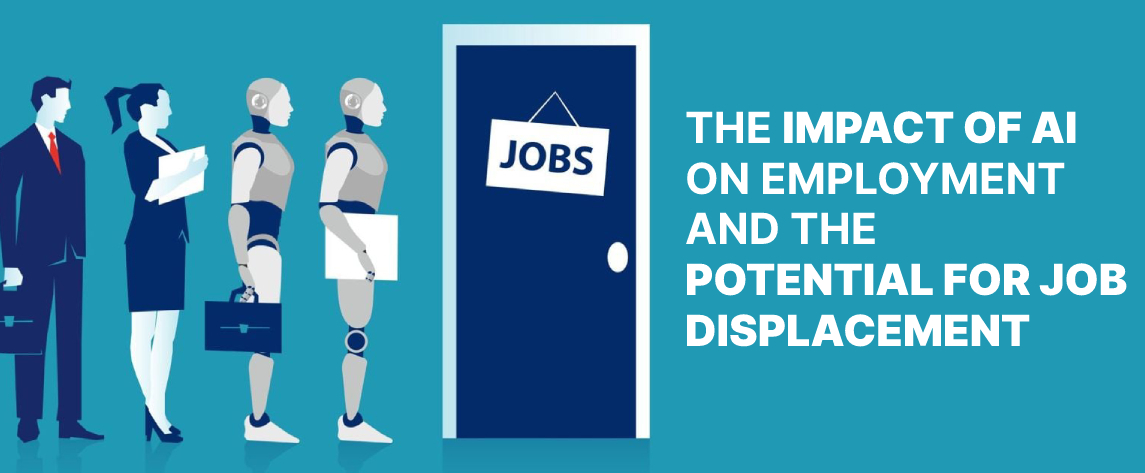
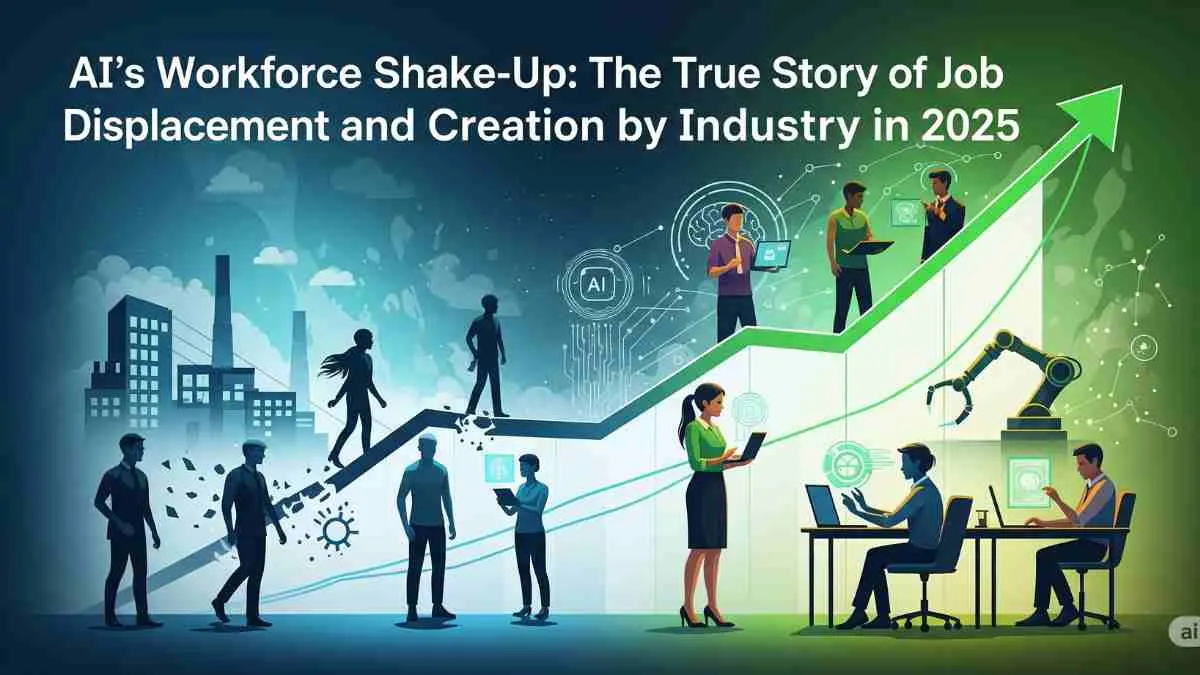
Artificial intelligence (AI) is transforming industries worldwide, automating tasks that were once performed by humans. While AI-driven automation enhances productivity and efficiency, it also raises significant concerns about job displacement. The integration of AI into workflows has led to the obsolescence of certain roles, particularly in manufacturing, customer service, and data processing. However, AI also creates new opportunities in fields such as AI development, data science, and cybersecurity.
Economic studies suggest that AI could displace millions of jobs by 2030, with routine-based roles being the most vulnerable. Conversely, roles requiring creativity, emotional intelligence, and complex problem-solving may see increased demand. Governments, businesses, and educational institutions are exploring strategies to mitigate the negative effects of AI on employment, including reskilling programs and policy reforms.
#History / Background
The concept of machines replacing human labor dates back to the Industrial Revolution, when mechanization reduced the need for manual craftsmanship. The 20th century saw further automation with the rise of computers and robotics, particularly in manufacturing and administrative tasks. The advent of AI in the 21st century accelerated this trend, with machine learning and deep learning enabling systems to perform cognitive tasks previously exclusive to humans.
Key milestones in AI-driven automation include:
- 1950s–1970s: Early AI research focused on symbolic reasoning and rule-based systems.
- 1990s: The rise of statistical machine learning, enabling systems to improve with data.
- 2010s: Deep learning breakthroughs, such as convolutional neural networks (CNNs) and transformers, revolutionized image and language processing.
- 2020s: AI tools like generative models (e.g., large language models) and robotic process automation (RPA) are increasingly integrated into business operations.
#How It Works
AI-driven job displacement occurs primarily through automation, where machines perform tasks traditionally handled by humans. The process involves several key technologies:
- Robotic Process Automation (RPA): Software robots mimic human actions to perform repetitive tasks, such as data entry and invoice processing.
- Machine Learning (ML): Algorithms analyze data to identify patterns and make decisions, reducing the need for human intervention in tasks like fraud detection and customer support.
- Natural Language Processing (NLP): AI systems understand and generate human language, enabling chatbots and virtual assistants to replace customer service representatives.
- Computer Vision: Machines interpret visual data, automating quality control in manufacturing and autonomous driving in logistics.
The economic rationale for AI adoption is cost reduction and efficiency gains. Businesses invest in AI to streamline operations, reduce errors, and scale production. However, this often leads to workforce reductions in sectors where human labor is deemed less cost-effective than automation.
#Important Facts
- Job Displacement Risk: A 2023 report by the McKinsey Global Institute estimates that up to 30% of work hours in the U.S. economy could be automated by 2030.
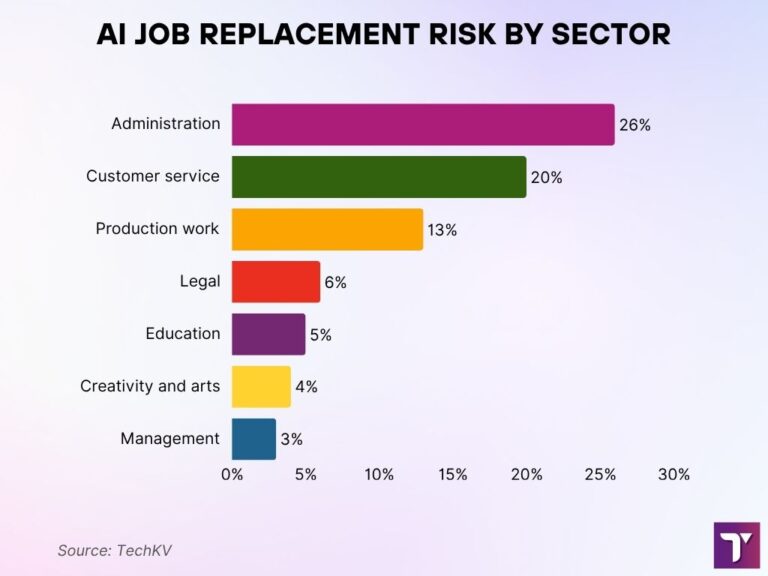
- Sector Vulnerability: Routine-based jobs in manufacturing, retail, and administrative support are at higher risk, while healthcare, education, and creative fields are less susceptible.
- New Job Creation: AI is expected to generate 97 million new jobs globally by 2025, according to the World Economic Forum, though these roles may require different skill sets.
- Economic Impact: The World Bank projects that AI could contribute up to $15.7 trillion to the global economy by 2030, but warns of widening inequality without proper policies.
- Policy Responses: Countries like Singapore and Denmark have implemented reskilling programs, while the EU’s Artificial Intelligence Act aims to regulate high-risk AI applications.
#Timeline
Year Event 1956 The term "artificial intelligence" is coined at the Dartmouth Conference. 1966 ELIZA, an early natural language processing program, simulates human conversation. 1997 IBM’s Deep Blue defeats world chess champion Garry Kasparov. 2011 IBM Watson wins Jeopardy!, demonstrating advanced NLP capabilities. 2016 AlphaGo defeats a professional Go player, showcasing deep learning advancements. 2020 COVID-19 pandemic accelerates AI adoption in remote work and e-commerce. 2023 Generative AI tools like DALL-E and ChatGPT gain widespread public attention. 2024 U.S. and EU governments propose AI regulation frameworks to address job displacement risks.
#Related Terms
#FAQ
What does AI And Job Displacement: Addressing Concerns cover?
Explores how artificial intelligence shapes job displacement and addressing concerns, covering practical use cases, benefits, limitations, and risks.
Why is AI And Job Displacement: Addressing Concerns important?
It helps readers understand key concepts, compare practical use cases, and evaluate how Artificial Intelligence decisions affect outcomes, risks, and implementation choices.
What should readers verify before applying this topic?
Readers should compare the benefits, limitations, data requirements, and related themes such as Job, Displacement, Addressing before using the ideas in real projects.
#References
- AI And Job Displacement: Addressing Concerns terminology and background research
- AI And Job Displacement: Addressing Concerns use cases, implementation examples, and limitations
- Artificial Intelligence best practices, standards, and risk guidance
- Job case studies, benchmarks, and current industry analysis

Comments
No comments yet. Start the discussion with a useful note.