

#Short Answer
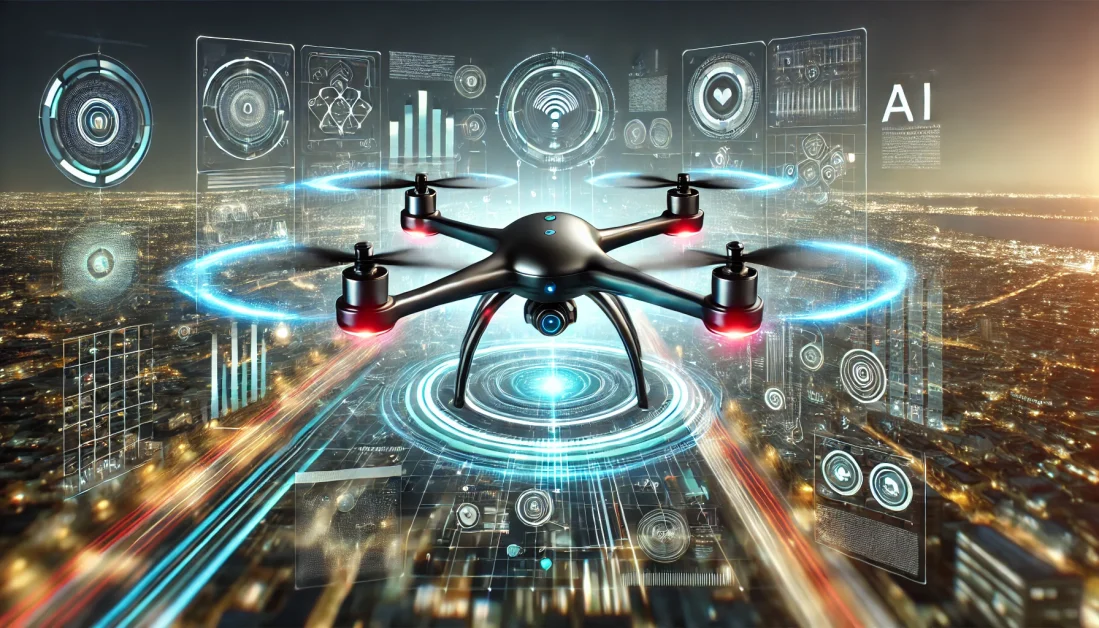
AI-driven drones use artificial intelligence algorithms to autonomously navigate, avoid obstacles, and perform complex tasks such as mapping, surveillance, and delivery. These systems integrate computer vision, machine learning, and sensor fusion to enable real-time decision-making, enhancing operational efficiency and reducing human intervention.
#Infobox
#Overview
AI and drones represent a convergence of artificial intelligence and unmanned aerial systems, enabling autonomous or semi-autonomous flight capabilities. Drones, also known as unmanned aerial vehicles (UAVs), leverage AI to process sensor data, interpret surroundings, and execute tasks without direct human control. This integration has revolutionized industries such as agriculture, logistics, defense, and entertainment by enhancing precision, reducing operational costs, and expanding operational reach in hazardous or remote environments.
The core of AI-driven drone technology lies in its ability to perform real-time data analysis. Advanced algorithms process inputs from cameras, LiDAR, radar, and other sensors to identify objects, navigate obstacles, and optimize flight paths. Machine learning models, particularly deep learning, enable drones to improve performance over time through exposure to diverse scenarios. This adaptability is crucial for applications like search and rescue, where drones must quickly assess dynamic environments.
#History / Background
#Early Development
The origins of drone technology trace back to the early 20th century, with early experiments in radio-controlled aircraft. However, the integration of AI into drones began in earnest during the late 20th and early 21st centuries. Military applications drove initial advancements, with the U.S. Department of Defense funding projects like the Predator drone, which incorporated basic autonomous features for surveillance and reconnaissance.
In the 1990s and early 2000s, advancements in computing power and sensor miniaturization allowed for more sophisticated onboard processing. The development of global positioning systems (GPS) and inertial measurement units (IMUs) provided drones with the ability to stabilize flight and follow predefined routes. These technological leaps laid the groundwork for AI integration, as drones began to incorporate algorithms for path planning and obstacle avoidance.
#Commercialization and Modern Advancements
The commercial drone industry experienced rapid growth in the 2010s, driven by the release of affordable, high-performance UAVs equipped with AI capabilities. Companies like DJI revolutionized the market with consumer-grade drones featuring computer vision for stable flight and automated photography. The introduction of obstacle avoidance systems, such as DJI’s APAS (Advanced Pilot Assistance Systems), marked a significant milestone in autonomous drone operation.
In parallel, AI research contributed to advancements in object detection and classification. Convolutional neural networks (CNNs) and other deep learning models enabled drones to identify and track objects in real time, enhancing applications in agriculture (crop monitoring), construction (site inspection), and environmental monitoring (wildlife tracking). The rise of edge computing further accelerated AI integration by allowing drones to process data locally, reducing latency and dependency on cloud connectivity.
#How It Works
#Core Components
AI-driven drones rely on a combination of hardware and software components to achieve autonomous operation:
- Sensors: Cameras (RGB, thermal, multispectral), LiDAR, radar, ultrasonic sensors, and IMUs provide environmental data.
- Onboard Computers: High-performance processors (e.g., NVIDIA Jetson) run AI models for real-time inference.
- AI Algorithms: Computer vision (YOLO, SSD), SLAM (Simultaneous Localization and Mapping), and reinforcement learning enable navigation and task execution.
- Communication Systems: Wi-Fi, cellular (4G/5G), and radio links facilitate remote control and data transmission.
- Power Systems: Lithium-polymer batteries or hydrogen fuel cells provide energy for extended flight durations.
#Key Technologies
Computer Vision: Enables drones to interpret visual data, such as identifying objects, reading text, or detecting anomalies. Techniques like edge detection and semantic segmentation are commonly used.
Machine Learning: Supervised learning models are trained on labeled datasets to recognize patterns (e.g., distinguishing between crops and weeds in agriculture). Reinforcement learning optimizes flight paths by rewarding efficient navigation.
Sensor Fusion: Combines data from multiple sensors (e.g., GPS, IMU, LiDAR) to improve accuracy in positioning and obstacle detection. Kalman filters and particle filters are often employed for this purpose.
Autonomous Navigation: AI systems generate flight plans, adjust trajectories in real time, and execute missions without human input. This includes waypoint navigation, geofencing, and dynamic rerouting to avoid no-fly zones.
#Important Facts
- Autonomy Levels: Drones are classified into five levels of autonomy (0–4) by the Autonomy Levels for Unmanned Systems (ALFUS) framework, ranging from fully manual to fully autonomous operation.
- Regulatory Frameworks: The FAA’s Part 107 regulations in the U.S. govern commercial drone operations, while the EU’s UAS Regulation (2019) standardizes rules across member states.
- Energy Efficiency: AI optimizes flight paths to conserve battery life, with some drones achieving up to 30% longer flight times through adaptive routing.
- Swarm Intelligence: AI enables drones to operate in coordinated swarms, performing tasks like search and rescue or agricultural monitoring with greater efficiency than single drones.
- Ethical Concerns: Privacy issues arise from drone surveillance, leading to debates over data collection and usage. Regulations often require compliance with local privacy laws.
- Environmental Impact: Electric drones produce zero emissions during flight, but battery disposal and manufacturing processes contribute to environmental concerns.
#Timeline
- A broader term for any aircraft operated without a human pilot onboard.
- A UAV capable of fully autonomous operation without human intervention.
- The field of AI focused on enabling machines to interpret visual data from the world.
- A technique used by drones to build a map of an unknown environment while simultaneously tracking their location.
- AI processing performed on the drone itself, rather than relying on cloud computing.
- A virtual boundary that restricts drone flight within designated areas to comply with regulations.
- The additional equipment or cargo carried by a drone, such as cameras, sensors, or medical supplies.
- Operation of a drone where the pilot cannot see it directly, requiring advanced navigation systems.
#Related Terms
#FAQ
What does AI And Drones: Unmanned Flight cover?
Explores how artificial intelligence shapes drones and unmanned flight, covering practical use cases, benefits, limitations, and risks.
Why is AI And Drones: Unmanned Flight important?
It helps readers understand key concepts, compare practical use cases, and evaluate how Technology decisions affect outcomes, risks, and implementation choices.
What should readers verify before applying this topic?
Readers should compare the benefits, limitations, data requirements, and related themes such as Drone, Unmanned, Flight before using the ideas in real projects.
#References
- AI And Drones: Unmanned Flight terminology and background research
- AI And Drones: Unmanned Flight use cases, implementation examples, and limitations
- Technology best practices, standards, and risk guidance
- Drone case studies, benchmarks, and current industry analysis


Comments
No comments yet. Start the discussion with a useful note.