

#Short Answer
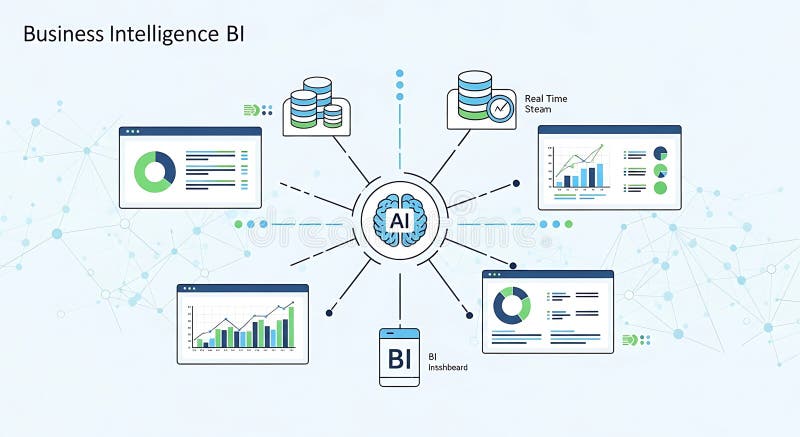
Artificial intelligence (AI) and databases are interconnected fields that enable advanced data processing, storage, and analysis. AI leverages databases to train models, while databases integrate AI techniques for smarter data management, query optimization, and automation.
#Infobox
#Overview
Artificial intelligence (AI) and databases represent two foundational pillars of modern computing. AI focuses on creating systems capable of performing tasks that typically require human intelligence, such as learning, reasoning, and decision-making. Databases, on the other hand, serve as structured repositories for storing and retrieving data efficiently. The integration of AI into database systems enhances their functionality by enabling predictive analytics, automated query optimization, and intelligent data retrieval.
AI-driven databases can adapt to user behavior, optimize performance based on workload patterns, and even detect anomalies in real time. This synergy is crucial in fields like business intelligence, healthcare, finance, and autonomous systems, where data-driven decisions are paramount. As AI continues to evolve, its role in database management becomes increasingly sophisticated, leading to more autonomous and self-tuning systems.
#History / Background
#Early Developments
The concept of artificial intelligence dates back to the mid-20th century, with seminal work by Alan Turing, who proposed the idea of machines capable of human-like thought in his 1950 paper Computing Machinery and Intelligence. Around the same time, early database models, such as the hierarchical and network models, emerged to organize and retrieve data efficiently.
#The Rise of Relational Databases
In 1970, Edgar F. Codd introduced the relational model for databases, which revolutionized data management by organizing information into tables with rows and columns. This model became the standard for database systems, leading to the development of SQL (Structured Query Language) as a universal language for interacting with databases.
#AI and Database Integration
The integration of AI into databases gained momentum in the late 20th and early 21st centuries. Machine learning algorithms began to be applied to optimize query performance, predict data trends, and automate administrative tasks. The advent of big data and cloud computing further accelerated this integration, enabling real-time analytics and scalable AI-driven database solutions.
#How It Works
#AI in Database Management
AI enhances database systems through several mechanisms:
- Query Optimization: AI algorithms analyze query patterns and adjust execution plans dynamically to improve performance.
- Automated Indexing: Machine learning models identify frequently accessed data and create optimal indexes to speed up retrieval.
- Anomaly Detection: AI systems monitor database activity to detect unusual patterns, such as unauthorized access or performance bottlenecks.
- Predictive Analytics: By analyzing historical data, AI can forecast future trends, such as storage needs or query loads.
#Database Systems for AI
AI applications rely on databases to store and process vast amounts of data. Key database technologies used in AI include:
- Relational Databases: Systems like PostgreSQL and MySQL provide structured storage and SQL-based querying, essential for training AI models.
- NoSQL Databases: Databases like MongoDB and Cassandra handle unstructured or semi-structured data, which is common in AI applications such as natural language processing.
- Data Warehouses: Systems like Amazon Redshift and Google BigQuery aggregate large datasets for analytics and machine learning.
- Graph Databases: Tools like Neo4j store and query complex relationships, useful for AI applications in social networks or recommendation systems.
#AI and Data Processing
AI models require large datasets for training. Databases play a critical role in:
- Data Collection: Aggregating data from multiple sources into a centralized repository.
- Data Cleaning: Identifying and correcting errors or inconsistencies in datasets.
- Data Transformation: Converting raw data into formats suitable for AI training.
- Data Augmentation: Generating synthetic data to improve model robustness.
#Important Facts
- The first AI program, Logic Theorist, was developed in 1956 by Allen Newell and Herbert A. Simon.
- Edgar F. Codd's relational model, introduced in 1970, remains the foundation of most modern databases.
- Machine learning models can reduce database query times by up to 90% through intelligent optimization.
- AI-driven databases can automatically scale resources based on workload demands, improving efficiency.
- Over 90% of enterprises use AI in some form of database management, according to industry reports.
- Graph databases are particularly effective for AI applications involving complex relationships, such as fraud detection.
#Related Terms
#FAQ
What does AI And Databases: Managing Information cover?
Explores how artificial intelligence shapes databases and managing information, covering practical use cases, benefits, limitations, and risks.
Why is AI And Databases: Managing Information important?
It helps readers understand key concepts, compare practical use cases, and evaluate how Healthcare AI decisions affect outcomes, risks, and implementation choices.
What should readers verify before applying this topic?
Readers should compare the benefits, limitations, data requirements, and related themes such as Database, Managing, Information before using the ideas in real projects.
#References
- AI And Databases: Managing Information terminology and background research
- AI And Databases: Managing Information use cases, implementation examples, and limitations
- Healthcare AI best practices, standards, and risk guidance
- Database case studies, benchmarks, and current industry analysis


Comments
No comments yet. Start the discussion with a useful note.