


#Short Answer
Artificial intelligence (AI) integration in Customer Relationship Management (CRM) systems enhances customer interactions, automates processes, and provides data-driven insights for businesses.
#Infobox
#Overview
AI in CRM refers to the application of artificial intelligence technologies within customer relationship management systems to optimize customer interactions, automate repetitive tasks, and extract actionable insights from large datasets. By leveraging machine learning (ML), natural language processing (NLP), and predictive analytics, AI-powered CRM platforms enable businesses to deliver highly personalized experiences, anticipate customer needs, and streamline operational workflows. This integration transforms traditional CRM from a static data repository into a dynamic, intelligent system capable of real-time decision-making.
AI-driven CRM solutions are widely adopted across industries such as retail, healthcare, finance, and telecommunications. They support functions including lead scoring, sentiment analysis, chatbot assistance, and automated email campaigns. The primary goal is to enhance customer satisfaction while reducing manual effort and human error. As AI continues to evolve, its role in CRM is expanding, with emerging applications in voice recognition, computer vision, and generative AI for content creation.
#History / Background
The concept of CRM emerged in the 1980s with the rise of database marketing and contact management systems. Early CRM tools were primarily focused on storing customer contact information and tracking sales activities. However, these systems lacked intelligence and relied heavily on manual data entry. The integration of AI into CRM began in the late 1990s and early 2000s, coinciding with advancements in data analytics and machine learning.
In 2007, Salesforce introduced its AI engine, Einstein, marking a significant milestone in AI-powered CRM. This innovation allowed businesses to leverage predictive analytics for lead scoring and opportunity insights. Around the same time, companies like HubSpot and Zoho began incorporating AI-driven features such as chatbots and automated workflows. The proliferation of cloud computing further accelerated AI adoption in CRM by enabling real-time data processing and accessibility.
By the 2010s, AI in CRM had become mainstream, with major vendors such as Microsoft (Dynamics 365 AI), Oracle (CX Intelligence), and SAP (Leonardo) integrating AI capabilities into their platforms. The rise of big data and the Internet of Things (IoT) provided additional data sources that AI systems could analyze to enhance customer understanding. Today, AI in CRM is a cornerstone of digital transformation strategies, enabling businesses to stay competitive in an increasingly customer-centric market.
#How It Works
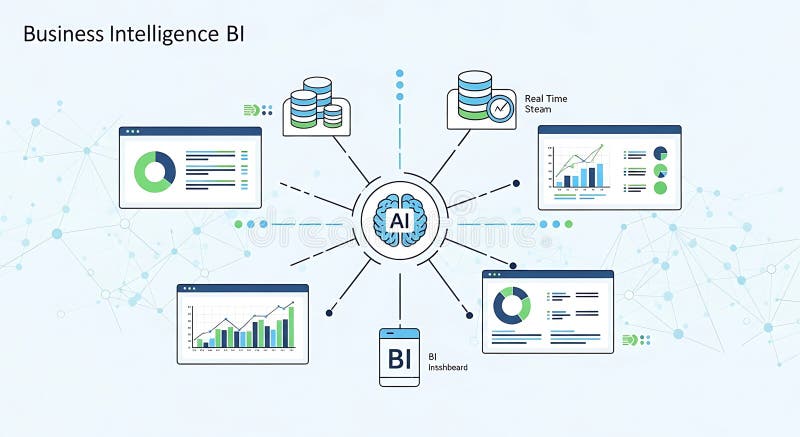
AI in CRM operates through a combination of advanced technologies that process and analyze customer data to generate insights and automate actions. The core components include:
Data Collection and Integration
AI-powered CRM systems aggregate data from multiple sources, including customer interactions (emails, calls, chats), transaction histories, social media activity, and IoT devices. This data is stored in a centralized database, often in the cloud, to ensure accessibility and scalability.
Machine Learning and Predictive Analytics
Machine learning algorithms analyze historical data to identify patterns and trends. Predictive models forecast customer behavior, such as purchase likelihood, churn risk, or lifetime value. These insights help businesses prioritize leads, tailor marketing campaigns, and proactively address customer needs.
Natural Language Processing (NLP)
NLP enables CRM systems to understand and process human language. It powers features like sentiment analysis, which evaluates customer emotions from emails or social media posts, and chatbots, which provide instant responses to customer queries. NLP also facilitates voice assistants that interact with customers via voice commands.
Automation and Workflow Optimization
AI automates repetitive tasks such as data entry, lead routing, and follow-up emails. Robotic process automation (RPA) works alongside AI to handle routine operations, freeing up human agents to focus on complex or high-value interactions. Workflow optimization ensures that processes are efficient and consistent.
Personalization Engines
AI-driven personalization engines analyze customer preferences and behaviors to deliver tailored content, product recommendations, and offers. These engines use collaborative filtering, content-based filtering, and deep learning to create highly individualized experiences across channels such as email, websites, and mobile apps.
Real-Time Decision Making
AI systems process data in real time, enabling businesses to make immediate decisions. For example, an AI-powered CRM can detect a customer’s frustration during a chat interaction and escalate the issue to a human agent or offer a discount to mitigate dissatisfaction.
#Important Facts
- Market Growth: The global AI in CRM market size was valued at approximately $6.5 billion in 2022 and is projected to grow at a compound annual growth rate (CAGR) of 12.5% from 2023 to 2030.
- Adoption Rates: Over 60% of businesses using CRM systems have integrated AI capabilities, with adoption highest in the technology, financial services, and retail sectors.
- Customer Expectations: 72% of customers expect companies to understand their needs and preferences, making AI-driven personalization a critical differentiator.
- Efficiency Gains: AI automation can reduce customer service response times by up to 70% and increase sales team productivity by 40%.
- Data Privacy: Compliance with regulations such as GDPR and CCPA is essential when using AI in CRM, as these systems often process sensitive customer data.
- Ethical Considerations: Bias in AI algorithms can lead to unfair treatment of certain customer segments. Businesses must implement ethical AI practices to ensure fairness and transparency.
- Integration Challenges: Integrating AI with legacy CRM systems can be complex, requiring data migration, API development, and employee training.
#Timeline
- Early CRM systems emerge
Early CRM systems emerge, focusing on contact management and sales automation.
- Salesforce is founded, pioneer
Salesforce is founded, pioneering cloud-based CRM solutions.
- Salesforce introduces Einstein
Salesforce introduces Einstein AI, the first major AI integration in CRM.
- HubSpot launches its CRM
HubSpot launches its CRM platform with AI-driven marketing automation features.
- Microsoft Dynamics 365 integra
Microsoft Dynamics 365 integrates AI for predictive analytics and chatbots.
- Gartner predicts that by
Gartner predicts that by 2020, AI will be a top investment priority for CRM vendors.
- Oracle CX Intelligence and
Oracle CX Intelligence and SAP Leonardo expand AI capabilities in CRM.
- Generative AI begins to
Generative AI begins to be integrated into CRM for content creation and customer engagement.
- AI-driven CRM adoption surpass
AI-driven CRM adoption surpasses 60% among Fortune 500 companies.
#Related Terms
#FAQ
What does AI And CRM: Managing Relationships cover?
Explores how artificial intelligence shapes CRM and managing relationships, covering practical use cases, benefits, limitations, and risks.
Why is AI And CRM: Managing Relationships important?
It helps readers understand key concepts, compare practical use cases, and evaluate how Healthcare AI decisions affect outcomes, risks, and implementation choices.
What should readers verify before applying this topic?
Readers should compare the benefits, limitations, data requirements, and related themes such as Crm, Managing, Relationship before using the ideas in real projects.
#References
- AI And CRM: Managing Relationships terminology and background research
- AI And CRM: Managing Relationships use cases, implementation examples, and limitations
- Healthcare AI best practices, standards, and risk guidance
- Crm case studies, benchmarks, and current industry analysis

Comments
No comments yet. Start the discussion with a useful note.