

#Short Answer
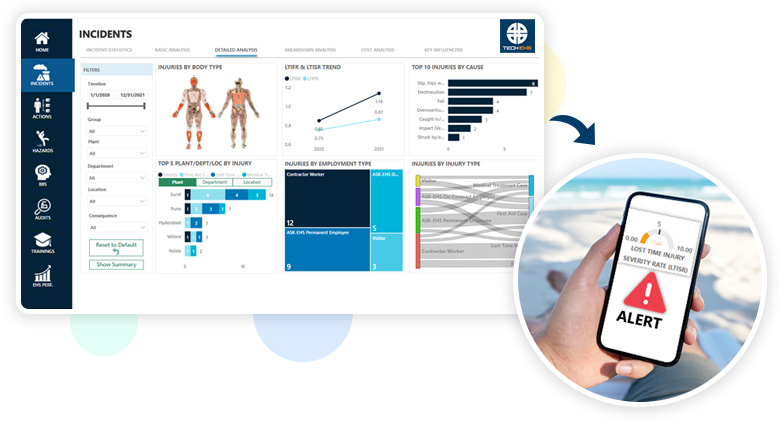
AI-driven proactive notifications leverage artificial intelligence to analyze real-time data and generate automated alerts, enabling organizations to anticipate risks, prevent incidents, and enhance operational safety before issues escalate.
#Infobox
#Overview
AI and alerts—particularly proactive notifications—represent a transformative approach to risk management across industries. By integrating artificial intelligence with data monitoring systems, organizations can automatically detect emerging hazards and send timely alerts before incidents occur. This shift from reactive to proactive safety measures is powered by machine learning models that analyze vast datasets, including sensor inputs, historical incident records, and environmental conditions.
Proactive notifications are not limited to physical safety; they extend to cybersecurity, supply chain disruptions, and public health monitoring. The core principle is the same: using AI to interpret patterns and trigger alerts that prompt immediate action, reducing downtime, preventing accidents, and saving lives. As AI technologies advance, the accuracy and speed of these systems continue to improve, making them indispensable in modern safety frameworks.
#History / Background
The concept of automated alerts predates AI, with early systems relying on threshold-based triggers in industrial settings. For example, pressure sensors in chemical plants would activate alarms when readings exceeded safe levels. However, these systems were rigid and often produced false positives or missed subtle risks.
The integration of AI began in the late 2000s and early 2010s, as machine learning algorithms became capable of processing complex, high-dimensional data. Researchers in occupational safety and environmental monitoring started experimenting with neural networks to predict equipment failures or hazardous conditions. The breakthrough came with the advent of deep learning and the proliferation of IoT devices, which provided continuous streams of real-time data.
By the mid-2010s, industries such as oil and gas, construction, and manufacturing adopted AI-powered safety dashboards. These platforms used predictive models trained on historical incident data to forecast risks like falls, explosions, or toxic gas leaks. The COVID-19 pandemic further accelerated adoption, as organizations sought AI-driven tools to monitor workplace compliance with health protocols and detect early signs of outbreaks.
#How It Works
#Data Collection and Integration
Proactive notification systems begin with data ingestion from multiple sources. These may include IoT sensors (e.g., temperature, vibration, air quality), wearable devices (e.g., GPS trackers, heart rate monitors), and external databases (e.g., weather forecasts, regulatory compliance records). The data is normalized and stored in cloud-based platforms for real-time processing.
#AI Model Training
Machine learning models—often deep neural networks or ensemble methods—are trained on labeled datasets containing past incidents and near-misses. Supervised learning allows the system to recognize patterns associated with unsafe conditions. For instance, a model might learn that a sudden spike in carbon monoxide levels combined with high humidity correlates with an increased risk of explosion.
#Real-Time Analysis and Anomaly Detection
Once deployed, the AI continuously monitors incoming data streams. It uses techniques like time-series forecasting and clustering to identify deviations from normal patterns. When an anomaly is detected, the system evaluates its severity using a risk-scoring algorithm that considers factors such as location, time, and historical context.
#Alert Generation and Delivery
If the risk score exceeds a predefined threshold, the system triggers an alert. Notifications are delivered through multiple channels—mobile apps, SMS, email, dashboard alerts, or even voice commands—ensuring that relevant personnel are informed immediately. Some advanced systems integrate with automated response mechanisms, such as shutting down equipment or initiating evacuation protocols.
#Feedback Loop and Continuous Improvement
User feedback and post-incident reviews are fed back into the model to improve accuracy. Reinforcement learning techniques allow the system to adapt to new risks over time, reducing false positives and improving detection of emerging threats.
#Important Facts
- Accuracy Rate: AI-powered alert systems can achieve over 90% accuracy in predicting workplace incidents when trained on high-quality data.
- Response Time: Proactive alerts reduce average incident response time by up to 70% compared to traditional manual monitoring.
- Industry Adoption: The construction and manufacturing sectors lead in AI alert adoption, with over 60% of large enterprises using some form of predictive safety system.
- Cost Savings: Organizations using AI-driven safety notifications report an average 25% reduction in workplace injuries and associated costs.
- Regulatory Compliance: Many AI alert systems are designed to meet OSHA, ISO, and other regulatory standards, automating compliance reporting.
- Scalability: Cloud-based AI platforms allow seamless scaling across multiple sites and geographies without significant infrastructure investment.
- Human-AI Collaboration: While AI generates alerts, human oversight remains critical for decision-making, especially in ambiguous or high-stakes scenarios.
#Timeline
- Early industrial alarm systems
Early industrial alarm systems using threshold-based sensors are introduced in manufacturing plants.
- First machine learning models
First machine learning models applied to predictive maintenance in aerospace and energy sectors.
- Deep learning breakthroughs en
Deep learning breakthroughs enable more accurate pattern recognition in safety data.
- AI-powered safety dashboards e
AI-powered safety dashboards emerge in construction and oil & gas industries.
- Wearable IoT devices with
Wearable IoT devices with AI analytics become commercially available for worker safety.
- COVID-19 drives rapid adoption
COVID-19 drives rapid adoption of AI health monitoring and contact tracing systems.
- Federated learning enables pri
Federated learning enables privacy-preserving AI safety models across multiple organizations.
- Integration of generative AI
Integration of generative AI allows natural language-based safety reporting and query systems.
#Related Terms
#FAQ
What does AI And Alerts: Proactive Notifications cover?
Explores how artificial intelligence shapes alerts and proactive notifications, covering practical use cases, benefits, limitations, and risks.
Why is AI And Alerts: Proactive Notifications important?
It helps readers understand key concepts, compare practical use cases, and evaluate how Artificial Intelligence decisions affect outcomes, risks, and implementation choices.
What should readers verify before applying this topic?
Readers should compare the benefits, limitations, data requirements, and related themes such as Alert, Proactive, Notification before using the ideas in real projects.
#References
- AI And Alerts: Proactive Notifications terminology and background research
- AI And Alerts: Proactive Notifications use cases, implementation examples, and limitations
- Artificial Intelligence best practices, standards, and risk guidance
- Alert case studies, benchmarks, and current industry analysis



Comments
No comments yet. Start the discussion with a useful note.