

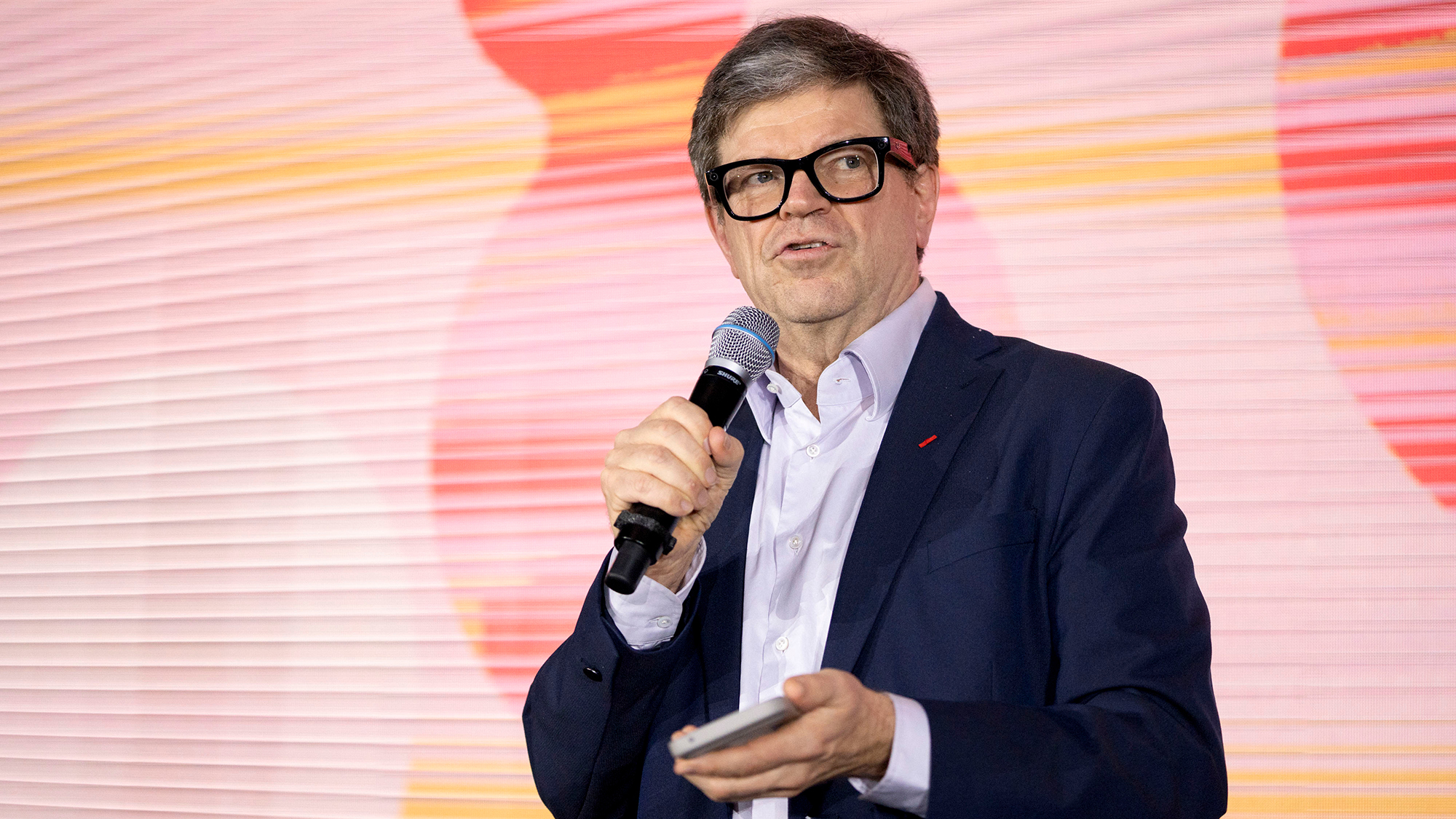
#Short Answer
Profiles Who Is Yann Lecun, including background, AI-related work, influence, and important context.
#Infobox
#Overview
Yann LeCun is a French-American computer scientist whose groundbreaking research in artificial intelligence has reshaped the field of machine learning. He is widely regarded as one of the "Godfathers of AI" alongside Geoffrey Hinton and Yoshua Bengio, collectively recognized for their foundational contributions to deep learning. LeCun’s work spans several decades, from early developments in neural networks to modern advancements in computer vision and self-supervised learning. His most notable achievement is the invention of convolutional neural networks (CNNs), a type of deep learning model that revolutionized image recognition and computer vision. CNNs are now the backbone of technologies such as facial recognition, autonomous vehicles, and medical imaging. Beyond his technical contributions, LeCun has been a vocal advocate for ethical AI, emphasizing the importance of responsible development and deployment of AI systems.
#History / Background
#Early Life and Education Yann André LeCun was born on July 8, 1960, in Soisy-sous-Montmorency, France. From a young age, he displayed a keen interest in mathematics and computer science, which led him to pursue a degree in computer science at Pierre and Marie Curie University (Paris VI). He earned his PhD in 1987 under the supervision of Yves Le Cun (no relation), focusing on neural networks and backpropagation, a fundamental algorithm in training deep learning models.
#Career Beginnings After completing his doctorate, LeCun joined AT&T Bell Laboratories in the United States, where he conducted early research on neural networks. His work during this period laid the groundwork for modern deep learning, including the development of LeNet-5, a CNN architecture that became a landmark in the field. LeNet-5 was designed for handwritten digit recognition and demonstrated the potential of CNNs for real-world applications.
#Academic and Industry Leadership In 1988, LeCun joined New York University (NYU) as a professor, where he continued to advance neural network research. He later became the Director of AI Research at Meta (formerly Facebook) in 2013, a role in which he has overseen the development of AI technologies for the company’s platforms. Under his leadership, Meta has made significant strides in computer vision, natural language processing, and AI ethics.
#How It Works
#Convolutional Neural Networks (CNNs)
LeCun’s most influential contribution is the convolutional neural network (CNN), a specialized type of deep learning model designed for processing grid-like data, such as images. CNNs leverage three key ideas:
- Local Receptive Fields: Neurons in a CNN respond to small regions of the input image, mimicking the human visual system.
- Shared Weights: The same set of weights (filters) is applied across the entire image, reducing the number of parameters and improving efficiency.
- Pooling Layers: These layers reduce the spatial dimensions of the data, making the network more robust to variations in input.
#Backpropagation LeCun played a crucial role in popularizing backpropagation, an algorithm used to train neural networks by adjusting weights based on the error gradient. His work demonstrated how backpropagation could be applied to deep networks, enabling them to learn complex patterns from large datasets.
#Self-Supervised Learning In recent years, LeCun has been a proponent of self-supervised learning, a paradigm where models learn from unlabeled data by predicting missing parts of the input. This approach reduces the reliance on labeled datasets, which are often expensive and time-consuming to produce.
#Important Facts
- Pioneer of Deep Learning: LeCun is one of the three recipients of the 2018 Turing Award (alongside Geoffrey Hinton and Yoshua Bengio) for his contributions to deep learning.
- LeNet-5: His CNN architecture, developed in the 1990s, was used by the U.S. Postal Service for handwritten digit recognition.
- AI Ethics Advocate: LeCun has spoken extensively about the ethical implications of AI, advocating for transparency, fairness, and accountability in AI systems.
- Dual Citizenship: He holds both French and American citizenship.
- Influence on Industry: His research has directly influenced products like Facebook’s facial recognition, autonomous driving systems, and medical imaging tools.
#Timeline
- Foundational ideas
Core concepts and early methods shape Who Is Yann Lecun?.
- Practical use
Tools, examples, and real-world deployments make the topic easier to evaluate.
- Responsible implementation
Current work focuses on reliability, governance, performance, and measurable impact.
#Related Terms
#FAQ
What does Who Is Yann Lecun? cover?
Profiles Who Is Yann Lecun, including background, AI-related work, influence, and important context.
Why is Who Is Yann Lecun? important?
It helps readers understand key concepts, compare practical use cases, and evaluate how Artificial Intelligence decisions affect outcomes, risks, and implementation choices.
What should readers verify before applying this topic?
Readers should compare benefits, limitations, data requirements, and related themes such as Yann, Lecun, AI before using the ideas in real projects.
#References
- Who Is Yann Lecun? terminology and background research
- Who Is Yann Lecun? use cases, implementation examples, and limitations
- Artificial Intelligence best practices, standards, and risk guidance
- Yann case studies, benchmarks, and current industry analysis


Comments
No comments yet. Start the discussion with a useful note.