

#Short Answer
Profiles Who Is Demis Hassabis, including background, AI-related work, influence, and important context.
#Infobox
#Overview
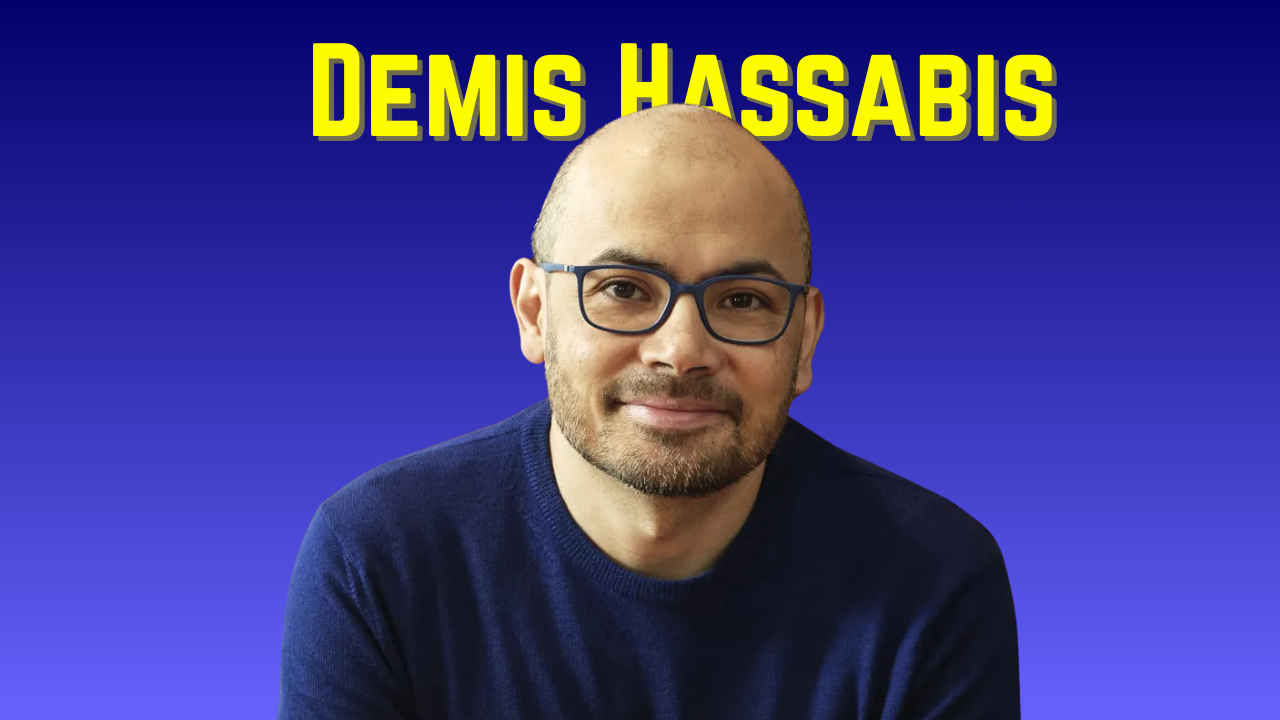
Demis Hassabis is a pioneering figure in the field of artificial intelligence, renowned for his interdisciplinary approach that bridges neuroscience, computer science, and game theory. As the co-founder and CEO of DeepMind, he has led the development of groundbreaking AI systems, including AlphaGo, which defeated the world champion in the complex board game Go, and AlphaFold, which revolutionized protein structure prediction. His work has not only advanced AI capabilities but also demonstrated its potential to solve real-world problems in science and healthcare. Hassabis’ career spans multiple domains, from designing award-winning video games to conducting cutting-edge neuroscience research. His ability to integrate insights from diverse fields has positioned him as a leading voice in the global AI community, influencing both academic research and industrial applications.
#History / Background
#Early Life and Education Demis Hassabis was born on July 27, 1976, in London, England. From a young age, he exhibited a strong aptitude for both science and games. At the age of 13, he became the second-highest-rated chess player in the world for his age group, a feat that foreshadowed his later achievements in AI. Hassabis pursued his undergraduate studies at the University of Cambridge, where he earned a Bachelor of Arts degree in Computer Science. He then moved to University College London (UCL) to complete a PhD in Cognitive Neuroscience under the supervision of Eleanor Maguire, a leading expert in memory research. His doctoral work focused on the neural mechanisms of memory and imagination, laying the foundation for his later interdisciplinary approach to AI.
#Career Beginnings: Video Games and Entrepreneurship Before entering AI research, Hassabis made a name for himself in the video game industry. In 1998, he co-founded Elixir Studios, a video game development company that produced critically acclaimed titles such as Republic: The Revolution and Evil Genius. Despite the studio’s eventual closure, Hassabis gained valuable experience in project management, design, and the commercial aspects of technology.
#Transition to AI and Neuroscience After Elixir Studios, Hassabis returned to academia, working as a postdoctoral researcher at UCL and later at Harvard University. His research focused on the hippocampus, a brain region critical for memory and spatial navigation. This work provided him with deep insights into how biological neural networks function, which would later inform his AI research.
#Founding DeepMind In 2010, Hassabis co-founded DeepMind Technologies with the goal of advancing AI research and developing systems capable of learning in a manner similar to humans. The company quickly gained attention for its innovative approach to deep reinforcement learning, a technique that combines deep learning with reinforcement learning to enable machines to learn from experience. DeepMind’s breakthrough came in 2016 when its AlphaGo program defeated Lee Sedol, the world champion in the ancient Chinese board game Go. This victory was a landmark achievement in AI, as Go was considered far more complex than chess and required intuitive, strategic thinking. The success of AlphaGo demonstrated the potential of deep reinforcement learning and propelled DeepMind into the global spotlight. In 2014, Google acquired DeepMind for a reported £400 million, making Hassabis the CEO of the newly formed Google DeepMind. Under his leadership, the company expanded its research into areas such as healthcare, energy efficiency, and robotics, further cementing its reputation as a leader in AI innovation.
#How It Works
#Deep Reinforcement Learning At the core of DeepMind’s AI systems is deep reinforcement learning (DRL), a method that combines deep neural networks with reinforcement learning algorithms. In DRL, an AI agent learns to perform tasks by interacting with an environment and receiving rewards or penalties based on its actions. Over time, the agent develops strategies to maximize its cumulative reward, effectively learning through trial and error.
#Neural Networks and Deep Learning DeepMind’s AI systems rely on deep neural networks, which are computational models inspired by the structure and function of the human brain. These networks consist of multiple layers of interconnected nodes (neurons) that process and transform data. The depth of these networks allows them to learn complex patterns and representations, making them particularly effective for tasks such as image recognition, natural language processing, and game playing.
#AlphaGo and AlphaZero AlphaGo, the AI system that defeated Lee Sedol in 2016, utilized a combination of deep neural networks and Monte Carlo Tree Search (MCTS) to evaluate board positions and select moves. The system was trained on a vast dataset of human Go games before refining its skills through self-play, enabling it to discover novel strategies and tactics. AlphaZero, a more generalized version of AlphaGo, extended this approach to other games, including chess and shogi. Unlike AlphaGo, which was trained on human data, AlphaZero learned entirely through self-play, achieving superhuman performance in just a few hours. This demonstrated the potential of AI systems to master complex tasks without human input.
#AlphaFold and Protein Folding One of DeepMind’s most impactful contributions to science is AlphaFold, an AI system designed to predict the 3D structures of proteins from their amino acid sequences. Protein folding is a critical problem in biology, as the structure of a protein determines its function. Traditional methods for determining protein structures, such as X-ray crystallography and cryo-electron microscopy, are time-consuming and expensive. AlphaFold uses deep learning to predict protein structures with remarkable accuracy, significantly accelerating the process of protein structure determination. In 2020, AlphaFold’s predictions were recognized as the most accurate in the Critical Assessment of Structure Prediction (CASP) competition, a biennial event that evaluates the state of the art in protein folding. The system’s success has opened new avenues for drug discovery, disease research, and synthetic biology.
#Applications in Healthcare and Beyond Beyond games and protein folding, DeepMind’s AI systems have been applied to a wide range of real-world problems. In healthcare, the company has collaborated with medical institutions to develop AI tools for detecting diseases such as diabetic retinopathy and breast cancer. In energy efficiency, DeepMind’s AI has been used to optimize the cooling systems of Google’s data centers, reducing energy consumption by up to 40%.
#Important Facts
- First AI to Beat a Human Go Champion: AlphaGo’s victory over Lee Sedol in 2016 marked the first time an AI system defeated a top human player in the complex board game Go, a milestone that demonstrated the power of deep reinforcement learning.
- AlphaFold’s Impact on Biology: AlphaFold’s ability to predict protein structures with high accuracy has been hailed as a breakthrough in biology, with potential applications in drug discovery and disease research.
- Interdisciplinary Approach: Hassabis’ background in neuroscience, computer science, and game design has enabled him to develop AI systems that mimic aspects of human cognition, such as learning, memory, and problem-solving.
- Recognition and Awards: Hassabis has received numerous accolades for his work, including the Breakthrough Prize in Life Sciences (2021), the Royal Society’s Mullard Award (2017), and a Commander of the Order of the British Empire (CBE) in 2018.
- Influence on AI Ethics: As a leading figure in AI, Hassabis has been vocal about the ethical implications of artificial intelligence, advocating for responsible development and deployment of AI technologies.
#Timeline
- Foundational ideas
Core concepts and early methods shape Who Is Demis Hassabis?.
- Practical use
Tools, examples, and real-world deployments make the topic easier to evaluate.
- Responsible implementation
Current work focuses on reliability, governance, performance, and measurable impact.
#Related Terms
#FAQ
What does Who Is Demis Hassabis? cover?
Profiles Who Is Demis Hassabis, including background, AI-related work, influence, and important context.
Why is Who Is Demis Hassabis? important?
It helps readers understand key concepts, compare practical use cases, and evaluate how Artificial Intelligence decisions affect outcomes, risks, and implementation choices.
What should readers verify before applying this topic?
Readers should compare benefits, limitations, data requirements, and related themes such as Demis, Hassabis, AI before using the ideas in real projects.
#References
- Who Is Demis Hassabis? terminology and background research
- Who Is Demis Hassabis? use cases, implementation examples, and limitations
- Artificial Intelligence best practices, standards, and risk guidance
- Demis case studies, benchmarks, and current industry analysis


Comments
No comments yet. Start the discussion with a useful note.