

#Short Answer
Explains What Is Keras, including the core definition, how it works, practical examples, and limitations.
#Infobox
#Overview
Keras is a high-level, user-friendly deep learning framework that simplifies the process of building and training neural networks. It abstracts much of the complexity involved in deep learning, allowing developers and researchers to focus on model design rather than low-level implementation details. Keras is particularly well-suited for rapid prototyping, enabling users to experiment with different architectures and hyperparameters efficiently. The framework supports both convolutional and recurrent neural networks, as well as their combinations, making it versatile for tasks such as image recognition, natural language processing, and time-series analysis. Keras integrates seamlessly with TensorFlow, leveraging its computational power and scalability while providing a more intuitive interface. This integration has made Keras a popular choice in both academic and industrial settings.
#History / Background
Keras was created by François Chollet, a Google engineer, and first released on March 27, 2015. Chollet developed Keras to address the growing need for a more accessible and modular deep learning framework. Before Keras, most deep learning tools required extensive boilerplate code and intricate configurations, which hindered experimentation and innovation. Initially, Keras supported multiple backends, including TensorFlow, Theano, and CNTK, allowing users to choose the computational engine that best suited their needs. However, with the release of TensorFlow 2.0 in 2019, TensorFlow adopted Keras as its official high-level API, leading to a significant shift in the deep learning landscape. This integration solidified Keras' position as a leading framework, combining ease of use with the scalability and performance of TensorFlow. Over the years, Keras has evolved through several major versions, with Keras 2.0 (released in 2017) introducing significant improvements in modularity and performance. The latest version, Keras 3.0, further enhances flexibility by supporting multiple backends and improving interoperability with other deep learning tools.
#How It Works
Keras operates as a high-level API that sits atop lower-level deep learning frameworks like TensorFlow. It abstracts the complexities of tensor operations, automatic differentiation, and hardware acceleration, allowing users to define neural networks using a simple, declarative syntax.
#Core Components
- Layers: The fundamental building blocks of Keras models. Layers encapsulate operations such as convolution, pooling, and dense connections. Common layer types include:
- Dense: Fully connected layers for traditional neural networks.
- Conv2D: Convolutional layers for image processing.
- LSTM/GRU: Recurrent layers for sequential data.
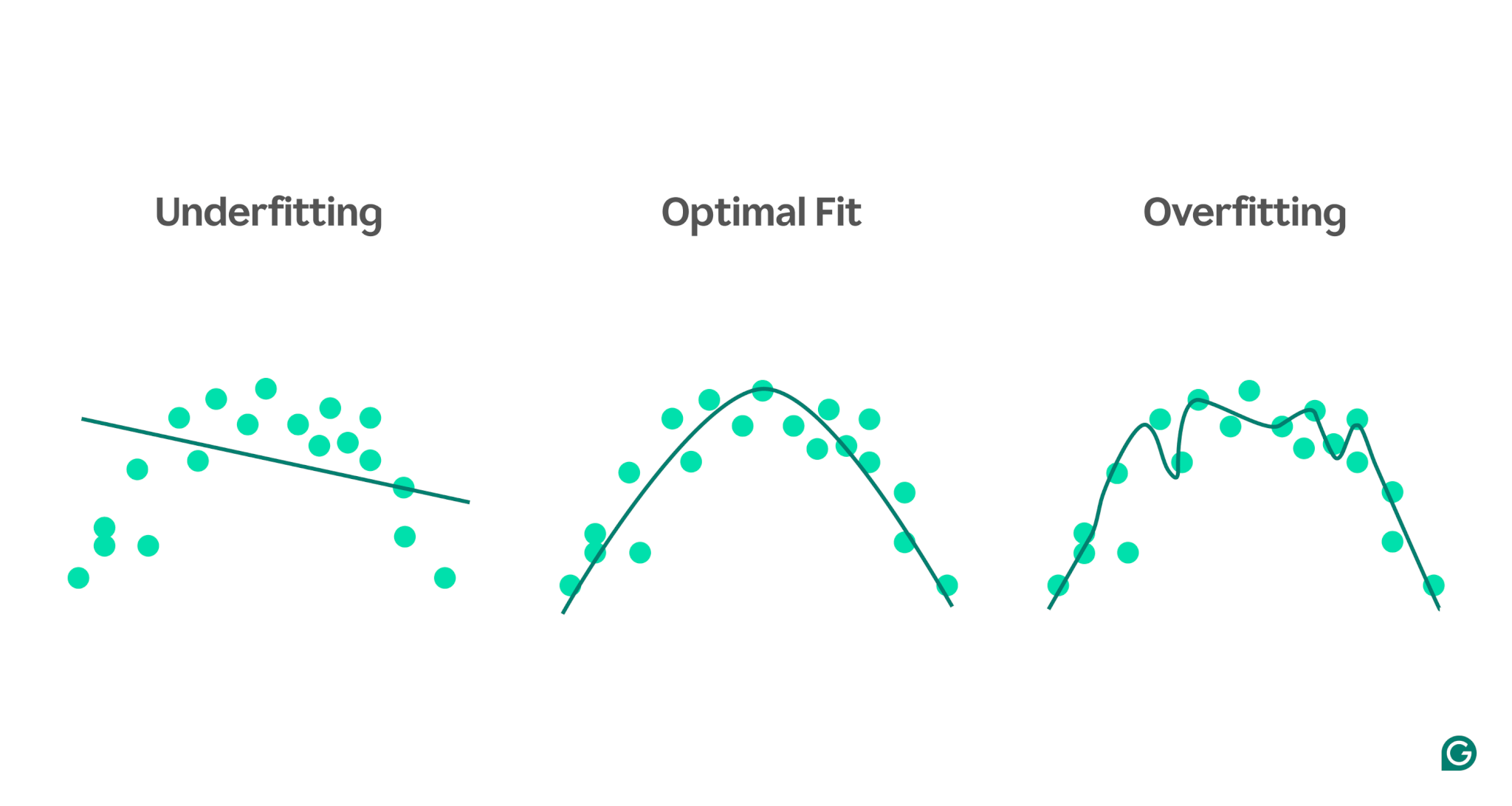
- Dropout: Regularization layers to prevent overfitting.
- Models: Keras provides two primary ways to construct models:
- Sequential API: A linear stack of layers, ideal for simple architectures.
- Functional API: A more flexible approach that allows for complex topologies, including multi-input, multi-output, and shared layers.
- Callbacks: Mechanisms to customize the training process, such as early stopping, model checkpointing, and learning rate scheduling.
- Optimizers: Algorithms that adjust model weights during training to minimize loss. Common optimizers include Adam, SGD, and RMSprop.
- Loss Functions: Metrics used to evaluate model performance, such as categorical cross-entropy, mean squared error, and binary cross-entropy.
#Workflow A typical Keras workflow involves the following steps:
- Data Preparation: Load and preprocess data using libraries like NumPy or Pandas.
- Model Definition: Construct the neural network architecture using Keras layers.
- Model Compilation: Specify the optimizer, loss function, and evaluation metrics.
- Training: Fit the model to the training data using the
fit()method. - Evaluation: Assess model performance on validation or test datasets.
- Deployment: Save the trained model and deploy it for inference using tools like TensorFlow Serving or ONNX.
#Example Code python from keras.models import Sequential from keras.layers import Dense
Define a simple neural network model = Sequential([ Dense(64, activation='relu', input_shape=(784,)), Dense(64, activation='relu'), Dense(10, activation='softmax') ])
Compile the model model.compile(optimizer='adam', loss='categorical_crossentropy', metrics=['accuracy'])
Train the model model.fit(X_train, y_train, epochs=10, batch_size=32)
Evaluate the model loss, accuracy = model.evaluate(X_test, y_test) print(f"Test Accuracy: accuracy")
#Important Facts
- Modularity: Keras is designed around the principle of modularity, allowing users to combine layers and models in flexible ways.
- Extensibility: Users can create custom layers, loss functions, and metrics to tailor Keras to their specific needs.
- GPU Acceleration: Keras leverages GPU computing through its backend frameworks, significantly speeding up training times.
- Cross-Platform: Models trained in Keras can be deployed on various platforms, including mobile devices (via TensorFlow Lite) and web browsers (using TensorFlow.js).
- Pre-trained Models: Keras provides access to pre-trained models for tasks like image classification (e.g., ResNet, VGG) and natural language processing (e.g., BERT), enabling transfer learning.
- Integration with TensorFlow: Since TensorFlow 2.0, Keras has been tightly integrated into TensorFlow, offering seamless interoperability and access to TensorFlow's ecosystem.
#Timeline
- Foundational ideas
Core concepts and early methods shape What Is Keras?.
- Practical use
Tools, examples, and real-world deployments make the topic easier to evaluate.
- Responsible implementation
Current work focuses on reliability, governance, performance, and measurable impact.
#Related Terms
#FAQ
What does What Is Keras? cover?
Explains What Is Keras, including the core definition, how it works, practical examples, and limitations.
Why is What Is Keras? important?
It helps readers understand key concepts, compare practical use cases, and evaluate how Machine Learning decisions affect outcomes, risks, and implementation choices.
What should readers verify before applying this topic?
Readers should compare benefits, limitations, data requirements, and related themes such as Keras, AI, Implementation before using the ideas in real projects.
#References
- What Is Keras? terminology and background research
- What Is Keras? use cases, implementation examples, and limitations
- Machine Learning best practices, standards, and risk guidance
- Keras case studies, benchmarks, and current industry analysis


Comments
No comments yet. Start the discussion with a useful note.