


#Short Answer
Explains What Is an AI Algorithm, including the core definition, how it works, practical examples, and limitations.
#Infobox
#Overview
An AI algorithm is a structured set of rules or procedures that allows a computer system to process information and perform tasks that mimic human cognitive functions. Unlike traditional software, which follows explicit instructions, AI algorithms often incorporate elements of learning and adaptation, enabling them to improve performance over time through exposure to data. At its core, an AI algorithm consists of three fundamental components:
- Input: The data or information fed into the system.
- Processing: The computational steps applied to the input, which may include transformations, analyses, or learning from examples.
- Output: The result generated by the algorithm, which could be a prediction, classification, decision, or action. AI algorithms are categorized based on their functionality and learning mechanisms. The two primary categories are:
- Traditional AI algorithms: Rule-based systems that follow predefined logic (e.g., expert systems).
- Machine learning algorithms: Systems that learn patterns from data without explicit programming (e.g., deep learning models). These algorithms power a wide range of applications, from virtual assistants and autonomous vehicles to fraud detection and medical diagnostics.
#History / Background
The concept of AI algorithms traces back to the mid-20th century, coinciding with the emergence of artificial intelligence as a formal discipline. Early developments were influenced by foundational work in mathematics, logic, and cybernetics.
#Key Milestones:
- 1950s: Alan Turing’s seminal paper "Computing Machinery and Intelligence" posed the question "Can machines think?" and introduced the Turing Test as a measure of machine intelligence. This era also saw the creation of the first AI programs, such as the Logic Theorist (1956), which could prove mathematical theorems.
- 1956: The term "artificial intelligence" was coined at the Dartmouth Conference, marking the official birth of AI as a research field. Early algorithms focused on symbolic reasoning and problem-solving.
- 1960s–1970s: Development of expert systems, which used rule-based algorithms to mimic human expertise in specific domains (e.g., MYCIN for medical diagnosis). However, these systems lacked adaptability and scalability.
- 1980s–1990s: The rise of machine learning introduced algorithms that could learn from data, such as decision trees and neural networks. The backpropagation algorithm (1986) enabled training of multi-layer neural networks, laying the groundwork for modern deep learning.
- 2000s–Present: The explosion of big data and computational power led to breakthroughs in deep learning, with convolutional neural networks (CNNs) and recurrent neural networks (RNNs) achieving state-of-the-art performance in tasks like image recognition and natural language processing. The introduction of transformer models (e.g., BERT, 2018) revolutionized language understanding. The evolution of AI algorithms has been shaped by interdisciplinary collaboration, drawing from statistics, neuroscience, and computer science.
#How It Works
AI algorithms operate through a series of logical steps, which vary depending on the type of algorithm and its intended function. Below is a general framework for how most AI algorithms function:
#
- Data Collection and Preprocessing
- Input Data: The algorithm requires structured or unstructured data, such as text, images, or numerical values.
- Preprocessing: Raw data is cleaned, normalized, and transformed to ensure consistency. Techniques include:
- Feature extraction: Identifying relevant attributes (e.g., edges in images, word frequencies in text).
- Normalization: Scaling data to a standard range (e.g., 0 to 1).
- Handling missing values: Imputing or removing incomplete data points.
#
- Model Selection and Training
- Algorithm Choice: Selecting an appropriate algorithm based on the problem type (e.g., classification, regression, clustering).
- Supervised Learning: Algorithms like linear regression or support vector machines (SVMs) learn from labeled data.
- Unsupervised Learning: Algorithms like k-means clustering identify patterns in unlabeled data.
- Reinforcement Learning: Algorithms like Q-learning learn by interacting with an environment and receiving rewards.
- Training: The algorithm adjusts its internal parameters (e.g., weights in a neural network) to minimize error or maximize performance. This is often done using optimization techniques like gradient descent.
#
- Inference and Prediction
- Testing: The trained model is evaluated on unseen data to assess its generalization ability.
- Output Generation: The algorithm produces predictions, classifications, or decisions based on new inputs.
#
- Feedback and Improvement
- Evaluation Metrics: Performance is measured using metrics such as accuracy, precision, recall, or mean squared error.
- Iterative Refinement: The algorithm may be retrained or fine-tuned based on feedback to improve accuracy.
#Example: Neural Network Algorithm A neural network processes data through layers of interconnected nodes (neurons):
- Input Layer: Receives raw data (e.g., pixel values of an image).
- Hidden Layers: Apply weighted transformations and activation functions (e.g., ReLU) to extract features.
- Output Layer: Produces a prediction (e.g., classifying the image as a cat or dog).
- Backpropagation: During training, errors are propagated backward to adjust weights and minimize loss.
#Important Facts
- No Universal AI Algorithm: Different algorithms are suited for different tasks. For example, a decision tree excels at interpretability, while a deep neural network may outperform in complex pattern recognition.
- Bias and Fairness: AI algorithms can inherit biases present in training data, leading to unfair or discriminatory outcomes. Addressing bias is a critical challenge in AI ethics.
- Explainability: Many AI algorithms, particularly deep learning models, operate as "black boxes," making it difficult to interpret their decisions. Explainable AI (XAI) aims to address this.
- Computational Cost: Training advanced AI models (e.g., large language models) requires significant computational resources, often necessitating specialized hardware like GPUs or TPUs.
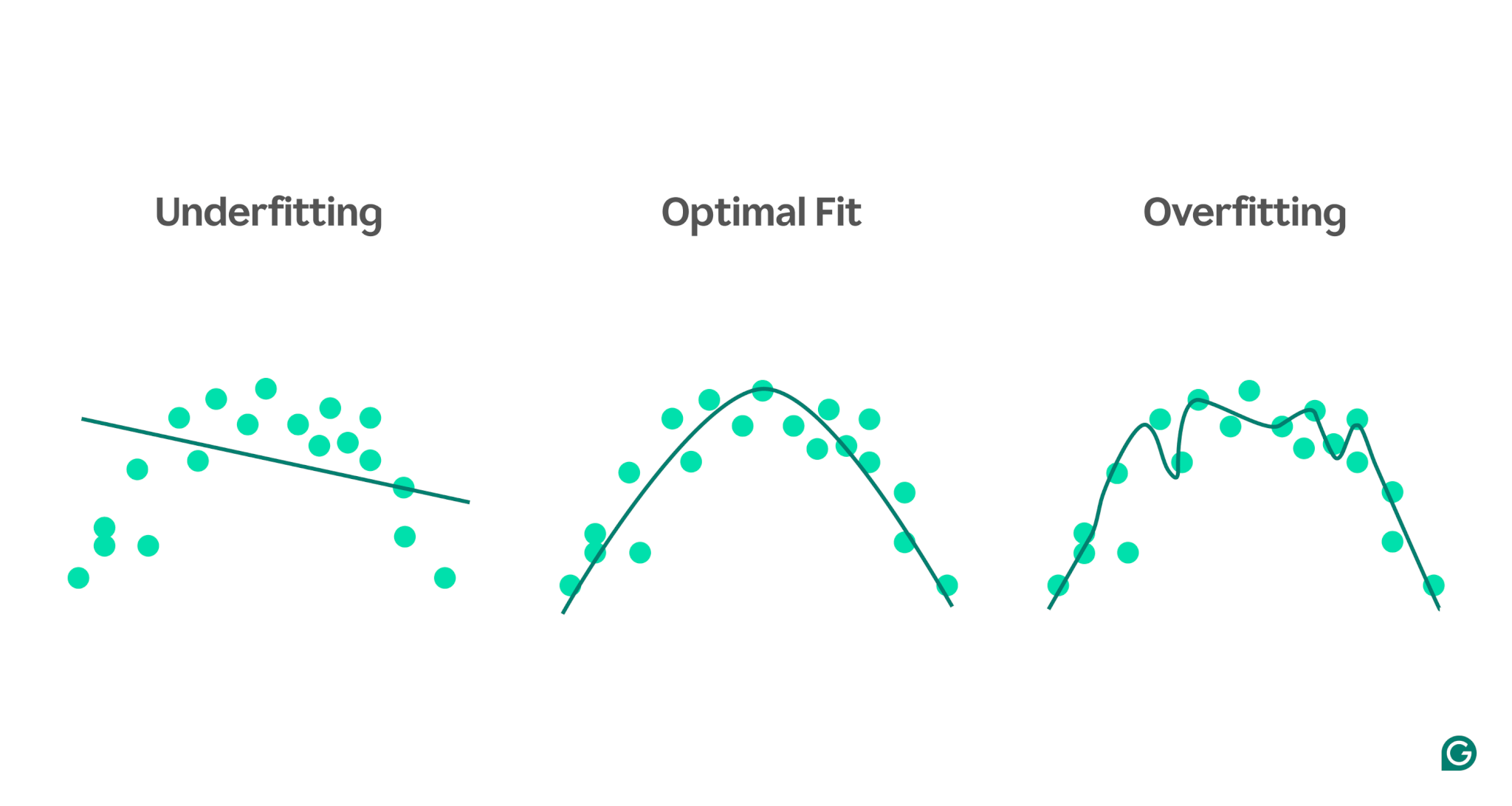
- Overfitting vs. Underfitting:
- Overfitting: The model performs well on training data but poorly on unseen data.
- Underfitting: The model fails to capture underlying patterns, performing poorly on both training and test data.
- Transfer Learning: Pre-trained models (e.g., BERT for language tasks) can be fine-tuned for specific applications, reducing the need for large datasets.
- Real-World Impact: AI algorithms are deployed in critical sectors, including healthcare (e.g., diagnosing diseases from medical images), finance (e.g., fraud detection), and transportation (e.g., autonomous driving).
#Timeline
- Foundational ideas
Core concepts and early methods shape What Is an AI Algorithm?.
- Practical use
Tools, examples, and real-world deployments make the topic easier to evaluate.
- Responsible implementation
Current work focuses on reliability, governance, performance, and measurable impact.
#Related Terms
#FAQ
What does What Is an AI Algorithm? cover?
Explains What Is an AI Algorithm, including the core definition, how it works, practical examples, and limitations.
Why is What Is an AI Algorithm? important?
It helps readers understand key concepts, compare practical use cases, and evaluate how Machine Learning decisions affect outcomes, risks, and implementation choices.
What should readers verify before applying this topic?
Readers should compare benefits, limitations, data requirements, and related themes such as AI, Algorithm, Implementation before using the ideas in real projects.
#References
- What Is an AI Algorithm? terminology and background research
- What Is an AI Algorithm? use cases, implementation examples, and limitations
- Machine Learning best practices, standards, and risk guidance
- AI case studies, benchmarks, and current industry analysis


Comments
No comments yet. Start the discussion with a useful note.