

#Short Answer
Reviews review: best ai chatbots in 2026, covering notable options, strengths, limitations, and practical selection factors.
#Infobox
#Overview
The Review: Best AI Chatbots in 2026 provides a comprehensive analysis of the most advanced AI chatbot systems available in 2026, highlighting their strengths, weaknesses, and real-world applications. As artificial intelligence continues to evolve, chatbots have transitioned from simple scripted responders to sophisticated conversational agents capable of reasoning, creativity, and multimodal interactions. This review categorizes chatbots based on their underlying architectures—ranging from large language models (LLMs) to hybrid systems integrating retrieval-augmented generation (RAG) and fine-tuned domain-specific models. The assessment emphasizes practical usability, integration capabilities, and alignment with ethical AI principles, reflecting the growing demand for responsible and transparent AI deployment. Key trends shaping the 2026 landscape include the rise of agentic AI—chatbots that can autonomously perform tasks beyond conversation—alongside enhanced multimodal support (text, image, audio, and video). Privacy-preserving techniques such as federated learning and differential privacy are increasingly integrated, addressing user concerns over data security.
#History / Background
The evolution of AI chatbots traces back to the 1960s with ELIZA, a primitive natural language processing program that mimicked human conversation. However, the modern era of AI chatbots began in the 2010s with the advent of deep learning and transformer architectures.
- 2018–2020: The release of OpenAI’s GPT-2 and Google’s BERT marked a turning point, enabling models to generate coherent, context-aware text.
- 2022: The launch of ChatGPT by OpenAI introduced conversational AI to the mainstream, sparking global interest and investment.
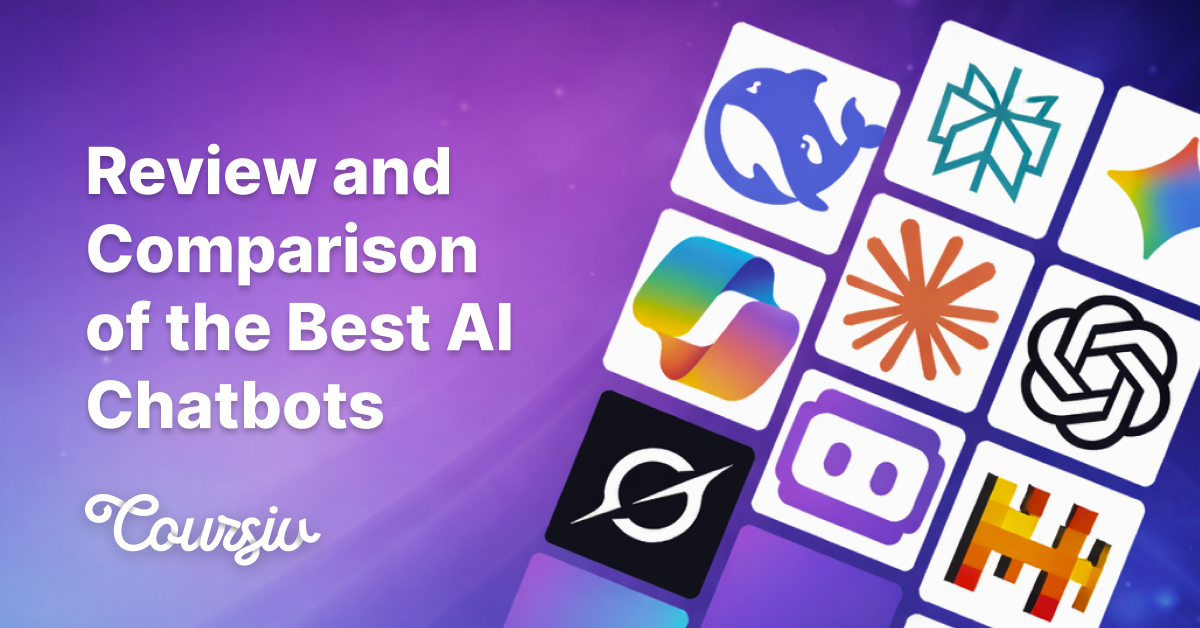
- 2023–2024: Competitors like Google’s Bard (later renamed Gemini), Anthropic’s Claude, and Mistral AI emerged, each emphasizing different strengths—such as reasoning, safety, or multilingual support.
- 2025–2026: The integration of agentic capabilities—where chatbots can plan, execute, and refine actions—became a defining feature. Models began supporting real-time web browsing, code execution, and multimodal input/output, blurring the line between chatbot and digital assistant. Regulatory frameworks such as the EU AI Act and U.S. AI Executive Order have influenced development, pushing companies toward greater transparency and accountability in AI systems.
#How It Works
AI chatbots in 2026 operate using a combination of large language models (LLMs), retrieval systems, and task automation frameworks. The core process involves:
#
- Input Processing Users provide text, voice, or image inputs. Advanced systems support multimodal prompts, allowing users to upload documents, images, or audio files for analysis.
#
- Contextual Understanding LLMs analyze input using transformer-based architectures, which process sequences of tokens to infer meaning, intent, and context. Models like Gemini 2.0 and Claude 3.7 incorporate long-context windows (up to 1 million tokens), enabling analysis of entire documents or extended conversations.
#
- Response Generation The model generates a response by predicting the most likely sequence of words based on learned patterns. Techniques like chain-of-thought prompting and self-consistency checks improve reasoning accuracy.
#
- Retrieval-Augmented Generation (RAG) Many systems integrate RAG to pull real-time or curated information from databases, APIs, or the web, reducing hallucinations and improving factual accuracy. For example, Perplexity AI and You.com specialize in RAG-driven responses.
#
- Task Execution & Agentic Behavior Advanced chatbots can plan and execute multi-step tasks, such as scheduling meetings, drafting emails, or debugging code. This is enabled by function calling and tool-use APIs, where the model dynamically invokes external tools (e.g., calculators, search engines, or software applications).
#
- Output Delivery Responses are delivered in text, speech, or visual formats. Some platforms support interactive dashboards, collaborative editing, or API-based integrations for developers.
#
- Feedback Loop & Continuous Learning User interactions feed into reinforcement learning from human feedback (RLHF) or direct preference optimization (DPO), refining model behavior over time while maintaining ethical boundaries.
#Important Facts
- Top Models in 2026:
- OpenAI GPT-5: Known for advanced reasoning and multimodal capabilities.
- Google Gemini 2.0: Excels in real-time web search and coding assistance.
- Anthropic Claude 3.7: Prioritizes safety, interpretability, and long-context analysis.
- Mistral AI Le Chat: Offers high performance with lower computational costs.
- xAI Grok 3: Integrates humor, sarcasm, and real-time social media data.
- Key Innovations:
- Agentic AI: Chatbots that can autonomously perform workflows (e.g., booking flights, analyzing spreadsheets).
- Multimodal Mastery: Support for image generation (e.g., DALL·E 3 integration), video summarization, and audio transcription.
- Privacy Enhancements: On-device processing, encrypted data handling, and opt-out personalization.
- Performance Metrics:
- MMLU (Massive Multitask Language Understanding): Scores above 90% for top models.
- HumanEval: Coding benchmarks show near-expert-level performance in Python, JavaScript, and SQL.
- MT-Bench: Evaluates conversational quality, with scores exceeding 8.5/10 for leading models.
- Ethical Considerations:
- Bias Mitigation: All major models undergo debiasing training to reduce gender, racial, and cultural biases.
- Transparency Reports: Companies publish model cards detailing limitations, training data sources, and intended use cases.
- User Control: Options to disable data collection, request model retractions, or opt into federated learning.
#Timeline
- Foundational ideas
Core concepts and early methods shape Review: Best AI Chatbots in 2026.
- Practical use
Tools, examples, and real-world deployments make the topic easier to evaluate.
- Responsible implementation
Current work focuses on reliability, governance, performance, and measurable impact.
#Related Terms
#FAQ
What does Review: Best AI Chatbots in 2026 cover?
Reviews review: best ai chatbots in 2026, covering notable options, strengths, limitations, and practical selection factors.
Why is Review: Best AI Chatbots in 2026 important?
It helps readers understand key concepts, compare practical use cases, and evaluate how Language AI decisions affect outcomes, risks, and implementation choices.
What should readers verify before applying this topic?
Readers should compare benefits, limitations, data requirements, and related themes such as Review, Best, AI before using the ideas in real projects.
#References
- Review: Best AI Chatbots in 2026 terminology and background research
- Review: Best AI Chatbots in 2026 use cases, implementation examples, and limitations
- Language AI best practices, standards, and risk guidance
- Review case studies, benchmarks, and current industry analysis

Comments
No comments yet. Start the discussion with a useful note.