

#Short Answer
Explains how does ai work?, including the main process, tools, examples, risks, and practical implementation steps.
#Infobox
#Overview
Artificial Intelligence (AI) is a branch of computer science focused on creating machines capable of performing tasks that normally require human intelligence. These tasks include reasoning, learning, perception, problem-solving, and decision-making. AI systems are designed to analyze data, identify patterns, and make predictions or decisions based on that data. The field of AI is broadly divided into two categories: narrow AI (or weak AI), which is designed for a specific task, and general AI (or strong AI), which would possess the ability to perform any intellectual task that a human can. As of 2024, all existing AI systems fall under the narrow AI category. AI technologies power a wide range of applications, from virtual assistants like Siri and Alexa to advanced systems such as self-driving cars and medical diagnostic tools. The rapid advancements in AI have been driven by improvements in computational power, the availability of large datasets, and breakthroughs in algorithms, particularly in the field of machine learning.
#History / Background
#Early Foundations (Pre-1950s)
The concept of AI dates back to ancient myths and stories of artificial beings endowed with intelligence or consciousness. Philosophers and mathematicians, including Aristotle and Gottfried Wilhelm Leibniz, explored the idea of mechanical reasoning. However, the formal study of AI began in the mid-20th century.
#The Birth of AI (1950s)
The term "Artificial Intelligence" was coined in 1956 by John McCarthy during the Dartmouth Conference, which is widely regarded as the birth of AI as a field. Early AI research focused on symbolic reasoning and problem-solving. In 1950, Alan Turing published his seminal paper "Computing Machinery and Intelligence," which proposed the Turing Test as a criterion for machine intelligence.
#The Golden Years (1956–1974)
This period saw significant progress, including the development of the first AI programs capable of playing chess and solving logic problems. Programs like ELIZA (1966), an early natural language processing system, demonstrated the potential of AI in human-computer interaction. However, funding cuts in the 1970s led to a period known as the "AI winter," characterized by reduced interest and investment.
#The Revival (1980s–1990s)
The 1980s saw a resurgence in AI research, driven by advancements in expert systems—programs designed to mimic the decision-making ability of a human expert. The Japanese government's Fifth Generation Computer Systems project and the revival of neural networks contributed to this revival. However, expert systems faced limitations in scalability and adaptability.
#The Modern Era (2000s–Present)
The 21st century has witnessed an explosion in AI capabilities, fueled by the availability of big data, improvements in computational power, and breakthroughs in machine learning algorithms. The rise of deep learning, a subset of machine learning that uses neural networks with many layers, has enabled significant advancements in areas such as computer vision, speech recognition, and natural language processing. Landmark achievements include IBM's Watson winning Jeopardy! in 2011, AlphaGo defeating a world champion Go player in 2016, and the development of generative AI models like DALL-E and ChatGPT.
#How It Works
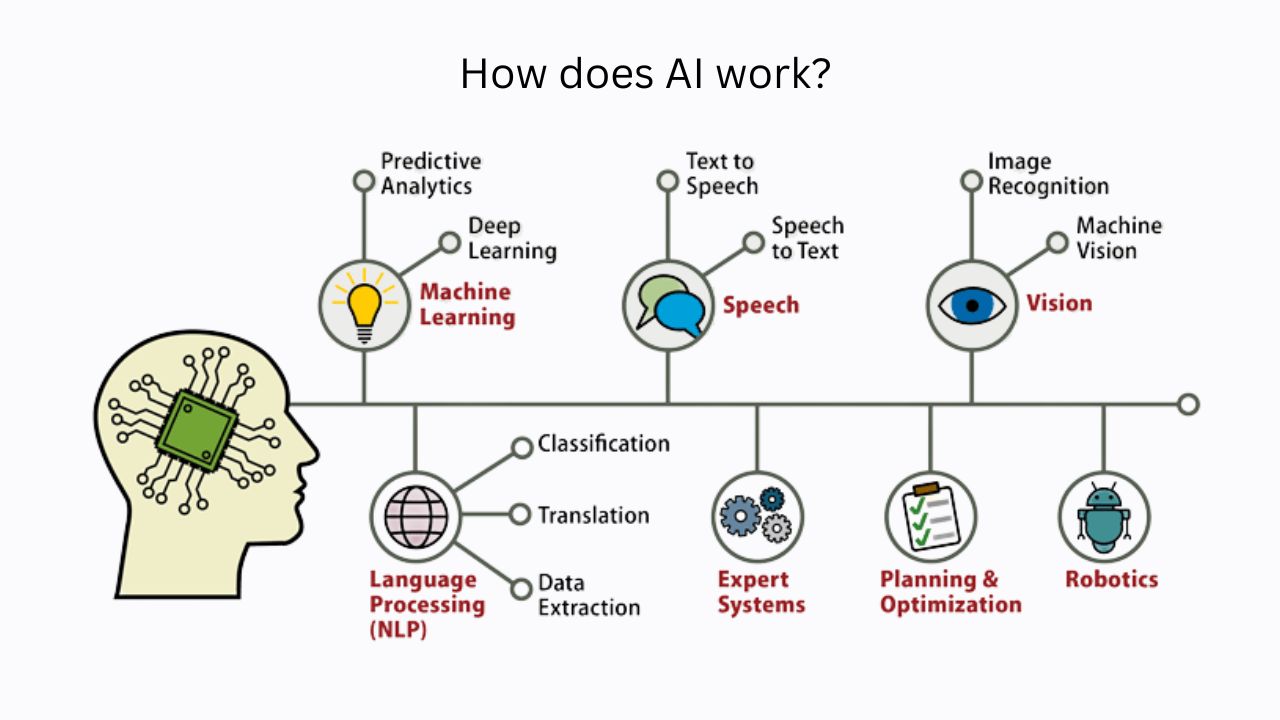
#Core Concepts AI systems operate through a combination of algorithms, data, and computational power. The primary methodologies include:
- Machine Learning (ML): A subset of AI focused on building systems that learn from data. ML algorithms identify patterns and make decisions with minimal human intervention. Key techniques include:
- Supervised Learning: The model is trained on labeled data, where the correct output is known.
- Unsupervised Learning: The model identifies patterns in unlabeled data.
- Reinforcement Learning: The model learns by interacting with an environment and receiving rewards or penalties.
- Deep Learning: A specialized form of machine learning that uses artificial neural networks with multiple layers (hence "deep"). These networks are inspired by the structure of the human brain and are particularly effective in processing large amounts of unstructured data, such as images, audio, and text. Convolutional Neural Networks (CNNs) and Recurrent Neural Networks (RNNs) are common architectures in deep learning.
- Natural Language Processing (NLP): Enables machines to understand, interpret, and generate human language. NLP techniques include tokenization, sentiment analysis, and machine translation. Modern NLP relies heavily on transformer models, such as BERT and GPT, which use attention mechanisms to process language efficiently.
- Computer Vision: Focuses on enabling machines to interpret and make decisions based on visual input. Applications include image recognition, object detection, and facial recognition. Convolutional Neural Networks (CNNs) are the backbone of most computer vision systems.
- Robotics: Combines AI with physical machines to perform tasks in the real world. Robotics involves perception (using sensors), decision-making (using AI algorithms), and actuation (using motors and actuators).
#Data and Training AI systems require vast amounts of data to learn effectively. This data is used to train models, which are then evaluated and refined. The training process involves:
- Data Collection: Gathering relevant datasets from various sources.
- Data Preprocessing: Cleaning, normalizing, and augmenting the data to improve model performance.
- Model Selection: Choosing an appropriate algorithm or neural network architecture.
- Training: Feeding the data into the model and adjusting its parameters to minimize error.
- Evaluation: Testing the model on unseen data to assess its performance.
- Deployment: Integrating the trained model into real-world applications.
#Algorithms and Architectures AI relies on a variety of algorithms and architectures, each suited to specific tasks:
- Decision Trees and Random Forests: Used for classification and regression tasks.
- Support Vector Machines (SVM): Effective for high-dimensional data.
- Neural Networks: Composed of interconnected nodes (neurons) that process information in layers.
- Generative Adversarial Networks (GANs): Used for generating new data samples, such as images or text.
- Transformers: A type of neural network architecture that has revolutionized NLP, enabling models like BERT and GPT to achieve state-of-the-art performance.
#Hardware and Infrastructure The development and deployment of AI systems require significant computational resources. Key hardware components include:
- Central Processing Units (CPUs): Provide general-purpose computing power.
- Graphics Processing Units (GPUs): Accelerate parallel computations, essential for training deep learning models.
- Tensor Processing Units (TPUs): Specialized hardware designed by Google for machine learning tasks.
- Cloud Computing: Platforms like AWS, Google Cloud, and Azure provide scalable infrastructure for training and deploying AI models.
#Important Facts
- AI is Not New: The concept of AI dates back to the 1950s, but recent advancements in computing power and data availability have accelerated its development.
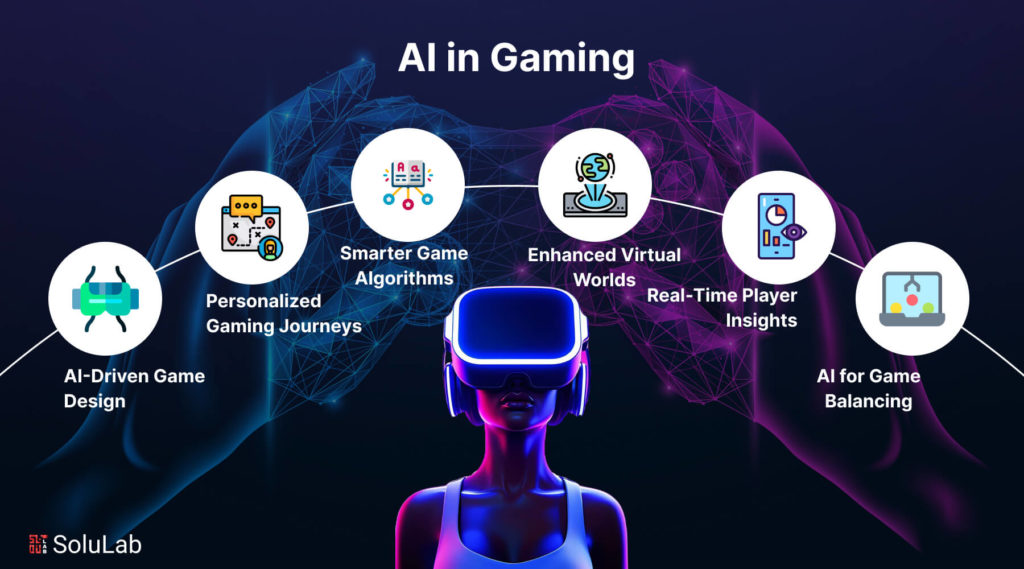
- AI is Everywhere: AI powers technologies we use daily, from search engines and social media algorithms to voice assistants and recommendation systems.
- AI Can Outperform Humans: In specific tasks, such as playing chess or Go, AI systems have surpassed human capabilities.
- AI Requires Data: The quality and quantity of data directly impact the performance of AI systems. Poor data can lead to biased or inaccurate results.
- AI is Not Perfect: AI systems can make mistakes, especially when faced with unfamiliar or ambiguous inputs. They lack true understanding and consciousness.
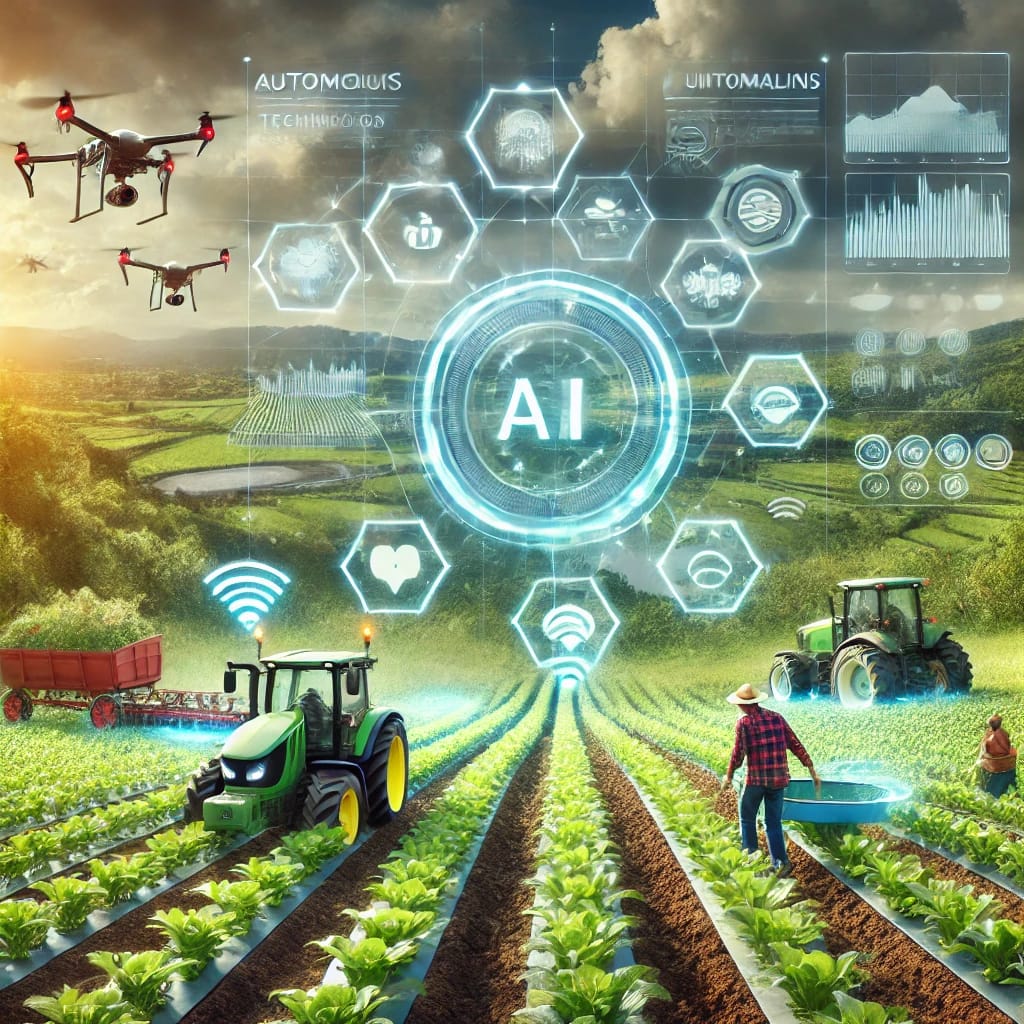
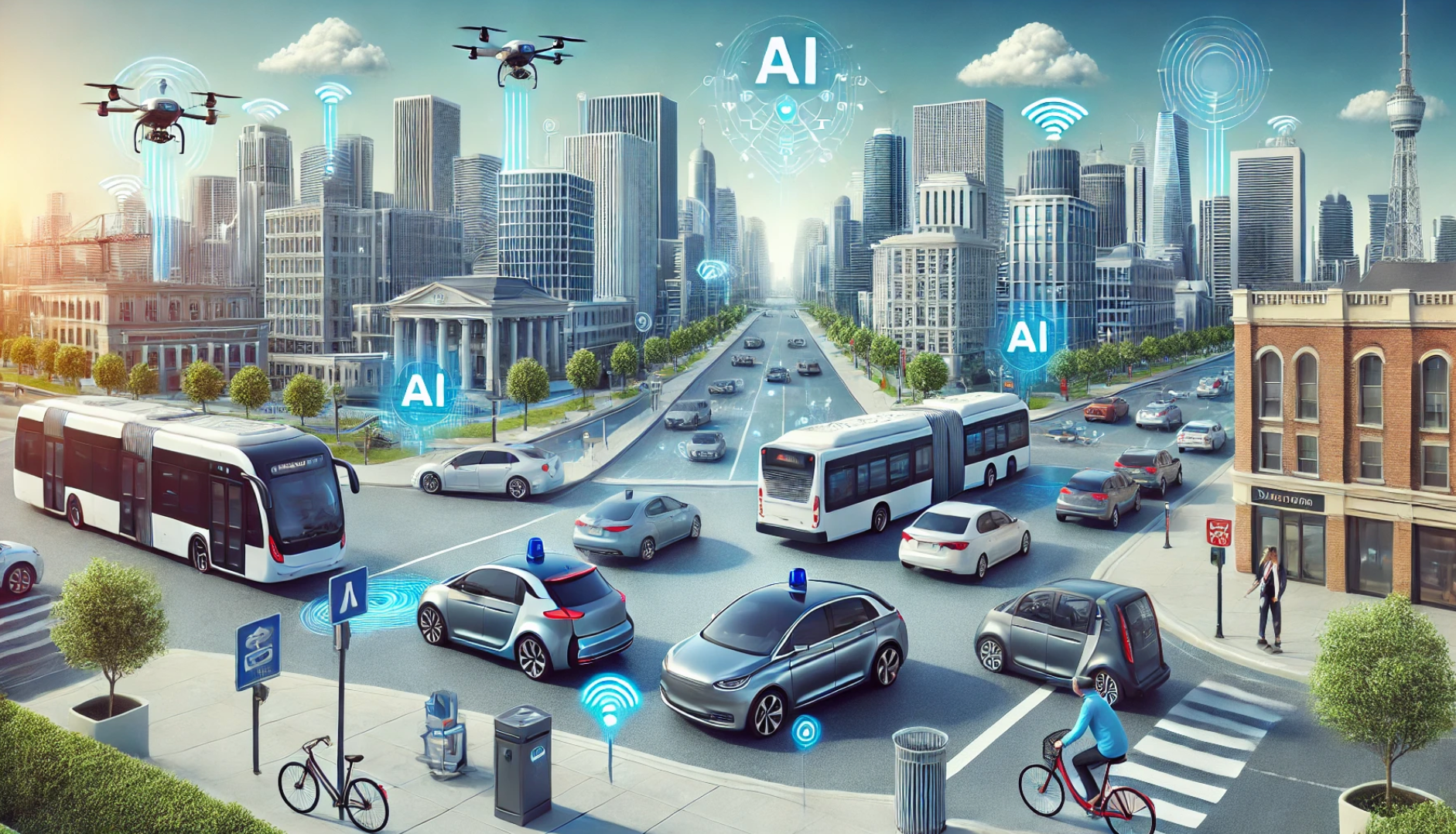
- AI is Transforming Industries: From healthcare and finance to transportation and entertainment, AI is driving innovation and efficiency across sectors.
- Ethical Concerns: AI raises significant ethical issues, including privacy violations, algorithmic bias, job displacement, and the potential for autonomous weapons.
- AI and Creativity: While AI can generate art, music, and text, it does so by learning patterns from existing data rather than possessing true creativity.
#Timeline
- Foundational ideas
Core concepts and early methods shape How Does AI Work?.
- Practical use
Tools, examples, and real-world deployments make the topic easier to evaluate.
- Responsible implementation
Current work focuses on reliability, governance, performance, and measurable impact.
#Related Terms
#FAQ
What does How Does AI Work? cover?
Explains how does ai work?, including the main process, tools, examples, risks, and practical implementation steps.
Why is How Does AI Work? important?
It helps readers understand key concepts, compare practical use cases, and evaluate how Artificial Intelligence decisions affect outcomes, risks, and implementation choices.
What should readers verify before applying this topic?
Readers should compare benefits, limitations, data requirements, and related themes such as Does, AI, Work before using the ideas in real projects.
#References
- How Does AI Work? terminology and background research
- How Does AI Work? use cases, implementation examples, and limitations
- Artificial Intelligence best practices, standards, and risk guidance
- Does case studies, benchmarks, and current industry analysis

Comments
No comments yet. Start the discussion with a useful note.