

#Short Answer
Covers facts about ai in gaming, including core concepts, practical examples, benefits, limitations, and risks in Artificial Intelligence.
#Infobox
#Overview
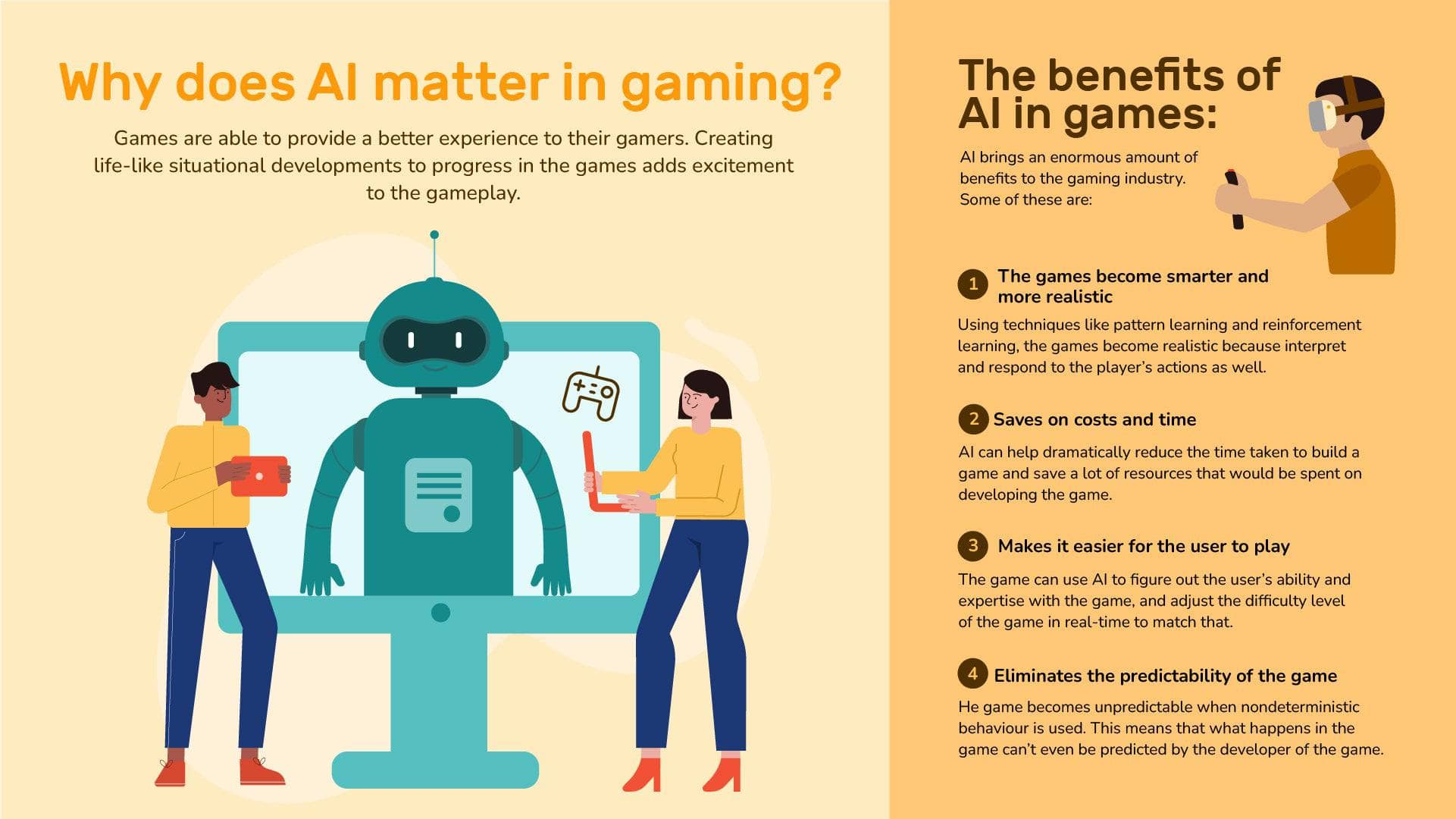
Artificial Intelligence in gaming encompasses a broad spectrum of technologies designed to simulate human-like intelligence within digital environments. Unlike traditional programming, which relies on static rules, AI systems adapt, learn, and evolve based on player interactions, environmental changes, and contextual data. This adaptability allows games to offer unique experiences tailored to individual players, fostering deeper engagement and replayability. The integration of AI in gaming extends beyond NPCs (non-player characters) to include procedural content generation, where algorithms create vast, unique worlds without manual design. AI also powers voice recognition, natural language processing, and even predictive analytics to adjust game difficulty dynamically. As hardware capabilities grow, so does the sophistication of AI applications, enabling more immersive and responsive gaming experiences.
#History / Background
#Early Beginnings (1950s–1970s)
The roots of AI in gaming trace back to the 1950s, when early computer scientists experimented with simple AI algorithms. Games like Nim (1951) and Tic-Tac-Toe (1952) demonstrated basic decision-making capabilities, laying the groundwork for more complex systems. By the 1970s, text-based adventure games such as Colossal Cave Adventure (1976) used simple parsing techniques to interpret player commands, foreshadowing modern natural language processing.
#The Arcade Era (1980s–1990s)
The 1980s saw the rise of arcade games with rudimentary AI, such as Pac-Man (1980), where ghosts followed predictable patterns. However, Pac-Man’s AI was still rule-based, lacking true adaptability. The 1990s introduced more sophisticated AI in games like Doom (1993), which used pathfinding algorithms (e.g., A*) to navigate complex environments. The Sims (2000) revolutionized AI by implementing behavior trees, allowing NPCs to perform tasks autonomously based on needs and environmental stimuli.
#Modern Advancements (2000s–Present)
The 2000s marked a turning point with the adoption of machine learning and neural networks. Games like F.E.A.R. (2005) used AI to coordinate squad tactics, while Left 4 Dead (2008) introduced the "AI Director," a system that dynamically adjusted enemy spawns and item placements based on player performance. The 2010s saw the rise of deep learning, with titles like AlphaGo (2016) demonstrating AI’s ability to master complex strategy games. Today, AI in gaming is ubiquitous, from open-world RPGs like Red Dead Redemption 2 (2018), which features NPCs with daily routines, to The Last of Us Part II (2020), where enemies adapt to player tactics. Cloud-based AI services, such as NVIDIA’s DLSS and AMD’s FSR, leverage machine learning to enhance graphics and performance in real time.
#How It Works
#Core AI Techniques in Gaming
- Rule-Based Systems - Early AI relied on predefined rules to dictate NPC behavior. For example, a game’s enemy might follow a scripted patrol route or attack when the player is within range.
- Example: Pac-Man’s ghosts used a combination of random movement and target-chasing based on player position.
- Pathfinding Algorithms - Algorithms like A* (A-Star) and Dijkstra’s are used to navigate complex environments efficiently. These systems calculate the shortest path between two points while avoiding obstacles.
- Example: Half-Life (1998) used A* for enemy navigation, ensuring NPCs moved realistically.
- Behavior Trees - A hierarchical structure that defines NPC actions based on conditions. For instance, an NPC might prioritize "eat" if hungry, "sleep" if tired, or "attack" if threatened.
- Example: The Sims series uses behavior trees to simulate daily life activities.
- Procedural Content Generation (PCG) - AI algorithms generate game content dynamically, including levels, quests, and items. This reduces development time and increases replayability.
- Example: Minecraft (2011) uses PCG to create infinite worlds with biomes, structures, and resources.
- Machine Learning & Neural Networks - Deep learning models, such as convolutional neural networks (CNNs) and reinforcement learning (RL), enable AI to learn from player behavior and improve over time.
- Example: AlphaStar (2019) used RL to master StarCraft II, outperforming human players.
- Natural Language Processing (NLP) - AI-powered chatbots and voice recognition systems allow players to interact with games using natural language.
- Example: Mass Effect series features dialogue trees where AI interprets player choices to shape the story.
- Dynamic Difficulty Adjustment (DDA) - AI monitors player performance and adjusts game difficulty in real time to maintain engagement.
- Example: Left 4 Dead’s AI Director modifies enemy spawns and item placements based on player skill.
- Computer Vision - Used in games with motion controls or augmented reality (AR), where AI interprets real-world inputs (e.g., Pokémon GO).
- Example: Microsoft Kinect (2010) used computer vision to track player movements.
#Important Facts
#1. AI Enhances Realism and Immersion AI-driven NPCs exhibit human-like behaviors, such as reacting to environmental changes, remembering past interactions, and adapting strategies. This creates a more immersive experience, as seen in Red Dead Redemption 2, where NPCs follow daily routines, respond to the player’s actions, and even remember past encounters.
#2. Procedural Generation Saves Development Time Games like No Man’s Sky (2016) use AI to generate entire planets with ecosystems, weather patterns, and alien life, reducing the need for manual design. This allows developers to create vast, unique worlds with minimal resources.
#3. AI Can Beat Human Players AI systems like AlphaGo (2016) and AlphaStar (2019) have surpassed human champions in complex strategy games, demonstrating the potential of machine learning in gaming. These systems analyze millions of games to refine their strategies, often uncovering novel tactics.
#4. Dynamic Difficulty Keeps Players Engaged Games like Cuphead (2017) and Celeste (2018) use AI to adjust enemy patterns and challenge levels based on player performance, ensuring a balanced difficulty curve.
#5. AI Powers Voice and Gesture Recognition Modern games incorporate voice commands and motion controls, enabled by AI. For example, The Legend of Zelda: Breath of the Wild (2017) uses motion controls to enhance gameplay, while Hellblade: Senua’s Sacrifice (2017) features AI-driven voice acting to create a more emotional narrative.
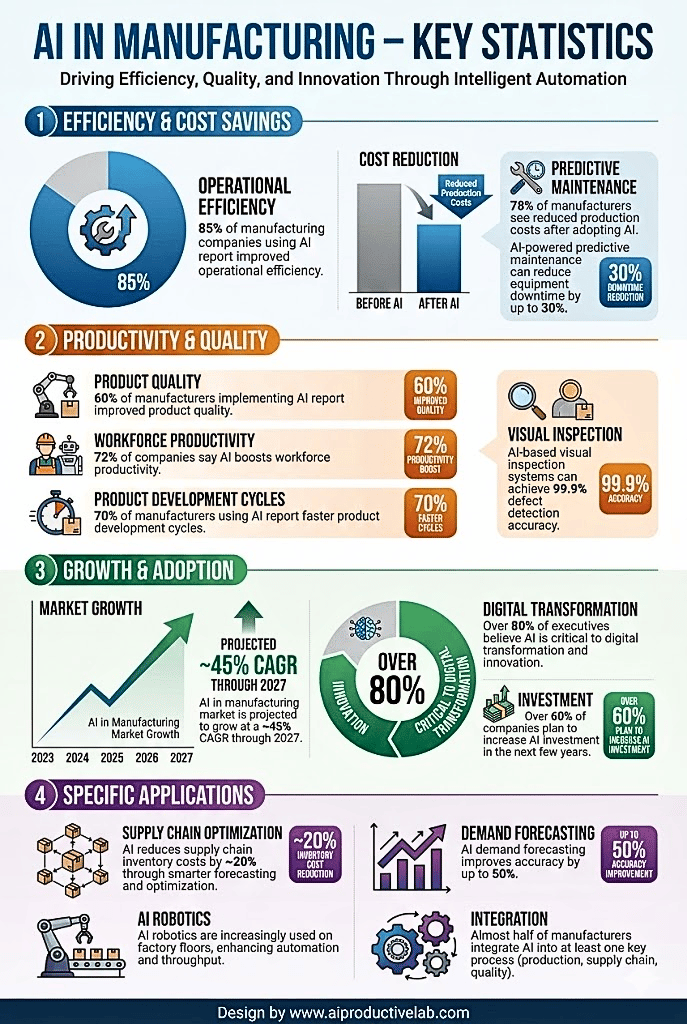
#6. AI is Used in Game Testing and QA AI tools like Test.ai and DeepMind’s game-playing agents are employed to test game mechanics, identify bugs, and optimize performance. This reduces the time and cost associated with manual testing.
#7. AI Influences Game Narrative AI-driven storytelling systems, such as Inworld AI and Promethean AI, generate dynamic narratives where player choices shape the plot. This is evident in games like Detroit: Become Human (2018), where AI characters make decisions based on player interactions.
#8. AI Enhances Graphics and Performance AI upscaling technologies like NVIDIA’s DLSS and AMD’s FSR use machine learning to render higher-quality images at lower computational costs, improving performance without sacrificing visual fidelity.
#9. AI is Used in Esports and Competitive Gaming AI analyzes player strategies, predicts opponent moves, and optimizes training routines. Tools like IBM Watson and Google’s DeepMind are used to scout opponents and develop counter-strategies in esports titles like League of Legends and Dota 2.
#10. AI is Shaping the Future of Game Design Emerging technologies like generative AI (e.g., Stable Diffusion, MidJourney) are being integrated into game development pipelines to create art, music, and even entire game levels. This democratizes game creation, allowing indie developers to produce high-quality content with minimal resources.
#Timeline
- Foundational ideas
Core concepts and early methods shape Facts About AI in Gaming.
- Practical use
Tools, examples, and real-world deployments make the topic easier to evaluate.
- Responsible implementation
Current work focuses on reliability, governance, performance, and measurable impact.
#Related Terms
#FAQ
What does Facts About AI in Gaming cover?
Covers facts about ai in gaming, including core concepts, practical examples, benefits, limitations, and risks in Artificial Intelligence.
Why is Facts About AI in Gaming important?
It helps readers understand key concepts, compare practical use cases, and evaluate how Artificial Intelligence decisions affect outcomes, risks, and implementation choices.
What should readers verify before applying this topic?
Readers should compare benefits, limitations, data requirements, and related themes such as Facts, About, AI before using the ideas in real projects.
#References
- Facts About AI in Gaming terminology and background research
- Facts About AI in Gaming use cases, implementation examples, and limitations
- Artificial Intelligence best practices, standards, and risk guidance
- Facts case studies, benchmarks, and current industry analysis

Comments
No comments yet. Start the discussion with a useful note.