

#Short Answer
Covers ethical ai: principles and frameworks, including core concepts, practical examples, benefits, limitations, and risks in AI Ethics.
#Infobox
#Overview
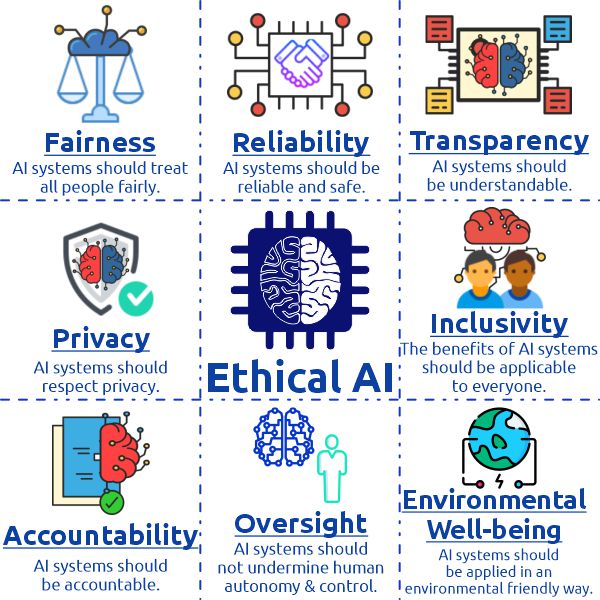
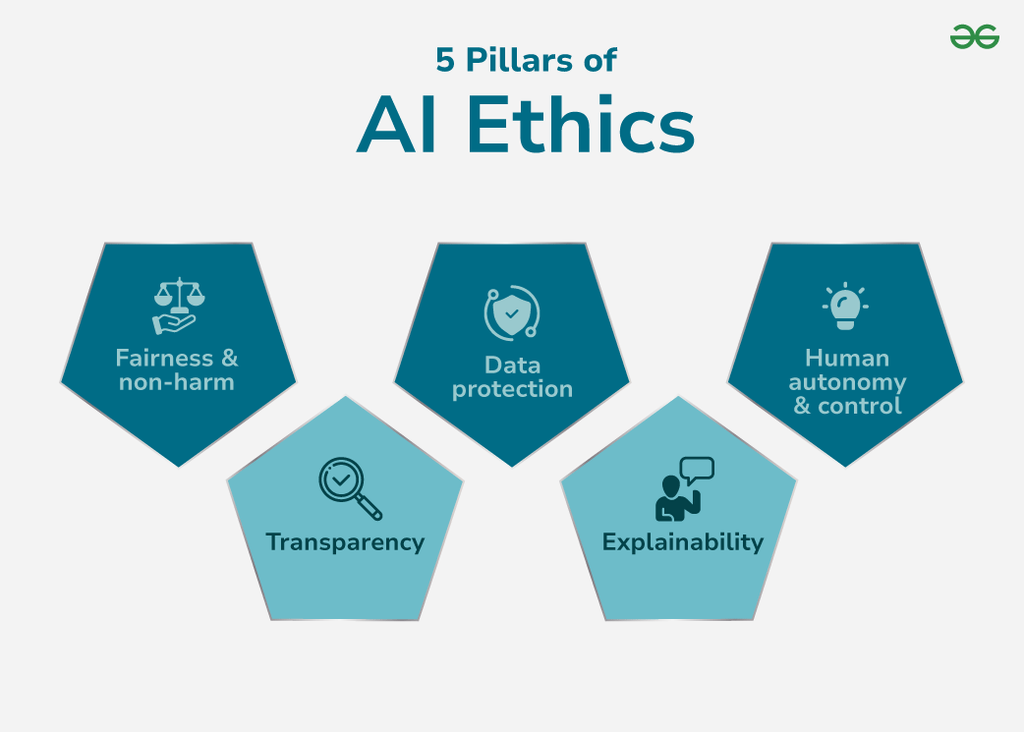
Ethical AI is an interdisciplinary field that examines the moral implications of artificial intelligence technologies, ensuring their alignment with human values and societal norms. As AI systems increasingly influence decision-making in sectors such as healthcare, finance, and criminal justice, ethical considerations have become critical to prevent harm and foster trust. The core principles of ethical AI include fairness, which addresses biases in AI algorithms; transparency, ensuring that AI decisions are explainable; accountability, holding developers and organizations responsible for AI outcomes; privacy, protecting user data; and human oversight, maintaining human control over AI systems. Frameworks such as the EU AI Act, IEEE Ethically Aligned Design, and the Asilomar AI Principles provide structured guidelines for ethical AI development. These frameworks emphasize risk-based approaches, with stricter regulations for high-risk applications like autonomous weapons or biometric surveillance.
#History / Background
The concept of ethical AI emerged alongside early AI research in the mid-20th century, but formal discussions on its ethical implications gained momentum in the 21st century. Key milestones include:
- 2011: The IEEE Global Initiative on Ethics of Autonomous Systems was launched to develop ethical guidelines for AI.
- 2016: The Asilomar AI Principles, a set of 23 guidelines for ethical AI research, were published by the Future of Life Institute (FLI).
- 2017: The EU High-Level Expert Group on AI was established to draft ethical guidelines for trustworthy AI.
- 2018: The OECD Principles on AI were adopted, emphasizing inclusive growth, human-centered values, and transparency.
- 2021: The EU AI Act was proposed, marking the first comprehensive legal framework for AI regulation.
- 2023: The UNESCO Recommendation on the Ethics of AI was adopted, providing global ethical standards. Early ethical debates centered on autonomous weapons and job displacement, but as AI applications expanded, concerns shifted to algorithmic bias, privacy violations, and lack of accountability.
#How It Works
Ethical AI operates through a combination of principles, frameworks, and mechanisms designed to guide AI development and deployment.
#Core Principles
- Fairness and Non-Discrimination - AI systems must avoid biases based on race, gender, or socioeconomic status. - Techniques like fairness-aware machine learning and bias audits are used to detect and mitigate discrimination.
- Transparency and Explainability - AI decisions should be interpretable to users and stakeholders. - Methods such as SHAP (SHapley Additive exPlanations) and LIME (Local Interpretable Model-agnostic Explanations) help explain AI outputs.
- Accountability and Responsibility - Developers and organizations must be held accountable for AI outcomes.
- AI impact assessments and audit trails ensure traceability of decisions.
- Privacy and Data Protection - AI systems must comply with data protection laws like GDPR. - Techniques like differential privacy and federated learning protect user data.
- Human Oversight and Control - AI should augment, not replace, human decision-making.
- Human-in-the-loop (HITL) systems ensure critical decisions remain under human control.
#Frameworks and Standards
- EU AI Act: Classifies AI systems into unacceptable risk, high risk, limited risk, and minimal risk, imposing stricter regulations on high-risk applications.
- IEEE Ethically Aligned Design: Provides a framework for embedding ethics into AI design, emphasizing transparency, accountability, and human rights.
- Asilomar AI Principles: Advocates for research priorities, ethics, and value alignment in AI development.
- OECD AI Principles: Focuses on inclusive growth, human-centered values, and transparency.
#Implementation Mechanisms
- Ethics Review Boards: Independent bodies that assess AI projects for ethical compliance.
- AI Impact Assessments: Evaluations of AI systems to identify potential ethical risks.
- Bias Detection Tools: Software like IBM AI Fairness 360 and Google’s What-If Tool to identify and correct biases.
- Explainable AI (XAI): Techniques to make AI decisions more interpretable.
#Important Facts
- Algorithmic Bias: AI systems can perpetuate biases present in training data, leading to discriminatory outcomes. For example, facial recognition systems have been shown to perform poorly on darker-skinned individuals.
- Privacy Concerns: AI systems often require vast amounts of personal data, raising concerns about surveillance and data misuse.
- Job Displacement: Automation driven by AI could displace millions of jobs, particularly in manufacturing and administrative roles.
- Autonomous Weapons: The development of lethal autonomous weapons (LAWs) raises ethical concerns about accountability and the potential for unintended harm.
- Explainability Challenges: Many AI models, such as deep neural networks, operate as "black boxes," making it difficult to understand their decision-making processes.
- Regulatory Gaps: Many countries lack comprehensive AI regulations, leading to inconsistent ethical standards.
- Public Trust: Surveys indicate that public trust in AI is low, with many people skeptical about its ethical implementation.
#Timeline
- Foundational ideas
Core concepts and early methods shape Ethical AI: Principles and Frameworks.
- Practical use
Tools, examples, and real-world deployments make the topic easier to evaluate.
- Responsible implementation
Current work focuses on reliability, governance, performance, and measurable impact.
#Related Terms
#FAQ
What does Ethical AI: Principles and Frameworks cover?
Covers ethical ai: principles and frameworks, including core concepts, practical examples, benefits, limitations, and risks in AI Ethics.
Why is Ethical AI: Principles and Frameworks important?
It helps readers understand key concepts, compare practical use cases, and evaluate how AI Ethics decisions affect outcomes, risks, and implementation choices.
What should readers verify before applying this topic?
Readers should compare benefits, limitations, data requirements, and related themes such as Ethical, AI, Principles before using the ideas in real projects.
#References
- Ethical AI: Principles and Frameworks terminology and background research
- Ethical AI: Principles and Frameworks use cases, implementation examples, and limitations
- AI Ethics best practices, standards, and risk guidance
- Ethical case studies, benchmarks, and current industry analysis


Comments
No comments yet. Start the discussion with a useful note.