


#Short Answer
Covers responsible ai: a guide for developers, including core concepts, practical examples, benefits, limitations, and risks in AI Ethics.
#Infobox
#Important Facts
- AI systems can perpetuate and amplify biases present in training data, leading to discriminatory outcomes in areas such as hiring, lending, and law enforcement.
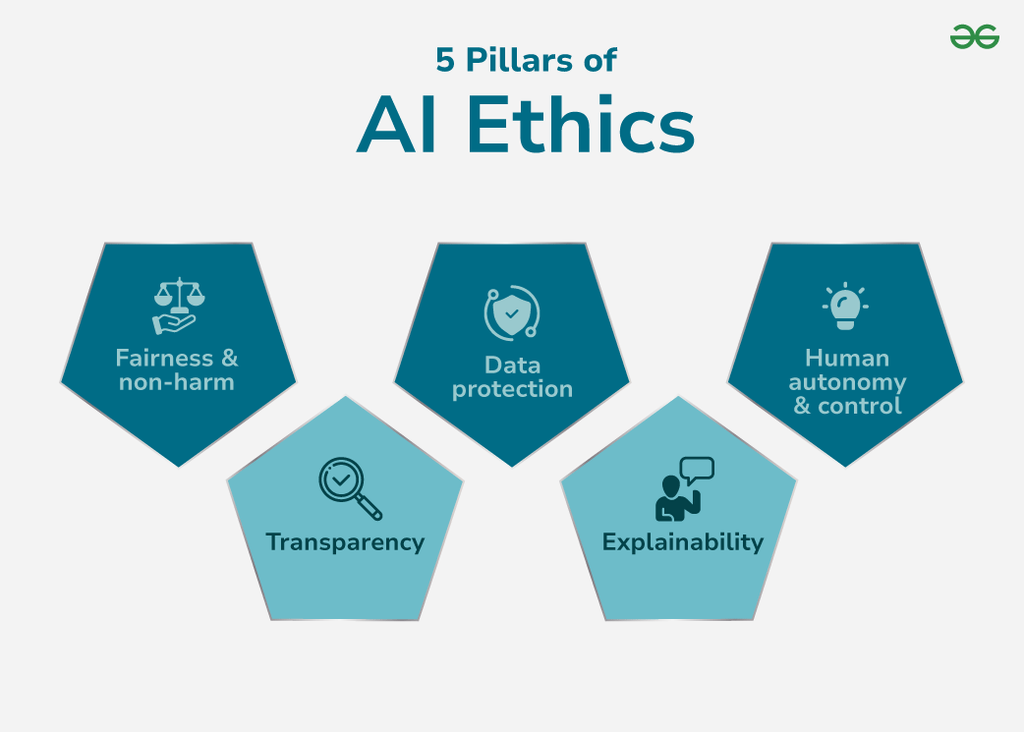
- Explainable AI (XAI) tools are increasingly required by regulators to ensure transparency in high-risk AI applications.
- The EU AI Act (2024) classifies AI systems into risk categories and imposes strict obligations on high-risk systems, including mandatory risk assessments and human oversight.
- Model cards—standardized documentation of AI model characteristics—are recommended to improve transparency and reproducibility.
- AI fairness is not a single metric but a multi-dimensional goal requiring trade-offs between different fairness criteria.
- Privacy-preserving AI techniques such as homomorphic encryption and federated learning help protect sensitive user data during model training and inference.
- Responsible AI is increasingly tied to corporate sustainability reporting, with ESG (Environmental, Social, and Governance) frameworks integrating AI ethics into corporate accountability.
#Timeline
- Foundational ideas
Core concepts and early methods shape Responsible AI: a Guide for Developers.
- Practical use
Tools, examples, and real-world deployments make the topic easier to evaluate.
- Responsible implementation
Current work focuses on reliability, governance, performance, and measurable impact.
#Related Terms
#FAQ
What does Responsible AI: a Guide for Developers cover?
Covers responsible ai: a guide for developers, including core concepts, practical examples, benefits, limitations, and risks in AI Ethics.
Why is Responsible AI: a Guide for Developers important?
It helps readers understand key concepts, compare practical use cases, and evaluate how AI Ethics decisions affect outcomes, risks, and implementation choices.
What should readers verify before applying this topic?
Readers should compare benefits, limitations, data requirements, and related themes such as Responsible, AI, Developers before using the ideas in real projects.
#References
- Responsible AI: a Guide for Developers terminology and background research
- Responsible AI: a Guide for Developers use cases, implementation examples, and limitations
- AI Ethics best practices, standards, and risk guidance
- Responsible case studies, benchmarks, and current industry analysis


Comments
No comments yet. Start the discussion with a useful note.