


#Short Answer
Introduces AI ethics for new readers, covering essential concepts, common examples, practical uses, and next steps for learning.
#Infobox
Beginner Guide to AI Ethics Field Artificial intelligence Focus Ethical considerations, risks, and guidelines Key Concepts Bias, fairness, transparency, accountability, privacy Pioneers Nick Bostrom, Stuart Russell, Kate Crawford Major Reports Asilomar AI Principles, EU AI Act
#Overview
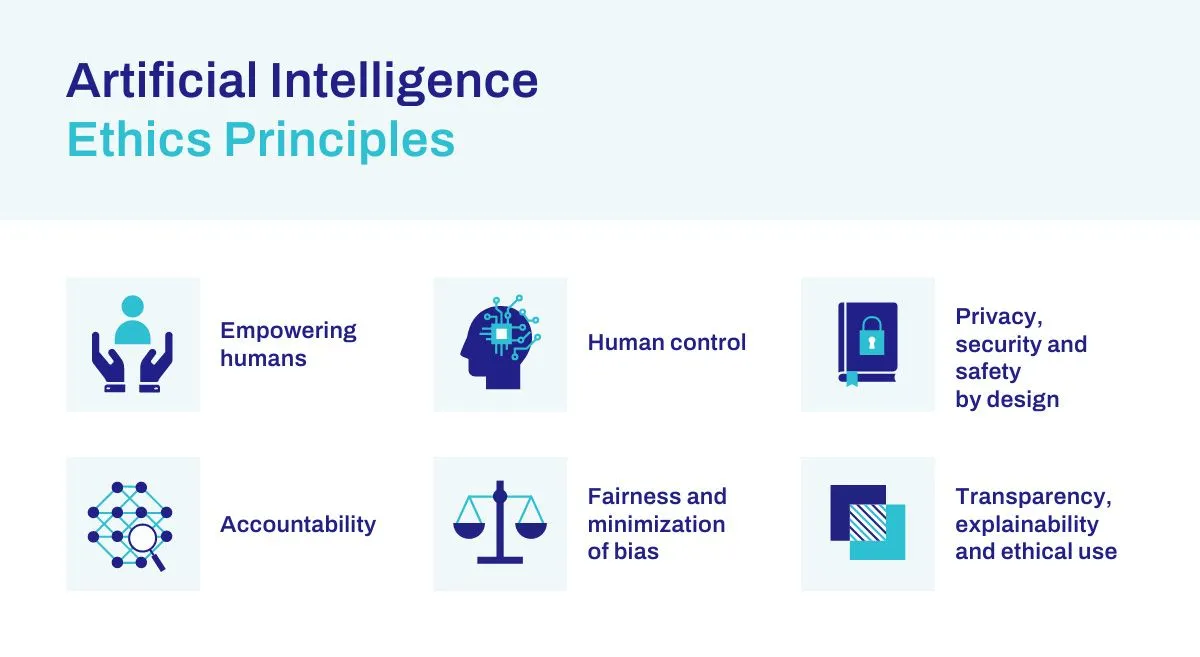
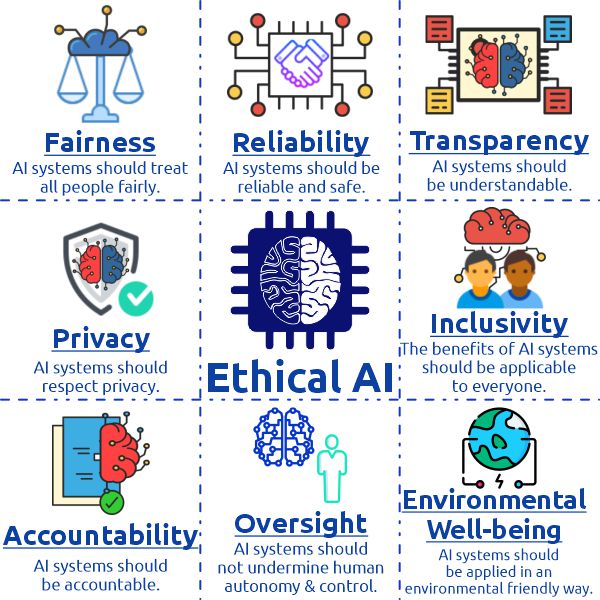
AI ethics is an interdisciplinary field that combines philosophy, computer science, law, and social sciences to examine the ethical implications of artificial intelligence. As AI systems become more integrated into critical aspects of society—such as healthcare, finance, criminal justice, and employment—the need for ethical frameworks has grown significantly. The primary goal of AI ethics is to create technologies that are fair, accountable, transparent, and aligned with human values.
Key ethical considerations include:
- Fairness and Bias: Ensuring AI systems do not perpetuate or amplify discrimination based on race, gender, age, or other protected attributes.
- Transparency and Explainability: Making AI decision-making processes understandable to users and stakeholders.
- Accountability: Establishing clear responsibility for AI-driven outcomes, especially in high-stakes scenarios.
- Privacy: Protecting personal data used in AI training and deployment.
- Safety and Robustness: Preventing AI systems from causing unintended harm due to errors or adversarial attacks.
- Human Control: Ensuring AI remains a tool for human benefit rather than an autonomous entity with unchecked power.
#History / Background
The origins of AI ethics can be traced to early discussions in the 1940s and 1950s, when pioneers like Alan Turing and Isaac Asimov began exploring the societal impact of intelligent machines. Asimov’s Three Laws of Robotics (1942) were among the first attempts to formalize ethical constraints for AI.
In the 1960s and 1970s, concerns about automation and job displacement led to broader debates on technology’s societal role. The 1980s saw the rise of expert systems, which raised questions about transparency and accountability in AI decision-making. By the 2000s, high-profile cases of algorithmic bias—such as in hiring tools or predictive policing—highlighted the need for ethical oversight.
Major milestones in AI ethics include:
- 2016: White House AI Report emphasized fairness, accountability, and transparency.
- 2017: Asilomar AI Principles were published by the Future of Life Institute, outlining 23 guidelines for responsible AI development.
- 2018: The EU General Data Protection Regulation (GDPR) introduced the "right to explanation," requiring transparency in automated decision-making.
- 2021: The EU AI Act proposed a risk-based regulatory framework for AI systems, categorizing them by potential harm.
#How It Works
AI ethics operates through a combination of theoretical frameworks, practical tools, and regulatory measures. The process typically involves:
#Ethical Frameworks
Several ethical frameworks guide AI development:
- Utilitarianism: Maximizing overall benefit while minimizing harm.
- Deontological Ethics: Emphasizing duty and rules (e.g., "AI should never lie").
- Virtue Ethics: Focusing on moral character and integrity in AI design.
- Rights-Based Ethics: Prioritizing individual rights, such as privacy and autonomy.
#Practical Tools
Ethical AI development relies on various tools and methodologies:
- Bias Audits: Detecting and mitigating bias in training data and algorithms.
- Explainable AI (XAI): Techniques like LIME (Local Interpretable Model-agnostic Explanations) to make AI decisions interpretable.
- Ethical Risk Assessments: Evaluating potential harms before deployment (e.g., impact assessments for facial recognition).
- Ethics Review Boards: Independent committees that oversee AI projects in organizations.
#Regulatory Measures
Governments and organizations implement policies to enforce ethical AI:
- Legislation: Laws like the EU AI Act and GDPR set compliance standards.
- Standards: Organizations like IEEE and ISO develop ethical AI standards (e.g., IEEE 7000 series).
- Certification: Programs like Trustworthy AI Certification validate ethical compliance.
#Important Facts
- Algorithmic Bias: AI systems can inherit biases from training data, leading to discriminatory outcomes (e.g., racial bias in facial recognition).
- Black Box Problem: Many AI models (e.g., deep neural networks) operate as "black boxes," making their decisions difficult to interpret.
- Autonomous Weapons: Concerns about "killer robots" have led to calls for bans on lethal autonomous weapons systems (LAWS).
- Job Displacement: AI-driven automation could eliminate 85 million jobs by 2025, according to the World Economic Forum.
- AI Alignment Problem: Ensuring AI goals align with human values remains an unsolved challenge (e.g., the "paperclip maximizer" thought experiment).
- Data Privacy: AI systems often require vast datasets, raising concerns about surveillance and data misuse.
#Timeline
Year Event 1942 Isaac Asimov publishes the Three Laws of Robotics. 1950 Alan Turing proposes the Turing Test, sparking debates on machine intelligence. 1976 Joseph Weizenbaum’s Computer Power and Human Reason critiques AI’s ethical implications. 2011 IBM’s Watson wins Jeopardy!, raising questions about AI’s societal role. 2016 ProPublica’s investigation reveals racial bias in COMPAS, a criminal risk assessment tool. 2017 The Asilomar AI Principles are published. 2018 GDPR’s "right to explanation" comes into effect. 2020 Google fires ethical AI team members Timnit Gebru and Margaret Mitchell, sparking debates on corporate accountability. 2021 The EU proposes the EU AI Act. 2023 OpenAI’s ChatGPT raises concerns about misinformation and job displacement.
#Related Terms
#FAQ
What does Beginner Guide To AI Ethics cover?
Introduces AI ethics for new readers, covering essential concepts, common examples, practical uses, and next steps for learning.
Why is Beginner Guide To AI Ethics important?
It helps readers understand key concepts, compare practical use cases, and evaluate how AI Ethics decisions affect outcomes, risks, and implementation choices.
What should readers verify before applying this topic?
Readers should compare the benefits, limitations, data requirements, and related themes such as Beginner Friendly, Ethics, Responsible AI before using the ideas in real projects.
#References
- Beginner Guide To AI Ethics terminology and background research
- Beginner Guide To AI Ethics use cases, implementation examples, and limitations
- AI Ethics best practices, standards, and risk guidance
- Beginner Friendly case studies, benchmarks, and current industry analysis


Comments
No comments yet. Start the discussion with a useful note.