


#Short Answer
AI Ethics is the study of moral principles and guidelines that govern the development, deployment, and use of artificial intelligence systems.
#Infobox
#Overview
AI Ethics refers to the moral principles and guidelines that shape the responsible development, deployment, and regulation of artificial intelligence technologies. As AI systems become increasingly integrated into daily life—from healthcare diagnostics to autonomous vehicles—the need for ethical oversight has grown significantly. AI ethics aims to ensure that these systems are designed and used in ways that align with human values, respect fundamental rights, and minimize harm.
At its core, AI ethics addresses questions about fairness, accountability, transparency, and privacy. It seeks to prevent biases in AI algorithms, ensure that automated decisions do not discriminate against individuals or groups, and maintain human oversight in critical decision-making processes. The field also explores the long-term societal impacts of AI, including job displacement, misinformation, and the potential for autonomous systems to act in unintended ways.
Ethical AI practices are not just theoretical—they are increasingly being codified into laws, corporate policies, and technical standards. Governments and organizations worldwide are developing AI ethics guidelines and regulations to foster trust and accountability in AI technologies.
#History / Background
The concept of AI ethics has evolved alongside the development of artificial intelligence itself. Early discussions about the ethical implications of intelligent machines can be traced back to the mid-20th century, when pioneers like Alan Turing and Isaac Asimov began exploring the societal impact of AI.
Asimov’s Three Laws of Robotics, introduced in 1942, were among the first attempts to formalize ethical constraints for intelligent machines. These laws aimed to prevent robots from harming humans, obeying human commands, and protecting their own existence—within reason. While largely fictional, Asimov’s laws laid the groundwork for later discussions on machine ethics.
In the 1960s and 1970s, philosophers and computer scientists began examining the ethical dimensions of AI more rigorously. Joseph Weizenbaum, a computer scientist, famously criticized the uncritical acceptance of AI in his 1976 book Computer Power and Human Reason, arguing that AI systems should not replace human judgment in morally significant decisions.
The late 20th and early 21st centuries saw a surge in AI capabilities, driven by advances in machine learning and big data. This rapid progress brought new ethical challenges, including algorithmic bias, privacy violations, and the potential for autonomous weapons. In response, organizations and governments began developing formal AI ethics frameworks.
In 2017, the Future of Life Institute published the Asilomar AI Principles, a set of 23 guidelines designed to promote beneficial AI. These principles emphasize safety, transparency, and alignment with human values. Around the same time, the European Union began drafting the EU AI Act, one of the first comprehensive legal frameworks for AI regulation.
#How It Works
AI ethics operates through a combination of philosophical reasoning, technical safeguards, and regulatory measures. It involves identifying potential risks, implementing mitigation strategies, and ensuring that AI systems are developed and used responsibly.
#Key Principles
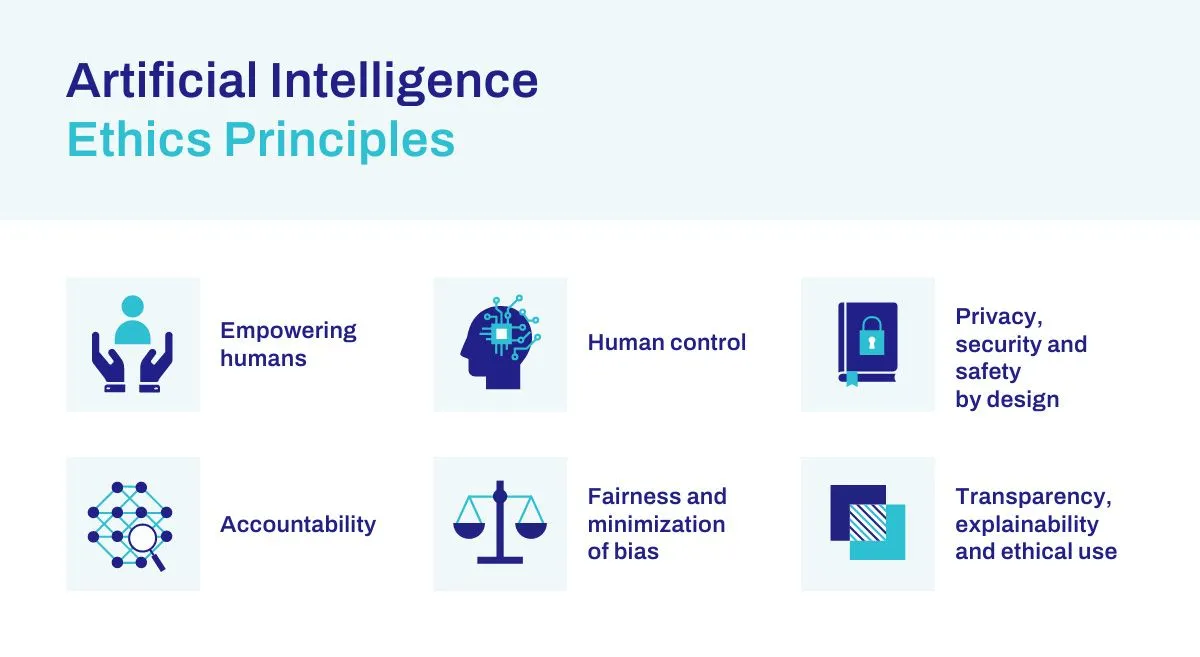
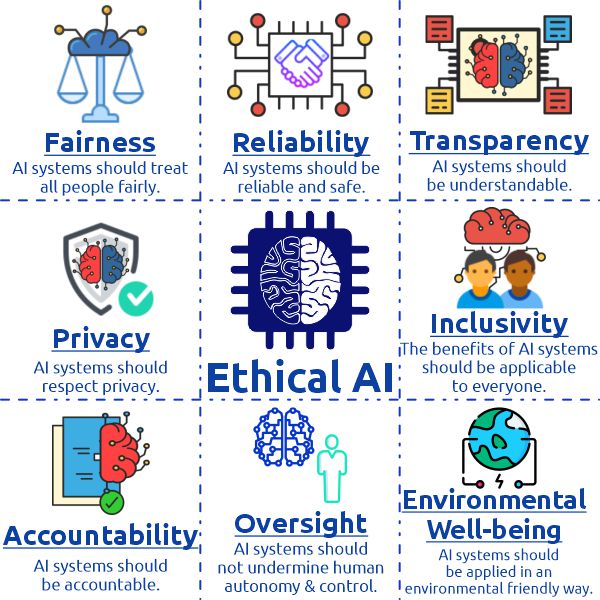
Several core principles underpin AI ethics:
- Fairness: AI systems should not discriminate against individuals or groups based on attributes such as race, gender, or socioeconomic status. This requires careful design to avoid biased training data and algorithms.
- Transparency: AI systems should be explainable, meaning their decision-making processes should be understandable to users and stakeholders. This is often referred to as the "black box" problem in AI.
- Accountability: Developers, organizations, and users should be held responsible for the outcomes of AI systems. This includes establishing clear lines of responsibility and mechanisms for redress in case of harm.
- Privacy: AI systems should respect individuals' privacy rights, particularly when handling sensitive data. This involves implementing data minimization, encryption, and user consent mechanisms.
- Safety: AI systems should be designed to minimize risks, including unintended consequences. This is especially critical in high-stakes domains like healthcare and transportation.
- Human Oversight: Humans should retain control over AI systems, particularly in decisions that significantly impact individuals' lives. This principle is often summarized as "human-in-the-loop."
#Implementation Strategies
Implementing AI ethics involves multiple strategies:
- Ethics Review Boards: Many organizations establish internal ethics committees to review AI projects, assess risks, and ensure compliance with ethical guidelines.
- Algorithmic Audits: Independent audits of AI systems can identify biases, errors, and unintended consequences. These audits may involve testing datasets, reviewing model architectures, and evaluating real-world performance.
- Explainable AI (XAI): Techniques such as LIME (Local Interpretable Model-agnostic Explanations) and SHAP (SHapley Additive exPlanations) help make AI models more interpretable and transparent.
- Bias Mitigation: Methods like reweighting training data, adversarial debiasing, and fairness-aware algorithms are used to reduce bias in AI systems.
- Regulatory Compliance: Organizations must adhere to laws and regulations such as the GDPR (General Data Protection Regulation) and sector-specific guidelines (e.g., HIPAA for healthcare).
#Important Facts
- Algorithmic Bias: AI systems can perpetuate and even amplify biases present in their training data. For example, facial recognition systems have been shown to perform poorly on darker-skinned individuals due to underrepresentation in training datasets.
- Black Box Problem: Many advanced AI models, particularly deep learning systems, operate as "black boxes," making it difficult to understand how they arrive at decisions. This lack of transparency can undermine trust in AI systems.
- Autonomous Weapons: The development of AI-powered autonomous weapons raises ethical concerns about accountability and the potential for unintended escalation in conflicts.
- Job Displacement: AI and automation are expected to disrupt labor markets, potentially displacing millions of workers. Ethical considerations include retraining programs and social safety nets to support affected individuals.
- Deepfakes and Misinformation: AI-generated deepfakes can be used to spread misinformation, posing threats to democracy and public trust. Ethical AI must include safeguards against malicious use.
- AI Alignment Problem: Ensuring that AI systems act in accordance with human intentions and values is a major challenge. Misalignment could lead to unintended and harmful outcomes.
#Timeline
- Isaac Asimov introduces the
Isaac Asimov introduces the [Three Laws of Robotics](# 'Three Laws of Robotics') in his short story 'Runaround.'
- Alan Turing publishes *Computi
Alan Turing publishes *Computing Machinery and Intelligence*, proposing the Turing Test and raising questions about machine consciousness and ethics.
- Joseph Weizenbaum publishes *E
Joseph Weizenbaum publishes *ELIZA*, an early natural language processing program, and later criticizes the uncritical acceptance of AI in *Computer Power and Human Reason* (1976).
- The Turing Award is
The [Turing Award](# 'Turing Award') is awarded to Kenneth Colby for his work on artificial intelligence and natural language processing, highlighting the intersection of AI and ethics.
- Nick Bostrom publishes *Superi
Nick Bostrom publishes *Superintelligence: Paths, Dangers, Strategies*, exploring the long-term risks of artificial general intelligence (AGI).
- Cathy O’Neil publishes *Weapon
Cathy O’Neil publishes *Weapons of Math Destruction*, exposing how biased algorithms can reinforce social inequalities.
- The Future of Life
The [Future of Life Institute](# 'Future of Life Institute') publishes the [Asilomar AI Principles](# 'Asilomar AI Principles'), a set of 23 ethical guidelines for AI.
- The European Commission releas
The [European Commission](# 'European Commission') releases its [European Strategy on Artificial Intelligence](# 'European Strategy on Artificial Intelligence'), emphasizing ethics and trustworthiness.
- The European Union proposes
The [European Union](# 'European Union') proposes the [EU AI Act](# 'EU AI Act'), the first major legal framework for AI regulation.
- Major tech companies and
Major tech companies and governments adopt AI ethics guidelines, including commitments to transparency, fairness, and human oversight.
#Related Terms
#FAQ
What does AI Ethics For Beginners: A Friendly Introduction cover?
AI ethics for beginners: a friendly introduction covers practical examples, benefits, limitations, and important considerations for readers.
Why is AI Ethics For Beginners: A Friendly Introduction important?
It helps readers understand key concepts, compare practical use cases, and evaluate how AI Ethics decisions affect outcomes, risks, and implementation choices.
What should readers verify before applying this topic?
Readers should compare the benefits, limitations, data requirements, and related themes such as Beginner Friendly, Ethics, Responsible AI before using the ideas in real projects.
#References
- AI Ethics For Beginners: A Friendly Introduction terminology and background research
- AI Ethics For Beginners: A Friendly Introduction use cases, implementation examples, and limitations
- AI Ethics best practices, standards, and risk guidance
- Beginner Friendly case studies, benchmarks, and current industry analysis


Comments
No comments yet. Start the discussion with a useful note.