


#Short Answer
Explains how AI is applied in wearable health tech to support real-time monitoring, with examples, workflows, benefits, and adoption challenges.
#Infobox
#Overview
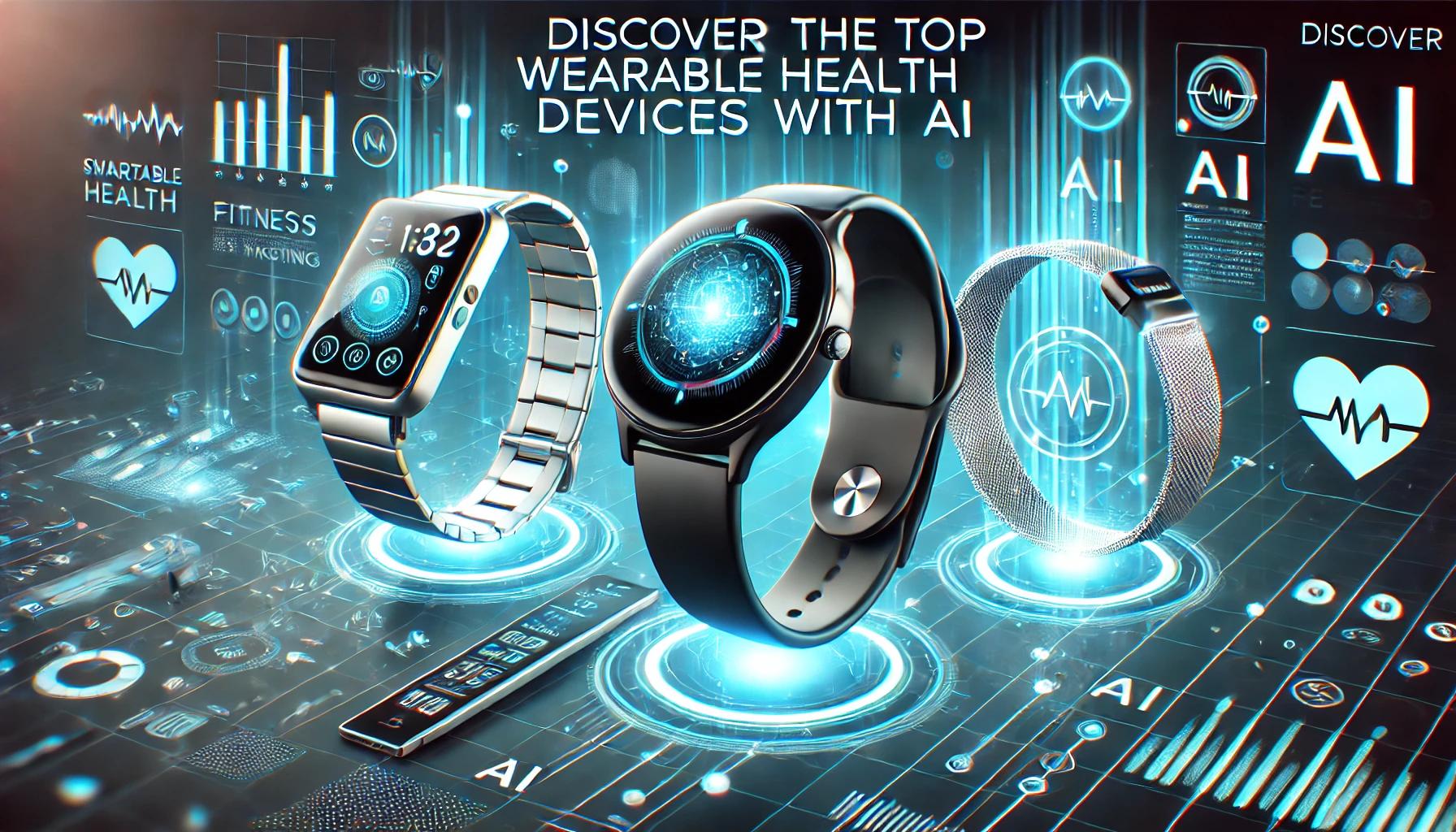
AI-powered wearable health technology represents a convergence of artificial intelligence, wearable computing, and healthcare, enabling continuous, non-invasive monitoring of physiological parameters. These devices leverage embedded sensors, advanced algorithms, and connectivity to provide actionable health insights in real time. Unlike traditional medical devices, wearables are designed for everyday use, offering convenience and accessibility for proactive health management.
The integration of AI enhances the functionality of wearables by enabling predictive analytics, anomaly detection, and personalized recommendations. For instance, AI can distinguish between normal and abnormal heart rhythms in ECG data or predict glucose fluctuations in diabetic patients based on activity and dietary patterns. This technology is particularly impactful in chronic disease management, preventive care, and remote patient monitoring, reducing hospitalizations and improving patient outcomes.
#Market Growth and Adoption
The global wearable health tech market is projected to reach $186.14 billion by 2027, growing at a CAGR of 19.4% from 2020 to 2027. Key drivers include increasing health awareness, rising chronic disease prevalence, and advancements in sensor miniaturization. The COVID-19 pandemic further accelerated adoption, as remote monitoring became essential for healthcare continuity.
Regions like North America and Europe lead adoption due to high healthcare spending and regulatory support, while Asia-Pacific is emerging as a growth hub with increasing smartphone penetration and digital health initiatives. Wearables are now integrated into corporate wellness programs, insurance models, and public health strategies, solidifying their role in modern healthcare ecosystems.
#History / Background
#Early Developments
The concept of wearable health tech dates back to the 1960s with the invention of the Holter monitor, a portable ECG device for continuous heart monitoring. However, the integration of AI into wearables began in the 2000s with the advent of smartwatches and fitness trackers. Early devices like the Nike+iPod (2006) and Fitbit (2009) focused on step counting and basic activity tracking, lacking advanced AI capabilities.
The breakthrough came with the introduction of the Apple Watch in 2015, which incorporated heart rate monitoring and later, in 2018, an FDA-cleared ECG app. This marked a shift toward medical-grade wearables capable of detecting arrhythmias like atrial fibrillation. Concurrently, research institutions and tech companies began exploring AI for real-time health analytics, leading to the development of algorithms for fall detection, sleep staging, and stress monitoring.
#Technological Milestones
- 2016: Google’s acquisition of Fitbit and launch of Wear OS, integrating AI-driven health insights.
- 2017: FDA approval of the first AI-powered medical device, IDx-DR, for diabetic retinopathy screening, paving the way for AI in diagnostics.
- 2019: Apple Watch Series 4 introduced an ECG feature, enabling users to perform a 30-second ECG and receive AFib notifications.
- 2020: Fitbit Sense and Garmin Venu introduced advanced stress and sleep tracking using AI-driven algorithms.
- 2021: FDA cleared the first AI-powered wearable for continuous glucose monitoring (CGM) integration, such as Dexcom G6 with predictive alerts.
- 2022: Oura Ring 3 introduced real-time body temperature tracking for early illness detection, leveraging AI for fever prediction.
- 2023: Meta (formerly Facebook) and Ray-Ban launched smart glasses with health monitoring features, including heart rate and step tracking.
#How It Works
#Sensor Technology
Wearable health devices employ a variety of sensors to collect physiological data:
- Photoplethysmography (PPG): Measures heart rate and blood oxygen levels using light-based sensors.
- Electrocardiogram (ECG): Detects electrical activity of the heart via electrodes, often embedded in smartwatch bands.
- Accelerometers and Gyroscopes: Track movement, posture, and physical activity.
- Temperature Sensors: Monitor body temperature for fever detection or ovulation tracking.
- Galvanic Skin Response (GSR): Measures skin conductance to assess stress or emotional arousal.
- Glucose Monitors: Use interstitial fluid sampling to track blood sugar levels in diabetic patients.
- Pulse Oximeters: Measure blood oxygen saturation (SpO2) and detect hypoxia.
#Data Collection and Processing
Collected data is transmitted via Bluetooth, Wi-Fi, or cellular networks to a paired smartphone or cloud server. AI algorithms then process this data using several techniques:
- Machine Learning Models: Trained on large datasets to recognize patterns, such as identifying AFib from ECG waveforms or predicting hypoglycemic events.
- Deep Learning: Used for image-based diagnostics (e.g., retinal scans via smartphone attachments) or complex time-series analysis (e.g., sleep apnea detection).
- Edge AI: On-device processing reduces latency and enhances privacy by minimizing cloud dependency.
- Federated Learning: Enables collaborative model training across devices without sharing raw data, preserving user privacy.
#User Feedback and Intervention
AI systems generate actionable insights through notifications, dashboards, or integration with healthcare providers. For example:
- A smartwatch alerts a user to an irregular heart rhythm and recommends a doctor’s visit.
- A fitness tracker suggests hydration or rest based on activity and environmental data.
- A CGM device sends predictive alerts for impending blood sugar drops to a diabetic patient’s phone.
- AI-powered chatbots provide mental health support by analyzing voice patterns or text inputs for stress indicators.
#Important Facts
- Accuracy: AI models in wearables achieve 90–98% accuracy in detecting AFib, sleep stages, and step counts, though performance varies by device and user conditions.
- Battery Life: Advanced AI processing can reduce battery life; devices like the Apple Watch Series 8 offer 18–36 hours of use per charge.
- Privacy Concerns: Wearables collect sensitive health data, raising concerns about data breaches and unauthorized access. Compliance with regulations like HIPAA (US) and GDPR (EU) is critical.
- FDA Clearance: Only a few wearables (e.g., Apple Watch ECG, Withings ScanWatch) have FDA clearance for medical claims; most are wellness-focused.
- Adoption Barriers: High cost, limited battery life, and user skepticism about data accuracy hinder widespread adoption, particularly among older adults.
- Global Reach: Over 1 billion wearable devices were shipped globally in 2022, with smartwatches accounting for 40% of the market.
#Timeline
YearEvent1960sIntroduction of the Holter monitor for continuous ECG recording.2006Launch of Nike+iPod, an early wearable for activity tracking.2009Fitbit releases its first fitness tracker, popularizing wearable health tech.2015Apple Watch debuts with heart rate monitoring and basic health features.2016Google acquires Fitbit, integrating AI into Wear OS.2018Apple Watch Series 4 receives FDA clearance for ECG app.2019Fitbit Sense introduces stress and sleep tracking with AI.2020COVID-19 pandemic accelerates adoption of remote monitoring wearables.2021FDA clears AI-powered CGM devices for real-time glucose alerts.2022Oura Ring 3 launches with body temperature tracking for illness detection.2023Meta and Ray-Ban introduce smart glasses with health monitoring features.
#Related Terms
#FAQ
What does AI In Wearable Health Tech: Real-Time Monitoring cover?
Explains how AI is applied in wearable health tech to support real-time monitoring, with examples, workflows, benefits, and adoption challenges.
Why is AI In Wearable Health Tech: Real-Time Monitoring important?
It helps readers understand key concepts, compare practical use cases, and evaluate how Healthcare AI decisions affect outcomes, risks, and implementation choices.
What should readers verify before applying this topic?
Readers should compare the benefits, limitations, data requirements, and related themes such as Wearable, Health, Tech before using the ideas in real projects.
#References
- AI In Wearable Health Tech: Real-Time Monitoring terminology and background research
- AI In Wearable Health Tech: Real-Time Monitoring use cases, implementation examples, and limitations
- Healthcare AI best practices, standards, and risk guidance
- Wearable case studies, benchmarks, and current industry analysis


Comments
No comments yet. Start the discussion with a useful note.