


#Short Answer
Ethical considerations and challenges arising from artificial intelligence systems.
#Infobox
#Overview
AI ethics refers to the moral principles and guidelines governing the development, deployment, and use of artificial intelligence systems. As AI technologies advance, they increasingly influence decision-making processes in sectors such as healthcare, finance, criminal justice, and employment. The ethical implications of AI encompass concerns about fairness, accountability, transparency, privacy, and the potential for unintended consequences. AI ethics seeks to ensure that these systems are designed and used in ways that align with societal values and human rights.
One of the primary goals of AI ethics is to mitigate risks associated with AI, such as algorithmic bias, which can perpetuate discrimination against certain groups. Additionally, AI ethics addresses issues related to data privacy, as AI systems often rely on vast amounts of personal data. The field also explores the long-term societal impacts of AI, including job displacement and the concentration of power in the hands of a few technology companies. By establishing ethical frameworks, policymakers, researchers, and industry leaders aim to foster trust in AI technologies and promote their responsible use.
#History / Background
The concept of AI ethics emerged alongside the development of artificial intelligence itself. Early discussions about the ethical implications of AI can be traced back to the mid-20th century, when pioneers like Alan Turing and Isaac Asimov began exploring the philosophical and moral dimensions of intelligent machines. Asimov's Three Laws of Robotics, introduced in 1942, laid the groundwork for ethical guidelines in robotics and AI.
In the 1960s and 1970s, scholars such as Joseph Weizenbaum raised concerns about the uncritical acceptance of AI technologies, particularly in his critique of ELIZA, an early natural language processing program. The 1980s and 1990s saw increased interest in machine ethics, with researchers like James Moor and Deborah Johnson examining the ethical responsibilities of AI systems.
The 21st century has witnessed a surge in AI ethics discussions, driven by the rapid advancement of AI technologies and their integration into everyday life. High-profile incidents, such as biased algorithms in hiring and lending, have highlighted the need for ethical oversight. In 2017, the Asilomar AI Principles were introduced, providing a set of guidelines for the ethical development of AI. Similarly, the European Union has taken steps to regulate AI through initiatives like the EU AI Act, which aims to ensure that AI systems are safe, transparent, and accountable.
#How It Works
AI ethics operates through a combination of theoretical frameworks, practical guidelines, and regulatory measures. At its core, AI ethics involves identifying potential risks and ethical dilemmas associated with AI systems and developing strategies to address them. This process typically includes the following steps:
- Risk Assessment: Evaluating the potential ethical, social, and environmental impacts of AI systems. This involves analyzing factors such as bias, privacy risks, and unintended consequences.
- Ethical Design: Incorporating ethical considerations into the design and development of AI systems. This may include techniques such as fairness-aware machine learning, explainable AI, and privacy-preserving algorithms.
- Stakeholder Engagement: Involving diverse stakeholders, including affected communities, policymakers, and industry experts, in the decision-making process. This ensures that AI systems are developed in a way that reflects societal values and priorities.
- Regulatory Compliance: Adhering to existing laws and regulations, as well as industry-specific ethical guidelines. This may involve compliance with data protection laws, such as the General Data Protection Regulation (GDPR), and sector-specific regulations.
- Transparency and Accountability: Ensuring that AI systems are transparent and that their decisions can be explained and justified. This includes providing clear documentation of AI models, as well as mechanisms for auditing and oversight.
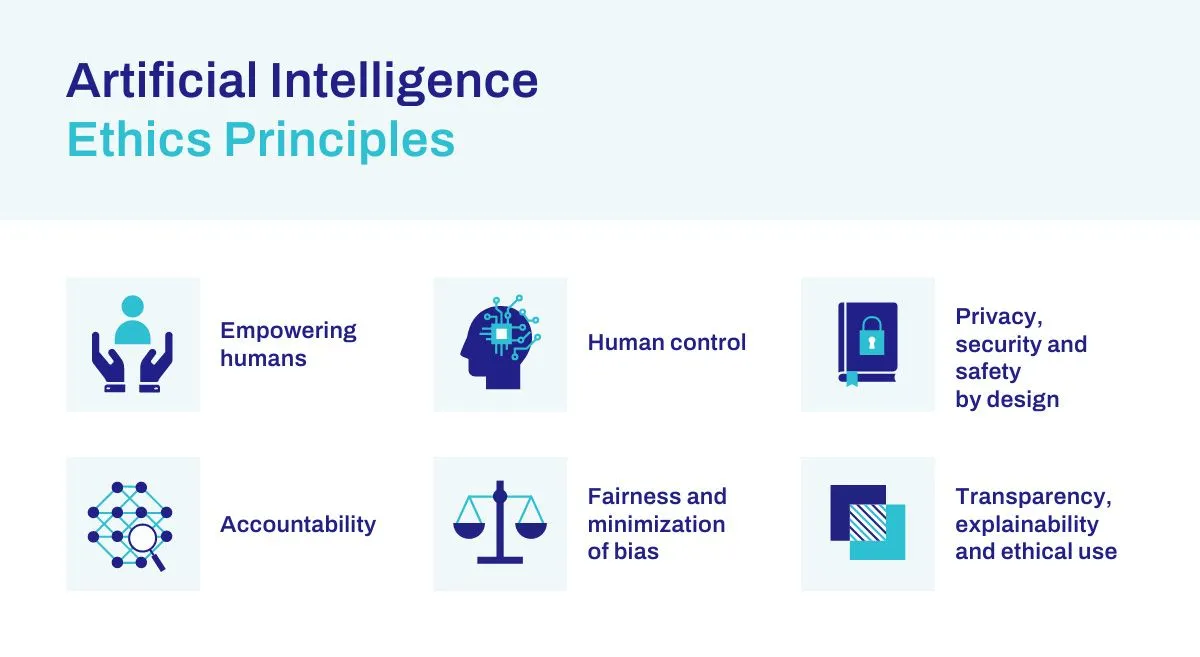
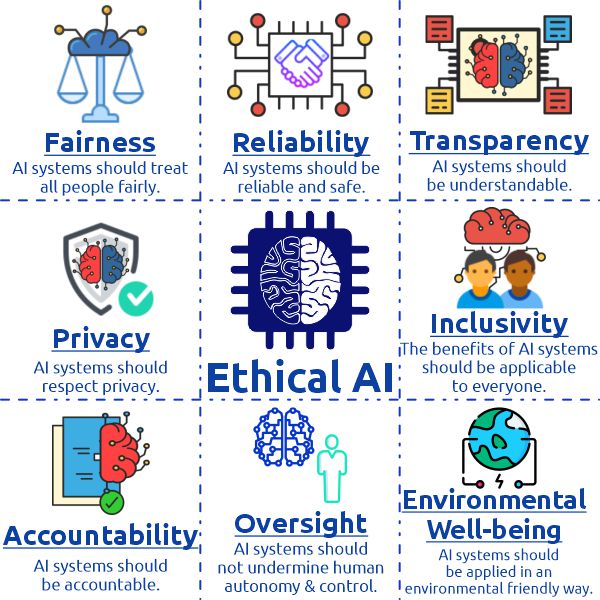
AI ethics also involves the development of ethical frameworks and principles that guide the behavior of AI systems. These frameworks often emphasize values such as fairness, accountability, transparency, privacy, and human dignity. For example, the IEEE Global Initiative on Ethics of Autonomous Systems has developed a set of ethical guidelines for AI and autonomous systems, known as the Ethically Aligned Design framework.
#Important Facts
- Algorithmic Bias: AI systems can perpetuate and amplify biases present in their training data, leading to discriminatory outcomes. For example, biased algorithms in hiring processes may favor certain demographics over others.
- Privacy Concerns: AI systems often rely on vast amounts of personal data, raising concerns about data privacy and security. The use of facial recognition technology, for instance, has sparked debates about surveillance and individual rights.
- Job Displacement: The automation of tasks through AI and machine learning may lead to job displacement in certain sectors. This raises ethical questions about the responsibility of governments and corporations to support affected workers.
- Explainability: Many AI systems, particularly deep learning models, operate as "black boxes," making it difficult to understand how they arrive at their decisions. This lack of transparency can undermine trust in AI systems.
- Autonomous Weapons: The development of autonomous weapons systems raises ethical concerns about accountability and the potential for unintended harm. International discussions about the regulation of such systems are ongoing.
- AI in Healthcare: AI has the potential to revolutionize healthcare by improving diagnostics and treatment. However, ethical concerns arise regarding data privacy, consent, and the potential for AI to exacerbate healthcare disparities.
- Ethical AI Frameworks: Organizations such as the Partnership on AI and the AI Ethics Guidelines developed by the European Commission provide frameworks for the ethical development of AI.
#Timeline
- Isaac Asimov introduces the
[Isaac Asimov](# 'Isaac Asimov') introduces the [Three Laws of Robotics](# 'Three Laws of Robotics').
- Alan Turing publishes 'Comput
[Alan Turing](# 'Alan Turing') publishes 'Computing Machinery and Intelligence,' raising questions about AI's potential and ethical implications.
- Joseph Weizenbaum publishes '
[Joseph Weizenbaum](# 'Joseph Weizenbaum') publishes 'ELIZA—a Computer Program For the Study of Natural Language Communication Between Man and Machine,' critiquing the uncritical acceptance of AI.
- James Moor publishes 'What
[James Moor](# 'James Moor') publishes 'What is Computer Ethics?' in *Metaphilosophy*, laying the groundwork for the field of machine ethics.
- The Machine Ethics Research
The [Machine Ethics Research Group](# 'Machine Ethics Research Group') at the University of Oxford is established.
- ProPublica publishes an invest
ProPublica publishes an investigation into racial bias in the COMPAS algorithm, used for predicting recidivism.
- The Asilomar AI Principles
The [Asilomar AI Principles](# 'Asilomar AI Principles') are introduced at the Asilomar Conference on Beneficial AI.
- European Commission releases i
European Commission releases its [AI Ethics Guidelines](# 'AI Ethics Guidelines').
- The EU AI Act
The [EU AI Act](# 'EU AI Act') is proposed, aiming to regulate AI systems in the European Union.
- Multiple countries, including
Multiple countries, including the United States and China, introduce or propose AI ethics and regulatory frameworks.
#Related Terms
#FAQ
What does AI Ethics: Pros And Cons cover?
Reviews the pros and cons of AI ethics, including benefits, risks, limitations, and trade-offs.
Why is AI Ethics: Pros And Cons important?
It helps readers understand key concepts, compare practical use cases, and evaluate how AI Ethics decisions affect outcomes, risks, and implementation choices.
What should readers verify before applying this topic?
Readers should compare the benefits, limitations, data requirements, and related themes such as Comparison, Trade Offs, Ethics before using the ideas in real projects.
#References
- AI Ethics: Pros And Cons terminology and background research
- AI Ethics: Pros And Cons use cases, implementation examples, and limitations
- AI Ethics best practices, standards, and risk guidance
- Comparison case studies, benchmarks, and current industry analysis


Comments
No comments yet. Start the discussion with a useful note.