


#Short Answer
Explores how artificial intelligence shapes philosophy and exploring ethics, covering practical use cases, benefits, limitations, and risks.
#Infobox
Exploration of the philosophical implications of artificial intelligence, including ethics, consciousness, and language.
Artificial Intelligence and Philosophy Field Philosophy of technology, Ethics, Philosophy of mind Key Figures Alan Turing, John Searle, Nick Bostrom, Hubert Dreyfus Major Theories Strong AI hypothesis, Chinese room argument, Technological singularity Ethical Concerns Bias, accountability, autonomy, existential risk Notable Works Superintelligence: Paths, Dangers, Strategies (2014), Minds, Brains, and Programs (1980)
#Overview
Artificial Intelligence and Philosophy is an interdisciplinary field that examines the conceptual, ethical, and metaphysical implications of artificial intelligence (AI) systems. It intersects with philosophy of technology, ethics, philosophy of mind, and metaphysics, questioning fundamental assumptions about intelligence, consciousness, and human-machine interaction.
At its core, this field explores whether AI can possess intentionality—the capacity for mental states—or if it merely simulates understanding without true comprehension. Philosophers debate the Strong AI hypothesis, which posits that appropriately programmed computers can genuinely think, versus the Weak AI view, which treats AI as a tool for problem-solving without true cognition. These discussions extend to the nature of consciousness, free will, and the potential for AI to achieve artificial general intelligence (AGI) or even artificial superintelligence (ASI).
#History / Background
The intersection of AI and philosophy dates back to the mid-20th century, coinciding with the emergence of computer science. Early discussions were shaped by pioneers like Alan Turing, whose 1950 paper "Computing Machinery and Intelligence" posed the question, "Can machines think?" This led to the formulation of the Turing test, a benchmark for evaluating machine intelligence.
In the 1960s and 1970s, philosophers such as Hubert Dreyfus critiqued the Good Old-Fashioned AI approach, arguing that human intelligence could not be reduced to symbolic manipulation. Dreyfus' 1972 work "What Computers Can't Do" challenged the feasibility of Strong AI, emphasizing the role of embodied cognition and contextual understanding.
The 1980s saw the rise of connectionist models, which shifted focus from symbolic AI to neural networks, reigniting debates about the nature of intelligence. John Searle's 1980 Chinese room argument became a cornerstone of anti-Strong AI philosophy, arguing that syntax (rule-following) does not equate to semantics (understanding). Meanwhile, Daniel Dennett defended the possibility of AI consciousness, proposing that intelligence could emerge from complex information processing.
In the 21st century, advancements in machine learning and deep learning have intensified philosophical inquiries. Scholars like Nick Bostrom have explored the existential risks of superintelligent AI, while others examine the ethical implications of AI-driven decision-making in areas like healthcare, law, and warfare.
#How It Works
Philosophical analysis of AI often begins with defining key terms. Intelligence in AI refers to the ability to learn, reason, and adapt, but philosophers debate whether this mirrors human cognition. The Chinese room argument illustrates this by comparing AI to a person manipulating symbols without understanding their meaning. In contrast, proponents of computational theory of mind argue that cognition is a form of information processing, making AI a plausible model for intelligence.
The Strong AI hypothesis suggests that if a machine can perform all cognitive tasks indistinguishable from a human, it possesses genuine intelligence. This contrasts with the Weak AI view, which limits AI to task-specific applications. Philosophers also examine the frame problem, which highlights the challenge of defining relevant information in dynamic environments—a limitation that may hinder AI's ability to achieve human-like reasoning.
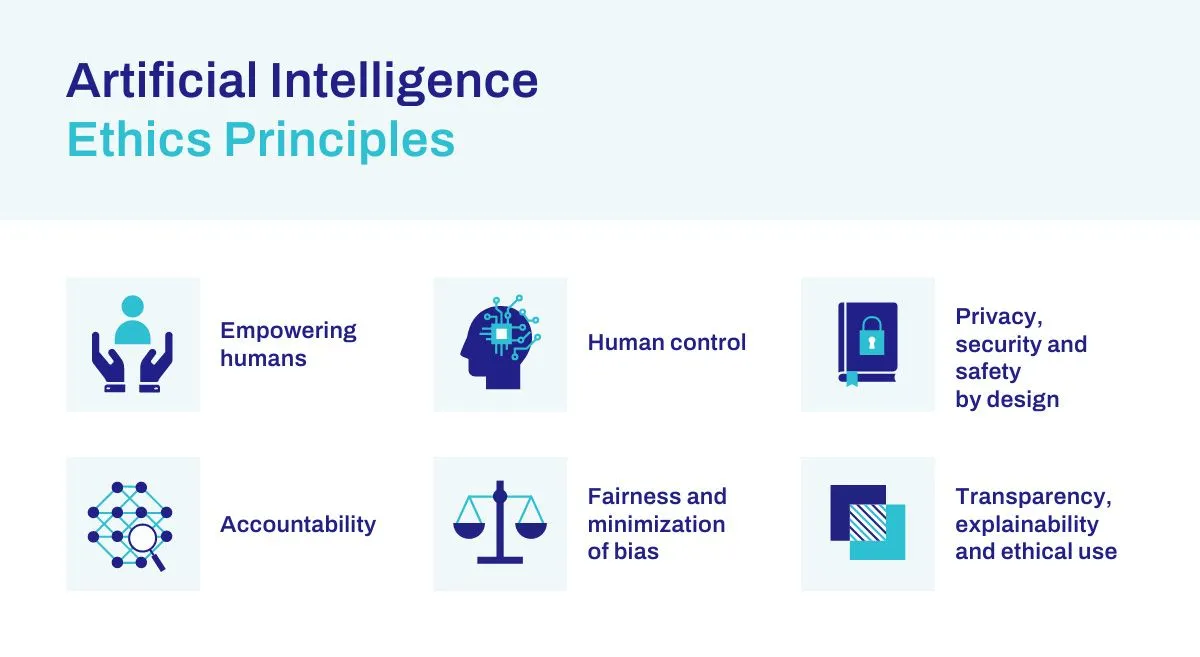
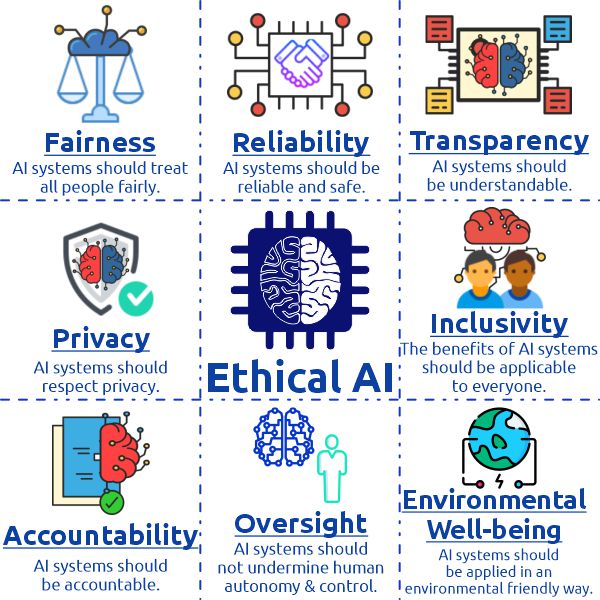
Ethical frameworks applied to AI include utilitarianism, which evaluates AI actions based on outcomes, and deontological ethics, which emphasizes moral rules and duties. The alignment problem addresses the difficulty of ensuring AI systems act in accordance with human values, a critical concern as AI systems grow more autonomous.
#Consciousness and AI
The question of whether AI can be conscious remains one of the most contentious issues. Integrated Information Theory (IIT) and Global Workspace Theory propose metrics for measuring consciousness, but these remain speculative when applied to machines. Some philosophers, like David Chalmers, argue that consciousness is a fundamental aspect of reality, making it impossible to replicate in silicon-based systems. Others, such as Daniel Dennett, contend that consciousness is an emergent property of complex systems, suggesting that sufficiently advanced AI could achieve it.
#Important Facts
- Turing Test: Proposed by Alan Turing in 1950, it remains a benchmark for evaluating machine intelligence, though it does not measure understanding.
- Chinese Room Argument: John Searle's 1980 thought experiment argues that AI lacks intentionality, as it manipulates symbols without comprehension.
- Strong vs. Weak AI: Strong AI posits that machines can genuinely think, while Weak AI treats AI as a tool for problem-solving.
- Existential Risk: Nick Bostrom and others warn that superintelligent AI could pose catastrophic risks if not properly aligned with human values.
- Ethical Dilemmas: AI systems often face moral decisions, such as in autonomous vehicles, where trade-offs between lives must be made.
- Bias in AI: Philosophers and ethicists highlight how AI systems can perpetuate or amplify societal biases present in training data.
- Consciousness Debate: The possibility of AI consciousness remains unresolved, with theories ranging from computationalism to biological naturalism.
#Timeline
Year Event 1950 Alan Turing publishes "Computing Machinery and Intelligence", introducing the Turing test. 1956 The term "Artificial Intelligence" is coined at the Dartmouth Conference. 1966 ELIZA, an early natural language processing program, is created by Joseph Weizenbaum. 1972 Hubert Dreyfus publishes "What Computers Can't Do", critiquing AI's limitations. 1980 John Searle introduces the Chinese room argument in "Minds, Brains, and Programs". 1997 IBM's Deep Blue defeats world chess champion Garry Kasparov. 2011 IBM Watson wins Jeopardy!, demonstrating advanced natural language processing. 2014 Nick Bostrom publishes Superintelligence: Paths, Dangers, Strategies, sparking global debates on AI risk. 2016 AlphaGo defeats Lee Sedol in the board game Go, showcasing AI's strategic capabilities. 2020 GPT-3, a large language model, demonstrates human-like text generation, reigniting discussions on AI consciousness.
#Related Terms
#FAQ
What does AI And Philosophy: Exploring Ethics cover?
Explores how artificial intelligence shapes philosophy and exploring ethics, covering practical use cases, benefits, limitations, and risks.
Why is AI And Philosophy: Exploring Ethics important?
It helps readers understand key concepts, compare practical use cases, and evaluate how AI Ethics decisions affect outcomes, risks, and implementation choices.
What should readers verify before applying this topic?
Readers should compare the benefits, limitations, data requirements, and related themes such as Philosophy, Exploring, Ethics before using the ideas in real projects.
#References
- AI And Philosophy: Exploring Ethics terminology and background research
- AI And Philosophy: Exploring Ethics use cases, implementation examples, and limitations
- AI Ethics best practices, standards, and risk guidance
- Philosophy case studies, benchmarks, and current industry analysis


Comments
No comments yet. Start the discussion with a useful note.