

#Short Answer
Explores how artificial intelligence shapes open source and community-driven innovation, covering practical use cases, benefits, limitations, and risks.
#Infobox
Open-source AI refers to artificial intelligence systems whose source code, datasets, and development processes are made publicly accessible, enabling collaborative innovation, transparency, and widespread adoption across industries.
Open-Source AI: Community-Driven Innovation Field: Artificial Intelligence Key Concepts: Collaborative Development, Transparency, Accessibility Major Contributors: GitHub, Hugging Face, LAION, EleutherAI Notable Projects: Stable Diffusion, Llama, BERT, PyTorch License Types: MIT, Apache 2.0, GPL, Creative Commons Impact Areas: Research, Education, Enterprise, Public Sector
#Overview
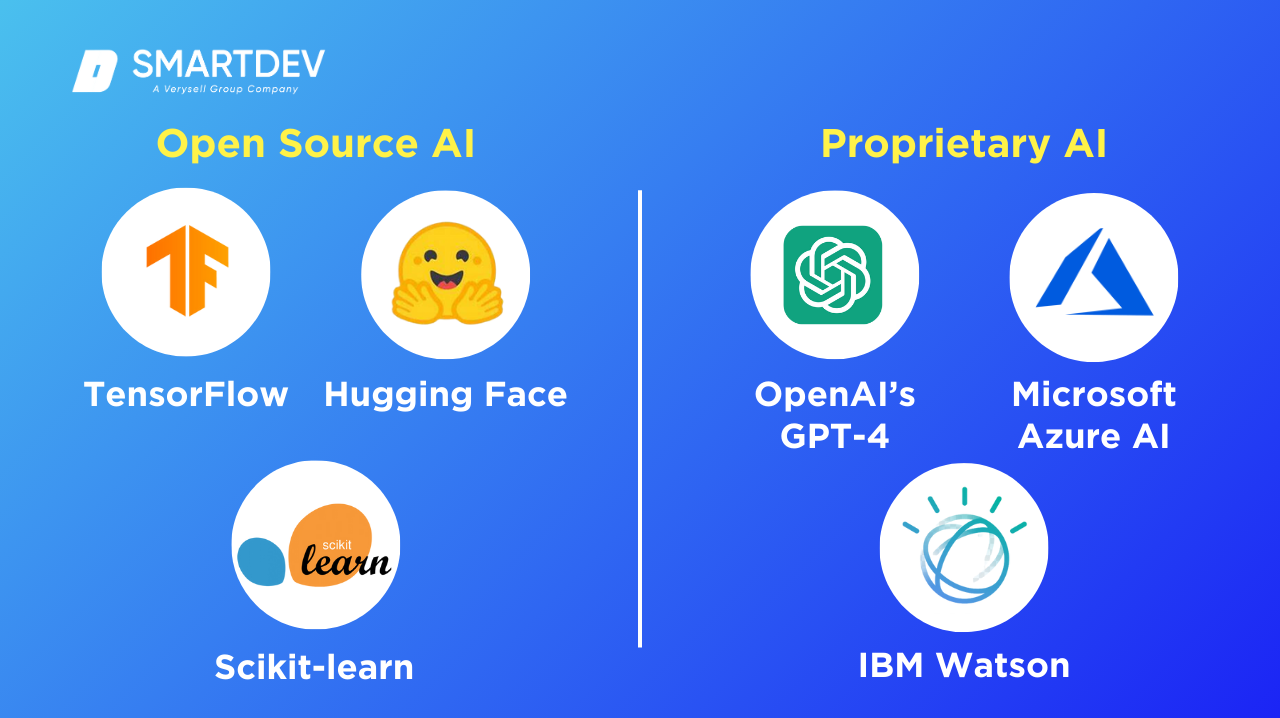
Open-source AI represents a paradigm shift in the development and deployment of artificial intelligence technologies. Unlike proprietary AI systems, which are developed and controlled by a single organization, open-source AI emphasizes transparency, accessibility, and community collaboration. This approach allows researchers, developers, and enthusiasts from around the world to contribute to, modify, and distribute AI models and tools, fostering rapid innovation and democratizing access to advanced AI capabilities.
The core principles of open-source AI include:
- Transparency: All components, including source code, datasets, and training methodologies, are made publicly available for scrutiny and improvement.
- Collaboration: Global communities of developers, researchers, and organizations work together to enhance AI models and address challenges.
- Accessibility: Open-source AI tools are freely available, reducing barriers to entry for individuals and organizations with limited resources.
- Reproducibility: By sharing code and data, open-source AI enables others to replicate and build upon existing work, accelerating scientific progress.
Open-source AI has become a cornerstone of modern AI research and application, enabling breakthroughs in natural language processing, computer vision, generative AI, and more. Its impact spans academic institutions, startups, and large corporations, driving innovation across diverse sectors.
#History / Background
#Early Foundations (1950s–1990s)
The roots of open-source AI can be traced back to the early days of artificial intelligence research. In the 1950s and 1960s, pioneers like Alan Turing and John McCarthy laid the groundwork for AI, but the field was largely academic and theoretical. Early AI systems were often developed in universities and research labs, where code and ideas were shared openly among researchers.
During the 1980s and 1990s, the rise of personal computing and the internet facilitated the sharing of AI tools and algorithms. Projects like the GNU Project and the Free Software Foundation promoted the idea of open-source software, which eventually influenced AI development. However, AI remained a niche field with limited public engagement.
#Emergence of Open-Source AI (2000s–2010s)
The 2000s marked a turning point with the growth of machine learning and the availability of large datasets. The launch of platforms like GitHub in 2008 provided a centralized space for developers to collaborate on AI projects. Open-source machine learning frameworks such as TensorFlow (2015) and PyTorch (2016) became widely adopted, enabling researchers to build and share AI models more efficiently.
In 2018, the release of BERT by Google marked a significant milestone in open-source AI. BERT, a transformer-based model for natural language processing, demonstrated the power of pre-trained models that could be fine-tuned for specific tasks. This approach became a blueprint for many subsequent open-source AI projects.
#Golden Age of Open-Source AI (2020s–Present)
The 2020s have seen an explosion of open-source AI innovation, driven by advances in deep learning, generative AI, and community-driven development. Key milestones include:
- 2020: The release of GPT-3 by OpenAI, which, while not fully open-source, inspired numerous open alternatives like EleutherAI's GPT-J.
- 2021: The launch of Stable Diffusion, an open-source text-to-image AI model that democratized generative AI for artists and creators.
- 2022: Meta's release of Llama, a large language model that sparked a wave of open-source LLM projects.
- 2023: The emergence of Hugging Face as a central hub for open-source AI models, datasets, and tools, facilitating collaboration and deployment.
Today, open-source AI is a global movement, with contributions from individuals, non-profits, corporations, and governments. The field continues to evolve, with new models, tools, and applications being released regularly.
#How It Works
#Development Process
Open-source AI projects typically follow a collaborative development process that involves several key stages:
- Idea and Planning: Developers or organizations propose a new AI model or tool, outlining its goals, architecture, and potential applications. This phase often involves community input through forums, GitHub discussions, or dedicated platforms.
- Code and Dataset Sharing: The source code, datasets, and training scripts are made publicly available on platforms like GitHub, GitLab, or Hugging Face. This transparency allows others to inspect, modify, and build upon the work.
- Collaborative Development: Contributors from around the world submit code improvements, bug fixes, and new features. This collaborative effort is often coordinated through version control systems like Git and project management tools like Jira or Trello.
- Testing and Validation: The community tests the AI model or tool to ensure its accuracy, robustness, and efficiency. Peer review and benchmarking play a crucial role in validating the project's quality.
- Documentation and Deployment: Comprehensive documentation is created to guide users on how to install, configure, and use the AI tool. Deployment options, such as pre-trained models, APIs, or cloud-based services, are provided to facilitate adoption.
- Continuous Improvement: Open-source AI projects are iterative, with regular updates, bug fixes, and new features being released based on community feedback and technological advancements.
#Key Components
Open-source AI projects typically consist of several key components:
- Source Code: The programming scripts that define the AI model's architecture, training algorithms, and inference logic. Common languages include Python, C++, and Julia.
- Datasets: Curated collections of data used to train AI models. Open-source datasets, such as LAION-5B or Common Crawl, are widely used in open-source AI projects.
- Pre-trained Models: AI models that have been trained on large datasets and are ready for fine-tuning or deployment. Examples include BERT, Llama, and Stable Diffusion.
- Frameworks and Libraries: Software tools that simplify the development and deployment of AI models. Popular frameworks include TensorFlow, PyTorch, and JAX.
- Documentation: Guides, tutorials, and API references that help users understand and utilize the AI tool effectively.
- Community Platforms: Online forums, chat groups, and collaboration platforms where developers can discuss, share ideas, and seek support.
#Licensing and Governance
Open-source AI projects are governed by licenses that define how the software can be used, modified, and distributed. Common licenses include:
- MIT License: Permissive license that allows for free use, modification, and distribution with minimal restrictions.
- Apache License 2.0: Permissive license that includes patent grants and requires attribution.
- GNU General Public License (GPL): Copyleft license that requires derivative works to also be open-source.
- Creative Commons Licenses: Used for datasets and other non-software components, allowing for various levels of sharing and modification.
Governance models vary among open-source AI projects. Some are managed by non-profit organizations, while others are led by corporations or independent developers. Community-driven governance, where decisions are made through consensus or voting, is common in larger projects.
#Important Facts
- Democratization of AI: Open-source AI has lowered the barriers to entry for individuals and organizations, enabling them to leverage advanced AI capabilities without significant financial investment.
- Accelerated Innovation: The collaborative nature of open-source AI has led to faster development cycles, with new models and tools being released at an unprecedented pace.
- Transparency and Trust: By making AI models and datasets publicly available, open-source AI promotes transparency, allowing users to understand how decisions are made and identify potential biases or errors.
- Ethical Considerations: Open-source AI raises important ethical questions, such as the responsible use of AI, data privacy, and the potential for misuse. The community actively addresses these issues through guidelines, best practices, and governance frameworks.
- Economic Impact: Open-source AI has created new economic opportunities, including the rise of AI startups, freelance development, and open-source consultancy services.
- Global Collaboration: Open-source AI projects often involve contributors from diverse backgrounds and geographies, fostering cross-cultural collaboration and innovation.
- Education and Research: Open-source AI tools are widely used in academic research and education, enabling students and researchers to experiment with cutting-edge technologies.
- Interoperability: Open-source AI promotes interoperability between different tools and frameworks, allowing developers to mix and match components to suit their needs.
#Timeline
Year Event 1950 Alan Turing publishes "Computing Machinery and Intelligence," laying the foundation for AI research. 1966 ELIZA, an early natural language processing program, is developed at MIT and shared openly. 1983 The GNU Project is launched, promoting free and open-source software, which later influences AI development. 1997 IBM's Deep Blue defeats world chess champion Garry Kasparov, showcasing the potential of AI. 2008 GitHub is launched, providing a platform for collaborative software development, including AI projects. 2015 Google releases TensorFlow, an open-source machine learning framework that becomes widely adopted. 2016 Facebook releases PyTorch, another popular open-source machine learning framework. 2018 Google releases BERT, a transformer-based model for natural language processing, sparking a wave of open-source NLP projects. 2020 EleutherAI releases GPT-J, an open-source alternative to OpenAI's GPT-3. 2021 Stable Diffusion is released, democratizing generative AI for artists and creators. 2022 Meta releases Llama, a large language model that inspires numerous open-source LLM projects. 2023 Hugging Face becomes a central hub for open-source AI models, datasets, and tools, facilitating collaboration and deployment.
#Related Terms
#FAQ
What does AI And Open Source: Community-Driven Innovation cover?
Explores how artificial intelligence shapes open source and community-driven innovation, covering practical use cases, benefits, limitations, and risks.
Why is AI And Open Source: Community-Driven Innovation important?
It helps readers understand key concepts, compare practical use cases, and evaluate how Artificial Intelligence decisions affect outcomes, risks, and implementation choices.
What should readers verify before applying this topic?
Readers should compare the benefits, limitations, data requirements, and related themes such as Open, Source, Communitydriven before using the ideas in real projects.
#References
- AI And Open Source: Community-Driven Innovation terminology and background research
- AI And Open Source: Community-Driven Innovation use cases, implementation examples, and limitations
- Artificial Intelligence best practices, standards, and risk guidance
- Open case studies, benchmarks, and current industry analysis

Comments
No comments yet. Start the discussion with a useful note.