

#Short Answer
Explores how artificial intelligence shapes investing and data-driven decisions, covering practical use cases, benefits, limitations, and risks.
#Infobox
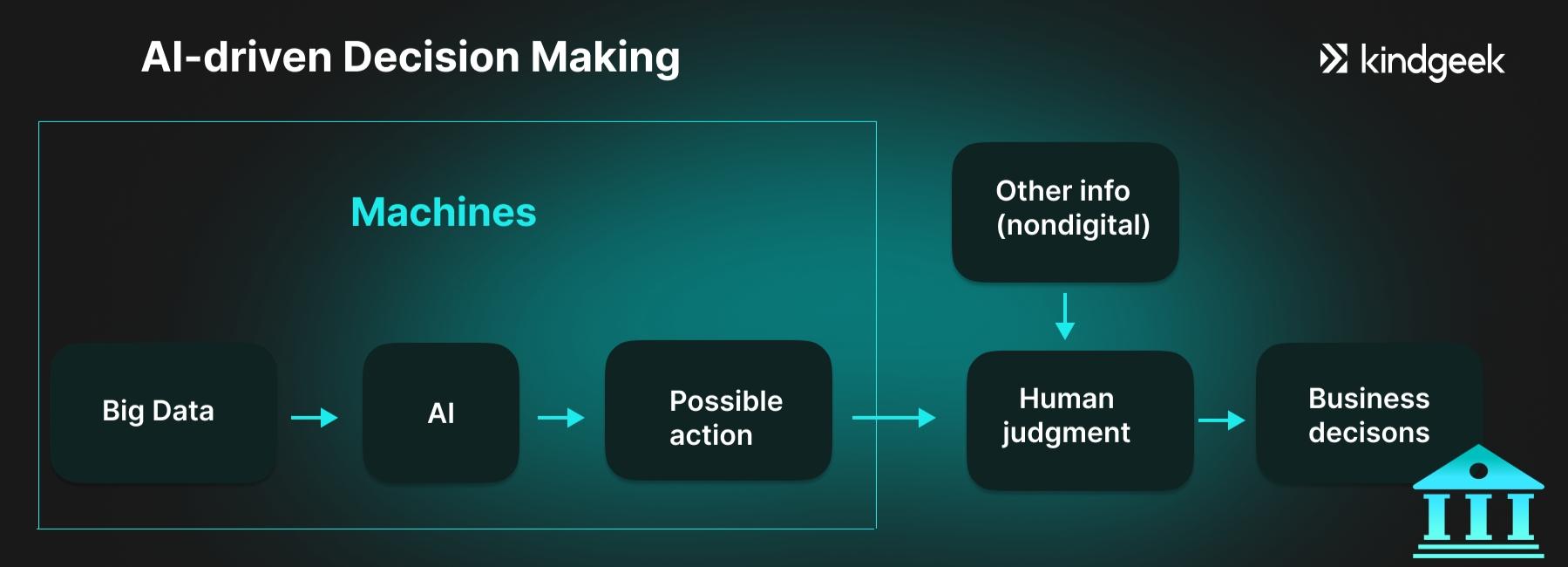
AI-driven investing leverages machine learning and big data analytics to automate financial decision-making, optimize portfolios, and enhance risk management. By processing vast datasets in real time, AI identifies patterns, predicts market trends, and executes trades with minimal human intervention, aiming to improve returns and reduce biases.
AI and Investing Field:Finance, Artificial Intelligence Key Technologies:Machine Learning, Natural Language Processing, Predictive Analytics Primary Applications:Algorithmic Trading, Portfolio Management, Risk Assessment Advantages:Speed, Scalability, Data-Driven Insights Challenges:Data Quality, Overfitting, Regulatory Compliance Notable Examples:Quantitative Hedge Funds, Robo-Advisors
#Overview
AI and investing represent a transformative intersection of artificial intelligence and financial markets, where algorithms analyze historical and real-time data to inform investment strategies. Unlike traditional methods reliant on human judgment, AI-driven systems process terabytes of structured and unstructured data—including market prices, news sentiment, social media trends, and macroeconomic indicators—to uncover hidden patterns and generate actionable insights.
This approach is particularly valuable in high-frequency trading (HFT), where milliseconds matter, and in long-term portfolio management, where predictive models assess asset correlations and risk exposures. By automating repetitive tasks such as rebalancing portfolios or executing trades, AI reduces operational costs and human error while enabling more precise and adaptive investment decisions.
#History / Background
#Early Foundations (1950s–1980s)
The conceptual roots of AI in investing trace back to the 1950s, with early experiments in computational finance. The development of the Efficient Market Hypothesis (EMH) by Eugene Fama in 1970 challenged the notion that markets could be consistently outperformed, indirectly spurring interest in quantitative methods. Meanwhile, the advent of personal computers in the 1980s allowed rudimentary algorithmic trading strategies to emerge, though these were limited by computational power and data availability.
#Rise of Quantitative Trading (1990s–2000s)
The 1990s saw the proliferation of quantitative hedge funds like Renaissance Technologies and D.E. Shaw, which pioneered statistical arbitrage and machine learning techniques. The dot-com bubble and subsequent market crashes highlighted the need for robust risk management tools, further driving adoption of data-driven approaches. During this period, support vector machines (SVMs) and neural networks began appearing in trading algorithms, though their complexity often limited widespread use.
#Modern Era (2010s–Present)
The 2010s marked a turning point with the explosion of big data, cloud computing, and advancements in deep learning. Companies like BlackRock (with Aladdin) and Two Sigma integrated AI into their core investment processes, while robo-advisors such as Betterment and Wealthfront democratized access to automated portfolio management. The 2020s have seen AI models incorporate alternative data sources (e.g., satellite imagery, credit card transactions) and leverage transformer-based architectures for natural language processing (NLP) to gauge market sentiment from news articles and earnings calls.
#How It Works
#Data Collection and Preprocessing
AI-driven investing begins with aggregating diverse data streams, including:
- Market Data: Price movements, trading volumes, order book dynamics.
- Fundamental Data: Financial statements, earnings reports, valuation metrics.
- Alternative Data: Social media sentiment, web traffic, geospatial data.
- Macroeconomic Indicators: Interest rates, GDP growth, inflation rates.
This data undergoes cleaning, normalization, and feature engineering to remove noise and highlight relevant signals. Techniques like principal component analysis (PCA) or autoencoders may reduce dimensionality for efficiency.
#Model Development
Several AI methodologies are employed, each suited to different tasks:
- Supervised Learning: Used for classification (e.g., predicting stock price movements) or regression (e.g., forecasting earnings). Models like random forests or gradient boosting (XGBoost, LightGBM) excel here.
- Unsupervised Learning: Identifies hidden patterns in unlabeled data, such as clustering similar assets or detecting anomalies in trading behavior.
- Reinforcement Learning (RL): Enables systems to learn optimal trading strategies through trial and error, adjusting actions based on rewards (e.g., profit maximization).
- Natural Language Processing (NLP): Analyzes text data (e.g., news, SEC filings) to extract sentiment scores or extract key events affecting asset prices.
#Execution and Monitoring
Once trained, models generate signals (e.g., "buy," "sell," or "hold") based on real-time data. These signals are then executed via algorithmic trading platforms, which optimize order placement to minimize slippage and market impact. Continuous monitoring tracks model performance, with feedback loops retraining models to adapt to changing market conditions. Risk management modules enforce constraints (e.g., position sizing, stop-loss limits) to prevent catastrophic losses.
#Important Facts
- Speed Advantage: AI systems can execute trades in microseconds, far outpacing human traders.
- Bias Mitigation: Unlike humans, AI is not prone to emotional biases (e.g., overconfidence, loss aversion), though it may inherit biases from training data.
- Backtesting Limitations: Historical performance does not guarantee future results; overfitting to past data is a common pitfall.
- Regulatory Scrutiny: AI-driven trading is subject to regulations like MiFID II (EU) and SEC Rule 15c3-5 (US), which mandate risk controls and transparency.
- Energy Consumption: Training large AI models (e.g., deep neural networks) requires significant computational resources, raising sustainability concerns.
- Black Swan Events: AI models may struggle to predict unprecedented events (e.g., pandemics, geopolitical shocks) due to lack of training data.
- Explainability Challenges: "Black box" models (e.g., deep learning) often lack interpretability, complicating audits and regulatory compliance.
#Timeline
YearMilestone 1956Dartmouth Conference coins the term "artificial intelligence." 1970Eugene Fama publishes the Efficient Market Hypothesis. 1986James Simons founds Renaissance Technologies, pioneering quantitative trading. 1997IBM's Deep Blue defeats world chess champion Garry Kasparov. 2006First robo-advisor (Wealthfront) launches. 2012Andrew Ng and Google's X Lab demonstrate deep learning for stock prediction. 2016AlphaGo defeats Lee Sedol in Go, showcasing AI's potential in complex decision-making. 2018BlackRock acquires Aperio Group, expanding AI-driven portfolio management. 2020COVID-19 pandemic accelerates adoption of AI for risk modeling and dynamic asset allocation. 2023Generative AI tools (e.g., LLMs) begin analyzing earnings call transcripts for investment signals.
#Related Terms
#FAQ
What does AI And Investing: Data-Driven Decisions cover?
Explores how artificial intelligence shapes investing and data-driven decisions, covering practical use cases, benefits, limitations, and risks.
Why is AI And Investing: Data-Driven Decisions important?
It helps readers understand key concepts, compare practical use cases, and evaluate how Business & Finance decisions affect outcomes, risks, and implementation choices.
What should readers verify before applying this topic?
Readers should compare the benefits, limitations, data requirements, and related themes such as Investing, Datadriven, Decision before using the ideas in real projects.
#References
- AI And Investing: Data-Driven Decisions terminology and background research
- AI And Investing: Data-Driven Decisions use cases, implementation examples, and limitations
- Business & Finance best practices, standards, and risk guidance
- Investing case studies, benchmarks, and current industry analysis


.png)
Comments
No comments yet. Start the discussion with a useful note.