


#Short Answer
Explores how artificial intelligence shapes humanitarian aid and crisis response, covering practical use cases, benefits, limitations, and risks.
#Infobox
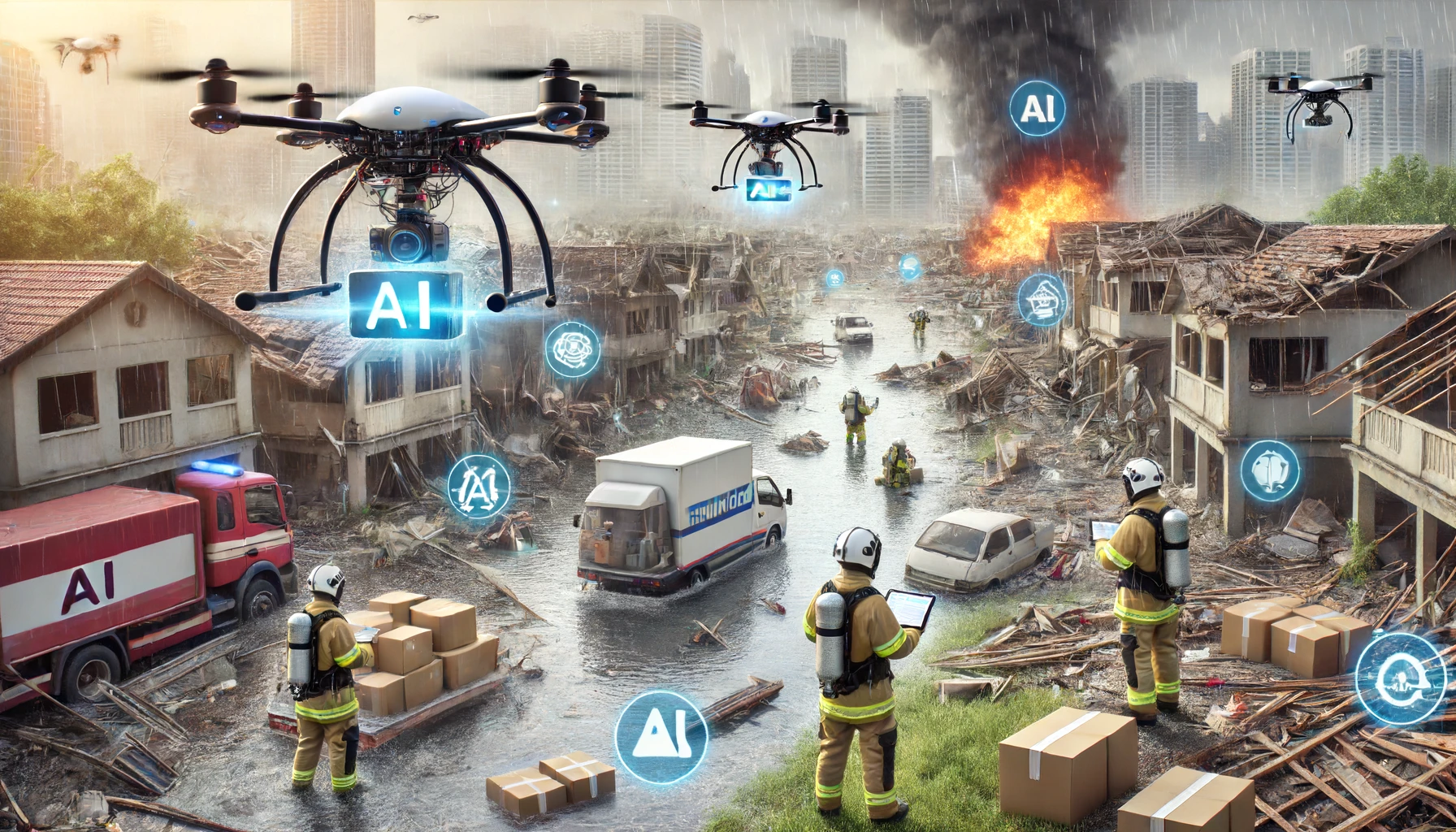
Artificial intelligence in humanitarian aid and crisis response involves using AI technologies to enhance disaster management, improve resource allocation, and accelerate response efforts in emergencies.
Artificial Intelligence in Humanitarian Aid and Crisis Response Field Artificial intelligence Focus Humanitarian aid, crisis response, disaster management Key Technologies Machine learning, natural language processing, computer vision, predictive analytics Applications Early warning systems, damage assessment, resource allocation, refugee support Notable Organizations UNICEF, Red Cross, World Food Programme, Médecins Sans Frontières First Use Early 2010s (experimental), widespread adoption mid-2010s
#Overview
Artificial intelligence (AI) in humanitarian aid and crisis response refers to the application of AI technologies to improve the efficiency, accuracy, and speed of humanitarian operations during natural disasters, conflicts, pandemics, and other emergencies. AI systems analyze vast datasets—such as satellite imagery, social media posts, weather patterns, and historical disaster data—to predict crises, assess damage, optimize resource distribution, and support decision-making by aid organizations.
These technologies enable faster response times, reduce human error, and enhance situational awareness in chaotic environments. By automating repetitive tasks and providing data-driven insights, AI helps humanitarian workers focus on high-impact interventions, ultimately saving lives and reducing suffering in affected communities.
#History / Background
The integration of AI into humanitarian aid began in the early 2010s, with early experiments focusing on using machine learning for damage assessment after earthquakes. The devastating 2010 Haiti earthquake marked a turning point, as organizations like the United Nations and International Red Cross explored AI-driven tools to improve response coordination.
By 2015, advancements in computer vision and natural language processing enabled real-time analysis of social media and satellite images. The 2015 Nepal earthquake saw the first large-scale deployment of AI-powered damage assessment tools, which helped prioritize rescue efforts.
In the late 2010s, AI became a core component of early warning systems, particularly for floods, hurricanes, and wildfires. The COVID-19 pandemic further accelerated AI adoption, with tools used to track virus spread, predict healthcare resource needs, and optimize vaccine distribution.
#How It Works
#Data Collection and Processing
AI systems rely on diverse data sources to function effectively:
- Satellite and Aerial Imagery: High-resolution images from satellites, drones, and aircraft are analyzed using computer vision to detect structural damage, assess infrastructure integrity, and identify affected populations.
- Social Media and Crowdsourced Data: Natural language processing (NLP) algorithms scan platforms like Twitter, Facebook, and WhatsApp to extract real-time information on emergencies, such as reports of collapsed buildings or stranded individuals.
- Sensor Networks: IoT devices, including weather stations, seismic sensors, and water level monitors, provide continuous data streams for early warning systems.
- Historical Disaster Data: Machine learning models are trained on past disaster responses to identify patterns in resource allocation, response times, and recovery strategies.
#Predictive Modeling and Early Warning
AI-driven predictive models analyze environmental and socioeconomic factors to forecast disasters before they occur. For example:
- Flood Prediction: Models combine rainfall data, river levels, and terrain maps to predict flooding in high-risk areas, allowing evacuations to be initiated days in advance.
- Disease Outbreak Detection: AI systems monitor global health data, travel patterns, and environmental conditions to predict outbreaks of diseases like cholera or malaria.
- Conflict Forecasting: Machine learning algorithms analyze political instability indicators, economic trends, and historical conflict data to predict potential humanitarian crises.
#Damage Assessment and Resource Allocation
After a disaster, AI tools rapidly assess the extent of damage to prioritize response efforts:
- Automated Damage Detection: Computer vision models compare pre- and post-disaster satellite images to identify collapsed buildings, blocked roads, and damaged infrastructure.
- Supply Chain Optimization: AI algorithms optimize the distribution of food, medical supplies, and shelter materials by predicting demand based on population density, weather conditions, and accessibility.
- Route Planning: Machine learning calculates the most efficient delivery routes for aid convoys, avoiding damaged roads and security risks.
#Communication and Support
AI enhances communication between aid organizations and affected communities:
- Chatbots and Virtual Assistants: NLP-powered chatbots provide real-time information on evacuation routes, medical facilities, and aid distribution points in multiple languages.
- Translation Services: AI-driven translation tools break down language barriers, enabling aid workers to communicate with local populations effectively.
- Community Engagement: Social media monitoring tools track public sentiment and misinformation, allowing organizations to address concerns and correct false information promptly.
#Important Facts
- Speed of Response: AI can reduce damage assessment time from days to hours, enabling faster rescue operations.
- Cost Efficiency: Automating repetitive tasks with AI reduces operational costs by up to 30% in some humanitarian operations.
- Accuracy: AI models trained on historical data achieve over 90% accuracy in predicting disaster impacts in controlled studies.
- Scalability: AI systems can process data from multiple disasters simultaneously, making them ideal for large-scale emergencies.
- Ethical Considerations: The use of AI in humanitarian aid raises concerns about data privacy, bias in algorithms, and the potential displacement of human workers.
- Global Adoption: Over 60% of major humanitarian organizations now use AI in some capacity, according to a 2023 UN report.
#Timeline
Year Event 2010 Post-Haiti earthquake: Early experiments with AI for damage assessment begin. 2012 UN launches the "Global Pulse" initiative to explore AI for humanitarian data analysis. 2015 Nepal earthquake: First large-scale use of AI-powered damage assessment tools. 2016 Red Cross deploys AI chatbots to provide disaster information in multiple languages. 2018 UNICEF launches "AI for Children" program to address child welfare in crises. 2020 COVID-19 pandemic: AI tools used for contact tracing, vaccine distribution, and resource allocation. 2021 UN launches the "AI for Good" humanitarian track to accelerate AI adoption in crisis response. 2023 Over 60% of major humanitarian organizations integrate AI into their operations.
#Related Terms
#FAQ
What does AI And Humanitarian Aid: Crisis Response cover?
Explores how artificial intelligence shapes humanitarian aid and crisis response, covering practical use cases, benefits, limitations, and risks.
Why is AI And Humanitarian Aid: Crisis Response important?
It helps readers understand key concepts, compare practical use cases, and evaluate how Climate & Society decisions affect outcomes, risks, and implementation choices.
What should readers verify before applying this topic?
Readers should compare the benefits, limitations, data requirements, and related themes such as Humanitarian, Aid, Crisi before using the ideas in real projects.
#References
- AI And Humanitarian Aid: Crisis Response terminology and background research
- AI And Humanitarian Aid: Crisis Response use cases, implementation examples, and limitations
- Climate & Society best practices, standards, and risk guidance
- Humanitarian case studies, benchmarks, and current industry analysis

Comments
No comments yet. Start the discussion with a useful note.