

#Short Answer
Artificial intelligence in data centers refers to the application of AI techniques—such as machine learning and deep learning—to optimize operations, reduce energy consumption, enhance reliability, and improve overall efficiency in data center infrastructure.
#Infobox
#Overview
Data centers are the backbone of modern digital infrastructure, hosting servers, storage systems, and networking equipment that power cloud computing, big data analytics, and internet services. As global demand for digital services grows, data centers face increasing pressure to operate efficiently while minimizing environmental impact. Artificial intelligence (AI) has emerged as a transformative tool in this domain, enabling intelligent automation, real-time decision-making, and predictive analytics to enhance performance and sustainability.
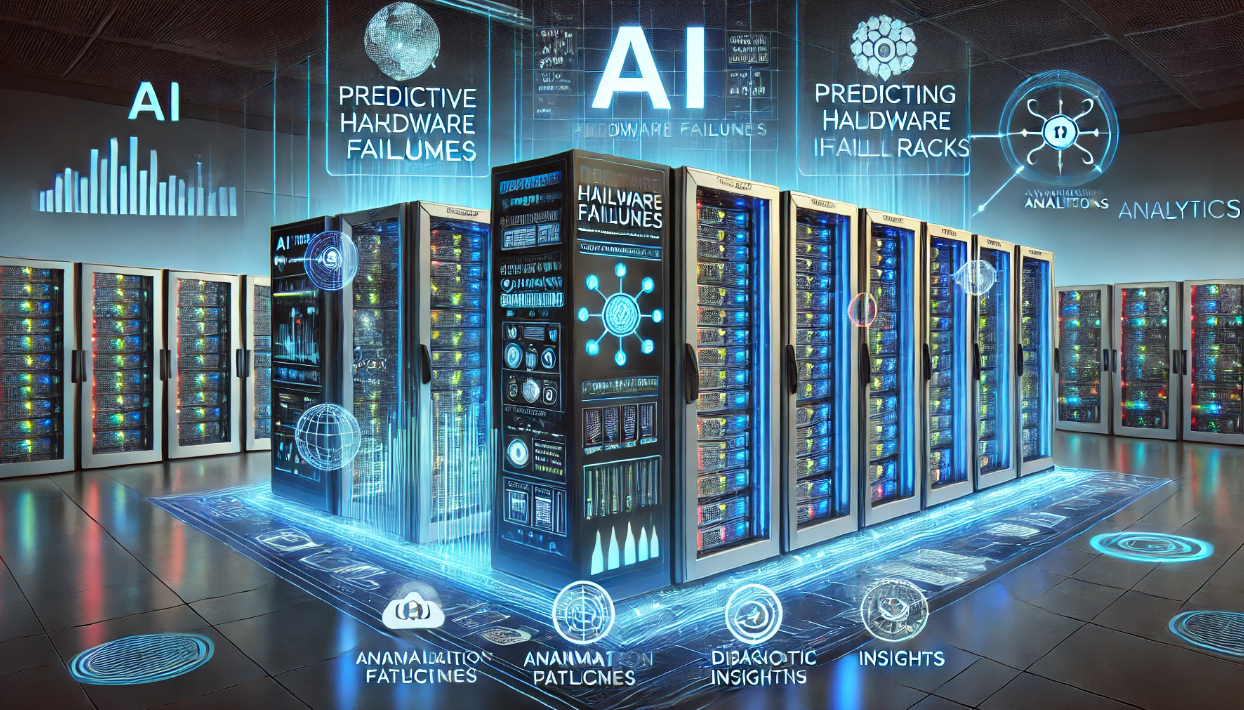
AI-driven solutions in data centers address critical challenges such as energy consumption, cooling inefficiencies, hardware failures, and workload management. By leveraging advanced algorithms, AI systems can analyze vast datasets from sensors, logs, and operational metrics to identify patterns, predict failures, and optimize resource allocation. This integration not only reduces operational costs but also contributes to sustainability goals by lowering carbon footprints.
#History / Background
The concept of using AI in data centers began to gain traction in the early 2010s, as advancements in machine learning and the proliferation of Internet of Things (IoT) devices provided the necessary tools for real-time monitoring and control. Early applications focused on basic automation and rule-based systems, but the rapid evolution of deep learning and reinforcement learning expanded AI's capabilities significantly.
One of the first major milestones was the adoption of AI-driven cooling systems in hyperscale data centers operated by companies like Google and Microsoft. These systems used neural networks to predict thermal loads and dynamically adjust cooling mechanisms, resulting in substantial energy savings. By 2018, Google reported a 40% reduction in cooling energy consumption at one of its data centers using AI-powered DeepMind technology.
The integration of AI into data center management has since become a standard practice among leading providers, driven by the need for scalability, cost efficiency, and environmental responsibility. Today, AI is not only used for operational optimization but also for cybersecurity, predictive maintenance, and workload forecasting.
#How it works
AI systems in data centers operate through a combination of data collection, model training, and real-time decision-making. The process typically involves the following steps:
- Data Collection: Sensors and monitoring tools gather real-time data on temperature, humidity, power usage, server performance, and network traffic. This data is often stored in time-series databases for analysis.
- Preprocessing and Feature Extraction: Raw data is cleaned, normalized, and transformed into meaningful features that AI models can interpret. Techniques such as Fourier transforms or wavelet analysis may be used to extract relevant patterns.
- Model Training: Machine learning models—such as convolutional neural networks (CNNs) for image-based monitoring or recurrent neural networks (RNNs) for time-series forecasting—are trained on historical and real-time data. Reinforcement learning is often employed to optimize control policies dynamically.
- Real-Time Inference: Trained models process incoming data streams to generate predictions or control signals. For example, an AI system might predict server overheating and adjust cooling fan speeds accordingly.
- Action and Feedback Loop: The AI system sends commands to actuators (e.g., adjusting cooling systems, rerouting workloads) and continuously receives feedback to refine its models through techniques like online learning.
#Key AI Technologies in Data Centers
- Machine Learning: Used for predictive maintenance, anomaly detection, and energy forecasting.
- Deep Learning: Enables complex pattern recognition in high-dimensional data, such as identifying subtle signs of hardware degradation.
- Reinforcement Learning: Optimizes dynamic control systems, such as adjusting cooling or workload distribution to minimize energy use while maintaining performance.
- Computer Vision: Analyzes thermal images or video feeds to detect overheating components or physical obstructions in server racks.
- Natural Language Processing (NLP): Processes unstructured data from logs or support tickets to identify recurring issues or automate troubleshooting.
#Important Facts
- AI-driven cooling systems can reduce energy consumption in data centers by up to 40%, according to studies by Google and Microsoft.
- The global AI in data center market is projected to grow from $1.5 billion in 2023 to $10.5 billion by 2030, driven by increasing adoption of cloud services and edge computing.
- Predictive maintenance using AI can reduce unplanned downtime by up to 50% by identifying potential failures before they occur.
- AI systems can optimize server workload distribution, reducing the need for over-provisioning and lowering hardware costs by 15–30%.
- Data centers account for approximately 1% of global electricity consumption, making energy efficiency a critical focus for AI applications.
- AI models in data centers often require high-performance computing (HPC) resources for training, leading to increased energy use in AI development phases.
#Related Terms
#FAQ
What does AI And Data Centers: Efficient Operations cover?
Explores how artificial intelligence shapes data centers and efficient operations, covering practical use cases, benefits, limitations, and risks.
Why is AI And Data Centers: Efficient Operations important?
It helps readers understand key concepts, compare practical use cases, and evaluate how Business & Marketing decisions affect outcomes, risks, and implementation choices.
What should readers verify before applying this topic?
Readers should compare the benefits, limitations, data requirements, and related themes such as Data, Center, Efficient before using the ideas in real projects.
#References
- AI And Data Centers: Efficient Operations terminology and background research
- AI And Data Centers: Efficient Operations use cases, implementation examples, and limitations
- Business & Marketing best practices, standards, and risk guidance
- Data case studies, benchmarks, and current industry analysis
Comments
No comments yet. Start the discussion with a useful note.